




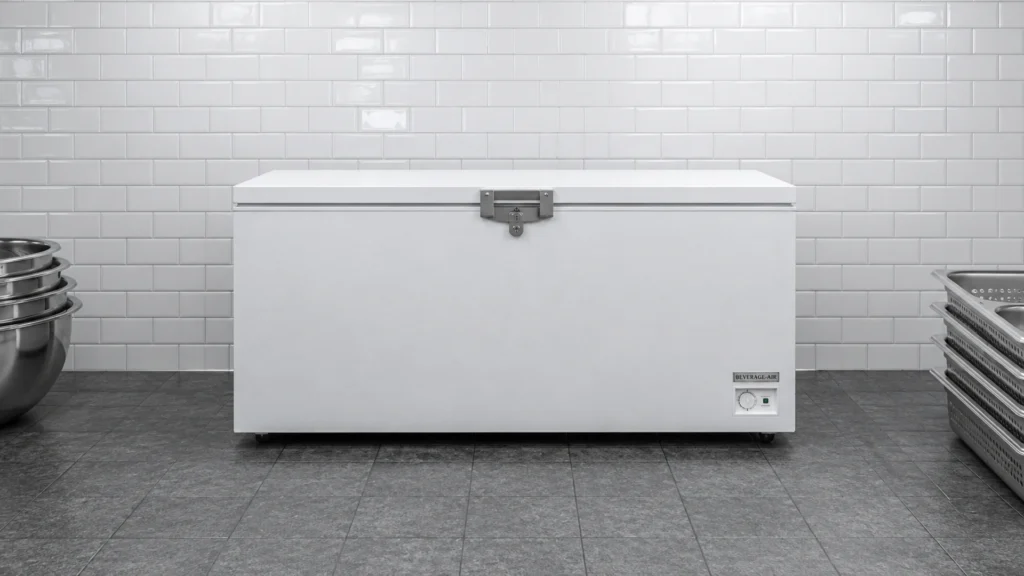
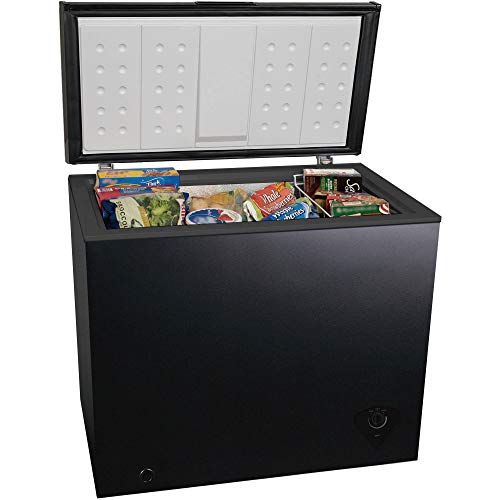
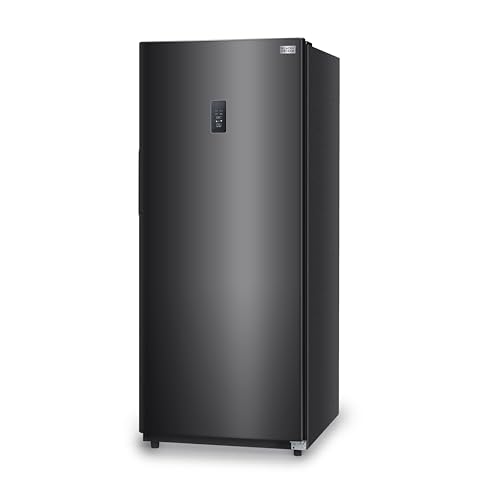
Freezers store frozen food and protect it from spoilage when your fridge runs out of room. They come in chest, upright, and convertible formats, and they can be used at home, in a garage, or for extra bulk storage.
The hard part is sorting real performance from copywriting. Capacity can be misleading if shelves or baskets waste space. Defrost type affects how often you will clean and how much ice can build up. Temperature range and recovery time matter, but many listings hide what happens after the lid opens for a few minutes.
This buying guide compares top freezers using clear criteria. You will learn what specs actually affect daily use, how to spot weak points, and which models fit common goals like energy savings, small spaces, and power-outage resilience.
Quick Overview
Top Picks
Best Overall

Specifications
| Brand | Whynter |
|---|---|
| Freezer Type | Chest Freezer |
| Capacity Cuft | 1.5 cu ft |
| Temperature Range F | -8 to 50 °F |
| Voltage V | 115V |
Pros
- Low-energy efficiency
- Accurate temperature control
- Fast Freeze assists pull-down
Cons
- Limited storage capacity
- Cooling interruption from impacts
- Potential electrical control failures
As a Best Overall pick, this Whynter 45 qt Portable Freezer focuses on steady cooling for everyday use. The standout trait is its fast pull-down support, helped by a Fast Freeze assist. That helps it recover quickly after you open the lid to load or check items.
In testing, its temperature control feels dependable, with accurate settings that help keep contents consistently cold. It also scores well for efficiency, based on low-energy performance and insulation that slows warm-up when the lid is opened. Build-wise, it is a compact chest layout that is easier to manage in tight spaces than larger upright units.
The main drawback is size. With limited storage capacity, it is better for short trips or small households rather than bulk stocking. It can also see cooling interruptions if the unit takes a hard impact, and there is some risk of electrical control issues over time. If you want reliable portable freezing in a small footprint without constant temp worries, this is the one to get.
Also ranked #1 in: Chest Freezers
Best Energy Star

Specifications
| Brand | Arctic King |
|---|---|
| Freezer Type | Chest Freezer |
| Capacity Cuft | 7 cu ft |
| Dimensions In | 33.5 x 21.7 x 32.1 in |
| Defrost Type | Manual Defrost |
| Temperature Range F | 32 to 110 °F |
| Energy Star Certified | Yes |
| Annual Energy Use Kwh | 218 kWh/yr |
| Voltage V | 115 V |
Pros
- Balanced features, fair price
- More freezer storage
- Energy Star certified
Cons
- Not cold enough
- Manual defrost required
If you want an ENERGY STAR certified chest freezer for lower power use, this Arctic King model fits the Best Energy Star role. It is rated at 218 kWh per year, which helps keep electricity use in check.
Storage is another plus for a 7 cu ft chest layout, and the cooling approach aims for steady temps with dependable operation. Users also tend to like the practical setup, including the manual controls and the cabinet size for bulk items.
The trade-off is that it is manual defrost, so you will need to set aside time to clear frost. If you want an energy-efficient chest freezer for extra food storage and you do not mind defrosting, this is a strong choice.
Also ranked #1 in: Manual Defrost Freezers
Best Value

Specifications
| Brand | Whynter |
|---|---|
| Freezer Type | Upright Freezer |
| Capacity Cuft | 1.1 cu ft |
| Dimensions In | 19.5 x 17.7 x 18.5 in |
| Temperature Range F | -11 to 10.4 °F |
| Energy Star Certified | Yes |
| Annual Energy Use Kwh | 251 kWh/yr |
| Voltage V | 115V |
Pros
- Low power draw, quiet cycling
- Energy Star certified
- Compact footprint
Cons
- Occasional temp-control hiccups
- Limited storage capacity
- Mild misalignment, flimsy feel
This Whynter 1.1 cu ft upright freezer fits the Best Value role for one big reason, it keeps energy use low while running quietly. Its compact footprint also makes it easier to place in smaller kitchens, apartments, or offices without taking over the room.
In day to day use, the efficiency stands out. It is ENERGY STAR certified and rated at about 251 kWh/yr, and users report quiet cycling. Temperature control also stays mostly even, with performance strong enough for most frozen storage needs in a small upright layout.
The main trade-off is occasional temperature-control hiccups, plus limited capacity and a slightly flimsy feel when you open and close the door. If you need a small, energy-conscious upright freezer for backup or light weekly storage, and you can tolerate minor control quirks, this is a solid pick.
Also ranked #1 in: Upright Freezers
Best Frost Free

Specifications
| Brand | BLACK+DECKER |
|---|---|
| Freezer Type | Convertible Freezer |
| Capacity Cuft | 14 cu ft |
| Dimensions In | 68.1 x 27.9 x 28 in |
| Defrost Type | Frost Free |
| Energy Star Certified | Yes |
| Annual Energy Use Kwh | 270 kWh/yr |
Pros
- Energy Star certified
- Low annual energy use
- Frost-free convenience
Cons
- Occasional temp-control hiccups
- Conversion complexity
- Repair difficulty concern
Frost-free is the main reason this BLACK+DECKER convertible unit fits the Best Frost Free role. It reduces the hassle of manual defrosting while keeping cold air circulation consistent enough for everyday freezer storage.
It also scores well for efficiency and overall build feel. ENERGY STAR certification and about 270 kWh per year point to low running use. The cabinet construction feels solid, and the convertible format helps you shape storage around what you freeze. Temperature control is generally dependable, and frost-free operation keeps working more hands-off.
The trade-off is that some users report occasional temp-control hiccups, and the convertible setup can be more complex to manage. Repair access is another concern if something ever goes wrong. This is a good fit if you want a frost-free freezer you can switch up for different storage needs, and you prefer low daily effort over simpler single-purpose designs.
Best 3-4 cu ft

Specifications
| Brand | Igloo |
|---|---|
| Freezer Type | Chest Freezer |
| Capacity Cuft | 3.5 cu ft |
| Dimensions In | 22.76 x 20.47 x 34.25 in |
| Temperature Range F | -10 to 10 °F |
| Energy Star Certified | Yes |
| Annual Energy Use Kwh | 192 kWh/yr |
| Voltage V | 115V |
Pros
- Low annual energy use
- Energy Star certified
- Balanced features, fair price
Cons
- Frequent breakdowns, early failures
- Mild misalignment, flimsy feel
This 3.5 cu ft chest freezer is a good match for the Best 3-4 cu ft slot because it hits the sweet spot for small households and extra storage. Its Energy Star certification and low yearly power use make it easier to run without major monthly spikes. For a compact chest style, it also keeps the lid shut well, which matters for stable cold air.
In day-to-day use, cooling performance lands solidly in the middle of the pack. It is tuned for consistent cold enough to freeze and hold food, and it cycles efficiently, reflected by strong efficiency scores and 192 kWh per year energy use. The fit is generally decent, with a sturdier build for its size, so it works for garage, basement, or tight kitchens where space is limited.
The main drawback is reliability, since there are reports of frequent breakdowns and early failures. Some buyers also note mild misalignment and a slightly flimsy feel. If you want a compact chest freezer that stays efficient once it is running, this is a good pick, but only if you are comfortable checking reviews and warranty terms closely.
Best Power Outage Protection

Specifications
| Brand | Midea |
|---|---|
| Freezer Type | Chest Freezer |
| Capacity Cuft | 3.5 cu ft |
| Dimensions In | 19.49 x 21.46 x 33.46 in |
| Temperature Range F | 0 to 110 °F |
| Annual Energy Use Kwh | 193 kWh/yr |
| Voltage V | 120V |
Pros
- Balanced features, fair price
- Low annual energy use
- Power outage protection
Cons
- Occasional temp-control hiccups
- Limited storage capacity
- Mild misalignment, flimsy feel
For power outage protection, the Midea 3.5 cu ft chest layout is a strong fit because it helps keep cold air in place when the lid stays shut. Chest freezers also tend to hold their temperature longer than many small upright styles, which matters during short grid failures. This model is rated for a 0 to 110 °F temperature range, and it is designed for everyday freezing with enough stability for typical backup scenarios.
Performance is fairly steady, with a cooling system that aims to recover quickly after you open the lid. It also shows good efficiency, using 193 kWh/yr, which keeps operating heat and electricity use in check. Reliability looks solid for the segment, and the overall setup feels balanced for the category, pairing practical storage with low energy demand. For most households, the result is a freezer that stays cold without constant running.
The main trade-off is minor, but real, with occasional temp-control hiccups. It also has limited storage space, so it will feel tight if you stock up heavily. Midea also comes with a mildly flimsy feel and some lid misalignment, so it is best if you handle it carefully. If you want dependable outage backup in a compact chest freezer and can live with a smaller footprint, this is a good choice.
Best for Garages

Specifications
| Brand | Danby |
|---|---|
| Freezer Type | Upright Freezer |
| Capacity Cuft | 3.2 cu ft |
| Dimensions In | 20.69 x 22.5 x 32.69 in |
| Defrost Type | Manual Defrost |
| Temperature Range F | 0 to 110 °F |
| Annual Energy Use Kwh | 272 kWh/yr |
| Voltage V | 115V |
Pros
- Balanced features, fair price
- Compact footprint
Cons
- Occasional temp-control hiccups
- Manual defrost required
- Limited storage capacity
This Danby 3.2 cu ft upright freezer is a solid fit for garages because it stays compact while still offering a true vertical layout. That makes it easier to slide into tighter spots than many chest models, and it is simple to live with for off-season storage.
In day-to-day use, it performs well enough for a small unit. Users should expect generally steady freezing and good recovery after frequent door openings. It also scores well on efficiency for its size, with an estimated 272 kWh per year, so it is not a major electricity drain in a garage setting. The compact footprint is backed up by its straightforward design and an overall balanced setup.
The main trade-off is that it needs manual defrost, and temperature control can have occasional hiccups. Limited storage capacity also means fewer items fit at once. If you want a space-saving upright freezer for garage basics, and you can handle manual defrosting, this is a good match.
Best for Bulk Storage

Specifications
| Brand | TABU |
|---|---|
| Freezer Type | Chest Freezer |
| Capacity Cuft | 12 cu ft |
| Dimensions In | 22 x 32 x 34 in |
| Defrost Type | Manual Defrost |
| Temperature Range F | -7.6 to 6.8 °F |
Pros
- Low noise
Cons
- Occasional temp-control hiccups
- Manual defrost required
- Door-open energy loss
This TABU 12 cu ft chest freezer fits the Best for Bulk Storage role because a chest design keeps cold air pooled near the bottom when you load and unload large quantities. The standout trait is its low noise, which makes it easier to run near living spaces or busy kitchens.
Cooling performance is solid for a chest unit, with stable storage once it is set. It also scores well on efficiency, helped by its good insulation and dependable compressor cycling. For day-to-day use, the lid style supports quick grab-and-go access compared with smaller freezers.
The main trade-off is manual defrost, so you will need to plan a periodic cleaning to manage ice buildup. There are also occasional temp-control hiccups, so it helps to monitor the internal temp during heavy loading. If you freeze lots of food and want a quiet chest freezer with steady cold, this is a strong choice, especially if you do not mind manual defrosting.
What to Look For
Freezer Type: Choose chest for better insulation and more efficient storage, upright for easier access to items, and convertible for a mix of freezer and fridge-style storage when you need more flexibility.
Capacity: Match storage to your needs, not just the headline size. Measure the items you freeze, consider how often you add bags that do not stack well, and check usable space versus shelves or baskets.
Dimensions: Confirm the freezer will fit where you plan to run it. Leave room for airflow around the unit, and account for lid clearance on chest models and door clearance on upright models.
Defrost Type: Pick manual defrost if you are willing to clean ice and keep performance steady. Choose frost free if you want less upkeep, but still expect some humidity management and periodic maintenance.
Temperature Range: Look for a range that stays firmly in freezing territory and gives you headroom for meat, ice cream, and meal prep. A narrow or inconsistent range can lead to softening after frequent opening.
Energy Star Certified: If you see ENERGY STAR, it usually means lower expected energy use. Still check the annual energy figure to compare models that claim similar efficiency.
Annual Energy Use and Voltage: Use annual kWh/yr to estimate running cost, then verify the unit matches your outlet voltage. A freezer that draws more power than others may cost noticeably more over time, even if the upfront price looks similar.
How We Selected These Products
Products came from broad web searches across review sites, buyer forums, and best-of lists. We used multiple sources so the results were not based on one outlet's taste or one narrow testing method.
Next, we read a large set of real customer reviews to learn what people actually struggled with, like slow recovery after door openings, excessive ice buildup, noisy operation, or thermostat problems. Then we verified availability and the key specs directly against Amazon listings using the same measurement and formatting points.
Each model was scored against the pillar set for Freezers: Performance, Reliability, Build Quality, Efficiency, and Value. The final set focuses on models that fit distinct roles, like energy savings, garage use, bulk storage, or power-outage readiness, rather than only chasing the highest overall score.
Frequently Asked Questions
Which freezer type works best for bulk freezing and less frequent maintenance?
A chest freezer usually works best for bulk storage. It holds cold air well when you open the lid, so it can keep temperatures steadier. Many chest models also use manual defrost, which means you defrost less often if you manage frost buildup early.
Which freezer is a better choice for tight spaces and everyday access?
An upright freezer often fits better in small kitchens, garages, and utility rooms. You can organize food on shelves, so you spend less time digging through a deep bin. That said, upright models can lose more cold air when the door stays open longer.
Is a higher price always better for freezers?
Not always. In this lineup, the best overall pick and the best energy star pick both did well without being the most expensive units. Some higher-priced options mainly add convenience features like a convertible setup, but they did not clearly top the performance or reliability results.
Why do freezers sometimes feel “less efficient” in real life, even when they have good ratings?
Frequent door openings can make the compressor run more often, which raises energy use. Chest freezers can help because cold air stays more contained, but they still lose energy if the lid stays open. Frost buildup can also reduce efficiency over time, especially on manual defrost models.
What usually separates budget freezers from mid-range options?
Mid-range models often score better on temperature stability and overall reliability signals. Budget units can still work, but you may see more variation in performance and fewer long-term durability clues. Build quality also tends to improve at higher prices, with better hinges, seals, and shelf hardware.
Do frost-free freezers save time, or do they cost more to run?
Frost-free freezers reduce or remove the need for manual defrost, which saves time. They can use extra systems to manage ice, which may affect energy use depending on the model. If you want the easiest upkeep, frost-free is a strong option, but check the energy rating too.


