




The 6 Best Energy Star Freezers in 2026

Transparency Note: This post contains affiliate links. As an Amazon Associate, we earn from qualifying purchases at no extra cost to you.

Energy Star freezers are the models in this freezer category that meet ENERGY STAR efficiency standards. For this sub-category, buyers should focus on steady cabinet temperatures, fast recovery after frequent door openings, and clear temperature control. You also want reliable seals and a defrost approach that does not fight you with heavy ice buildup.

Picking the right Energy Star freezer is hard because efficiency and capacity do not always move in the same direction. Smaller models may use less power but can struggle with even temperatures. Some convertible styles add flexibility but can add cost. And frost patterns and defrost type can create real day-to-day differences, even when the label looks similar.

We narrowed choices to the Energy Star models that fit how most people use a freezer at home, and we explain the trade-offs by performance, reliability, efficiency, and value, so you can buy with fewer surprises. Looking for all types? See our Best Freezers.

Quick Overview

Arctic King 7 cu ft Chest Freezer
#1 Arctic King 7 cu ft Chest Freezer
Whynter 1.1 cu ft Upright Freezer
#2 Whynter 1.1 cu ft Upright Freezer
BLACK+DECKER 14 cu ft Convertible Freezer Refrigerator
#3 BLACK+DECKER 14 cu ft Convertible Freezer Refrigerator
Igloo 3.5 cu ft Chest Freezer
#4 Igloo 3.5 cu ft Chest Freezer
Magic Chef 3 cu ft Upright Freezer
#5 Magic Chef 3 cu ft Upright Freezer
Danby 3.5 cu ft Chest Freezer
#6 Danby 3.5 cu ft Chest Freezer

Our Top Picks

#1. Arctic King 7 cu ft Chest Freezer
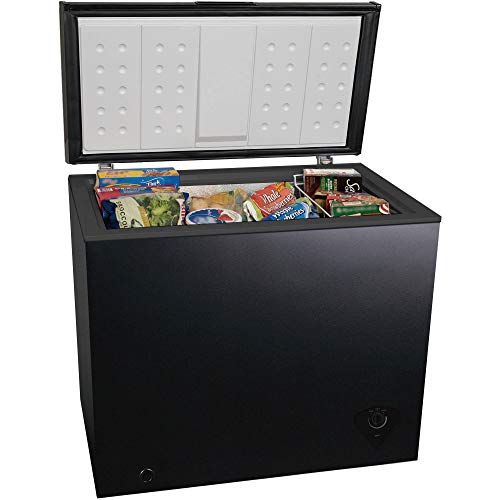
Arctic King 7 cu ft Chest Freezer
Our Score
7.4 / 10
hover for details
Performance
7.4
Reliability
7.1
Build Quality
7.1
Efficiency
7.6
Value
8.1
BrandArctic King
Freezer TypeChest Freezer
Capacity Cuft7 cu ft
Dimensions In33.5 x 21.7 x 32.1 in
Defrost TypeManual Defrost
Temperature Range F32 to 110 °F
Energy Star CertifiedYes
Annual Energy Use Kwh218 kWh/yr
Voltage V115 V
  • Balanced features, fair price
  • More freezer storage
  • Energy Star certified
  • Not cold enough
  • Manual defrost required

The Arctic King 7 cu ft Chest Freezer stands out in ENERGY STAR freezers thanks to its Energy Star certification and low annual use of 218 kWh/yr. For a chest style unit, that is a practical match for households that want a dedicated cold space without running up power use. It also keeps a wide temperature range of 32 to 110 F, so you can use it for storage needs beyond just deep freezing.

The main trade-off is performance under real freezer loads. Some buyers report it does not stay cold enough, and it uses manual defrost, which means more work when frost builds up. This makes it a better fit for light, organized freezer storage where you will monitor settings and are willing to defrost as needed.

→ Read full review

#2. Whynter 1.1 cu ft Upright Freezer

Whynter 1.1 cu ft Upright Freezer
Our Score
7.3 / 10
hover for details
Performance
7.3
Reliability
6.8
Build Quality
6.5
Efficiency
8
Value
8.4
BrandWhynter
Freezer TypeUpright Freezer
Capacity Cuft1.1 cu ft
Dimensions In19.5 x 17.7 x 18.5 in
Temperature Range F-11 to 10.4 °F
Energy Star CertifiedYes
Annual Energy Use Kwh251 kWh/yr
Voltage V115V
  • Low power draw, quiet cycling
  • Energy Star certified
  • Compact footprint
  • Occasional temp-control hiccups
  • Limited storage capacity
  • Mild misalignment, flimsy feel

This Whynter upright freezer stands out for Energy Star freezer shoppers who want low running costs without giving up normal upright convenience. It is Energy Star certified and rated at about 251 kWh per year, and it is reported to cycle quietly with low power draw. In daily use, that translates to a compact unit that should not add much heat to the room, while still keeping frozen food in the target range of -11 to 10.4 F.

The main trade-off is size and steadiness. With just 1.1 cu ft of space, it fits best for small households or backup storage, not bulk buys. Some buyers report occasional temperature-control hiccups and a mildly flimsy feel with mild misalignment. If you can live with the smaller capacity and watch the temp early on after power or door changes, it is a solid Energy Star option in this category.

→ Read full review

#3. BLACK+DECKER 14 cu ft Convertible Freezer Refrigerator

BLACK+DECKER 14 cu ft Convertible Freezer Refrigerator
Our Score
7.2 / 10
hover for details
Performance
7
Reliability
6.6
Build Quality
8
Efficiency
7.4
Value
7.8
BrandBLACK+DECKER
Freezer TypeConvertible Freezer
Capacity Cuft14 cu ft
Dimensions In68.1 x 27.9 x 28 in
Defrost TypeFrost Free
Energy Star CertifiedYes
Annual Energy Use Kwh270 kWh/yr
  • Energy Star certified
  • Low annual energy use
  • Frost-free convenience
  • Occasional temp-control hiccups
  • Conversion complexity
  • Repair difficulty concern

This BLACK+DECKER 14 cu ft convertible freezer stands out in the Energy Star freezer group for its energy-sipping design. It is ENERGY STAR certified and rates at about 270 kWh per year, which helps keep running costs steadier than many non-certified options. The frost-free setup also cuts down on the regular defrost hassle, so the unit stays ready for frequent use without much upkeep.

The main trade-off is temperature control consistency. Some owners report occasional hiccups, and the conversion between freezer and refrigerator modes can feel a bit involved. If you want a smaller, efficient frost-free unit and you are comfortable monitoring settings when switching modes, it can fit well. If you prefer a freezer that stays perfectly stable with zero fuss, you may want to compare against models with more consistent feedback.

→ Read full review

#4. Igloo 3.5 cu ft Chest Freezer

Igloo 3.5 cu ft Chest Freezer
Our Score
7.1 / 10
hover for details
Performance
7.6
Reliability
5.9
Build Quality
6.7
Efficiency
7.5
Value
8.3
BrandIgloo
Freezer TypeChest Freezer
Capacity Cuft3.5 cu ft
Dimensions In22.76 x 20.47 x 34.25 in
Temperature Range F-10 to 10 °F
Energy Star CertifiedYes
Annual Energy Use Kwh192 kWh/yr
Voltage V115V
  • Low annual energy use
  • Energy Star certified
  • Balanced features, fair price
  • Frequent breakdowns, early failures
  • Mild misalignment, flimsy feel

This Igloo 3.5 cu ft chest freezer stands out in an ENERGY STAR-focused search because it pairs certification with low annual use, at 192 kWh per year. In everyday terms, that means it is built for steady long-run cooling without feeling like it is constantly drawing power. The temperature range of -10 to 10 °F also makes it a practical option for storing frozen basics, plus longer-term items that you want to stay solid.

The trade-off is durability and feel. There are mentions of frequent breakdowns and early failures, along with mild misalignment and a somewhat flimsy impression. If you want an ENERGY STAR model mainly for short-term or lighter, careful use, this can fit. If you are prioritizing years of trouble-free ownership above all, you may want to compare reliability scores more closely with higher-ranked options.

→ Read full review

#5. Magic Chef 3 cu ft Upright Freezer

Magic Chef 3 cu ft Upright Freezer
Our Score
7.0 / 10
hover for details
Performance
7.2
Reliability
6.5
Build Quality
6.7
Efficiency
6.9
Value
8
BrandMagic Chef
Freezer TypeUpright Freezer
Capacity Cuft3 cu ft
Dimensions In20 x 17 x 24 in
Defrost TypeManual Defrost
Energy Star CertifiedYes
Annual Energy Use Kwh270 kWh/yr
Voltage V120V
  • Balanced features, fair price
  • Compact footprint
  • Energy Star certified
  • Occasional temp-control hiccups
  • Runs often, uses more power
  • Manual defrost required

This Magic Chef 3 cu ft upright freezer stands out in the Energy Star Freezers niche thanks to its ENERGY STAR certification and moderate 270 kWh/yr estimate. In everyday use, that matters for people who want a small upright option without pushing power use too high. Its compact footprint also makes it easier to fit in tighter spaces than larger chest models, while still keeping a true freezer cabinet setup.

The main trade-off is day-to-day temperature stability. Some buyers report occasional temp-control hiccups, and the unit can run often, which aligns with the slightly higher energy behavior noted in feedback. It also uses manual defrost, so you will need to plan on maintenance when frost builds up. This is a solid fit for households needing extra upright freezing space and who do not mind manual defrosting, but it may not be the best pick for anyone who wants near hands-off performance.

#6. Danby 3.5 cu ft Chest Freezer

Danby 3.5 cu ft Chest Freezer
Our Score
6.8 / 10
hover for details
Performance
6.3
Reliability
6.7
Build Quality
6.6
Efficiency
7.3
Value
8
BrandDanby
Freezer TypeChest Freezer
Capacity Cuft3.5 cu ft
Dimensions In20.28 x 20.67 x 23.82 in
Defrost TypeManual Defrost
Temperature Range F0 to 110 °F
Energy Star CertifiedYes
Annual Energy Use Kwh173 kWh/yr
  • Balanced features, fair price
  • Energy Star certified
  • Compact footprint
  • Not cold enough
  • Limited storage capacity
  • Manual defrost required

This Danby 3.5 cu ft chest freezer stands out in the Energy Star Freezers space because it is ENERGY STAR certified while keeping power use moderate at 173 kWh/yr. If you want a smaller chest style unit that fits a tight footprint, this model is a practical match, and its manual lid helps limit warm air leaks compared with many smaller compact freezers.

The trade-off is mainly performance and convenience. Some buyers report it does not stay cold enough, and the 3.5 cu ft capacity leaves limited room for bulk storage. It also needs manual defrost, so you will plan for occasional ice buildup and cleanup. Best for people who want an energy certified compact chest freezer and can manage manual defrosting, but not for those who need deep freezing for large quantities.

What to Look For

ENERGY STAR certification: Confirm the listing is labeled Yes for Energy Star certified. This is the fastest way to avoid paying higher electricity costs for a freezer that is only “energy efficient” in name.

Temperature control that stays even: Look for stable cold holding and even temperatures across the cabinet. In this sub-category, that means fewer hot spots where food softens and less risk of inconsistent freezing.

Recovery after door openings: Choose a model that quickly returns to set temperature after you load or check it. Frequent use exposes weak cooling systems fast, and poor recovery shows up as temperature swings.

Defrost type that matches your patience: Prefer Frost Free if you want less manual work and fewer big ice cycles. If it is Manual Defrost, plan on periodic cleaning so ice does not reduce cooling efficiency.

Annual energy use that fits your setup: Use the kWh/yr figure to compare running cost. In Energy Star freezers, lower annual energy use usually pairs with better insulation and efficient compressor cycling, which also helps keep the cabinet temperature more stable.

How We Picked

Products were identified through broad research across review sites and buyer forums, then filtered to only those that qualify as Energy Star freezers. We kept the focus on the freezer types buyers actually shop in this sub-category, including chest, upright, and convertible options.

Scoring used the same objective pillar framework as the main Freezers post, allowing direct comparison of products within this sub-category. Performance and reliability carried the most weight, then build quality, efficiency, and value, based on reported temperature behavior, recovery, ice issues, seal and compressor performance, and owner feedback tied to long-term ownership.

Frequently Asked Questions

What does ENERGY STAR certification mean for a freezer?

ENERGY STAR certified freezers use less electricity than standard models. This can lower your yearly energy cost. It also usually means good insulation and an efficient cooling system. You still need to set the right temperature and keep the door closed.

How should I set the temperature range for best freezing and energy use?

Start with the freezer set near its recommended cold range, then check results after 24 hours. If food stays soft, lower the setting slightly. If ice builds up too fast or the unit runs nonstop, raise the setting a bit. Keep a thermometer in the unit for accurate readings.

Do chest freezers or upright freezers usually save more energy?

Chest freezers often save more energy because their lids seal tightly and cold air stays inside longer. Upright freezers can be more convenient for organizing and access. If you open the door often, you may see a bigger energy difference either way. In general, better insulation and a stable temperature matter most.

When should I choose a different freezer type instead of an ENERGY STAR freezer?

Consider switching types if your main need is short-term access, not bulk storage. Upright models can be easier for grabbing items quickly. Chest models can be better for large amounts of food and less frequent door openings. If you need very small storage space, a compact freezer may fit better.

How do ENERGY STAR freezers compare to other freezers in annual energy use?

ENERGY STAR freezers usually have lower annual kWh use because of more efficient compressors and better insulation. Two freezers with similar size can still use different amounts of power. Your actual usage also depends on room temperature and how often you open the door. Choose a model with both certification and solid insulation.

See Also

Share:
On Key
You Might Also Like