




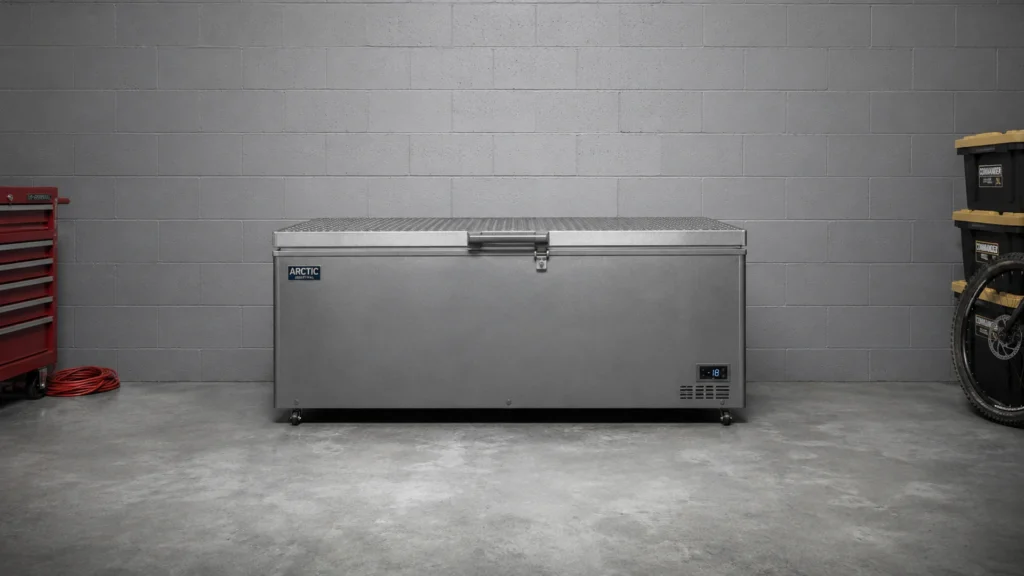
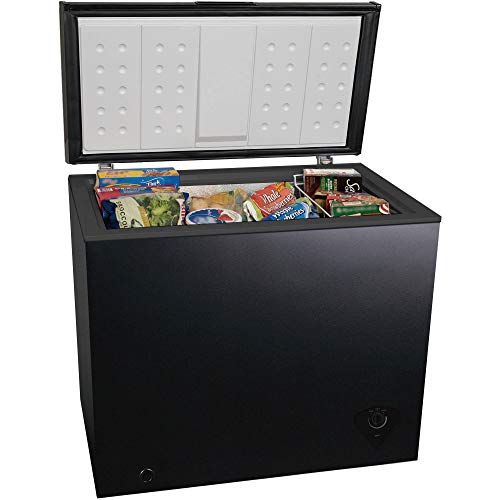
Chest freezers are the right choice when you want more frozen food space and you do not mind loading from the top lid. They keep cold well when the lid stays closed, which matters for bulk buys like meat, bread, and frozen meals. Buyers also care about temperature stability, since uneven cold can soften food or create frustrating frost patterns.
Picking one is harder than it looks because chest freezers trade convenience for storage. You must plan around the lid opening, the capacity shape, and how you organize baskets or the main bin. You also balance freeze speed and insulation against energy use. Some models run constantly to hold temperature, while others may save power but struggle to recover quickly after frequent lid openings.
For more guidance across every freezer type, use the full buying guide here: Looking for all types? See our Best Freezers.
Quick Overview
Our Top Picks
#1. Whynter 45 qt Portable Freezer

Specifications
| Brand | Whynter |
|---|---|
| Freezer Type | Chest Freezer |
| Capacity Cuft | 1.5 cu ft |
| Temperature Range F | -8 to 50 °F |
| Voltage V | 115V |
Pros
- Low-energy efficiency
- Accurate temperature control
- Fast Freeze assists pull-down
Cons
- Limited storage capacity
- Cooling interruption from impacts
- Potential electrical control failures
The Whynter 45 qt Portable Freezer stands out in the chest freezer category because it is designed for moving and setup flexibility, not just staying in one place. Its compact 1.5 cu ft size makes it easier to use in tight spaces like apartments, basements, or overflow needs during events. In day to day use, the freezer control stays steady, and the Fast Freeze assist helps pull food down to cold faster after loading.
The main trade-off is capacity. At 1.5 cu ft, it works best for smaller batches or short term storage, not for stocking a whole family. It can also be sensitive to impacts, since cooling can get interrupted if the unit takes a hit. For buyers who want dependable cold storage that is still portable, this is a solid match. For larger households or long term bulk freezing, the size limits will likely feel restrictive.
#2. Kismile 7 cu ft Chest Freezer

Specifications
| Brand | Kismile |
|---|---|
| Freezer Type | Chest Freezer |
| Capacity Cuft | 7 cu ft |
| Dimensions In | 22.04 x 32.20 x 33.66 in |
| Temperature Range F | 6.8 to -7.6 °F |
| Annual Energy Use Kwh | 241.8 kWh/yr |
Pros
- Balanced features, fair price
- More freezer storage
Cons
- Occasional temp-control hiccups
This 7 cu ft Kismile chest freezer stands out for sheer storage in the chest category, making it a practical choice when you need more room than many compact units. The temperature range is 6.8 to -7.6 F, and it is sized well for bulk buys, freezer meals, and seasonal items that you only use a few times a year. It is also built for the usual chest-freezer setup: cold air stays in the bin when the lid is closed, which helps keep your food firm when you load and unload regularly.
The main trade-off is occasional temp-control hiccups. In day-to-day use, that means you may want to monitor it a bit at first, especially after frequent lid openings or larger restocks. If you can tolerate that minor uncertainty and you prefer extra storage over the smoother temperature stability you might expect from higher-end models, this one fits the chest-freezer use case well.
#3. Arctic King 7 cu ft Chest Freezer

Specifications
| Brand | Arctic King |
|---|---|
| Freezer Type | Chest Freezer |
| Capacity Cuft | 7 cu ft |
| Dimensions In | 33.5 x 21.7 x 32.1 in |
| Defrost Type | Manual Defrost |
| Temperature Range F | 32 to 110 °F |
| Energy Star Certified | Yes |
| Annual Energy Use Kwh | 218 kWh/yr |
| Voltage V | 115 V |
Pros
- Balanced features, fair price
- More freezer storage
- Energy Star certified
Cons
- Not cold enough
- Manual defrost required
This 7 cu ft Arctic King chest freezer stands out in the chest-freezer category for its straightforward size and ENERGY STAR certification. It is a good fit for stockpiling frozen foods, extra meat, or backup storage, without taking up the footprint of a larger model. The manual temperature control covers a wide 32 to 110 F range, and its listed annual use is 218 kWh/yr, which helps keep day-to-day running more predictable than many older freezers.
The main trade-off is performance. Reports say it is not cold enough for some users, and because it uses manual defrost, you will need to plan for occasional thawing when frost builds up. This makes it best for shoppers who want basic, contained storage and are willing to handle maintenance, rather than for anyone who expects consistently freezer-like temps and low-fuss operation every day.
#4. Frigidaire 7 cu ft Chest Freezer

Specifications
| Brand | Frigidaire |
|---|---|
| Freezer Type | Chest Freezer |
| Capacity Cuft | 7 cu ft |
| Dimensions In | 35 x 22.8 x 38.6 in |
| Temperature Range F | -24 to 41 °F |
Pros
- More freezer storage
- Colder freezer temps
Cons
- Some temperature swings
- Runs often, uses more power
- Manual defrost upkeep
The Frigidaire 7 cu ft chest freezer stands out for simple, colder storage in a small footprint. Chest designs help trap cold air, so it is a good fit for bulk items like meat, frozen meals, or garden harvest. In use, it tends to keep freezer temps low, which is what you want when you are stocking deeper than a typical fridge freezer.
The main trade-off is how it manages temperature and ice. Some temperature swings are reported, and it can run often, which may mean higher power use. Plan on manual defrost upkeep too, since chest freezers without automatic defrost take some effort to keep frost from building up. This model fits best if you want extra freezer space and can handle occasional maintenance.
#5. Igloo 3.5 cu ft Chest Freezer

Specifications
| Brand | Igloo |
|---|---|
| Freezer Type | Chest Freezer |
| Capacity Cuft | 3.5 cu ft |
| Dimensions In | 22.76 x 20.47 x 34.25 in |
| Temperature Range F | -10 to 10 °F |
| Energy Star Certified | Yes |
| Annual Energy Use Kwh | 192 kWh/yr |
| Voltage V | 115V |
Pros
- Low annual energy use
- Energy Star certified
- Balanced features, fair price
Cons
- Frequent breakdowns, early failures
- Mild misalignment, flimsy feel
The Igloo 3.5 cu ft Chest Freezer stands out in the chest freezer category mainly for how steady it can be on daily use, paired with low power draw. It is ENERGY STAR certified and listed at about 192 kWh per year, which is a practical fit for people who want a small backup freezer without running up electricity bills. For a chest design, it also has the kind of compact footprint that can work in tight spaces where many full size chest units feel too big.
The main trade-off is that reliability is the weak spot for this model. Reviews point to frequent breakdowns and early failures, and the lid can feel a bit misaligned or flimsy. This makes it a better choice for careful buyers who can watch the unit closely at first and are comfortable troubleshooting, rather than a set and forget option for families who need dependable long term uptime.
#6. Midea 3.5 cu ft Chest Freezer

Specifications
| Brand | Midea |
|---|---|
| Freezer Type | Chest Freezer |
| Capacity Cuft | 3.5 cu ft |
| Dimensions In | 19.49 x 21.46 x 33.46 in |
| Temperature Range F | 0 to 110 °F |
| Annual Energy Use Kwh | 193 kWh/yr |
| Voltage V | 120V |
Pros
- Balanced features, fair price
- Low annual energy use
- Power outage protection
Cons
- Occasional temp-control hiccups
- Limited storage capacity
- Mild misalignment, flimsy feel
This Midea 3.5 cu ft chest freezer stands out for keeping running costs low while still doing the main job. It averages about 193 kWh per year, which is a strong number for a small chest unit. It also includes power outage protection, helpful if you store meat and bulk groceries that you do not want to risk.
The trade-off is size and consistency. At 3.5 cu ft, it fits best for smaller households or extra overflow storage. Some owners report occasional temperature-control hiccups, and the lid feel can be slightly flimsy with mild misalignment. If you want a compact chest freezer and can tolerate a little unevenness, this is a practical choice.
#7. TABU 12 cu ft Chest Freezer

Specifications
| Brand | TABU |
|---|---|
| Freezer Type | Chest Freezer |
| Capacity Cuft | 12 cu ft |
| Dimensions In | 22 x 32 x 34 in |
| Defrost Type | Manual Defrost |
| Temperature Range F | -7.6 to 6.8 °F |
Pros
- Low noise
Cons
- Occasional temp-control hiccups
- Manual defrost required
- Door-open energy loss
TABU 12 cu ft Chest Freezer stands out in the chest freezer category for its low noise. For buyers who want to keep a freezer in a garage, basement, or near living space, the quieter running makes day-to-day use easier. In a format where the lid stays shut most of the time, its temperature control can feel mostly stable, but some users report occasional hiccups that can soften food if the unit is not loaded and handled carefully.
The main trade-off is that it uses manual defrost. That means more work over time, especially if you open the lid often. It can also lose energy when the door stays open, so it is better for people who load in one trip and let it seal fully afterward. This is a decent pick for steady, bulk storage needs, as long as you are willing to manage frost manually and watch for temperature swings after frequent access.
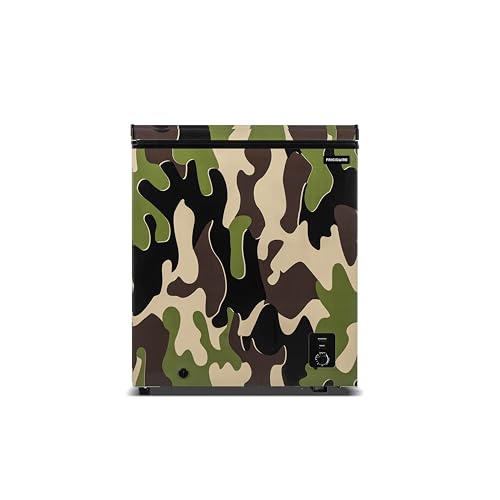
#8. Frigidaire CAMO 5 cu ft Chest Freezer

Specifications
| Brand | Frigidaire |
|---|---|
| Freezer Type | Chest Freezer |
| Capacity Cuft | 5 cu ft |
| Dimensions In | 27.3 x 21.8 x 32.3 in |
| Voltage V | 115V |
Pros
- Balanced features, fair price
Cons
- Some temperature swings
- Occasional temp-control hiccups
- Runs often, uses more power
The Frigidaire CAMO 5 cu ft chest freezer stands out as a straightforward compact option for people who want extra cold space without needing a full sized unit. In the chest-freezer world, the biggest win is the simple, strong cold storage you get from the chest layout, which helps when you are stocking bulk meat, freezing leftovers, or buying seasonal produce. It also feels solid for its size, and the lid closure helps keep the inside cold between uses.
That said, it is not the most even performer. Some temperature swings and occasional control hiccups can happen, and owners report that it runs often. If your priority is steady, low-power operation, you may want a more efficient model. This one fits best for smaller households or garages where you can monitor it and keep the lid closed most of the time.
#9. Danby 3.5 cu ft Chest Freezer

Specifications
| Brand | Danby |
|---|---|
| Freezer Type | Chest Freezer |
| Capacity Cuft | 3.5 cu ft |
| Dimensions In | 20.28 x 20.67 x 23.82 in |
| Defrost Type | Manual Defrost |
| Temperature Range F | 0 to 110 °F |
| Energy Star Certified | Yes |
| Annual Energy Use Kwh | 173 kWh/yr |
Pros
- Balanced features, fair price
- Energy Star certified
- Compact footprint
Cons
- Not cold enough
- Limited storage capacity
- Manual defrost required
The Danby 3.5 cu ft chest freezer stands out for being ENERGY STAR certified while staying compact enough for tight spaces. With 173 kWh/yr listed for annual use, it is a practical pick for small households that want chest-freezer cold storage without running up electricity. It also fits the typical chest-freezer advantage: you can pack items in flat and keep them steady for longer-term freezing.
The trade-off is performance consistency. Some buyers report it is not cold enough, and its manual defrost means you will need to plan for periodic thawing. Storage is also limited at 3.5 cu ft, so it makes the most sense for topping up a freezer run or storing fewer bulk items, not for replacing a larger family unit.
What to Look For
Cold stability and recovery: Choose a chest freezer that holds a steady temperature and bounces back fast after you open the lid. This reduces food softening and helps keep frost buildup from turning into a cooling problem over time.
Capacity that matches real storage: Look at the cu ft size, then think about how you will load it. If you plan to store thick trays or tall packages, prioritize overall dimensions and internal space that fits your items.
Defrost style you can live with: Manual defrost often means more work, but it can be predictable. If the model is labeled frost free, confirm it is truly meant for freezer use, then expect less maintenance than manual-only designs.
Energy use for long-term cost: Favor ENERGY STAR certified models and check annual kWh/yr when available. Lower energy use usually means better insulation and more efficient cooling cycles.
Build and lid fit: A good seal matters more on a chest freezer than on most upright designs. Inspect the lid alignment and gasket quality, and pick sturdier handles and hinges that close firmly without gaps.
How We Picked
Products were identified through broad research across review sites and buyer forums, then filtered to only those that qualify as Chest Freezers.
Scoring used the same objective pillar framework as the main Freezers post, allowing direct comparison of products within this sub-category.
Frequently Asked Questions
What capacity do I actually need in a chest freezer?
A smaller 3 to 5 cu ft chest freezer works for basics like meat and a few frozen meals. A 7 cu ft model is better for regular bulk shopping and more storage bins. For large families or frequent freezing, consider a bigger unit to avoid overcrowding and slow freezing.
How cold should a chest freezer get, and how can I check it?
Most chest freezers aim for deep freezing temperatures in the single digit below zero range in Fahrenheit. Use a simple freezer thermometer and place it near the middle of the basket area. If your temperature stays steady, your freezing quality and texture will usually hold up better.
Do chest freezers need manual defrosting, and how often?
Some models use manual defrost, which means you remove ice buildup yourself. If frost thickens, it can reduce cooling efficiency and take up usable space. Plan defrosting when frost becomes noticeable, typically a few times per year depending on humidity and how often you open the lid.
When should I choose an upright freezer instead of a chest freezer?
Choose an upright freezer if you want easier access with shelves and more organized storage. Choose a chest freezer if you want strong insulation and typically better value per cu ft. Chest models also help prevent temperature rise during outages because cold air stays pooled at the bottom.
How does a chest freezer compare to an upright freezer for everyday convenience?
A chest freezer stores horizontally, so items can get buried, and you may need to dig to find them. An upright freezer usually lets you grab items at eye level. If you label baskets and rotate stock, a chest freezer can feel almost as easy.


