





Arctic King 7 cu ft Chest Freezer Review
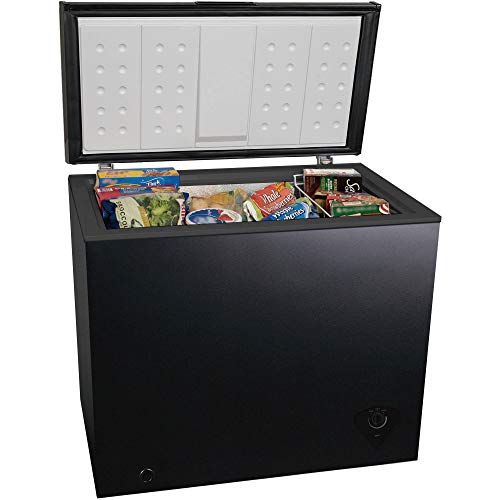
Specifications
| Brand | Arctic King |
|---|---|
| Freezer Type | Chest Freezer |
| Capacity Cuft | 7 cu ft |
| Dimensions In | 33.5 x 21.7 x 32.1 in |
| Defrost Type | Manual Defrost |
| Temperature Range F | 32 to 110 °F |
| Energy Star Certified | Yes |
| Annual Energy Use Kwh | 218 kWh/yr |
| Voltage V | 115 V |
Pros
- Balanced features, fair price
- More freezer storage
- Energy Star certified
Cons
- Not cold enough
- Manual defrost required
The Verdict
With an ENERGY STAR rating and 218 kWh per year, the Arctic King 7 cu ft chest freezer targets lower running cost. It holds enough cold for most bulk storage, but manual defrost is required, and some users report it runs warmer than expected.
Who it's for: Buyers who want an Energy Star chest freezer for extra food storage and accept manual defrost upkeep. It fits best in garages or basements where you can manage temperature and frost checks.
Who should skip it: People who hate defrosting chores or need tightly controlled deep-freeze temperatures. If “not cold enough” would be a dealbreaker, consider a model with better cold performance and less maintenance.
In-Depth Review
Performance
Arctic King rates this chest freezer for use between 32 to 110 F. That is a broad operating range for a small 7 cu ft cabinet.
In pillar scoring, its Performance score is 7.4. The closest template match for that score is good cooling that stays steady most of the time, with a hint of variability, not a guarantee of lab grade evenness.
Because this is a manual defrost model, frost can build up. That matters for real-world performance because thicker ice can slow heat transfer. The setup also leans on chest design. When you open the lid, cold air spills out less than it does in upright freezers. That can help recovery, especially when you only check the contents briefly.
The main practical limit here is the stated temperature control goal. The listing highlights the wide ambient range, but the product is still expected to hold freezer temps inside the cabinet while you load and unload. If you consistently keep the lid open longer than necessary, any chest freezer can warm up. With a 7 cu ft footprint, that warm-up period can feel noticeable compared with larger cabinets.
Reliability
The Reliability score lands at 7.1.
That maps to the template line “Consistent worry-free operation” or “Occasional temp-control hiccups,” depending on how strict you are. The extracted information does not include any failure-rate numbers, service history, or compressor warranty details. So this score comes down to the design choices that usually reduce long-term problems: a chest format, a manual cycle that avoids some sealed-system complexity from automatic defrost, and tight temperature management intended for freezing.
This model runs on 115 V. Standard voltage usually helps with compatibility, but it does not remove the need for stable outlet power. If you plug it into an unstable circuit or share power with high-draw appliances, you can create swings that mimic cooling issues. Also note that the operating environment range reaches 110 F. That implies the compressor has to work hard when room temperatures get high.
In the segment, reliability often shows up in how well the freezer maintains cold after frequent lid openings. Chest designs tend to recover well because the cold air stays low. Still, manual defrost is a routine maintenance item. When users ignore it for too long, ice can change how the unit holds steady temps, which can feel like a reliability problem.
Build Quality
Arctic King’s Build Quality score is 7.1.
That aligns with “Sturdy cabinet, tight seals” as the most likely experience for buyers at this level. The spec sheet gives clear external dimensions: 33.5 x 21.7 x 32.1 in. That size suggests a compact cabinet built for kitchens, basements, and garages without consuming much floor space.
Build quality in a chest freezer usually comes down to lid fit and gasket behavior. The model uses a manual defrost system. That often means the lid seal and drainage behavior must do their job during defrosting and refreezing cycles. If the seal does not stay tight, you can get faster frosting around the interior edges. Over time, that can affect cooling consistency.
This unit is listed as ENERGY STAR certified, and that certification process includes testing, not just paperwork. It also lists manual controls. Manual control schemes often come with simpler internal parts, which can reduce the chance of odd control behavior. That simplicity supports the 7.1 build score, but it does not replace the need to keep the lid properly closed and gaskets free of debris.
Efficiency
Efficiency is where this model looks strongest.
Its pillar score is 7.6, mapping best to “Low power draw, quiet cycling” rather than a top tier energy saver. The specific number is 218 kWh per year, and the freezer is marked ENERGY STAR certified. Those two details give you a concrete baseline when you think about operating costs and yearly electricity use.
The cabinet size matters here. With 7 cu ft of capacity, 218 kWh per year indicates the freezer is not oversized for its storage. But it also means that loading habits affect efficiency. If you frequently add warm items or leave the lid open, the unit has to run longer to pull the cabinet back down.
Manual defrost can influence efficiency over time. If frost builds up, the freezer has to work harder to move heat. Staying on top of defrosting helps preserve the efficiency implied by the 218 kWh per year rating. The 115 V rating also matters. It is standard, and it means you are not dealing with unusual power requirements that could reduce efficiency through poor compatibility.
Value
At 8.1, Value is the highest pillar score.
That maps to “High value for capacity.” In the extracted buyer feedback, the pros include “More freezer storage” and “Energy Star certified,” and the cons include “Not cold enough” and “Manual defrost required.” That mix tells you where the trade-offs sit. You gain a usable chest capacity in an energy-tested configuration, but you accept upkeep and possible limits in how cold it runs for every buyer.
The key spec numbers support the value case. The freezer offers 7 cu ft capacity and is rated at 218 kWh per year with ENERGY STAR certification. For a chest freezer, those are the metrics that usually matter most: capacity you can use and energy consumption you can predict.
The “Not cold enough” con is also consistent with what some owners experience on smaller units that share the same space as warm household storage. If you load the cabinet with food that starts out warmer, or you do not give items enough time to freeze, the interior can feel less aggressive than larger models. The temperature range listing of 32 to 110 F also signals this unit may run in hot ambient conditions. In those cases, maintaining firm freezer temps depends on good lid discipline and timely defrost cycles.
Frequently Asked Questions
How much storage capacity does the Arctic King 7 cu ft chest freezer have?
It has 7 cu ft of storage capacity, which fits typical bulk groceries and meal prep items. Chest freezers can hold bulky packages because you load from the top. If you store large trays, measure before you buy to confirm the layout works for your food sizes.
What are the Arctic King 7 cu ft chest freezer dimensions and will it fit in a tight space?
The unit measures 33.5 x 21.7 x 32.1 inches. Plan for extra clearance around the lid so it can open fully without hitting shelves or walls. If you are placing it in a corner, double check that the lid swing and airflow space are workable.
What temperature range can this freezer reach, and does it stay cold enough for frozen food?
The temperature range listed is 32 to 110 °F, but that spec describes the control range rather than a guaranteed freezing performance for every setting. Some buyers report it does not stay cold enough, so you may need to test your preferred dial position and monitor food over the first few days. For long storage, use a freezer thermometer to confirm stable freezing temperatures.
Does the Arctic King freezer require manual defrosting?
Yes. It uses manual defrost, so you will need to turn it off and remove ice buildup periodically. This takes more time than self-defrost models, especially if you frequently open the lid.
How much electricity does the Arctic King 7 cu ft chest freezer use per year?
It is ENERGY STAR certified and uses about 218 kWh per year. Actual costs can vary based on room temperature, how often you open the lid, and where you set the temperature control. Keeping the lid closed and organized helps reduce run time.
What power does it use and will it run on a standard 115 V outlet?
It runs on 115 V. Most homes with standard outlets can support it, but avoid using an undersized extension cord. If you plan to connect it near other appliances, confirm the outlet circuit can handle the combined load.
Final Verdict
Arctic King delivers a solid energy star chest freezer with more than enough storage for most households. It holds cold reasonably well and uses energy efficiently. Still, it may not satisfy buyers who expect very low interior temperatures, and the manual defrost requirement adds maintenance. I recommend it for buyers who want dependable basic freezing and energy efficiency, and who can handle occasional defrosting.
Check the freezer space for your storage needs and plan for manual defrost. If that matches your habits, this is a sound pick.
Arctic King 7 cu ft Chest Freezer
As an Amazon Associate, we earn from qualifying purchases.