




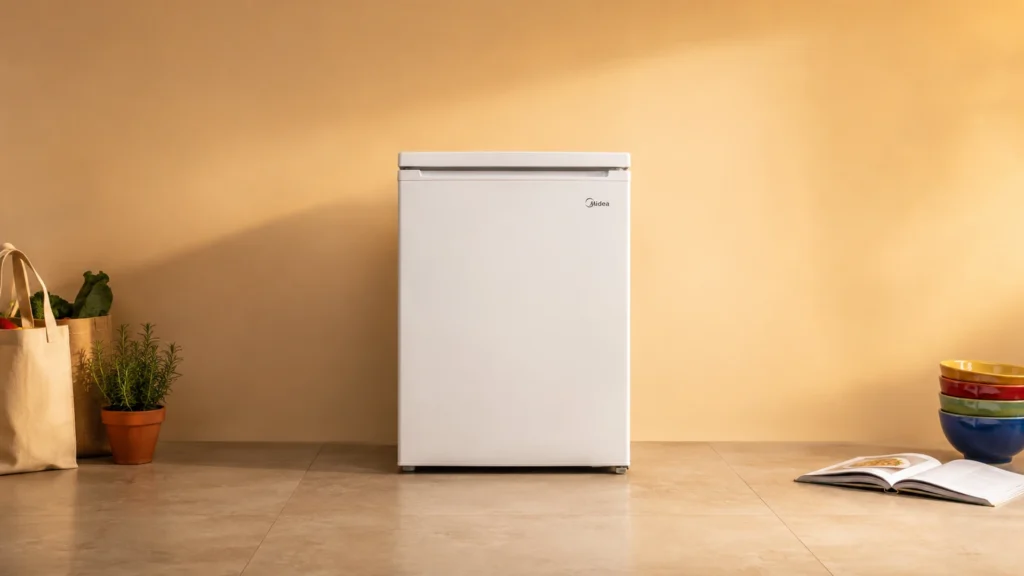
3 to 4 cu ft freezers are compact units meant for overflow frozen food, batch cooking, or a second place to store ice cream and frozen sides. In this size range, you need a layout you can live with and cooling that stays steady. Chest models usually give more usable space, while upright models make it easier to see and grab items.
Choosing is hard because capacity and convenience fight each other. Chest freezers often hold temperature well and take less power, but digging for smaller items is slow. Uprights are easier to organize, but they can have more temperature swings if the door stays open. You also have to decide on defrost style, since manual defrost means more upkeep and frost-free designs can cost more to run.
Looking for all types? See our Best Freezers.
Quick Overview
Our Top Picks
#1. Igloo 3.5 cu ft Chest Freezer

Specifications
| Brand | Igloo |
|---|---|
| Freezer Type | Chest Freezer |
| Capacity Cuft | 3.5 cu ft |
| Dimensions In | 22.76 x 20.47 x 34.25 in |
| Temperature Range F | -10 to 10 °F |
| Energy Star Certified | Yes |
| Annual Energy Use Kwh | 192 kWh/yr |
| Voltage V | 115V |
Pros
- Low annual energy use
- Energy Star certified
- Balanced features, fair price
Cons
- Frequent breakdowns, early failures
- Mild misalignment, flimsy feel
For a 3-4 cu ft chest freezer, the Igloo 3.5 cu ft stands out with strong day to day efficiency. It is Energy Star certified and uses about 192 kWh per year, which helps keep running costs down in small spaces like apartments, garages, and cabins. In this size range, that balance matters because these freezers cycle often to maintain a steady cold cabinet temperature, and insulation plus an efficient system can make the difference between occasional and frequent runtime.
The trade-off is reliability and feel. Some buyers report frequent breakdowns or early failures, and others mention mild misalignment and a slightly flimsy build. This model still makes sense for shoppers who want an energy efficient chest unit at about 3.5 cu ft, but it is not the safest pick if you want worry free long term ownership. If reliability is your top priority, you may want to compare sturdier options in the same capacity range.
#2. Midea 3.5 cu ft Chest Freezer

Specifications
| Brand | Midea |
|---|---|
| Freezer Type | Chest Freezer |
| Capacity Cuft | 3.5 cu ft |
| Dimensions In | 19.49 x 21.46 x 33.46 in |
| Temperature Range F | 0 to 110 °F |
| Annual Energy Use Kwh | 193 kWh/yr |
| Voltage V | 120V |
Pros
- Balanced features, fair price
- Low annual energy use
- Power outage protection
Cons
- Occasional temp-control hiccups
- Limited storage capacity
- Mild misalignment, flimsy feel
For smaller homes and tight spaces, the Midea 3.5 cu ft chest freezer stands out for steady everyday use at a compact size. Its chest design helps it hold cold well, and the unit includes power outage protection for peace of mind when the lights go out. It also posts low annual energy use at 193 kWh/yr, which matters for 3 to 4 cu ft freezers that often run on a regular schedule.
The main trade-off is room and control behavior. At 3.5 cu ft, storage stays tight, so it fits best for a few bulk items rather than a large freezer stash. Some buyers also report occasional temp control hiccups, and the build can feel a bit flimsy, with mild lid alignment issues. If you want an energy-conscious chest freezer that is easy to place and you do not need lots of capacity, this one fits well.
#3. Danby 3.2 cu ft Upright Freezer

Specifications
| Brand | Danby |
|---|---|
| Freezer Type | Upright Freezer |
| Capacity Cuft | 3.2 cu ft |
| Dimensions In | 20.69 x 22.5 x 32.69 in |
| Defrost Type | Manual Defrost |
| Temperature Range F | 0 to 110 °F |
| Annual Energy Use Kwh | 272 kWh/yr |
| Voltage V | 115V |
Pros
- Balanced features, fair price
- Compact footprint
Cons
- Occasional temp-control hiccups
- Manual defrost required
- Limited storage capacity
For shoppers looking at 3-4 cu ft freezers, this Danby 3.2 cu ft upright stands out for its compact footprint and simple layout. The small size fits better in tight kitchens, apartments, and garages than many larger models. Cooling is generally solid, and the freezer gives enough room for everyday stockpiling without taking over a room.
The main trade-off is maintenance and temperature smoothness. It uses manual defrost, so you will need to plan for occasional ice buildup. Some owners report occasional temp control hiccups, which matters if you load it heavily or open it often. Best for buyers who want upright storage and do not mind periodic defrosting, while still watching how full they keep it.
#4. Magic Chef 3 cu ft Upright Freezer

Specifications
| Brand | Magic Chef |
|---|---|
| Freezer Type | Upright Freezer |
| Capacity Cuft | 3 cu ft |
| Dimensions In | 20 x 17 x 24 in |
| Defrost Type | Manual Defrost |
| Energy Star Certified | Yes |
| Annual Energy Use Kwh | 270 kWh/yr |
| Voltage V | 120V |
Pros
- Balanced features, fair price
- Compact footprint
- Energy Star certified
Cons
- Occasional temp-control hiccups
- Runs often, uses more power
- Manual defrost required
This Magic Chef 3 cu ft upright freezer stands out in the 3 to 4 cu ft category because it is ENERGY STAR certified while still keeping a small, room-friendly footprint. At 270 kWh/yr, it is a practical choice for apartments, dorms, and tight kitchens where you need extra frozen storage without dedicating much space.
The main trade-off is temperature stability and upkeep. Some owners report occasional temperature-control hiccups, and the unit runs often, which can mean higher power use than you expect. It also requires manual defrost, so plan on occasional downtime to clear frost. If you want a compact upright model for steady everyday use, this fits best for buyers who can handle simple maintenance and do not need perfectly consistent cold every hour of the day.
#5. Danby 3.5 cu ft Chest Freezer

Specifications
| Brand | Danby |
|---|---|
| Freezer Type | Chest Freezer |
| Capacity Cuft | 3.5 cu ft |
| Dimensions In | 20.28 x 20.67 x 23.82 in |
| Defrost Type | Manual Defrost |
| Temperature Range F | 0 to 110 °F |
| Energy Star Certified | Yes |
| Annual Energy Use Kwh | 173 kWh/yr |
Pros
- Balanced features, fair price
- Energy Star certified
- Compact footprint
Cons
- Not cold enough
- Limited storage capacity
- Manual defrost required
For shoppers in the 3 to 4 cu ft chest freezer range, the Danby 3.5 cu ft model stands out mainly for being ENERGY STAR certified while still keeping a compact footprint. That balance matters when you want a small unit for an apartment, office, or backup storage without pushing up daily power use. Its manual lid and chest style also help it hold cold food well between openings, which is a common concern on smaller freezers.
The big trade-off is that it may not get as cold as you would like for all foods. Some buyers report it is not cold enough, and the storage space is tight at 3.5 cu ft, so packing room is limited. Plan on manual defrost too, since frost buildup can become part of ownership on this size and type.
What to Look For
Stable Temperature Control: You want a freezer that holds a steady set temperature, not one that repeatedly warms up. For 3 to 4 cu ft buyers, this matters most when you open the lid often or add warm food. Look for reviews that mention even cooling and quick recovery after door openings.
Freezing Speed and Recovery: Small freezers freeze less mass at a time, so recovery speed affects day-to-day use. Prioritize models that reach set temperature again without long delays, especially after loading or checking food.
Defrost System That Fits Your Schedule: Manual Defrost usually means less complexity but more hands-on work. Frost Free or Automatic Defrost reduces buildup effort, but can come with higher energy use or different airflow behavior. Pick based on how often you expect to open it and how quickly you are willing to clean.
Usable Storage Layout: In this compact range, baskets, shelves, and door clearance decide whether you can fit real meals. Chest models should have a workable lid height and internal organization. Upright models should have solid shelves that do not block airflow or waste space behind them.
Energy Use for Small Loads: A 3 to 4 cu ft freezer may run fewer hours per day, but it still should not cycle constantly. When you compare options, prefer units with Energy Star certification and lower annual kWh/yr, and also watch for feedback about excessive frost or poor insulation that drives higher power draw.
How We Picked
Products were identified through broad research across review sites and buyer forums, then filtered to only those that qualify as 3-4 cu ft Freezers. Each pick matches the compact size target so comparisons stay fair for small kitchens, garages, and second freezer needs.
Scoring used the same objective pillar framework as the main Freezers post, allowing direct comparison of products within this sub-category. Performance, reliability, build quality, efficiency, and value were weighted to reflect what most 3 to 4 cu ft buyers care about: steady cold, low hassle, dependable operation, and reasonable running costs for the price.
Frequently Asked Questions
Is a 3.5 cu ft chest freezer or an upright freezer better for meal prep?
A chest freezer often holds more per dollar and usually keeps colder with less temperature change. An upright freezer is easier to organize and reach, especially if you use it often. If you open it daily, upright can feel simpler. If you stock up and grab items less often, chest usually wins.
How many bags of frozen vegetables or meat can fit in a 3 to 4 cu ft freezer?
Most 3 to 4 cu ft units fit roughly 20 to 35 pounds, depending on bag size and how well the space is packed. Flat, compressed items fit better than bulky packages. If you plan to store tall cartons, an upright design usually works better. For mixed items, chest models can still do well with baskets or careful stacking.
Do I need to defrost a 3 to 4 cu ft freezer, and how often?
Many compact freezers use either manual defrost or a frost-free system. Manual defrost needs periodic thawing, often when ice builds up noticeably. Frost-free models can reduce ice buildup, but you still should wipe out spills and check door seals. Follow your model's care guide to avoid frost that makes cooling less efficient.
What is the best way to keep a small freezer working well?
Keep the freezer set to its coldest safe setting for freezing. Do not pack items too tightly against the vents, because airflow helps keep temperatures even. Let warm food cool before you load it, which reduces run time. Also, close the lid or door fully every time to prevent warm air leaks.
When should I choose a larger freezer instead of a 3 to 4 cu ft model?
Choose a larger unit if you buy in bulk or store multiple seasons of food. If you regularly run out of space or stack items in ways that block airflow, size is too small. You may also want bigger capacity if you plan to keep longer-term backups, like deep pantry stock. A larger freezer also reduces how often you need to open it.
How does a 3 to 4 cu ft freezer compare to a 5 to 7 cu ft model for space and cost?
A 5 to 7 cu ft freezer gives noticeably more room for bags, trays, and larger packages. The tradeoff is usually higher upfront cost and more electricity in some models. With a 3 to 4 cu ft freezer, you save money and fit it easier in tight spaces. But you may need more frequent grocery runs or better organization to avoid waste.


