




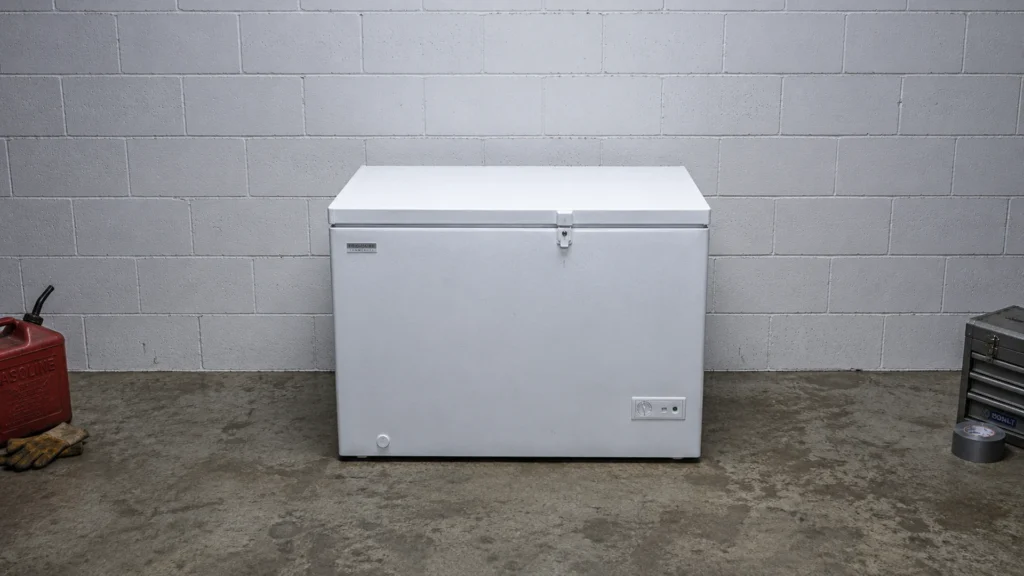
Manual defrost freezers use a simple cycle: ice builds up, then you shut off the unit and remove it. For buyers in this category, the real goal is dependable cold storage between defrost days. You also need a freezer that recovers quickly after loading it and that keeps temperatures even so food does not soften.
Picking one is hard because the trade-offs are direct. You will spend time defrosting. You must also watch for temperature swings during defrost intervals and after the door stays open too long. Some models build frost faster, which can cost you space and working efficiency.
For broader options across defrost types, see our Best Freezers.
Quick Overview
Our Top Picks
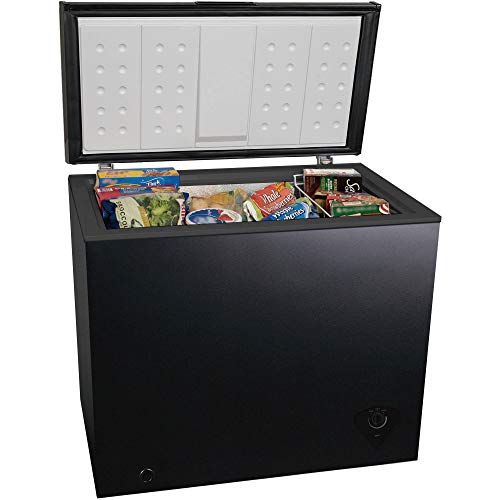
#1. Arctic King 7 cu ft Chest Freezer
Specifications
| Brand | Arctic King |
|---|---|
| Freezer Type | Chest Freezer |
| Capacity Cuft | 7 cu ft |
| Dimensions In | 33.5 x 21.7 x 32.1 in |
| Defrost Type | Manual Defrost |
| Temperature Range F | 32 to 110 °F |
| Energy Star Certified | Yes |
| Annual Energy Use Kwh | 218 kWh/yr |
| Voltage V | 115 V |
Pros
- Balanced features, fair price
- More freezer storage
- Energy Star certified
Cons
- Not cold enough
- Manual defrost required
The Arctic King 7 cu ft chest freezer stands out in manual defrost freezer shopping because it pairs that hands-on defrost style with ENERGY STAR efficiency. It is sized for extra food storage, and it uses 218 kWh/yr while staying on 115 V power. In day-to-day use, that means fewer performance surprises than some budget manual models, since the unit is built to run steadily rather than wasting cold.
The trade-off is the one thing manual defrost buyers must accept. You will need to plan for periodic defrosting, and some users report it does not always feel cold enough for their strict food-safety comfort. This model fits best if you store frozen items that tolerate occasional maintenance and you prefer an efficient chest layout over a fully automated frost-free system.
#2. Danby 3.2 cu ft Upright Freezer

Specifications
| Brand | Danby |
|---|---|
| Freezer Type | Upright Freezer |
| Capacity Cuft | 3.2 cu ft |
| Dimensions In | 20.69 x 22.5 x 32.69 in |
| Defrost Type | Manual Defrost |
| Temperature Range F | 0 to 110 °F |
| Annual Energy Use Kwh | 272 kWh/yr |
| Voltage V | 115V |
Pros
- Balanced features, fair price
- Compact footprint
Cons
- Occasional temp-control hiccups
- Manual defrost required
- Limited storage capacity
Danby 3.2 cu ft upright freezer stands out in the manual defrost category because it keeps things simple and compact without turning setup into a project. In day to day use, you get an upright layout for easier access than a chest style. Cooling can feel consistent, but some owners note occasional temperature control hiccups, so it is not the kind of unit to leave fully alone when you are loading a lot at once. It uses a manual defrost system, so expect some regular effort to deal with frost buildup.
This model works best for small spaces where you want stand-up storage and can commit to defrosting. The main trade-off is limited storage capacity at 3.2 cu ft, which can fill up quickly for bigger households. If you only need backup freezer space, and you do not mind stopping to defrost, it is a practical fit in the manual defrost lane.
#3. Magic Chef 3 cu ft Upright Freezer

Specifications
| Brand | Magic Chef |
|---|---|
| Freezer Type | Upright Freezer |
| Capacity Cuft | 3 cu ft |
| Dimensions In | 20 x 17 x 24 in |
| Defrost Type | Manual Defrost |
| Energy Star Certified | Yes |
| Annual Energy Use Kwh | 270 kWh/yr |
| Voltage V | 120V |
Pros
- Balanced features, fair price
- Compact footprint
- Energy Star certified
Cons
- Occasional temp-control hiccups
- Runs often, uses more power
- Manual defrost required
In a manual defrost upright freezer category where most people choose simplicity, the Magic Chef 3 cu ft model stands out for keeping things easy to live with day to day. It is ENERGY STAR certified and listed at 270 kWh/yr, which helps offset some of the routine work that comes with manual defrosting. The compact 20 x 17 x 24 in footprint also makes it a practical fit for tight spaces like apartments or laundry rooms.
The trade-off is that manual defrosting is still part of ownership, and some buyers report occasional temperature control hiccups. It also tends to run often, so expect higher power use than the label might suggest at all times. This is best for shoppers who can commit to defrost schedules and do not need a zero-maintenance, frost-free setup.
#4. TABU 12 cu ft Chest Freezer

Specifications
| Brand | TABU |
|---|---|
| Freezer Type | Chest Freezer |
| Capacity Cuft | 12 cu ft |
| Dimensions In | 22 x 32 x 34 in |
| Defrost Type | Manual Defrost |
| Temperature Range F | -7.6 to 6.8 °F |
Pros
- Low noise
Cons
- Occasional temp-control hiccups
- Manual defrost required
- Door-open energy loss
The TABU 12 cu ft chest freezer stands out in the manual defrost category because it keeps things simple. It runs with low noise, and its capacity is a practical fit for extra bulk storage like frozen meat, bread, and meal prep. In day to day use, it can also bounce back quickly after you open the lid, so food does not sit warm for long.
The main trade-off is that you must stay on top of manual defrost. Expect occasional temp control hiccups, and the lid being open longer than needed can mean extra energy loss. This is a good choice if you do not mind periodic defrosting and you want a quieter chest-style freezer, but it is less ideal if you want hands off temperature control.
#5. Danby 3.5 cu ft Chest Freezer

Specifications
| Brand | Danby |
|---|---|
| Freezer Type | Chest Freezer |
| Capacity Cuft | 3.5 cu ft |
| Dimensions In | 20.28 x 20.67 x 23.82 in |
| Defrost Type | Manual Defrost |
| Temperature Range F | 0 to 110 °F |
| Energy Star Certified | Yes |
| Annual Energy Use Kwh | 173 kWh/yr |
Pros
- Balanced features, fair price
- Energy Star certified
- Compact footprint
Cons
- Not cold enough
- Limited storage capacity
- Manual defrost required
This Danby 3.5 cu ft chest freezer stands out for manual defrost users who still want low energy use. It is Energy Star certified and uses about 173 kWh/yr. In a manual defrost model, that is a strong fit if you are comfortable wiping out melt water and handling frost buildup on your schedule. The compact 20.28 x 20.67 x 23.82 in footprint also makes it easier to find a spot for bulk items, even in tighter kitchens or basements.
The main trade-off is cold performance and usable space. Reviews cite that it can run warmer than expected, so food may soften sooner than you want if the lid stays open or the set point is not monitored closely. Storage is limited at 3.5 cu ft, which is better for short-term stock or a small family run, not for big freezer loads that need even, deep freezing across many items.
#6. Summit Appliance Accucold 22.25" Storage Freezer

Specifications
| Brand | Summit Appliance |
|---|---|
| Freezer Type | Compact Freezer |
| Capacity Cuft | 1.4 cu ft |
| Dimensions In | 18.5 x 23.25 x 22.25 in |
| Defrost Type | Manual Defrost |
| Annual Energy Use Kwh | 156.95 kWh/yr |
Pros
- Compact footprint
- Internal air circulation
Cons
- Occasional temp-control hiccups
- Runs often, uses more power
- Limited storage capacity
The Summit Appliance Accucold 22.25 is a compact manual defrost freezer, and that size matters in this category. At 1.4 cu ft, it fits where full-size upright or chest models do not. Inside, air circulation helps keep things evenly cold, so frozen items stay firm instead of warming up in pockets. That makes it a practical pick for small apartments, offices, or overflow storage where you still want solid freezing without frost-free maintenance.
The trade-off comes with manual defrost. The temperature control can have occasional hiccups, and reports suggest it runs often, which can raise energy use. Manual defrost also limits hands-off convenience, since ice build-up will require periodic cleaning. This freezer works best for buyers who want a small, simple storage unit and are willing to manage defrosting instead of choosing frost-free convenience.
What to Look For
Cold stability and even temperatures: Look for feedback that the freezer holds steady cold and does not create hot spots. Even temps matter most for meat and frozen meals, since soft spots often happen when the cooling system struggles or airflow is uneven.
Fast recovery after door openings: Manual defrost units still need to bounce back quickly. If reviews mention long “settling” times after loading or during frequent door use, choose a model with better control behavior.
Defrost effort that you can actually keep up with: Since you will remove frost yourself, check how easy it is to access melt water and clear ice. A freezer that makes cleaning awkward can turn routine maintenance into a problem.
Seal quality and temperature leak resistance: Strong door seals reduce frost buildup and limit temperature loss. Look for comments about consistent gasket fit and closures that latch without extra force.
Energy use and insulation suited to manual defrost: Manual defrost can be cheaper to buy, but insulation still drives cost and performance. Check for low annual energy use and signs of efficient compressor cycling, especially if you plan frequent access.
How We Picked
Products were identified through broad research across review sites and buyer forums, then filtered to only those that qualify as Manual Defrost Freezers.
Scoring used the same objective pillar framework as the main Freezers post, allowing direct comparison of products within this sub-category.
Frequently Asked Questions
How often do I need to defrost a manual defrost freezer?
You should defrost when frost builds up to about a quarter inch. Many people end up doing it every few months. If you open the lid often, it may need more frequent defrosting. Faster cooling and better efficiency usually follow a full defrost.
What is the best way to defrost without making a mess?
Unplug the freezer and move food to a cooler with ice packs. Put towels around the drain area if your model has one. Let frost melt fully, then wipe the interior dry. Plug it back in after the inside is completely dry.
Do manual defrost freezers keep food frozen longer during power outages?
They often hold cold longer because they rely on insulation, not constant airflow. The time depends on how well the lid seals and how thick the insulation is. Keep the lid closed during the outage to reduce cold loss. For safety, do not refreeze food that has thawed and warmed too much.
When should I choose a chest freezer instead of an upright manual defrost freezer?
Choose a chest freezer if you store a lot of bulk items. It also usually gives you better cold storage per dollar. Choose an upright if you want easier access to smaller items and quicker item browsing. Uprights can make it easier to organize, but chests often seal better.
Are manual defrost freezers more efficient than frost free models?
They can be more efficient in some cases because they do not run defrost heaters. You control the defrost timing, so the freezer does not waste energy during automatic cycles. That said, efficiency drops if heavy frost builds up. Plan defrosting and you will usually get better real-world performance.


