




Skip to content

The 9 Best Water Filtration Systems in 2026

August 20, 2026-By The Top Zone

Transparency Note: This post contains affiliate links. As an Amazon Associate, we earn from qualifying purchases at no extra cost to you.

Water filtration systems remove common contaminants from tap water using different methods, including activated carbon, reverse osmosis, UV, and ceramic filtration. In a home, these systems typically target drinking water at the point of use, like under-sink or countertop setups, or they serve whole-home needs with higher flow.

Buying one is hard because the specs can hide the trade-offs. Flow rate and filter capacity often matter more than marketing claims. Some systems sound efficient but deliver slow output for daily use. Others target taste and odor but do not meaningfully reduce health-related contaminants. Even certification language can get blurry when a listing does not state the standard or the exact test target.

This guide helps you compare systems the way you will actually use them. You will learn what performance to expect, which certifications to verify, how to judge flow and capacity, and how easy it is to install and maintain. You will also see what each system type is best suited for, so you can choose with fewer surprises.

Quick Overview

Top Picks

Best Overall

Weddell Duo Shower Head Filter
Our Score 8.3 / 10 Score details
Performance8.3
Build Quality8.1
Ease of Use8.5
Value8.4
How we research & score
BrandWEDDELL
System TypeShower
Contaminants RemovedChlorine;PFAS;Micro-plastics;Sediment;Lead;Particulates
CertificationsNSF/ANSI 42
Filter Capacity8000 gallons
Flow Rate2.8 gpm
Dimensions3.8 x 8.5 x 2.5 in
  • Strong contaminant reduction
  • Reliable seals and fittings
  • Worth the price, efficient filters
  • Pressure-dependent performance
  • Fit-sensitive installation
  • Varied under water hardness

This shower filter earns the Best Overall spot because it delivers strong whole-shower water improvement in a simple, everyday form. Its standout trait is dependable contaminant reduction, including chlorine, PFAS, micro-plastics, sediment, lead, and particulates, backed by NSF/ANSI 42.

In daily use, it tends to feel steady rather than touchy. The build is also reassuring, with reliable seals and fittings that help prevent bypass and leakage. Setup is straightforward, and filter changes are manageable, which makes it easier to keep the system working as intended. The filter capacity of 8000 gallons and a 2.8 gpm flow rate help maintain a normal shower experience through regular use.

The main downside is pressure-dependent performance, and installation can be a bit fit-sensitive, especially if your shower head threads or spacing do not match well. Also, results can vary under different water hardness levels. If you want strong, well-rounded shower filtration with low hassle, this is a solid pick. If you have low water pressure or a finicky shower connection, you may want to look for a more forgiving option.

Also ranked #1 in: PFAS Reduction Water Filtration Systems

→ Read full review

Best Reverse Osmosis Under-Sink

Home Master Artesian Full Contact Reverse Osmosis System
Our Score 8.3 / 10 Score details
Performance8.5
Build Quality8.1
Ease of Use8.3
Value7.8
How we research & score
BrandHome Master
System TypeUnder-Sink
Filtration TechnologyReverse Osmosis
Number Of Stages7
Contaminants RemovedChloramines;Chlorine;Sediment;Calcium;Magnesium
CertificationsNSF Certified
Filter Capacity2000
  • Strong contaminant reduction
  • Whole-home capability
  • Reliable seals and fittings
  • Pressure-dependent performance
  • Faucet hole requirement
  • Filter cost friction

This Home Master Artesian Full Contact RO system fits the Best Reverse Osmosis Under-Sink role because it uses a true reverse osmosis design in a standard under-sink footprint, with a 7-stage setup for cleaner drinking water at the tap. If you want noticeable taste and odor improvement plus strong contaminant reduction without adding a countertop unit, this is a practical match.

In day-to-day use, its performance stands out for its whole-home style contaminant reduction and consistent results tied to a multi-stage process. The system also scores well for build quality, with reliable seals and fittings that help prevent bypass leaks. Maintenance is fairly straightforward, and filter changes are not overly complex, which matters when you rely on the system every day.

The main trade-off is that performance can be pressure-dependent, so your water pressure needs to be adequate. It also needs a dedicated faucet hole, and replacement filter costs can add up over time. If you have the space for an under-sink RO setup and want strong contaminant reduction for drinking water, this is a solid choice, as long as you can handle the faucet install and pressure requirements.

→ See full ranking

→ Read full review

Best Value

Sawyer Squeeze Portable Water Filter
Our Score 8.2 / 10 Score details
Performance8.1
Build Quality7.9
Ease of Use8.6
Value8.8
How we research & score
BrandSawyer
System TypeInline
Contaminants RemovedBacteria;Protozoa;Cysts;Sediment;Micro-plastics
  • Strong contaminant reduction
  • Simple maintenance, clear setup
  • Worth the price, efficient filters
  • pouch burst risk
  • Freezing sensitivity
  • syringe lifespan worry

This portable inline filter fits the Best Value slot because it delivers strong everyday water improvement without a complicated setup. The simple, grab-and-go design makes it easy to use beyond home, like travel and camping, while still reducing key contaminants.

In real-world use, it stands out for strong contaminant reduction, including bacteria, protozoa, cysts, and sediment. It also tends to keep things simple to maintain, with clear setup steps and an easy filter-change routine. Build quality feels solid for a squeeze-style system, and the overall ease of use is high, which matters when you are using it often.

The main trade-off is pouch burst risk, so you have to use care during operation and storage. It can also be sensitive to freezing conditions, and some users worry about syringe lifespan over time. If you want reliable on-the-go filtration with straightforward maintenance and strong contaminant reduction, this is a strong pick for travelers, campers, and anyone building a simple backup water plan.

→ Read full review

Best Ceramic Media

British Berkefeld Super Sterasyl Ceramic Gravity Water Filtration System
Our Score 8.1 / 10 Score details
Performance8.1
Build Quality8.3
Ease of Use8.1
Value7.8
How we research & score
BrandBritish Berkefeld
System TypeWhole-House
Filtration TechnologyCeramic
Number Of Stages4
Contaminants RemovedChlorine;Cysts;Bacteria;Particulate Matter
CertificationsNSF/ANSI 401
Flow Rate30 gpm
Dimensions19.2 x 8.5 x 8.5 in
  • Strong contaminant reduction
  • Reliable seals and fittings
  • Simple maintenance, clear setup
  • Minimal treatment stages
  • Bulky footprint
  • Source-water dependent

This British Berkefeld gravity system fits the Best Ceramic Media role because it uses ceramic filtration as its core step. With NSF/ANSI 401 certification, it targets microbes and particulates in a straightforward, filter-and-flow setup. If you want a gravity-fed option that focuses on ceramic media, this is a solid match.

In daily use, it is built around dependable sealing and well-made fittings, which helps prevent bypass or leaks. Filtration performance lands high, with strong reduction of chlorine, cysts, bacteria, and particulate matter. Maintenance is also simple, with clear setup and easy filter changes, so you are not constantly tinkering with the unit.

The main trade-off is that it has minimal treatment stages for a whole-house system. It also depends on your source water, so results can vary if your incoming supply is very different from typical expectations. Choose this for households that want ceramic-media water improvement and easy upkeep, and can handle a bulky footprint and source-water variability.

→ Read full review

Best Glass Carafe

AquaTru Glass Carafe Countertop Reverse Osmosis System
Our Score 8.0 / 10 Score details
Performance8.1
Build Quality8
Ease of Use8.1
Value7.8
How we research & score
BrandAQUA TRU
System TypeCountertop
Filtration TechnologyReverse Osmosis
Number Of Stages4
Contaminants RemovedMicroplastics;Fluoride;Chromium-6;Arsenic;PFAS;Lead;PFOA;PFOS;VOCs
CertificationsNSF/ANSI 58
Dimensions13.5 x 5.2 x 1.5 in
  • Strong contaminant reduction
  • Reliable seals and fittings
  • Simple maintenance, clear setup
  • Premature membrane clogging
  • Limited point-of-use
  • Outlet dependency

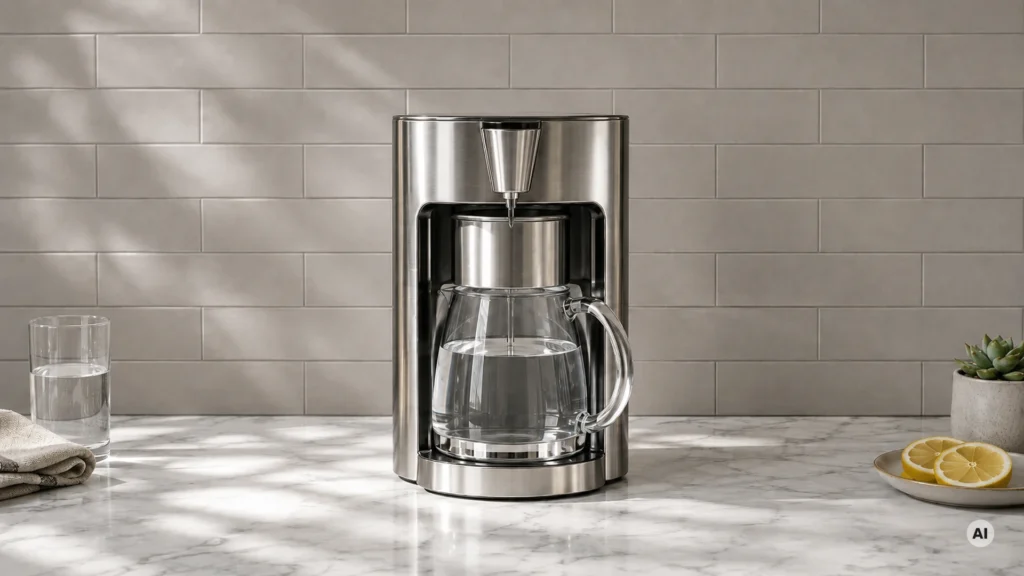
This countertop reverse osmosis system fits the Best Glass Carafe spot because it pairs RO filtration with a glass carafe design for everyday drinking. It is designed to deliver cleaner water straight to the carafe, so you can see what you are pouring and keep taste-focused routines simple.

Filtration performance is a standout, with strong reductions for targets like fluoride, lead, chromium-6, PFAS, and VOCs. The build also feels dependable, with reliable seals and well-made fittings that help prevent slow leaks during use. Maintenance stays manageable too, with simple setup and straightforward filter changes, which matters for a multi-stage unit.

The main downside is that the membrane can clog early, which may cut the effective lifespan and require earlier troubleshooting or replacement. Also, results depend on the outlet and setup around where you place it. If you want glass-carafe convenience plus broad contaminant reduction for daily use, and you can handle RO maintenance, this is a strong fit.

→ Read full review

Best UV Treatment

iSpring RCC7AK-UVBN Under-Sink Reverse Osmosis System
Our Score 7.9 / 10 Score details
Performance8
Build Quality7.8
Ease of Use8.1
Value7.8
How we research & score
BrandiSpring
System TypeUnder-Sink
Filtration TechnologyReverse Osmosis;UV
Number Of Stages7
Contaminants RemovedAsbestos;Barium;Cadmium;Chromium;Copper;Fluoride;Lead;Selenium;TDS
CertificationsNSF/ANSI 58
Filter Capacity75
  • Strong contaminant reduction
  • High-removal technology
  • More treatment stages
  • Low capacity
  • Faucet drilling required
  • Slow startup performance

This under-sink reverse osmosis system earns a spot in the Best UV Treatment role thanks to its UV step for extra disinfection. The 7-stage design goes beyond basic taste and odor cleaning, aiming to reduce a wide range of contaminants while UV adds another layer of safety.

You get strong contaminant reduction, with target removals that include lead, fluoride, arsenic, copper, cadmium, chromium, and barium, plus TDS. It also uses NSF/ANSI 58 certification, which helps match real-world expectations for performance. With a focused UV component and multiple treatment stages, the water quality change is usually noticeable in both taste and odor.

The trade-off is practical. Capacity is listed at 75 gallons, and setup can be more involved because faucet drilling is required. Slow startup performance is another minor inconvenience during the first minutes after turning it on. If you want the added UV disinfection step and can handle a dedicated install, this system is a good fit for households prioritizing thorough treatment.

→ Read full review

Best High Flow

Aqua-Pure AP900 Series Whole House Water Filtration System
Our Score 7.9 / 10 Score details
Performance7.7
Build Quality8.2
Ease of Use8.1
Value7.7
How we research & score
BrandAqua-Pure
System TypeWhole-House
Filtration TechnologyActivated Carbon
Number Of Stages3
Contaminants RemovedSediment;Chlorine;Scale;Taste and Odor
CertificationsNSF/ANSI 42;NSF/ANSI 372
Filter Capacity100000 gallons
Flow Rate20 gpm
Dimensions4.5 x 25.2 x 4.5 in
  • Whole-home capability
  • Long filter life
  • High flow rate
  • Minimal treatment stages
  • Pre-filter dependency
  • Scale-fit uncertainty

This whole-house filter fits the Best High Flow slot because it can move water fast, rated up to 20 gpm. That matters for homes where multiple fixtures run at once, or where high demand can make slower systems feel limiting. It uses a 3-stage activated carbon setup to target common taste and odor issues across the entire house.

In day-to-day use, you should notice cleaner-tasting water, plus help with chlorine-related taste and smell. The build feels dependable, and the unit is designed for real plumbing setups, not awkward countertop use. Maintenance also looks manageable thanks to a long 100,000-gallon filter capacity, which helps reduce how often you think about cartridge changes.

The main trade-off is that treatment stays fairly simple, with minimal stages beyond activated carbon. It also leans on a pre-filter, so uncertain pipe scale and sediment control could affect how well it performs over time. If you want whole-home chlorine and taste-and-odor improvement with strong flow, and you already have solid pre-filtration in place, this is the one to get.

→ Read full review

Best for Refrigerator Fit

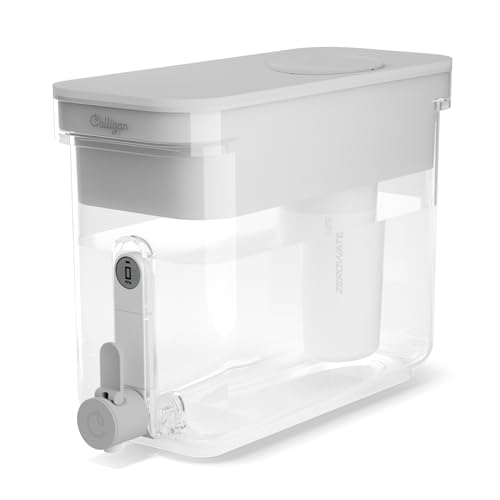
Culligan ZeroWater Water Filter Dispenser
Our Score 7.9 / 10 Score details
Performance7.8
Build Quality7.4
Ease of Use8.1
Value8.8
How we research & score
BrandCulligan
System TypeRefrigerator
Filtration TechnologyReverse Osmosis
Number Of Stages5
Contaminants RemovedPFAS;Lead;Chlorine;Mercury
CertificationsIAPMO
Dimensions10.5 x 6 x 14.8 in
  • High-removal technology
  • Reduces high-risk contaminants
  • Simple maintenance, clear setup
  • No NSF certification
  • Abrupt filter failure
  • Potential end-of-life leaking

This refrigerator-ready dispenser is a strong match for the Best for Refrigerator Fit category thanks to its reverse-osmosis design aimed at clean drinking water right where you need it. Its 5-stage system targets common contaminants like PFAS, lead, chlorine, and mercury, so water coming from the unit feels more consistent with what you expect from a deeper purification setup.

In daily use, the standout strength is the high-removal approach. The process includes multiple stages, which helps improve taste and odor while reducing high-risk contaminants. It also scores well on ease of use, with simple maintenance and straightforward filter changes, so the routine stays manageable.

The main downside is that it does not list NSF certification, and some users report abrupt filter failure or potential leaking near end of life. If you want refrigerator fit plus strong contaminant reduction and you are ready to watch the filter status closely, this is the one to consider.

→ Read full review

Best PFAS Reduction

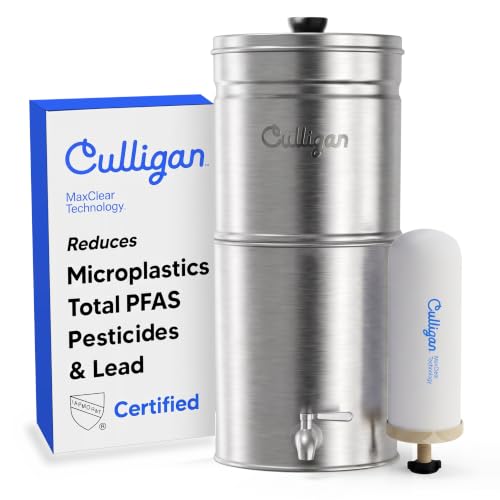
Culligan MaxClear Countertop Gravity Water Filtration System
Our Score 7.8 / 10 Score details
Performance7.4
Build Quality8
Ease of Use8.1
Value8
How we research & score
BrandCulligan
System TypeCountertop
Filtration TechnologyCeramic + Activated Carbon
Contaminants RemovedMicroplastics;Lead;PFAS
CertificationsNSF/ANSI 42
Dimensions26 x 8.6 x 8.6 in
  • Reduces high-risk contaminants
  • Reliable seals and fittings
  • Simple maintenance, clear setup
  • No NSF certification
  • Bulky footprint
  • Slow gravity fill

This countertop gravity system earns a spot in Best PFAS Reduction because it combines Ceramic + Activated Carbon media for high-risk contaminant targets like PFAS and lead. It is designed for clean drinking water right at the counter, using gravity rather than plumbing changes.

In real use, it should make water taste and smell better, while also aiming at tougher contaminants. Strong seals and reliable fittings help prevent leaks during daily fill and pour. Maintenance stays simple, with a clear setup and straightforward filter swaps that do not require special tools.

One drawback is that it lacks NSF certification beyond NSF/ANSI 42. It also fills slowly since it relies on gravity. If you want a countertop PFAS-focused option with simple maintenance and solid build quality, this is a strong fit for households that can wait for a slower fill rate.

→ Read full review

What to Look For

System Type: Match the setup to your plumbing and your goal. Under-sink units work well for drinking water at a dedicated faucet. Countertop and gravity systems need no plumbing. Whole-house systems require more capacity and usually cost more, but they cover every tap.

Filtration Technology: Pick the method that aligns with the contaminants you care about. Activated carbon helps with chlorine, taste, and odor. Reverse osmosis targets a broader range of dissolved contaminants. UV helps with microbes when paired with pre-filtration. Ceramic gravity systems rely on media performance and slower flow.

Number of Stages: Use stages as a rough quality signal, not a guarantee. More stages can mean better pre-treatment and post-treatment, which supports flow and long-term performance. Still, confirm what each stage does and what targets are claimed.

Contaminants Removed: Look for a clear list of targets, then check that it includes the issues you have. Use the exact contaminant names in the listing, such as Lead; Chlorine; Sediment; VOCs; PFAS. If the system only says it improves taste, it may not address your main concern.

Certifications: Prefer explicit NSF/ANSI standards listed on the product. Examples include NSF/ANSI 42 for taste and odor and NSF/ANSI 53 for health-related contaminants. If the listing has no standard, treat claims as unverified.

Filter Capacity: Capacity is the usable life before replacement, usually measured in gallons. Higher capacity can lower your long-term cost, but only if the system maintains flow. If the capacity is low, plan for more frequent filter swaps and check whether that affects pressure.

Flow Rate and Dimensions: Confirm flow rate in gpm for day-to-day use. Slow output can make refilling a cup or filling a kettle annoying. Also check dimensions to ensure the unit fits under your cabinet, on your counter, or in the space you plan to use.

How We Selected These Products

Products were discovered through broad web searches across review sites, buyer forums, and best-of lists, covering multiple filtration types and price points. This kept the shortlist from being driven by a single publication or a single test method.

A large volume of real customer reviews was read to understand recurring issues. I focused on practical complaints like slow flow, leaks, awkward cartridge access, clogged performance over time, and confusion about what contaminants each system actually targets.

Availability and technical specs were then verified against Amazon listings, including the stated system type, filtration technology, stages, claimed contaminants, certifications, filter capacity, flow rate, and listed dimensions. Each product was scored across Performance, Build Quality, Ease of Use, and Value, then curated to cover distinct real-world roles instead of just ranking every model by a single overall score.

Frequently Asked Questions

Which water filtration system should I choose for shower water?

If you want better skin and hair feel, choose a shower head filter. Look for chlorine reduction and multi-contaminant claims when available. Weddell Duo Shower Head Filter stands out in this set for shower-specific performance and strong support from certification.

What is the main difference between reverse osmosis and gravity filters?

Reverse osmosis uses a membrane to remove dissolved contaminants, so it usually lowers TDS the most. Gravity filters mainly help with taste, odor, and some cyst or sediment reduction using ceramic or carbon media. If you want the biggest drop in total dissolved solids, RO is often the better choice.

Do whole-house systems really maintain high flow for daily use?

They can, but only if they match your water demand and plumbing setup. Many whole-house units list high flow capacity, which helps reduce pressure drop. Aqua-Pure AP900 Series Whole House Water Filtration System is rated for up to 20 gpm in this set, so it is built for high household usage.

Is a higher price always better for water filtration systems?

Not always. Some mid-priced options deliver strong results because of certification and proven filter design. Value can come from good contaminant targets and reasonable filter life, not just a higher sticker price.

Why do some systems score lower on ease of use?

Most complaints focus on installation steps, refill habits, or filter change friction. RO systems often need more setup, like under-sink plumbing work or a nearby outlet for powered models. Countertop and gravity systems feel easier, but they can require waiting for slower fills.

What usually drives the performance scores in this category?

Performance tends to track certifications and real-world contaminant reduction claims. Systems that show strong chlorine, lead, PFAS, or bacteria reduction usually rate higher. Units with uncertain flow over time or unclear end-of-life behavior often lose points, even if they start strong.