




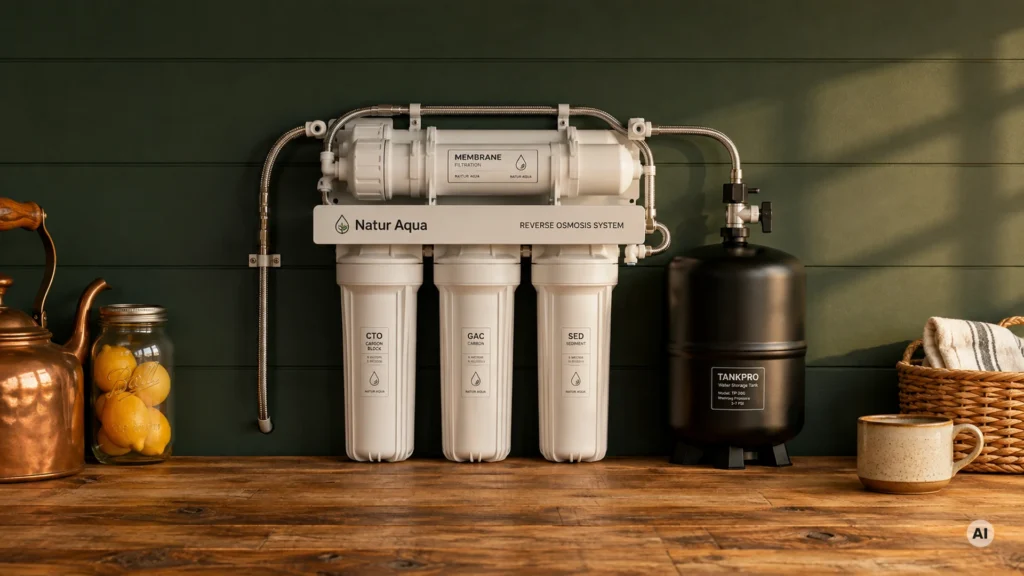
Reverse osmosis under-sink water filtration systems use a membrane to cut dissolved contaminants and deliver cleaner drinking water straight from your kitchen tap. Buyers in this sub-category usually want better taste and odor, less worry about common tap-water contaminants, and a setup that stays out of sight under the sink.
The hard part is trade-offs. RO systems nearly always add a storage tank, waste water, and regular filter changes. Faster flow can mean more plumbing complexity, while deeper contaminant targets can require more stages or stricter maintenance to keep performance steady.
When you compare systems, you should judge them by how well they hold up in daily use, not just by the headline claims. Use this guide to narrow your choices, then move through the same checks as our main recommendations in Best Water Filtration Systems.
Quick Overview
Our Top Picks
#1. Home Master Artesian Full Contact Reverse Osmosis System

Specifications
| Brand | Home Master |
|---|---|
| System Type | Under-Sink |
| Filtration Technology | Reverse Osmosis |
| Number Of Stages | 7 |
| Contaminants Removed | Chloramines;Chlorine;Sediment;Calcium;Magnesium |
| Certifications | NSF Certified |
| Filter Capacity | 2000 |
Pros
- Strong contaminant reduction
- Whole-home capability
- Reliable seals and fittings
Cons
- Pressure-dependent performance
- Faucet hole requirement
- Filter cost friction
If you want an under-sink reverse osmosis system that meaningfully improves everyday drinking water, the Home Master Artesian is a standout. It uses a 7-stage setup and targets common problems like chlorine and chloramines, plus sediment and hardness minerals. In use, that typically means cleaner taste and odor, with less scale-forming calcium and magnesium. It is also built around reliable seals and well-made fittings, which matters for RO systems that run continuously under the sink.
The main trade-off is that performance depends on home water pressure, so it may not feel as smooth in low-pressure setups. Installation also requires an available faucet hole for the dedicated RO spout, and you will want to plan for ongoing filter changes, which can add friction versus simpler under-sink filtration. This is best for households that want strong contaminant reduction from an RO unit and are willing to handle the space and maintenance that come with it.
#2. APEC RO-90 Under-Sink Reverse Osmosis System

Specifications
| Brand | APEC WATER |
|---|---|
| System Type | Under-Sink |
| Filtration Technology | Reverse Osmosis |
| Number Of Stages | 5 |
| Contaminants Removed | Arsenic;Chlorine;Lead;Fluoride;Heavy Metals |
| Certifications | NSF/ANSI 58;NSF/ANSI 372 |
Pros
- Strong contaminant reduction
- Simple maintenance, clear setup
- Reduces high-risk contaminants
Cons
- Variable flow setup
- Permeate pump confusion
The APEC RO-90 is notable in the reverse osmosis under-sink category for its strong contaminant reduction and NSF-backed testing, including NSF/ANSI 58 and NSF/ANSI 372. With five filtration stages, it targets high-risk items people worry about most, such as lead and arsenic, along with chlorine and fluoride that can affect taste and smell. In day to day use, that matters because the system is meant to deliver cleaner drinking water directly from a dedicated faucet, not just improve flavor.
The main trade-off is how it handles water flow during setup and how you use the permeate pump. Some users find the flow setup variable, and the permeate pump can be confusing at first. This is a good fit if you want RO filtration under your sink and do not mind a small learning curve, but it may be less ideal for anyone who wants plug-and-play simplicity.
#3. iSpring RCC7AK-UVBN Under-Sink Reverse Osmosis System

Specifications
| Brand | iSpring |
|---|---|
| System Type | Under-Sink |
| Filtration Technology | Reverse Osmosis;UV |
| Number Of Stages | 7 |
| Contaminants Removed | Asbestos;Barium;Cadmium;Chromium;Copper;Fluoride;Lead;Selenium;TDS |
| Certifications | NSF/ANSI 58 |
| Filter Capacity | 75 |
Pros
- Strong contaminant reduction
- High-removal technology
- More treatment stages
Cons
- Low capacity
- Faucet drilling required
- Slow startup performance
This iSpring under-sink RO system stands out for its 7-stage setup and UV treatment. In this sub-category, that mix matters because reverse osmosis handles dissolved contaminants like lead, fluoride, and TDS, while the added UV step adds extra attention to water quality after the main RO membrane. The result is the kind of improvement people look for in an under-sink unit, with strong contaminant reduction that aligns with its NSF/ANSI 58 listing.
The trade-off is practical, not technical. It has a low storage capacity of 75 gallons, so heavy use can mean slower recovery between draws. Installation also requires drilling the faucet, and some users may notice slower startup performance. This makes it a better fit for households that want clean drinking and cooking water from one dedicated spout, and can handle one-time plumbing work.
#4. Express Water RO-5DX Under-Sink Reverse Osmosis System

Specifications
| Brand | EXPRESS WATER |
|---|---|
| System Type | Under-Sink |
| Filtration Technology | Reverse Osmosis |
| Number Of Stages | 5 |
| Contaminants Removed | Lead;Chlorine;Fluoride;PFAS;PFOA;Calcium;Arsenic;Mercury;Micro-plastics;Chromium |
| Certifications | NSF/ANSI 58;NSF/ANSI 372 |
| Dimensions | 15 x 14 x 5 in |
Pros
- High-removal technology
- Reduces high-risk contaminants
- Whole-home capability
Cons
- Slow fill times
- Taste-related complaints
- Setup-dependent taste
The Express Water RO-5DX is a notable under-sink reverse osmosis option because it targets high-risk contaminants that people often look for in this category. It uses a 5-stage system and is rated for NSF/ANSI 58 and NSF/ANSI 372, including reductions like lead and PFAS/PFOA, along with fluoride and other common RO targets. In day-to-day use, that matters most when you want more than just better tasting water, especially for households that worry about specific metals and emerging contaminants.
The main trade-off is user experience with drinking-water taste and convenience. Some owners report taste complaints, and the results can depend on setup details. Expect slower fill times compared with faucet filters, since RO systems need time to produce treated water. This is best for people who want a more thorough under-sink RO process and are willing to dial in installation and patience for steady output.
What to Look For
Performance for real drinking water: Look for contaminant targets that match your household needs, then prioritize consistent results over time. A good RO system should not slow down quickly, clog fast, or show any leaks at the housing connections.
Filter stages that map to the problem: Under-sink RO units vary in number of stages. More stages can mean better pre-treatment, which helps protect the RO membrane. That can improve long-term output and reduce maintenance pain.
Flow rate that fits your routine: Check the system’s output speed in gpm. If you regularly fill bottles or run the tap for cooking, a low flow rate can feel slow. The right flow also reduces the time you wait for fresh RO water.
Build quality and leak resistance: RO water systems rely on seals, fittings, and steady housings under constant pressure. Choose units with solid construction and fittings that sit correctly without forcing tubing into awkward angles.
Value based on filter replacement costs: The upfront price is only part of the story. Consider how often filters change and what replacements cost, since that determines your true monthly ownership cost.
How We Picked
Products were identified through broad research across review sites and buyer forums, then filtered to only those that qualify as Reverse Osmosis Under-Sink Water Filtration Systems.
Scoring used the same objective pillar framework as the main Water Filtration Systems post, allowing direct comparison of products within this sub-category.
Frequently Asked Questions
What should I check first when choosing an under-sink reverse osmosis system?
Start with flow rate and daily use needs. Look at how the system delivers water through a dedicated faucet, not your main sink water. Next, check filter replacement schedules and what replacements cost over time. Finally, confirm the system fits under your sink and can connect to your existing plumbing.
How do multi-stage RO systems differ from each other in real life?
More stages usually means more steps for taste, odor, and contaminant reduction. Common stages include pre-filters for sediment and carbon, plus the RO membrane. Some systems also add extra polishing filters for water taste. The best choice depends on your water issues and your maintenance comfort.
How often do I need to change filters in an under-sink RO system?
Most under-sink RO systems need routine cartridge changes every 6 to 12 months. The exact timing depends on water quality and how much you use. Sediment and carbon pre-filters often wear faster than the membrane. Replacing on schedule helps protect flow rate and keeps water quality steady.
Do I need to worry about leaks or low water pressure with RO systems?
A quality install matters most. Follow the tubing and fitting steps carefully and ensure the system is level under the sink. If you notice slow flow, check for clogged pre-filters before assuming the membrane failed. Many issues can be solved with a filter change and a simple pressure check.
When should I choose a different type of water filtration system instead of under-sink RO?
Choose a different type if you only need taste and odor improvement. Activated carbon or carbon block systems can be simpler and cheaper to maintain. Choose RO when you want stronger reduction of dissolved contaminants. If you do not want a dedicated faucet or membrane maintenance, consider other options.
How do under-sink RO systems compare to other under-sink filtration types by install size and setup effort?
RO systems take more space because they use multiple cartridges and a storage tank. Some also add a drain line and a dedicated RO faucet. Carbon and other single-tank systems are usually smaller and faster to install. If your cabinet space is tight, measure first before buying.


