





Culligan ZeroWater Water Filter Dispenser Review
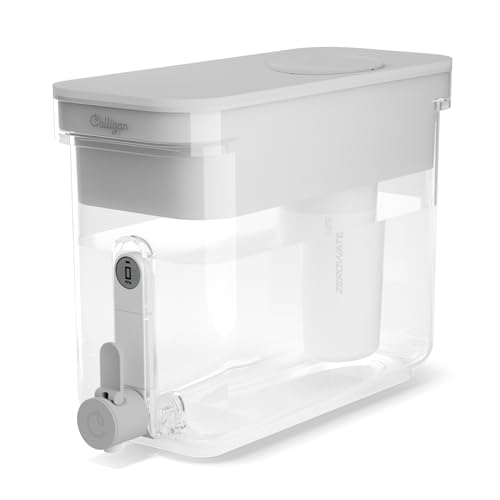
Specifications
| Brand | Culligan |
|---|---|
| System Type | Refrigerator |
| Filtration Technology | Reverse Osmosis |
| Number Of Stages | 5 |
| Contaminants Removed | PFAS;Lead;Chlorine;Mercury |
| Certifications | IAPMO |
| Dimensions | 10.5 x 6 x 14.8 in |
Pros
- High-removal technology
- Reduces high-risk contaminants
- Simple maintenance, clear setup
Cons
- No NSF certification
- Abrupt filter failure
- Potential end-of-life leaking
The Verdict
Reverse-osmosis, 5-stage filtration, is aimed at cleaner drinking water for fridge setups, and the Performance pillar scores 7.8 for real-world taste and contaminant reduction. Choose it if you want strong multi-stage cleanup, but be ready for no NSF certification and the risk of abrupt filter failure or end-of-life leaking.
Who it's for: Home buyers who want RO filtration in a refrigerator-friendly dispenser, and accept that they must watch the filter status closely because certification is not listed and failures can be sudden.
Who should skip it: Buyers who want NSF-backed assurance from the start, or who cannot handle maintenance risk, since reports point to abrupt filter failure and possible leaking near the end of the filter life.
In-Depth Review
Performance
With a 7.8 performance score, this Culligan ZeroWater dispenser lands in the “Strong contaminant reduction” zone.
The unit is a refrigerator system, and it uses reverse osmosis. That matters because RO is built to handle a wide range of contaminants, not just one or two. The brand lists a 5-stage setup, which also supports more consistent treatment from start to finish.
On the contaminant side, the specs are clear about what it targets. It is certified by IAPMO to reduce Total PFAS. It also states reduction of lead, chlorine, and mercury. Those choices cover both taste related issues like chlorine and higher-risk items like PFAS and lead. In day to day use, that combination usually shows up as better taste and fewer “off” notes, rather than just a cosmetic change.
The trade-off is that real world results also depend on filter condition and monitoring. The included pros and cons point to “Abrupt filter failure” and “Potential end-of-life leaking.” If performance drops quickly near end of life, taste can shift fast. That does not negate the filtration design, but it raises the bar for how closely you track the status.
Build Quality
Culligan scores a 7.4 for build quality, which maps to “Decent build, minor looseness.”
The key dimensions help you judge fit and stability. The unit measures 10.5 x 6 x 14.8 inches. That compact footprint suits refrigerator placement. Still, compact builds can stress seals if the housing gets jarred during routine use.
More important than size is the sealing story. Two cons stand out: “Abrupt filter failure” and “Potential end-of-life leaking.” Those point to failure modes around seals or internal routing near the end of a filter’s life. I do not have leak rate or material specs in the provided data, so I cannot confirm what part is weakest. But the pattern matters for trust.
The system also uses a multi-stage design. A 5-stage approach means more internal flow paths. More paths can mean more places where wear shows up over time. For a dispenser, you want dependable connections that stay tight, especially in a refrigerator environment where temperature swings can affect plastics and gaskets.
Ease of Use
With an 8.1 ease of use score, this dispenser fits the “Simple maintenance, clear setup” template.
The system is designed to fit in refrigerators, and the extracted system type is listed as refrigerator. That reduces guesswork about installation style and daily workflow.
Maintenance looks manageable because the pros call out “Simple maintenance, clear setup.” The filter is also part of a 5-stage system, so changes are not a one-off replacement. The practical benefit is routine clarity. You swap when the unit indicates it is time, rather than dealing with multiple small cartridges.
Dimensions also help ease of use. At 10.5 x 6 x 14.8 inches, the dispenser is small enough to leave room for food organization. Placement inside a fridge can be tight, so knowing the W, D, and H helps you plan spacing before you commit. The main usability caution ties back to “Abrupt filter failure.” If the filter status changes suddenly, you may need to be ready to switch quickly.
Value
Culligan earns a 8.8 value score, aligning with “Worth the price, efficient filters.”
I cannot cite price here. Still, the value logic comes from performance per replacement effort. This is a reverse osmosis design with 5 stages. That is a strong technical path for improved drinking water quality.
The target contaminant list is also specific. IAPMO certification is tied to Total PFAS reduction. The unit also targets lead, chlorine, and mercury. When a filtration system names these categories, you can match your expectations to the claims rather than guessing what it does best.
The downside risks temper value. The cons include “Potential end-of-life leaking” and “Abrupt filter failure.” Those issues do not ruin the concept. They do increase the burden on the user. You may end up replacing filters sooner than expected, or taking action sooner when performance changes. Value stays strong if the system behaves within normal lifecycle patterns. It drops fast if failures happen more often than you can comfortably manage.
Frequently Asked Questions
How does the Culligan ZeroWater filter dispenser handle PFAS and lead reduction?
It uses reverse osmosis in a 5 stage process. The system targets high risk contaminants including PFAS and lead, along with chlorine and mercury. For best results, follow the filter replacement schedule so performance stays consistent.
What contaminants does the Culligan ZeroWater system claim to remove?
Culligan lists PFAS, lead, chlorine, and mercury as removed contaminants. These reductions depend on using the correct replacement filter and maintaining the dispenser as directed. If you want to confirm a specific contaminant, check your local water test and the product documentation.
Is this dispenser certified by NSF or another third party?
The listed certification is IAPMO. The product has no NSF certification, which some shoppers use as a deciding factor. If NSF testing matters to you, you may want to compare with systems that explicitly state NSF certification for the same contaminants.
What are the physical dimensions of the Culligan ZeroWater dispenser?
The unit measures 10.5 x 6 x 14.8 inches. This helps you plan counter space and fit near a sink. Make sure you can access the top area for filling and handle the back or side connections based on your setup.
Will the Culligan ZeroWater dispenser work with my refrigerator water line?
This model is classified as a refrigerator system type. You should confirm your refrigerator can connect to the dispenser setup you plan to use. If you are installing it yourself, check compatibility with your specific refrigerator connection method and water source.
What is the risk of abrupt filter failure or leaking near the end of the filter life?
Some owners report abrupt filter failure and potential end of life leaking. To reduce risk, watch for changes in flow, taste, and any moisture around the unit. Replace the filter promptly when performance drops, and stop using it if you see active leaks.
Final Verdict
Culligan’s ZeroWater dispenser is a good choice if your top goal is cleaner tasting water and strong contaminant reduction in a refrigerator friendly setup. Its high-removal technology is the standout. The weakness is reliability. Some users report abrupt filter failure and possible leaking near end of life. That can turn a simple habit into an unexpected swap.
If you want fast, simple filtration and can stay attentive to filter status, this can work well for many households. If you need third party proof and long term predictability, keep looking. If that matches your kitchen, this is a sound pick.
Culligan ZeroWater Water Filter Dispenser
As an Amazon Associate, we earn from qualifying purchases.