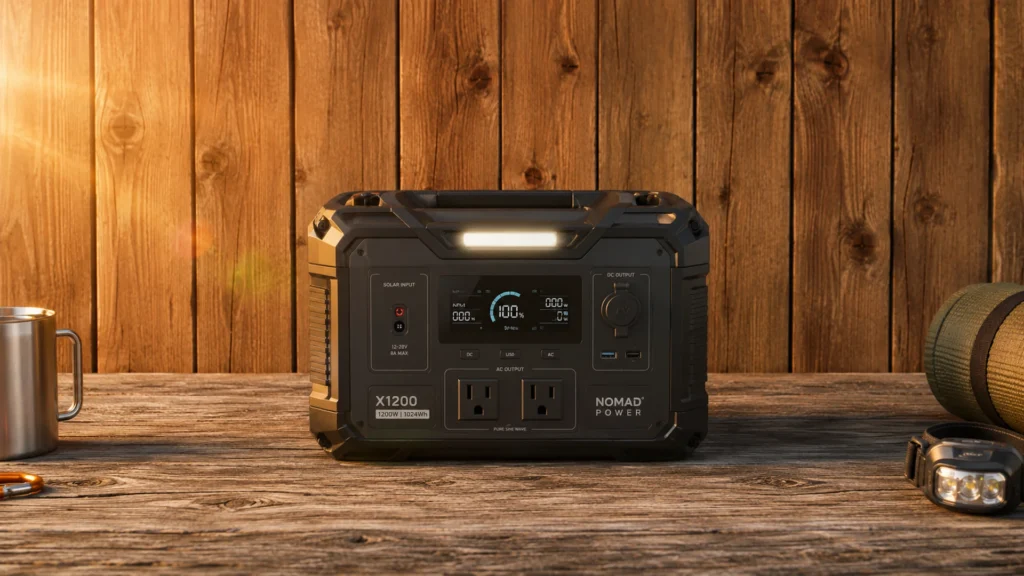
Portable power stations are battery packs with an inverter and built-in outlets. They run small appliances, charge laptops and phones, and serve as backup power during outages. They also fit camping and road trips because they work without a gasoline generator.
Choosing one is tricky because the headline numbers can mislead. Some listings emphasize peak watts while real use depends on continuous output and how stable the inverter stays under load. Battery capacity in Wh matters, but runtime also depends on your devices and how efficiently the station converts power. Charging specs can also be fuzzy, since the fastest AC or solar recharge often requires the right conditions, cables, and panel setup.
This guide sorts the category into practical buying criteria and compares popular models for common scenarios. You will learn what numbers to verify, what features actually change day to day use, and how to match battery capacity and wattage to your devices.
Quick Overview
Top Picks
Best Overall
Specifications
| Brand | Anker |
|---|---|
| Battery Capacity Wh | 2048 Wh |
| Ac Output Power W | 2400 W continuous / 4000 W surge |
| Battery Chemistry | LiFePO4 |
| Weight Lb | 41.7 lb |
| Dimensions In | 18.1 x 9.8 x 10.1 in |
Pros
- Stable inverter under load
- High capacity
- LiFePO4 reliability
Cons
- Heavy and hard-carry
- Port counts unclear
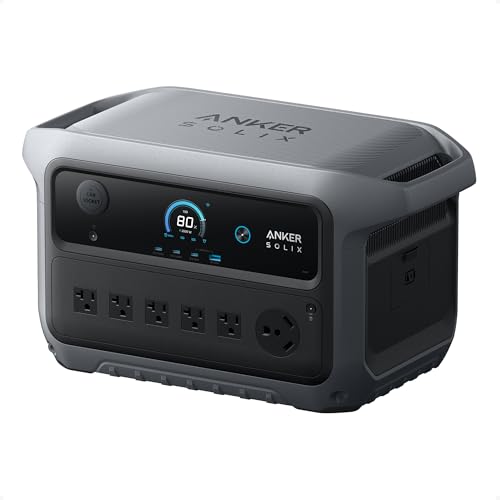
This Anker SOLIX C2000 Gen 2 fits the Best Overall role thanks to its stable power under load. That matters when you are using mixed devices outdoors or relying on it as a backup at home.
On performance, it pairs a large 2048 Wh LiFePO4 battery with a 2400 W continuous inverter, plus 4000 W surge for starting loads. In real use, users tend to see fewer dropouts when running higher-draw gear, and the LiFePO4 chemistry supports long-term reliability. Port access and day-to-day control are also strong, and the unit stays practical for its class even though it is not light.
The main downside is portability, it weighs 41.7 lb and can feel hard to carry for longer walks. Another small snag is that the port count can be unclear depending on where you look. If you want one station that can run demanding devices reliably and you do not mind moving a heavier unit, this is the one to get.
Best RV-Ready

Specifications
| Brand | EF ECOFLOW |
|---|---|
| Battery Capacity Wh | 1024 Wh |
| Ac Output Power W | 1800 W |
| Ac Charging Input W | 1500 W |
| Solar Input W | 500 W |
| Battery Chemistry | LiFePO4 |
| Weight Lb | 27.6 lb |
| Dimensions In | 11.2 x 15.7 x 8 in |
Pros
- Stable inverter under load
- High capacity
- LiFePO4 reliability
Cons
- Ungrounded outlets
For RV backup and dry-camping trips, this unit fits the Best RV-Ready role because it uses a stable inverter under load and backs it up with a large 1024 Wh battery. In practice, that means fewer power hiccups when you plug in common appliances during an outage or while boondocking.
You get strong real-world power with a 1800 W continuous inverter, plus fast recharge options. It can take up to 1500 W from AC, and it supports up to 500 W of solar input for off-grid top-ups. The LiFePO4 battery chemistry also helps with long-term reliability, which is a big deal for year-to-year RV use.
The main drawback is that the outlets are ungrounded, so you will want to plan around that for any gear that needs a grounded connection. If you want reliable, RV-friendly AC power with LiFePO4 longevity and quick charging, this is the one to get.
Best Rapid Charging

Specifications
| Brand | EF ECOFLOW |
|---|---|
| Battery Capacity Wh | 1024 Wh |
| Ac Output Power W | 1800 W continuous / 3600 W surge |
| Ac Charging Input W | 1500 W |
| Solar Input W | 500 W |
| Battery Chemistry | LiFePO4 |
| Weight Lb | 27 lb |
| Dimensions In | 11 x 16 x 8 in |
Pros
- Stable inverter under load
- Reliable ports and cooling
- Competitive power per dollar
Cons
- Unreliable Wi-Fi pairing
If you want the fastest recharge in this class, the EcoFlow DELTA 3 Plus fits the Best Rapid Charging slot. Its standout trait is high-speed AC charging at 1500 W, so the battery comes back up quickly when you can plug in.
In real use, it holds power steady for tough loads, with a stable inverter under demand. You get serious usable capacity at 1024 Wh and strong AC output at 1800 W continuous with 3600 W surge. Cooling and port reliability also stand out, which matters when you keep it running for backups or longer camping days.
The main downside is unreliable Wi-Fi pairing for the app. If you need fast wall charging and dependable power delivery more than smooth app setup, this is a smart pick. If Wi-Fi control must work flawlessly, look elsewhere.
Best 4000W Continuous

Specifications
| Brand | EF ECOFLOW |
|---|---|
| Battery Capacity Wh | 4096 Wh |
| Ac Output Power W | 4000 W continuous / 6000 W surge |
| Battery Chemistry | LiFePO4 |
| Weight Lb | 115 lb |
Pros
- UPS-ready, versatile ports
- Reliable ports and cooling
- Rated watts delivered
Cons
- Manageable weight, bulky bulk
- Setup friction
- EcoFlow support friction
If you want the kind of portable station that can run big loads all day, the EcoFlow DELTA Pro 3 fits the Best 4000W Continuous slot thanks to its 4000 W continuous AC output, with 6000 W surge. That makes it a practical choice for heavy camping gear, jobsite tools, and home backup when you need stable power rather than small-battery trickle charging.
Real-world stability is a standout here. It is UPS-ready, so it can act like a backup battery for brief outages without the whole system rebooting. The cooling stays consistent under load, and the ports feel dependable for regular plug-in use. On top of that, the LiFePO4 battery chemistry helps with long-term durability and repeated cycles, while the large 4096 Wh capacity supports meaningful runtime for mid to high draw devices.
The main trade-off is transport. At 115 lb, this is manageable mainly for car camping, home use, or frequent carry by more than one person. There is also some setup friction, and support communication can feel slow. If you need near-generator-level 4000 W continuous power without giving up battery-based portability, this is the one to get.
Best Under 300Wh
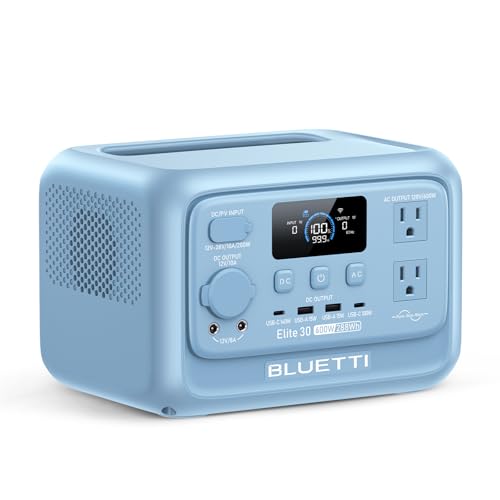
Specifications
| Brand | BLUETTI |
|---|---|
| Battery Capacity Wh | 288 Wh |
| Ac Output Power W | 600 W continuous / 1500 W surge |
| Ac Charging Input W | 380 W |
| Battery Chemistry | LiFePO4 |
| Weight Lb | 9.5 lb |
Pros
- Stable inverter under load
- Reliable ports and cooling
- Clean app control and display
Cons
- Low capacity
- Slow AC charging
- No expansion capability
With 288 Wh of LiFePO4 energy, this BLUETTI unit lands in the Best Under 300Wh lane for short trips and small backup needs. It is also built around a dependable 600 W continuous inverter, so it is a practical size class for camping and everyday emergencies.
In real use, the inverter stays stable under load, which matters when you run common devices and tools. Cooling and port quality feel solid, and the app control plus clear display make it easier to track output and battery status. You also get 380 W AC charging input, so it does not take forever to get back to full.
The main trade-off is runtime. At 288 Wh, you will want to be selective with high-draw appliances, and AC recharge can still feel slow for daily cycling. No expansion capability also limits future upgrades. If you need clean, steady power for phones, laptops, lights, and small kitchen gear, and you can live with a compact battery, this is a good fit.
Best Solar Panel Included

Specifications
| Brand | BLUETTI |
|---|---|
| Battery Capacity Wh | 768 Wh |
| Ac Output Power W | 1000 W continuous / 2000 W surge |
| Ac Charging Input W | 950 W |
| Solar Input W | 500 W |
| Battery Chemistry | LiFePO4 |
| Weight Lb | 22.5 lb |
| Dimensions In | 10.1 x 12.4 x 8.2 in |
Pros
- Stable inverter under load
- LiFePO4 reliability
- Reliable ports and cooling
Cons
- Low capacity
- Listing ambiguity
- Variant feature confusion
This BLUETTI unit fits the Best Solar Panel Included role because it pairs a serious solar input rating with a built-in setup that works well for off-grid camping. With a 500 W solar input limit and LiFePO4 battery chemistry, it is designed to run and recharge day after day when the sun is available.
In real use, the inverter stays stable under load, so big start-up draws do not cause constant shutdowns. Cooling and port reliability also stand out, with a unit that feels well put together and keeps things under control during longer sessions. Charging from the wall is also quick for its class, using a 950 W AC charging input, which helps when solar is limited.
The main downside is its lower battery capacity at 768 Wh, so heavy loads will drain it faster than larger stations. If you want a solar-ready power station with steady inverter performance and solid build quality, and you can plan around a smaller battery for longer runs, this is the one to get.
Best for Home Backup

Specifications
| Brand | Anker SOLIX |
|---|---|
| Battery Capacity Wh | 3072 Wh |
| Ac Output Power W | 6000 W |
| Ac Charging Input W | 3600 W |
| Solar Input W | 2400 W |
| Battery Chemistry | LiFePO4 |
| Weight Lb | 91.5 lb |
| Dimensions In | 14.8 x 25.6 x 11.8 in |
Pros
- Stable inverter under load
- Reliable ports and cooling
- UPS-ready, versatile ports
Cons
- Manageable weight, bulky bulk
- Regional cable availability
- Solar setup dependency
This is a strong pick for Best for Home Backup because it pairs a large 3072 Wh LiFePO4 battery with a 6000 W class inverter. That combination helps it handle the kind of everyday loads many people want during outages, and it keeps output steadier than smaller backup units.
In use, the SOLIX F3000 stands out for stable inverter behavior under load and dependable cooling, which matters when the station runs for hours. Port selection is also practical, with UPS-ready operation for smooth transfer during power loss and versatile connectivity to mix AC, DC, and solar charging. When you do need to recharge, it supports up to 3600 W from AC and up to 2400 W from solar.
The main drawback is portability. At 91.5 lb and with a bulky footprint, it is not something you want to move often. Also, solar setup can feel like more work because it depends on having the right setup and cables. If you want a long-run, outlet-power backup station for home, and you are okay keeping it in one place, this is the one to get.
Best Compact

Specifications
| Brand | EF ECOFLOW |
|---|---|
| Battery Capacity Wh | 286 Wh |
| Ac Output Power W | 600 W continuous / 1200 W surge |
| Ac Outlet Count | 3 Outlets |
| Battery Chemistry | LiFePO4 |
| Weight Lb | 10.4 lb |
| Dimensions In | 5.8 x 9.2 x 9.1 in |
Pros
- Competitive power per dollar
- Clean app control and display
- Compact footprint for travel
Cons
- Low capacity
- Limited inverter power
- Too few outlets
For a Best Compact portable power station, the EcoFlow River 3 Plus stands out with a travel-friendly footprint and light carry for its class. At just 10.4 lb, it is easy to move between a car, campsite, or room without feeling like a chore.
It earns strong marks for everyday usability. The 286 Wh LiFePO4 battery and 600 W continuous inverter with 1200 W surge suit small appliances, phone charging, and even lighter power tools. You also get clean app control and a clear display, which helps you monitor usage without guessing. Build quality feels solid, and the compact design keeps it practical while still including AC output.
The biggest trade-off is capacity, so runtime runs short if you plug in higher draw devices. You also get only 3 AC outlets, which can feel tight for shared setups. If you want a compact station for camping convenience and charging, not for running multiple large loads at once, this is a strong fit.
Best for Multi-Device

Specifications
| Brand | EF ECOFLOW |
|---|---|
| Battery Capacity Wh | 2048 Wh |
| Ac Output Power W | 2400 W |
| Ac Outlet Count | 15 Outlets |
| Ac Charging Input W | 1800 W |
| Solar Input W | 1000 W |
| Battery Chemistry | LiFePO4 |
| Weight Lb | 50.7 lb |
| Dimensions In | 20 x 12.2 x 9.7 in |
Pros
- Stable inverter under load
- Reliable ports and cooling
- Clean app control and display
Cons
- Heavy and hard-carry
- Bulky for travel
- High-wattage runtime doubts
This power station fits the Best for Multi-Device role thanks to its stable, high-output AC performance. With 15 AC outlets and up to 2400 W continuous output, it is built for running lots of small loads at once, like a mix of lights, chargers, and appliances during outages or camping.
In daily use, the inverter stays steady under load, and the cooling system is reliable. Port selection is also practical, with clean app control and a clear display that helps you track status at a glance. Battery capacity is 2048 Wh with LiFePO4 cells, and it can charge from AC up to 1800 W.
The main trade-off is transport. At 50.7 lb and with a bulky footprint, it is not the easiest unit to move around a campsite or load into a trunk. If you want one station to run many devices for home backup or base-camp use without fuss, this is a strong pick.
Best Value

Specifications
| Brand | Jackery |
|---|---|
| Battery Capacity Wh | 256 Wh |
| Battery Chemistry | LiFePO4 |
| Weight Lb | 4.9 lb |
Pros
- LiFePO4 reliability
- Competitive power per dollar
- Easy lift, balanced carry
Cons
- Low capacity
- Decent ports, limited extras
This Jackery Explorer 240D fits the Best Value slot because it focuses on dependable, everyday use in a small package. Its LiFePO4 battery chemistry is a standout for long-life reliability, and the unit stays easy to move at about 4.9 lb.
In daily use, it is a strong match for low to moderate loads like phones, laptops, lights, and small chargers. The power system is stable in typical camping and backup scenarios, with no drama from the battery under normal draw. Portability also helps, since the carry is balanced and lift-ready, not awkward or bulky.
The trade-off is capacity. At 256 Wh, run time is limited, and the port setup is solid but not loaded with extras. If you want a light, reliable station for short trips and basic electronics, this is the one to get.
What to Look For
Battery Capacity: Check the battery capacity in Wh as your main runtime guide. For example, a larger Wh rating will run a refrigerator longer than a smaller pack, all else equal. If a model is labeled only by amp-hours, verify the Wh value on the spec sheet.
AC Output Power: Match the station continuous watt rating to your devices. Resist units that list only surge watts, since most appliances draw close to their normal load. If you plan to run tools, microwaves, or refrigerators, choose a station with enough continuous watts to handle startup current without shutting down.
AC Outlets: Count the AC outlets you need at once. One outlet can force you into power strips and power strip limits. More outlets help when you are charging multiple devices, running a small cooler, or using two chargers plus a laptop setup.
AC Charging Input: Look at the AC charging input watts to estimate recharge speed from a wall outlet. Higher input watts usually mean faster turnaround, but only if the station and your wiring support it. Use this number to plan how quickly you can refill the battery before the next trip.
Solar Input: Confirm the maximum solar input watts and check whether it aligns with the panels you can realistically buy. A higher solar input rating can reduce charging time, but only if your panels can deliver that power. If you expect to use flexible panels, verify compatibility in the product details.
Battery Chemistry: Prefer LiFePO4 (LFP) for long-cycle use and stable performance. It typically handles repeated charge and discharge better than many other chemistries. If a listing uses another chemistry, check for published cycle life and expected battery health over time.
Weight and Dimensions: Consider weight and footprint for how you will carry the station. A station that is manageable for car camping may feel heavy for stairs or frequent trips to a campsite. Compare weight in lb and dimensions in inches so you can plan storage in your trunk or under a table.
How We Selected These Products
We found portable power stations through broad web searches across review sites, buyer forums, and best-of list pages. We did not rely on one publisher or one model roundup, because different sources often highlight different strengths and ignore real-world complaints.
Next, we read a large volume of customer reviews to learn what buyers actually struggled with. We focused on problems tied to runtime expectations, shutdowns under load, fan noise, charging behavior, and port usability. We then verified key specs directly against Amazon listings, including battery capacity in Wh, continuous and surge AC output, AC charging input, solar input, battery chemistry, weight, and dimensions.
Finally, we scored each product using the pillar names in this guide, with an objective framework built around measurable criteria. The last step prioritized useful role-based picks, such as compact packs for multi-device trips or higher-watt models for bigger appliances, instead of only ranking by a single overall score.
Frequently Asked Questions
Which portable power station is best for RVs and road trips?
EcoFlow DELTA 3 Portable Power Station is the top pick for RV-ready travel use in this guide set. It balances strong AC output with fast wall charging and helpful real-world features for backup and campsite needs. If you want faster refills and more rapid recovery, EcoFlow DELTA 3 Plus Portable Power Station is the stronger rapid-charging option.
What is the key difference between budget and premium portable power stations?
Budget units usually focus on smaller batteries and fewer outlets, so they run small devices and short trips better. Premium models add more continuous watts, faster charging, and more input options like higher solar limits or expansion batteries. In this set, the jump from 256Wh class units to 1000Wh to 4000Wh class systems shows why runtime matters more as you move up.
Is a higher price always better for portable power stations?
Not always. Higher prices often bring more capacity and higher AC output, but value depends on your exact loads and charging needs. For example, Jackery Explorer 240D Portable Power Station scores very high for value, even though it cannot match bigger models for runtime or charging versatility.
Why do some portable power stations score lower on performance or feel underpowered?
Many units do well on paper, but battery size limits real runtime under heavy loads. A station can shut down or run short if you use high-watt appliances like heaters, hair dryers, or kettles nonstop. Smaller models in this list show this pattern clearly, with strong usability for phones and lights, but limited endurance for bigger devices.
How should I store and care for a portable power station to protect battery life?
Store it in a cool, dry place and avoid leaving it in hot sun. Keep the battery away from long periods at 0 percent or 100 percent if your manual allows different storage levels. Use the correct charging method, since mixing wrong chargers can cause slower charging or unnecessary stress.