The 4 Best Under 300Wh Portable Power Stations in 2026

Transparency Note: This post contains affiliate links. As an Amazon Associate, we earn from qualifying purchases at no extra cost to you.

Under 300Wh portable power stations fit the small-to-medium use cases where you do not need full home backup. For most buyers here, that means phones, laptops, CPAP machines, lights, a small fan, and occasional kitchen items.

Choosing one is hard because these units share a tight budget of stored energy and inverter power. You must balance real runtime against outlet types, and also check how fast they recharge. A higher-watt AC output can still fall short if the unit drops under load or if charging stays slow.

When you want to compare the full category beyond this small-capacity range, use our guide from the same testing lens: Looking for all types? See our Best Portable Power Stations.

Quick Overview

BLUETTI Elite 30 V2 Portable Power Station
#1 BLUETTI Elite 30 V2 Portable Power Station
EcoFlow River 3 Plus Portable Power Station
#2 EcoFlow River 3 Plus Portable Power Station
Jackery Explorer 240D Portable Power Station
#3 Jackery Explorer 240D Portable Power Station
Jackery Explorer 300 Portable Power Station
#4 Jackery Explorer 300 Portable Power Station

Our Top Picks

#1. BLUETTI Elite 30 V2 Portable Power Station
BLUETTI Elite 30 V2 Portable Power Station
Our Score
8.2 / 10
hover for details
Performance
8.1
Portability
8.6
Build Quality
8
Features
8
Value
8.5
BrandBLUETTI
Battery Capacity Wh288 Wh
Ac Output Power W600 W continuous / 1500 W surge
Ac Charging Input W380 W
Battery ChemistryLiFePO4
Weight Lb9.5 lb
  • Stable inverter under load
  • Reliable ports and cooling
  • Clean app control and display
  • Low capacity
  • Slow AC charging
  • No expansion capability

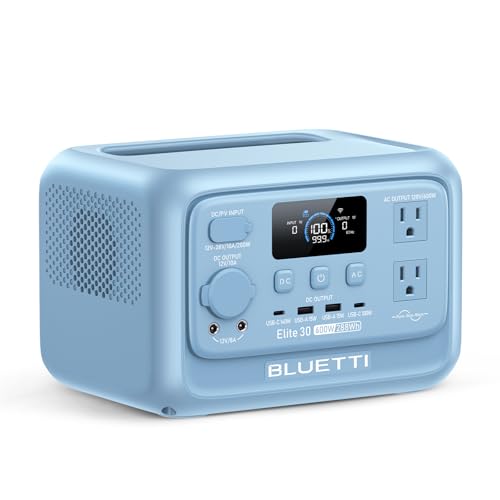
In the Under 300Wh portable power station class, the BLUETTI Elite 30 V2 stands out for how steady it stays while running heavier loads. It pairs a 288 Wh LiFePO4 battery with a 600 W continuous output and a 1500 W surge rating. In practice, that means it is a better fit for powering common tools and kitchen electronics than smaller, more fragile units. You also get clean app control and a clear display, which helps you track usage without guessing.

The trade-off is runtime and recharge speed. With only 288 Wh, expect limited time for high-draw devices, and the unit charges from AC at 380 W, which feels slower than some rivals in this size range. It is also not designed for growth, since there is no expansion capability. This is best for people who want reliable backup power in a compact 9.5 lb package, not a long-running system or a fast recharging setup.

→ Read full review

#2. EcoFlow River 3 Plus Portable Power Station

EcoFlow River 3 Plus Portable Power Station
Our Score
8.1 / 10
hover for details
Performance
7.9
Portability
8.4
Build Quality
8.1
Features
8.3
Value
8.3
BrandEF ECOFLOW
Battery Capacity Wh286 Wh
Ac Output Power W600 W continuous / 1200 W surge
Ac Outlet Count3 Outlets
Battery ChemistryLiFePO4
Weight Lb10.4 lb
Dimensions In5.8 x 9.2 x 9.1 in
  • Competitive power per dollar
  • Clean app control and display
  • Compact footprint for travel
  • Low capacity
  • Limited inverter power
  • Too few outlets

EcoFlow River 3 Plus stands out in the under-300Wh class for a practical balance of size and usable AC power. With a 286 Wh LiFePO4 battery and a 600 W continuous / 1200 W surge inverter, it can run common camping loads and keep electronics steady. At 10.4 lb and a compact 5.8 x 9.2 x 9.1 in footprint, it is easy to move between car, campsite, or home backup spots. The app control and clear display also make it simpler to manage power without guessing.

The main trade-off is runtime and outlet count. Three AC outlets can feel tight if you want to run multiple devices at once, and 286 Wh limits how long higher-draw gear will run before recharge. If you mainly need to power a small setup, charge phones, run a laptop, or keep a few essentials going, it fits the under-300Wh job well. If you expect to power larger appliances or run many loads simultaneously, you will likely want a bigger station.

→ Read full review

#3. Jackery Explorer 240D Portable Power Station

Jackery Explorer 240D Portable Power Station
Our Score
7.7 / 10
hover for details
Performance
7.3
Portability
9.1
Build Quality
7.4
Features
6.9
Value
8.7
BrandJackery
Battery Capacity Wh256 Wh
Battery ChemistryLiFePO4
Weight Lb4.9 lb
  • LiFePO4 reliability
  • Competitive power per dollar
  • Easy lift, balanced carry
  • Low capacity
  • Decent ports, limited extras

For under 300Wh portable power setups, the Jackery Explorer 240D stands out mainly for its LiFePO4 battery choice and easy portability. At 256 Wh and about 4.9 lb, it is one of the more practical sizes for car camping, small job sites, or backup power that you actually move around. The LiFePO4 chemistry also tends to hold up well over many charge cycles, which matters when you are storing it between trips.

The trade-off is runtime. With low capacity, high-draw items like some power tools or heaters will drain it quickly, so it fits best for phones, laptops, lights, and other lower-watt loads. Port selection is decent but not loaded with extras, so if you want lots of charging options at once or a big-feature control setup, you may want to step up within the category.

→ Read full review

#4. Jackery Explorer 300 Portable Power Station

Jackery Explorer 300 Portable Power Station
Our Score
7.7 / 10
hover for details
Performance
7.4
Portability
8.6
Build Quality
7.6
Features
7
Value
8.5
BrandJackery
Battery Capacity Wh292 Wh
Ac Output Power W300 W continuous / 600 W surge
Ac Outlet Count2 Outlets
Battery ChemistryLiFePO4
  • LiFePO4 reliability
  • Pure sine AC
  • Compact footprint for travel
  • Low capacity
  • Limited inverter power
  • Too few outlets

The Jackery Explorer 300 stands out in the under-300Wh class thanks to its LiFePO4 battery and pure sine AC output. That combo matters for everyday camping and short outages because LiFePO4 tends to be more cycle-friendly, and pure sine power is gentler on many chargers and power supplies. It is also easy to travel with, since the footprint is compact for a 292 Wh unit. For a small station, the 300 W continuous / 600 W surge rating makes it practical for light electronics, a laptop setup, and small appliances that do not draw too much.

The main trade-off is that the capacity stays limited at 292 Wh. Expect shorter runtimes if you run higher-draw devices, and its inverter power can feel tight for anything that starts like a motor. It also has only 2 AC outlets, so you may need a power strip if you want to run multiple things at once.

What to Look For

Real runtime for 256Wh to 300Wh: Convert your device needs into watts and hours. A 200Wh to 300Wh pack will not run high-draw appliances for long, so prioritize electronics, lights, and low-to-mid power cooking only if you confirm surge needs.

AC output you can actually use: Check the rated continuous wattage and surge wattage. In this size class, it matters for things like microwaves, portable refrigerators, and some power tools. If you plan to run any inductive load, verify surge support before you buy.

Charging speed from wall and solar: Look for a strong AC charging input and a practical solar input limit. Faster wall charging reduces downtime, and enough solar input helps only if you match panel size and your weather reality.

Port count and port types that match your gear: In small power stations, the outlet mix decides whether you can run everything at once. Make sure you get enough AC outlets for your main devices, plus USB-A, USB-C, and DC options for the rest.

Compact build and noise under load: Even under 300Wh, battery packs need cooling. Favor units that maintain stable output without constant throttling or loud fan behavior, and pay attention to weight and dimensions so the station stays easy to transport.

How We Picked

Products were identified through broad research across review sites and buyer forums, then filtered to only those that qualify as Under 300Wh Portable Power Stations.

Scoring used the same objective pillar framework as the main Portable Power Stations post, allowing direct comparison of products within this sub-category.

Frequently Asked Questions

What can I run on a portable power station under 300Wh?

You can run small electronics like phones, laptops, and Wi Fi most of the day. Many units also handle a small fridge or CPAP when you watch the watt draw. For a toaster or hair dryer, you will usually need a bigger battery and inverter.

How many hours of backup should I expect under 300Wh?

It depends on your device power draw in watts. For example, 150W loads often run about one to one and a half hours on a 200 to 300Wh class unit. Real world time usually drops with cold weather and high starting surge.

Can I charge these power stations by solar, and how long will it take?

Many under 300Wh models accept solar input around 100W to 200W. Charging time depends on sun hours and how many panels you use. In good sun, expect faster charging than in winter or cloudy conditions.

Do under 300Wh portable power stations support surge loads like a fridge compressor?

Some do, but you must check the surge rating, not just the running watts. A fridge or freezer compressor needs a short spike at startup. If the surge rating is too low, the station may shut off.

When should I choose a larger portable power station instead of staying under 300Wh?

Choose a larger unit if you need to run high watt devices for more than a few hours. Look for bigger AC output and more total Wh for things like space heaters, microwaves, and multiple appliances. Under 300Wh is best for short trips and careful device planning.

How do under 300Wh portable power stations compare to other portable power stations in size and weight?

They are usually smaller and easier to move by car or on a trip. You often get less capacity, so you trade runtime for portability. If you need long runtime, bigger Wh models will feel heavier but last longer.

See Also

Share:
On Key
You Might Also Like