RV-ready portable power stations are built for the day-to-day needs of parked travel. Buyers usually want steady AC power for the fridge, small microwave bursts, lights, and phone and laptop charging. They also need fast, practical recharging so you can top up from shore power, generators, or solar while you cook and sleep.
This sub-category is harder than it looks because the spec that matters most is not the max wattage marketing number. You must check continuous output stability, inverter behavior under real loads, and how quickly the unit refills from wall power. Capacity also needs to match your RV routine, so you do not run out after one long cook session or after a hot afternoon of solar-less camping.
Use this guide to narrow the field to units that fit common RV setups, then compare models side by side in the main ranking. Looking for all types? See our Best Portable Power Stations.
Quick Overview
Our Top Picks
#1. EcoFlow DELTA 3 Portable Power Station

Specifications
| Brand | EF ECOFLOW |
|---|---|
| Battery Capacity Wh | 1024 Wh |
| Ac Output Power W | 1800 W |
| Ac Charging Input W | 1500 W |
| Solar Input W | 500 W |
| Battery Chemistry | LiFePO4 |
| Weight Lb | 27.6 lb |
| Dimensions In | 11.2 x 15.7 x 8 in |
Pros
- Stable inverter under load
- High capacity
- LiFePO4 reliability
Cons
- Ungrounded outlets
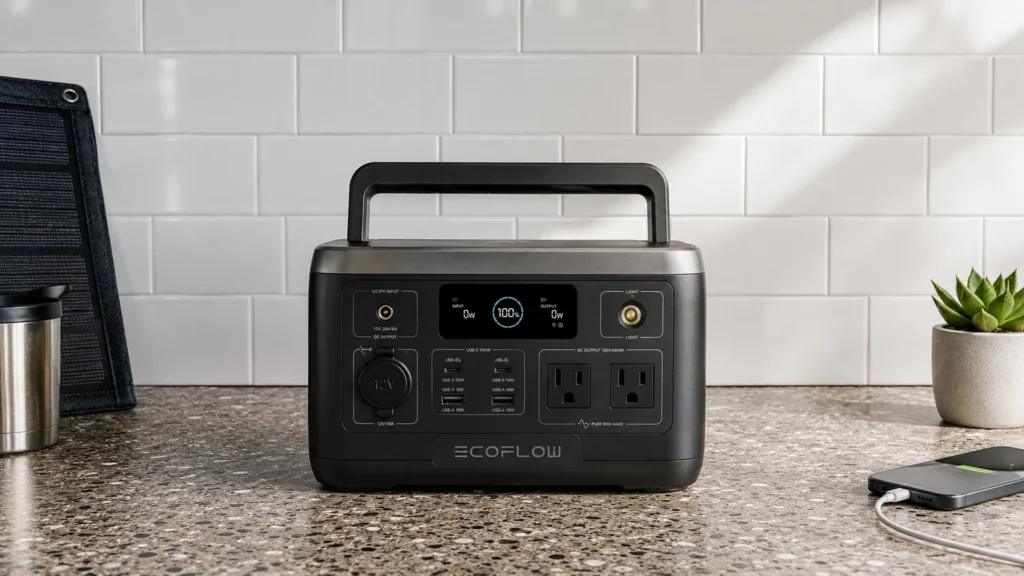
For RV-ready setups, the EcoFlow DELTA 3 stands out because it balances usable whole-house power with LiFePO4 battery reliability. With 1024 Wh capacity and up to 1800 W continuous AC output, it can run common campsite loads like a microwave, coffee maker, or RV accessories without the constant shutdowns that weaker inverters can trigger. It also recharges fast from wall power at up to 1500 W, and supports up to 500 W solar input, which matters when you want to top up between stops.
One trade-off to note: the outlets are not grounded, so it may not be the best choice for gear that depends on a grounded connection. At 27.6 lb, it is carryable for car use and short moves around the site, but it is not something you will want to lift frequently during daily RV routines.
#2. EcoFlow DELTA 3 Plus Portable Power Station

Specifications
| Brand | EF ECOFLOW |
|---|---|
| Battery Capacity Wh | 1024 Wh |
| Ac Output Power W | 1800 W continuous / 3600 W surge |
| Ac Charging Input W | 1500 W |
| Solar Input W | 500 W |
| Battery Chemistry | LiFePO4 |
| Weight Lb | 27 lb |
| Dimensions In | 11 x 16 x 8 in |
Pros
- Stable inverter under load
- Reliable ports and cooling
- Competitive power per dollar
Cons
- Unreliable Wi-Fi pairing
The EcoFlow DELTA 3 Plus is a strong pick for RV-ready use because it keeps power stable under load and has inverter ratings that match real-world expectations. With a 1024 Wh LiFePO4 battery and an 1800 W continuous / 3600 W surge output, it can handle everyday RV demands like microwaves, portable induction, and job-site tools more confidently than smaller units. Cooling behavior and port reliability are also standout points, which matters when you are running electronics for hours and moving the station between stops.
The main trade-off is its app connectivity. Wi-Fi pairing can be unreliable, so you may end up relying on the unit's screen and buttons instead of remote monitoring. If you want dependable AC power and easy daily use for camping or backup, this model fits well. If you depend on smooth app control, you may need to work around that pairing issue.
#3. EcoFlow DELTA Pro 3 Portable Power Station

Specifications
| Brand | EF ECOFLOW |
|---|---|
| Battery Capacity Wh | 4096 Wh |
| Ac Output Power W | 4000 W continuous / 6000 W surge |
| Battery Chemistry | LiFePO4 |
| Weight Lb | 115 lb |
Pros
- UPS-ready, versatile ports
- Reliable ports and cooling
- Rated watts delivered
Cons
- Manageable weight, bulky bulk
- Setup friction
- EcoFlow support friction
The EcoFlow DELTA Pro 3 stands out for RV-ready use because it pairs big inverter power with UPS-style stability. With 4000 W continuous and 6000 W surge, it can handle hard-start loads like a fridge compressor or microwave in many setups. It also uses LiFePO4 chemistry, which fits longer backup runs and frequent cycling. For road trips and outages, the UPS-ready behavior helps keep sensitive electronics from rebooting when power switches.
The main trade-off is mobility. At 115 lb, it is manageable for a one-time placement in an RV bay, but not fun to carry daily. Expect some setup friction too, especially if you are trying to match cable and port choices to your exact appliances. If you want a single heavy unit that can run real RV loads reliably, this is a strong match. If you need something you will move around often, lighter options may suit better.
#4. BLUETTI Elite 300 Portable Power Station

Specifications
| Brand | BLUETTI |
|---|---|
| Battery Capacity Wh | 3014 Wh |
| Ac Output Power W | 2400 W continuous / 4800 W surge |
| Ac Outlet Count | 4 Outlets |
| Battery Chemistry | LiFePO4 |
| Weight Lb | 58 lb |
| Dimensions In | 11.7 x 14.4 x 12 in |
Pros
- Stable inverter under load
- LiFePO4 reliability
- UPS <10ms switchover
Cons
- Heavy and hard-carry
- Unspecified charging specs
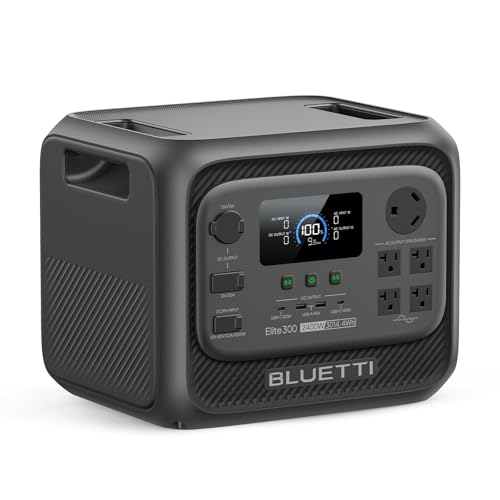
For RV-ready backup power, the BLUETTI Elite 300 stands out for how steady it stays when loads change. It runs a 2400 W continuous inverter with 4800 W surge, and it handles real-world draw without frequent shutdowns. It also supports true UPS behavior with under 10 ms switchover, which matters if you want your fridge, network gear, or weekend work setup to keep running through brief outages.
The main trade-off is portability. At 58 lb, it is not a grab-and-go unit for frequent moving around camp. It also has unspecified charging specs, so you will want to double-check recharge times with your preferred wall outlet or solar setup. This model fits best for RV owners who leave it in one spot and value stable power over easy carrying.
#5. Jackery Explorer 1000 V2 Portable Power Station

Specifications
| Brand | Jackery |
|---|---|
| Battery Capacity Wh | 1070 Wh |
| Ac Output Power W | 1500 W continuous / 3000 W surge |
| Battery Chemistry | LiFePO4 |
| Weight Lb | 23.8 lb |
| Dimensions In | 9.7 x 12.9 x 8.8 in |
Pros
- High capacity
- LiFePO4 reliability
- Stable inverter under load
Cons
- Slower recharge rivals
- Limited port transparency
For RV-ready backup use, the Jackery Explorer 1000 V2 stands out for its LiFePO4 battery and steady inverter behavior under load. With 1070 Wh of capacity and 1500 W continuous output, it fits well for common RV needs like powering a fridge, charging electronics, or running a coffee maker in cycles. At 23.8 lb and about 9.7 x 12.9 x 8.8 in, it is still carryable for campsite setup, without feeling like a permanent wall unit.
The main trade-off is recharge speed. It tends to be slower than some rivals, which matters when you cycle it every day or keep it topped off while you drive. It is also a bit light on clarity around ports and charging limits, so it helps to double-check your specific devices and expected input before relying on it for tightly planned RV schedules.
#6. BLUETTI Apex 300 Portable Power Station

Specifications
| Brand | BLUETTI |
|---|---|
| Battery Capacity Wh | 2764 Wh |
| Ac Output Power W | 3840 W continuous / 7680 W surge |
| Ac Outlet Count | 6 Outlets |
| Battery Chemistry | LiFePO4 |
| Weight Lb | 66.1 lb |
| Dimensions In | 12.6 x 20.7 x 12.9 in |
Pros
- Rated watts delivered
- Reliable ports and cooling
- Clean app control and display
Cons
- Manageable weight, bulky bulk
- Setup complexity
- Solar compatibility concerns
The BLUETTI Apex 300 stands out for RV-ready setups that need solid AC power and dependable day-to-day handling. It lists 3840 W continuous and 7680 W surge, along with 6 AC outlets, so you can run common campers loads without constant juggling. The LiFePO4 battery rated at 2764 Wh suits longer stretches off-grid, and its app control plus clear display make it easier to monitor what your rig is actually using.
Trade-offs matter in this class. At 66.1 lb and with a fairly bulky footprint, it is more “bring once, move rarely” than “grab and go.” Some users also report setup complexity, and solar compatibility can require extra attention during planning, especially if you expect plug-and-play charging from panels. Best fit: RV owners who want strong AC output and straightforward control, and who are willing to plan charging routes ahead of time.
#7. Jackery Explorer 2000 Plus Portable Power Station

Specifications
| Brand | Jackery |
|---|---|
| Battery Capacity Wh | 2042 Wh |
| Ac Output Power W | 3000 W |
| Solar Input W | 1200 W |
| Battery Chemistry | LiFePO4 |
| Weight Lb | 96.7 lb |
| Dimensions In | 14.7 x 18.6 x 14.1 in |
Pros
- Stable inverter under load
- Reliable ports and cooling
- Clean app control and display
Cons
- Manageable weight, bulky bulk
- Crappy manual quality
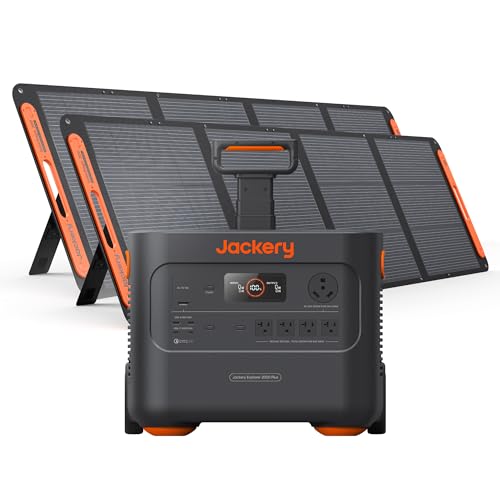
Built for RV and camper backups, the Jackery Explorer 2000 Plus stands out for its stable inverter behavior under real load and its very large 2042 Wh LiFePO4 battery. In practice, that translates to fewer shutdown moments when you run mixed devices around camp, and longer stretches before you need to recharge. It also earns trust in day to day use with reliable ports, steady cooling, and clean app control plus a clear on-unit display.
The main trade-off is moving it. At 96.7 lb and with a bulky footprint, it is not friendly for frequent lifting between the driveway and the RV. Also, some buyers mention weaker manual quality, so plan to rely more on the app and screen than the printed guide. This is a strong fit for RV owners who want a big, dependable station to stay put, not for people who treat portability as the top priority.
What to Look For
AC output for RV loads: Confirm the continuous AC output rating and whether the unit can handle your planned devices without shutting down. If you run a fridge compressor, look for stable inverter performance and enough continuous watts for the whole group of items you expect to run together.
Usable battery capacity in Wh: Pick Wh based on how long you need power during a normal stop. Larger Wh means more runtime for a full evening of lighting, charging, and fridge cycling. Smaller packs can work for short trips, but they deplete quickly once you add high-draw moments.
Charging input that matches your setup: Check the AC charging input watts so you know how fast you can recharge at a campsite or from a generator. Higher AC charge rates shorten downtime after you drain the battery. If you plan to arrive low and catch up quickly, this matters as much as AC output.
Solar input limits: Verify the max solar input watts and make sure it matches the solar panels you can realistically mount on your RV. A higher solar input can reduce recharge time, but it only helps if your panel setup can reach those limits.
Port selection and RV convenience: Prioritize AC outlets for fridge and kitchen use, plus enough USB and DC ports for everyday charging. Also check for UPS or pass-through behavior if you need a seamless handoff from shore power. Clear display readouts help you track battery use and avoid guesswork.
How We Picked
Products were identified through broad research across review sites and buyer forums, then filtered to only those that qualify as RV-Ready Portable Power Stations. The filter focuses on models that pair meaningful AC output with practical charging options for RV routines, including campsite shore power or solar top-ups.
Scoring used the same objective pillar framework as the main Portable Power Stations post, allowing direct comparison of products within this sub-category. Performance, portability, build quality, features, and value were weighted and judged using real-world priorities for RV buyers: stable AC under load, enough Wh for meaningful runtime, recharge speed, and a layout of ports that supports an RV power plan.
Frequently Asked Questions
What makes a portable power station RV-ready compared with other portable stations?
RV-ready stations focus on steady AC power and enough capacity for daily needs like lights, fans, and charging. They usually offer clean inverter output for appliances and a strong AC recharge rate. Many also include multiple outlet types, like AC plus USB, to reduce power juggling.
How do I size an RV-ready power station for my fridge and microwave?
Start with the running watts for each device, then add the surge watts for items like microwaves. Many appliances need extra power for a short start, even if their running power looks low. Then multiply by how many hours you need, and compare that to the station battery capacity in Wh.
Can an RV-ready power station run a coffee maker or hair dryer safely?
It depends on wattage and surge, not just the battery size. Resistive heaters like hair dryers and some coffee makers draw high watts and can trip weaker inverters. Check the station AC continuous output and surge rating, then confirm the device wattage stays below the inverter limits.
What is the fastest way to recharge an RV-ready power station while parked?
Use AC charging from shore power when you have it, because it is usually the quickest. If you only have solar, recharge will be slower and depends on your panel size and sunlight. Many RV setups also use a generator, but you must match the station's allowed AC input and avoid running it too long.
When should I choose a different type of portable power station instead of an RV-ready one?
Choose a smaller, lighter portable station if you only need phone charging, lights, and a small fan. Pick a higher-capacity option if you plan to run larger appliances for many hours. If you need lots of AC outlets and long runtime, an RV-ready style with more output and higher Wh usually fits better.


