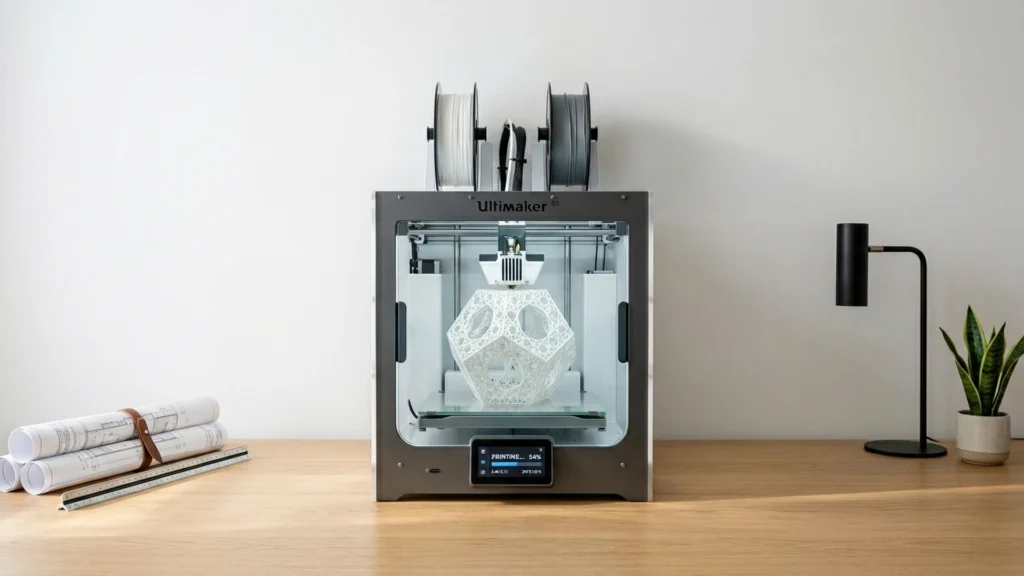
3D printers turn digital models into physical parts, layer by layer. In this guide, you will choose among FDM and resin machines, and you will compare their practical impact on prints.
The hard part is that specs can mislead you. Bigger build volume does not fix poor adhesion. Higher speed does not guarantee clean edges. Auto leveling helps, but only if the printer handles the materials you care about. Layer height also changes the look, but it does not replace good tuning and stable hardware.
This guide tests real shopping needs: print quality, reliability, ease of use, useful features, and value. You will also get clear ranges for build size, layer height, temperatures, and supported materials so you can avoid buying the wrong platform.
Quick Overview
Top Picks
Best Overall

Specifications
| Brand | ORIGINAL PRUSA |
|---|---|
| Printing Technology | FDM |
| Supported Materials | PLA |
Pros
- Sharp layers, accurate dimensions
- Stays calibrated, rarely fails
- Simple leveling, smooth workflow
Cons
- Limited material compatibility
- Basic-detail limited
- Price-to-performance concern
The Original Prusa MK4S is a natural pick for Best Overall because it turns out consistently clean prints with little fuss. Its standout trait is repeatability, it tends to stay dialed in, so you spend less time fixing prints and more time making them.
Print quality is strong, with sharp layers and accurate dimensions. Reliability is also a highlight, it is known for completing long jobs without the common chain-reaction failures like clogs and bed adhesion issues. The workflow is simple thanks to smooth leveling and an easy routine for calibration, so it is approachable even if you are not fully dialed-in yet.
The main drawback is material focus, supported materials are limited, which can matter if you want more specialty filaments. Detail is also not its best angle for very fine miniatures, and you may need extra work for the crispest edges. If you want dependable FDM prints and a low-tinkering experience for everyday projects, this is the one to get.
Best Resin

Specifications
| Brand | ELEGOO |
|---|---|
| Printing Technology | MSLA |
| Max Print Speed | 150 mm/h |
| Supported Materials | Resin |
Pros
- Sharp layers, accurate dimensions
- Stays calibrated, rarely fails
- Strong results, reasonable costs
Cons
- Firmware update failures
- Accessory workflow pitfalls
If you want the Best Resin pick, the ELEGOO Saturn 4 Ultra fits because it targets clean detail and smooth surfaces with MSLA resin printing. It is a strong choice when you care more about fine texture and accurate small parts than about fast, large FDM prints.
You get sharp layers and accurate dimensions, which shows up in crisp edges and consistent results. It also tends to stay calibrated, so prints are less likely to fail during long runs. In practice, that means fewer reprints and less time fixing adhesion or dialing things back in. Max print speed is rated at 150 mm/h, so you can still move at a reasonable pace for resin work.
The main downside is firmware update failures, which can add friction if you rely on updates to stay current. There are also accessory workflow pitfalls, especially if you are new to resin printer routines. Get this if you want reliable, high-detail resin parts and you are comfortable with the post-processing and maintenance that resin requires.
Best FDM

Specifications
| Brand | BAMBULAB |
|---|---|
| Printing Technology | FDM |
| Build Volume | 256 x 256 x 256 mm³ |
| Max Print Speed | 500mm/s |
| Max Nozzle Temperature | 300 °C |
| Supported Materials | PLA, PETG, TPU, PVA, PET ABS, ASA, PA, PC |
Pros
- Sharp layers, accurate dimensions
- Stays calibrated, rarely fails
- Smart convenience features, helpful extras
Cons
- Basic-detail limited
- Firmware authorization friction
- Occasional filament jamming
Built for everyday FDM users, the Bambu Lab P1S fits the Best FDM role thanks to its dependable print results. It tends to stay dialed in, so you spend less time fixing the printer and more time making parts.
Layer lines look sharp and the dimensions come out accurate, which means less sanding for functional prints. Reliability also stands out, with calibration that holds up and fewer long-print surprises. Practical extras help too, like fast printing up to 500 mm/s, an easy start workflow, and broad material support across PLA, PETG, TPU, PVA, PET ABS, ASA, PA, and PC.
The main drawback is that fine surface detail can be a bit limited, so ultra-clean minis may need extra work. There is also some firmware authorization friction, and occasional filament jamming can interrupt a job. If you want consistent, hands-off FDM printing for real projects without constant tinkering, this is a strong pick.
Also ranked #1 in: Multi-Color 3D Printers · Enclosed 3D Printers
Best 0.1mm Layer

Specifications
| Brand | ANYCUBIC |
|---|---|
| Printing Technology | MSLA |
| Layer Height | 0.1 mm |
| Max Print Speed | 170 mm/s |
| Supported Materials | Resin |
Pros
- Sharp layers, accurate dimensions
- Simple leveling, smooth workflow
- Smart convenience features, helpful extras
Cons
- Auto-feed uncertainty
- Resin handling requirements
If you want the “Best 0.1mm Layer” slot in resin printing, this is a strong match thanks to its 0.1 mm layer height. That thin step size helps create crisp edges and fine texture on models, even when you dial in details that would look softer on coarser settings.
Expect sharp layer definition and accurate dimensions, with a smoother finish than many entry resin printers. Setup is also straightforward, thanks to simple leveling and a smooth workflow once you load and cure resin. It also leans into convenience with smart extras that make daily use less fiddly.
The main downside is resin handling, it demands cleanup, safe storage, and regular maintenance. There is also some uncertainty with auto-feed. If you want repeatable detail at 0.1 mm and you are comfortable managing resin safety and mess, this is the one to get.
Best Quiet

Specifications
| Brand | BAMBULAB |
|---|---|
| Printing Technology | FDM |
| Build Volume | 180 x 180 x 180 mm³ |
| Max Print Speed | 500 mm/s |
| Max Nozzle Temperature | 300 °C |
Pros
- Sharp layers, accurate dimensions
- Simple leveling, smooth workflow
- Strong results, reasonable costs
Cons
- Small build capacity
- Basic-detail limited
- Messy poop system
This is a strong pick for the "Best Quiet" spot because it focuses on smooth, steady motion rather than loud, rattly prints. In daily use, the experience feels calm and controlled, so it works well in shared spaces or near your desk.
You also get sharp layers and accurate dimensions, with little need for cleanup in typical prints. Setup is refreshingly simple thanks to easy leveling and a smooth workflow. The printer can run at high speed, while still producing strong surface finish and good bridging and overhangs.
The main drawback is the small build capacity at 180 x 180 x 180 mm, so bigger projects may need multiple parts. Its “basic-detail limited” results can also show on very fine textures, and the poop system is messy. If you want a quiet, low-hassle printer for small to medium models, this is the one to get.
Best for Nylon

Specifications
| Brand | ORIGINAL PRUSA |
|---|---|
| Printing Technology | FDM |
| Layer Height | 0.05-0.30 mm |
| Supported Materials | PLA, PETG, ASA, PC, Nylon |
Pros
- Sharp layers, accurate dimensions
- Simple leveling, smooth workflow
- Wide material compatibility
Cons
- Early-model teething
- Potential warping issues
This Prusa CORE One is a strong pick for Nylon because it nails the basics that nylon demands, steady extrusion and repeatable calibration. If you want engineering-plastic prints that stay dimensionally true, this printer is built for that kind of work.
Print quality is the standout. It delivers sharp layers and accurate dimensions, with clean surface finish when tuned properly. Setup stays simple thanks to its smooth workflow and easy leveling approach, so you spend less time fighting the bed and more time printing. It also handles a wide mix of filaments, which helps if you test settings across PLA, PETG, and higher-temp plastics like ASA, PC, and Nylon.
Early-model teething is the main downside, so expect a little learning and early tweaks as you dial it in for nylon. Potential warping is also something to plan around with the right enclosure and print settings. If you want dependable, nylon-capable prints without a complicated setup ritual, this is the one to get.
Best Value

Specifications
| Brand | BAMBULAB |
|---|---|
| Printing Technology | FDM |
| Build Volume | 256 x 256 x 256 mm³ |
| Max Print Speed | 500 mm/s |
Pros
- Sharp layers, accurate dimensions
- Simple leveling, smooth workflow
- Strong results, reasonable costs
Cons
- Firmware instability reports
- Printhead cable snagging
For a Best Value spot in 3D printing, the Bambu Lab A1 stands out with its simple, repeatable workflow. You get strong results without spending a lot of time tuning. The setup and day-to-day process feel more like using a good device than learning a machine from scratch.
Print quality is a major win, with sharp layers and accurate dimensions that hold up across prints. Ease of use follows through with simple leveling and a smooth print workflow. It is also fast enough to keep momentum, with a max print speed rating of 500 mm/s, while still producing clean, usable parts with reasonable post-processing.
The main downside is that some users report firmware instability, and there are also mentions of printhead cable snagging. If you want dependable prints with low effort, and you can tolerate the occasional software or handling quirk, this is a strong pick for beginners and home makers.
Best Jumbo Build Volume

Specifications
| Brand | FLSUN |
|---|---|
| Build Volume | 500 x 500 x 480 mm |
| Max Print Speed | 600 mm/s |
| Number Of Extruders | 2 |
| Supported Materials | PLA, PETG, TPU |
Pros
- Sharp layers, accurate dimensions
- Fast printing speed
- Large build capacity
Cons
- Firmware update friction
- Klipper update failures
If you want big prints without changing to a smaller machine, the FLSUN V400 fits the Best Jumbo Build Volume role. It uses a 500 x 500 x 480 mm build area, so you can fit large parts in one go. That makes it easier for big models, jigs, and functional pieces.
Print quality stays strong even at speed. The layers look sharp, and test parts tend to land close to target sizes with little cleanup. It is also built for fast work, with a max rated print speed of 600 mm/s. You get dual extruder capability for multi-color or multi-material setups, which helps when you want more than one type of part in the same job.
The main drawback is software and firmware handling. Users report friction when updating, including cases where Klipper updates fail. If you plan to tinker with settings or you rely on easy, stress-free updates, look elsewhere. If you need a large-format printer that can produce crisp, accurate results for long, big builds, this is the right pick.
What to Look For
Printing Technology: Pick the technology that matches your goals. FDM is better for durable functional parts and quick learning. Resin is better for fine details and smooth surfaces. Your choice here determines what “good” looks like.
Build Volume: Check the maximum part size you plan to print. If your projects often need tall models or wide panels, prioritize volume over small quality upgrades. Also consider whether the printer supports the full height without print failures.
Layer Height: Look for the smallest practical layer height you can use often. For FDM, lower layer heights usually mean more detail but longer print times. For resin, thin layers often deliver crisp surfaces with less post work.
Max Print Speed: Treat max speed as a ceiling, not a target. What matters is how stable the printer stays at speed, especially for small features and overhangs. If you plan long functional prints, moderate speeds with consistent results beat top-end marketing numbers.
Number of Extruders: Choose multi-extruder only if you need it. Two extruders help with soluble supports or dual material effects. If you mostly print single-material parts, a single extruder can be simpler and more reliable.
Max Nozzle Temperature: Match nozzle temperature to the filament you want. Higher temperatures open the door to tougher engineering plastics, but they also demand correct cooling and tuning. If you only plan PLA or PETG, you can avoid paying for extra headroom.
Supported Materials: Confirm the materials you care about, not generic compatibility claims. PLA, PETG, TPU, and Nylon require different settings. If you want a specific material, verify that the printer platform supports it with practical results.
How We Selected These Products
We started with broad web research across review sites, buyer forums, and “best of” roundups to find the printers most discussed for real-world results. Then we read a large set of customer reviews to learn which failures show up in daily use, like clogs, bed adhesion issues, warping, and sensor problems, and which strengths buyers repeatedly mention.
Next, we verified availability and key specs directly against Amazon listings. We recorded the printing technology, build volume, layer height, max print speed, number of extruders, nozzle temperature, bed temperature, and supported materials. Each printer was scored using the same pillar criteria in this guide, with an objective rubric aimed at repeatable outcomes.
Final selection focused on role-based excellence. We did not just pick the highest score overall. We chose printers that perform clearly well for distinct needs, such as fine layer detail, quiet operation, large build volume, and higher-temperature or Nylon-focused printing.
Frequently Asked Questions
Which 3D printer should I buy if I want the most reliable prints with little tinkering?
Pick a printer that scores high for reliability and print quality together. In this list, Original Prusa MK4S 3D Printer leads overall because it uses strong automation for calibration and repeatable results. It also focuses on staying consistent over long prints, not just one good test run.
How do the main price tiers differ for 3D printers?
Budget printers usually need more setup and more tuning to get clean parts. Midrange options often add better calibration, faster workflows, and more automation that reduces failed prints. Premium models typically improve consistency, material handling, and long-term reliability, but they cost more upfront.
What maintenance and care tasks differ most between FDM and resin printers?
FDM printers mainly need nozzle cleaning, filament changes, and occasional bed leveling or calibration checks. Resin printers require regular vat cleaning, washing and curing steps, and strong safety habits because resin is messy and hazardous. Resin also tends to be more sensitive to temperature and exposure settings.
Is a higher price always better for 3D printers?
Not always. Some low to midrange models can deliver excellent results, especially for common materials and smaller prints. For example, Bambu Lab A1 3D Printer and Bambu Lab A1 Mini 3D Printer score highest on value, even though they cost far less than top premium machines.
Why do some 3D printers have great print quality but lower reliability scores?
Print quality depends on tuning and stable conditions during the whole job. A printer can produce sharp details once set up, but still fail long prints due to clogs, adhesion issues, or software and sensor errors. That is why the reliability pillar matters, not just the first successful model.
What separates budget and premium FDM printers in real use?
Premium FDM printers reduce your manual work with stronger automation, like consistent calibration and easier bed setup. They also tend to hold settings longer, so prints look similar across days. Budget printers can be great for learning, but you often spend more time fixing first-layer issues or re-tuning after changes.


