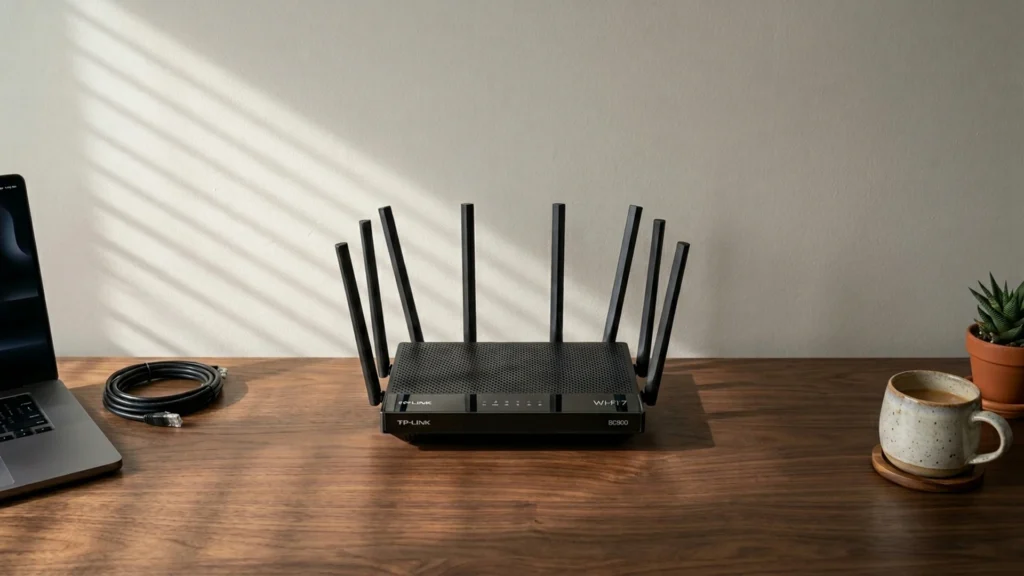
Wi-Fi 7 routers target the newest home wireless standard, built for higher throughput and lower lag. In this category, you should focus on how the router performs with real workloads such as 4K and 8K streaming, online gaming, and frequent downloads across multiple devices.
Picking the right Wi-Fi 7 router gets tricky fast. You trade price for multi-gig Ethernet and faster wireless links, but you also have to manage range and wall penetration. Many buyers also underestimate firmware maturity, which affects stability and how well the router holds performance over time.
For broader router buying help beyond this Wi-Fi 7 focus, see our Best Routers at the end of this guide.
Quick Overview
Our Top Picks
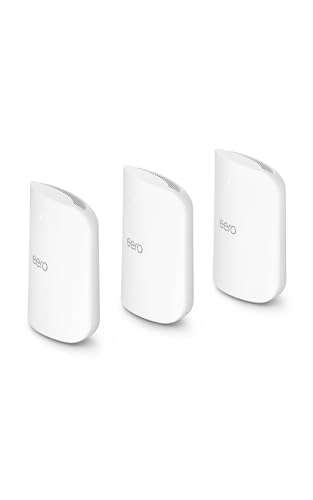
#1. eero Max 7 Router
Specifications
| Brand | eero |
|---|---|
| Router Type | Mesh Router |
| Wifi Standard | Wi-Fi 7 |
| Wifi Bands | Tri-Band |
| Max Wireless Speed | 4300 Mbps |
| Coverage Area | 7500 sq ft |
| Ethernet Ports | 2 x 10 Gbps WAN, null x null LAN |
| Security Features | WPA3, Parental Controls, VPN Support, Automatic Updates |
Pros
- Low-latency, steady speeds
- Consistent multi-room coverage
- Stable with mature firmware
Cons
- High-price feature tradeoff
- Limited power-user controls
- Non-Max mixing limits
The eero Max 7 stands out in Wi-Fi 7 routers because it focuses on smooth real-world use, not just peak numbers. In busy homes, it keeps low latency and steady speeds, even as more devices join. As a tri-band mesh system rated up to 4300 Mbps and covering up to 7500 sq ft, it tends to feel consistent across rooms, which matters more than bursty performance for gaming, streaming, and video calls.
That consistency comes with a few trade-offs. The setup and daily control are simple, but power-user options are limited compared with more configurable routers. It also follows eero’s approach to mesh mixing, so you may want to build around compatible eero gear rather than mixing random models.
#2. ASUS ZenWiFi BQ16 Pro Router

Specifications
| Brand | ASUS |
|---|---|
| Router Type | Mesh Router |
| Wifi Standard | Wi-Fi 7 |
| Wifi Bands | Quad-Band |
| Max Wireless Speed | 30000 Mbps |
| Coverage Area | 8000 sq ft |
| Ethernet Ports | 2 x 10 Gbps WAN, 0 x 10 Gbps LAN |
| Security Features | Parental Controls, VPN Support |
Pros
- Low-latency, steady speeds
- Consistent multi-room coverage
- Thoughtful, easy-to-use tools
Cons
- High price premium
- Value upgrade doubts
- Mounting inconvenience
This Wi-Fi 7 mesh system stands out for its smooth, low-latency feel during real use. With quad-band design and steady multi-room coverage around 8000 sq ft, it helps keep online gaming responsive and streaming stable, even when multiple devices are active at once.
The main downside is that the premium is noticeable, and mounting the nodes can be a bit inconvenient. This is best for larger homes where you want consistent performance across floors, and you are willing to set up a mesh system rather than rely on a single router.
#3. ASUS ROG Rapture GT-BE98 Pro Router

Specifications
| Brand | ASUS |
|---|---|
| Router Type | Gaming Router |
| Wifi Standard | Wi-Fi 7 |
| Wifi Bands | Quad-Band |
| Max Wireless Speed | 30000 Mbps |
| Coverage Area | 6000 sq ft |
| Ethernet Ports | 2 x 10 Gbps WAN, 4 x 2.5 Gbps LAN |
| Usb Ports | 2 x USB |
| Security Features | VPN Support |
Pros
- Sub-3ms latency
- Broad home coverage
- Latest Wi-Fi support
Cons
- MLO compatibility issues
- Static IP instability
- IoT device dropouts
The ASUS ROG Rapture GT-BE98 Pro stands out among Wi-Fi 7 routers for its gaming-first low latency and strong multi-port setup. In everyday use, the sub-3ms response feel helps online games feel tighter, and the quad-band design targets smoother throughput when several devices are active. It also backs that performance with serious wired capacity, including 2 x 10 Gbps WAN and 4 x 2.5 Gbps LAN ports, which suits setups with fast switches, NAS drives, or direct-to-router gaming.
The main trade-off is software and device compatibility. Some users report MLO compatibility issues, plus static IP instability and IoT device dropouts. If you run a mixed smart-home, you may need to test your device set and keep firmware updated. This is best for people who want top-tier Wi-Fi 7 speed and gaming responsiveness, and who are willing to fine-tune settings for a few finicky connections.
#4. NETGEAR Orbi 870 Mesh Router

Specifications
| Brand | NETGEAR |
|---|---|
| Router Type | Mesh Router |
| Wifi Standard | Wi-Fi 7 |
| Wifi Bands | Tri-Band |
| Max Wireless Speed | 21000 Mbps |
| Coverage Area | 9000 sq ft |
| Ethernet Ports | 4 x 2.5 Gbps WAN, 8 x 2.5 Gbps LAN |
| Security Features | Automatic Updates, Antivirus |
Pros
- Low-latency, steady speeds
- Consistent multi-room coverage
- Stable with mature firmware
Cons
- Weaker security support
- AP mode instability
- USB feature missing
NETGEAR Orbi 870 stands out in the Wi-Fi 7 router space because it feels built for smooth, low-latency use across rooms, not just peak speed in one spot. With a tri-band mesh design and a claimed 9000 sq ft coverage area, it tends to keep streaming, gaming, and video calls responsive as you move around the home. The experience is also steady when multiple devices are active at once, which is where many Wi-Fi upgrades start to show their limits.
The main trade-off is in control and setup details. Security support is weaker than you may want, and users have reported some instability when using AP mode. It is also not a great choice if you were hoping to use a USB drive for local media sharing since USB is not part of this model. If you want reliable whole-home Wi-Fi with fewer day-to-day slowdowns, this mesh system is a strong match.
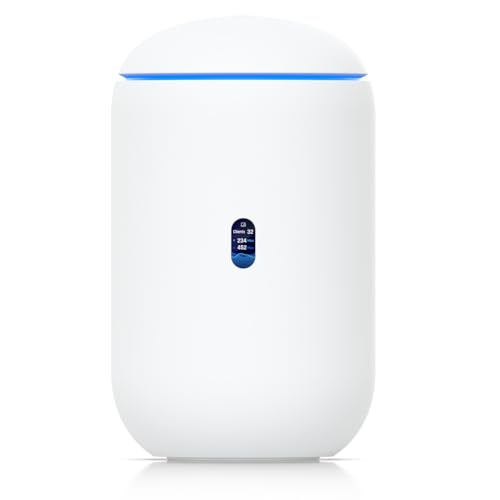
#5. Ubiquiti UniFi Dream Router 7
Specifications
| Brand | Ubiquiti Networks |
|---|---|
| Router Type | Wireless Router |
| Wifi Standard | Wi-Fi 7 |
| Wifi Bands | Tri-Band |
| Coverage Area | 1750 sq ft |
| Ethernet Ports | 1 x 2.5 Gbps WAN, 3 x 2.5 Gbps LAN |
| Security Features | WPA2, VPN Support, Parental Controls |
Pros
- Low-latency, steady speeds
- Consistent multi-room coverage
- Stable with mature firmware
Cons
- Coverage placement variability
- UniFi gateway skepticism
The Ubiquiti UniFi Dream Router 7 stands out in the Wi-Fi 7 router category for low-latency, steady performance under everyday load. In real-world use, it tends to hold fast speeds while multiple devices work at once, which matters more than peak numbers for gaming, video calls, and quick downloads. It is also built for consistent multi-room coverage across typical home layouts, so performance stays usable as you move away from the main unit.
The main trade-off is setup and ecosystem comfort. Ubiquiti gear is often at its best when you use UniFi software and workflows, and some buyers feel unsure if they just want a simple, out-of-the-box gateway experience. Coverage can vary based on where it sits, so planning the placement is important for full-room results.
#6. ASUS ZenWiFi BT10 Router

Specifications
| Brand | ASUS |
|---|---|
| Router Type | Mesh Router |
| Wifi Standard | Wi-Fi 7 |
| Wifi Bands | Tri-Band |
| Max Wireless Speed | 18000 Mbps |
| Coverage Area | 6000 sq ft |
| Ethernet Ports | 2 x 10 Gbps WAN, 0 x 10 Gbps LAN |
| Usb Ports | 1 x USB 3 |
| Security Features | Parental Controls, VPN Support |
Pros
- Low-latency, steady speeds
- Consistent multi-room coverage
- Thoughtful, easy-to-use tools
Cons
- Pricy for two nodes
ASUS ZenWiFi BT10 stands out in the Wi-Fi 7 router space because it is built as a two-node mesh system that keeps performance steady across rooms, not just near the main unit. In day-to-day use, it focuses on smooth, low-latency connections, which matters for online gaming, video calls, and fast app switching. With tri-band setup rated for up to 18000 Mbps and coverage guidance around 6000 sq ft, it is a strong fit for whole-home streaming and consistent speeds from room to room.
The main trade-off is that it is a more involved purchase than a single-router setup. With only two nodes, it works best in medium to larger homes where you can place both units well. It also leans into app-based control and family-friendly tools like parental controls and VPN support, so it is especially appealing for households that want easy management and stable wireless behavior across multiple devices.
#7. eero Pro 7 Router

Specifications
| Brand | eero |
|---|---|
| Router Type | Mesh Router |
| Wifi Standard | Wi-Fi 7 |
| Wifi Bands | Tri-Band |
| Max Wireless Speed | 3900 Mbps |
| Coverage Area | 6000 sq ft |
| Ethernet Ports | 2 x 5 Gbps WAN, null x null LAN |
| Security Features | Parental Controls, VPN Support |
Pros
- Low-latency, steady speeds
- Consistent multi-room coverage
- Latest Wi-Fi support
Cons
- Firmware regression risk
- Streaming dropouts
- High upgrade cost
The eero Pro 7 stands out in Wi-Fi 7 routers because it focuses on keeping service smooth when many devices share the network. In everyday use, it tends to feel fast and responsive, with low latency that helps gaming, video calls, and live streaming. Its tri-band mesh design also helps it stay usable across multiple rooms, which matters more than peak numbers on a box.
The main trade-off is software maturity. Firmware updates can be great, but there is also some regression risk, including occasional streaming dropouts reported by some users. This makes it a better pick for households that want reliable mesh coverage and are willing to stay on top of updates, rather than people who need a hands-off router that never changes behavior over time.
#8. ASUS TUF Gaming BE9400 Router

Specifications
| Brand | ASUS |
|---|---|
| Router Type | Gaming Router |
| Wifi Standard | Wi-Fi 7 |
| Wifi Bands | Tri-Band |
| Max Wireless Speed | 9400 Mbps |
| Coverage Area | 2500 sq ft |
| Ethernet Ports | 1 x 2.5 Gbps WAN, 3 x 2.5 Gbps LAN |
| Security Features | Parental Controls, VPN Support, Antivirus |
Pros
- Low-latency, steady speeds
- Consistent multi-room coverage
- Strong results for price
Cons
- RGB-less design
- USB capability uncertainty
ASUS TUF Gaming BE9400 stands out in the Wi-Fi 7 router space mainly for how steady it feels. With low-latency tuned for gaming and a tri-band setup rated up to 9400 Mbps, it does well when you are streaming, gaming, and downloading at the same time. In day-to-day use, it keeps throughput consistent across rooms, which matters more than peak numbers when walls and distance start to stack up.
The main trade-off is practical, not wireless. The design is more utilitarian, so if you want lighting or a flashy look, it will feel plain. Also, USB support is unclear here, so this is not the safest pick if you rely on storage sharing through the router. Overall, it fits best for households that prioritize stable multi-room performance and low lag over extra local networking add-ons.
#9. TP-Link Archer BE900 Router

Specifications
| Brand | TP-Link |
|---|---|
| Router Type | Wireless Router |
| Wifi Standard | Wi-Fi 7 |
| Wifi Bands | Quad-Band |
| Max Wireless Speed | 24000 Mbps |
| Ethernet Ports | 2 x 10 Gbps WAN, 4 x 2.5 Gbps LAN |
| Usb Ports | 2 x USB 3 |
| Security Features | Parental Controls, VPN Support |
Pros
- Low-latency, steady speeds
- Consistent multi-room coverage
- Thoughtful, easy-to-use tools
Cons
- Some disconnects over time
- Version MLO inconsistency
- Short support window
The TP-Link Archer BE900 stands out in Wi-Fi 7 routers thanks to its very steady day to day performance. In typical home use, it keeps speeds feeling consistent for streaming, gaming, and large downloads, even when multiple rooms are active. Coverage is also strong across multiple areas, so you are less likely to see dramatic slowdowns when you move between floors or sit farther from the router.
The main trade-off is long term stability and software maturity. Some owners report disconnects over time, and there are notes around MLO behaving inconsistently. This makes it a better fit for buyers who want strong Wi-Fi 7 speed and multi room reach, but are willing to monitor firmware updates and tune settings if they see dropouts.
#10. ASUS RT-BE92U Router

Specifications
| Brand | ASUS |
|---|---|
| Router Type | Wireless Router |
| Wifi Standard | Wi-Fi 7 |
| Wifi Bands | Tri-Band |
| Max Wireless Speed | 8648 Mbps |
| Coverage Area | 2750 sq ft |
| Ethernet Ports | 1 x 10 Gbps WAN, 4 x 2.5 Gbps LAN |
| Security Features | VPN Support |
Pros
- Low-latency, steady speeds
- Consistent multi-room coverage
- Latest Wi-Fi support
Cons
- AiMesh instability issues
- Memory utilization concerns
The ASUS RT-BE92U is a Wi-Fi 7 router that focuses on everyday speed and low lag. In real use, it tends to keep throughput steady, even as devices move between rooms. Its tri-band setup, plus multi-gig wiring with a 1 x 10 Gbps WAN and 4 x 2.5 Gbps LAN ports, helps it stay smooth for streaming, gaming, and large downloads at the same time.
The main trade-off is around ASUS AiMesh stability, which can matter if you plan to expand coverage with extra nodes. It can also show higher memory use during heavier setups, so it is best for homes that will update firmware regularly and do not rely on mesh for every scenario.
What to Look For
Everyday speed and latency: Look for a Wi-Fi 7 model that stays fast when multiple phones, laptops, and TVs run at once. The best picks maintain higher real-world throughput and more consistent response times on busy networks.
Coverage that survives real walls: Check whether the router keeps usable speeds across the rooms you actually use. If your layout forces long runs through drywall or multiple floors, prioritize systems designed for clean range extension, not only peak lab distance.
Reliability and mature firmware: Wi-Fi 7 hardware is new, so firmware matters. Choose models with a track record of steady uptime and fewer reports of disconnects, reboots, or buggy updates.
Wi-Fi 7 features that change day to day use: Verify you get the Wi-Fi 7 generation you paid for, plus practical extras like strong security settings, easy guest support, and solid app control for day-to-day management.
Right Ethernet and device mix: If you have a fast internet plan or a wired media setup, confirm the WAN and LAN ports match your speed needs. Multi-gig ports matter when you want to avoid bottlenecks for gaming consoles, PCs, and streaming devices.
How We Picked
Products were identified through broad research across review sites and buyer forums, then filtered to only those that qualify as Wi-Fi 7 Routers.
Scoring used the same objective pillar framework as the main Routers post, allowing direct comparison of products within this sub-category.
Frequently Asked Questions
Do I need a Wi-Fi 7 router if my internet plan is only 300 to 500 Mbps?
You might not see big speed gains right away. Wi-Fi 7 helps most when your home has fast internet and many devices. It can also lower lag for gaming and video calls. For slower internet, the upgrade mainly improves wireless efficiency, not your download limit.
What is the biggest real-world difference between a Wi-Fi 7 mesh system and a single Wi-Fi 7 router?
A single router covers less area and can create dead spots across multiple floors. A mesh system uses more nodes to spread the signal more evenly. You also get smoother handoffs when you move between rooms. Mesh usually costs more, but it is often the better choice for larger homes.
How many Ethernet ports and what speeds matter for Wi-Fi 7 routers?
Look for at least one multi-gig WAN port if you have a fast modem or fiber line. For wired devices, more LAN ports help if you use a TV, gaming PC, or streaming box. Speeds like 2.5 Gbps are useful even if your Wi-Fi is the main focus. Always check whether the router can do multi-gig on both WAN and LAN, not just one side.
Will Wi-Fi 7 work with my older Wi-Fi 6 or Wi-Fi 5 devices?
Yes. Wi-Fi 7 routers support backward compatibility, so older devices still connect. However, those older devices will not use Wi-Fi 7 speeds. Your upgrade also depends on how many new devices you have and how busy your network gets.
Should I choose a Wi-Fi 7 router or switch to a different router type like a mesh or a gaming-focused router?
Choose mesh if you need better whole-home coverage. Choose a gaming-focused router if you care most about smooth lag handling and simple prioritization. Choose a Wi-Fi 7 router when you want the newest wireless performance for many devices. If your home is small and you mostly use one room, a single router can be enough.
How do Wi-Fi 7 routers compare to Wi-Fi 6E routers for latency and device congestion?
Wi-Fi 7 often improves how the network handles many active devices. It can reduce congestion and keep speeds steadier during heavy use. Wi-Fi 6E also performs well, especially on the 6 GHz band, but it usually has fewer new efficiency gains than Wi-Fi 7. Your actual results depend on your layout and how many clients support newer features.