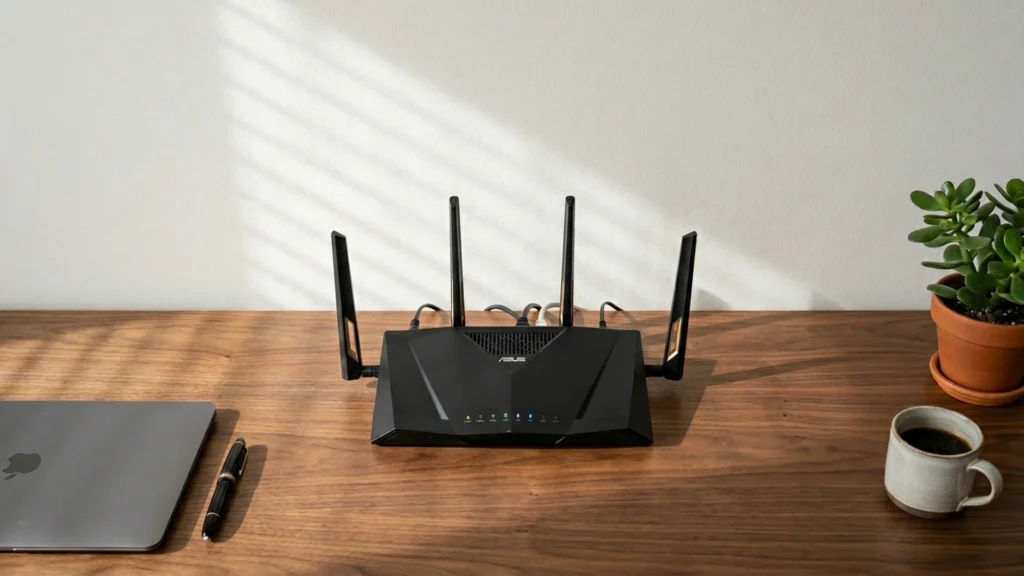
Routers route your internet to every device in your home, and they set the baseline for your Wi-Fi experience. In this guide, we focus on what separates a router that feels fast from one that slows down under real use.
Picking is hard because spec sheets often mislead. Max wireless speed ratings do not equal real throughput at your desk. Multi-device performance, room-to-room coverage, and firmware maturity matter more than the highest number on the box. Features like extra apps, complex settings, and flashy add-ons can sound useful, but they may not improve streaming, gaming, or work calls.
This guide helps you choose with clear criteria. You will see what to look for in performance, coverage, reliability, and features, plus how we picked models that fit different homes and needs.
Quick Overview
Top Picks
Best Overall
Specifications
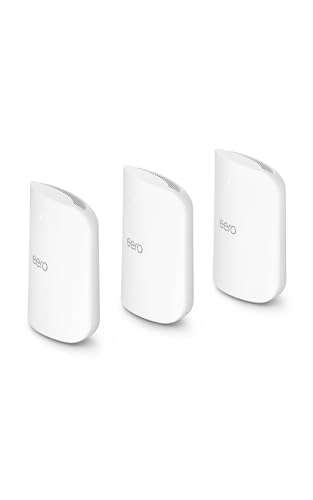
| Brand | eero |
|---|---|
| Router Type | Mesh Router |
| Wifi Standard | Wi-Fi 7 |
| Wifi Bands | Tri-Band |
| Max Wireless Speed | 4300 Mbps |
| Coverage Area | 7500 sq ft |
| Ethernet Ports | 2 x 10 Gbps WAN, null x null LAN |
| Security Features | WPA3, Parental Controls, VPN Support, Automatic Updates |
Pros
- Low-latency, steady speeds
- Consistent multi-room coverage
- Stable with mature firmware
Cons
- High-price feature tradeoff
- Limited power-user controls
- Non-Max mixing limits
This is a strong fit for a Best Overall pick because it delivers a consistent, low-latency Wi-Fi experience across a whole home, not just near the router. With Wi-Fi 7 and a tri-band mesh setup, it is built for smooth streaming, gaming, and fast downloads when you have multiple devices going at once.
You get steady performance and stable throughput, backed by mature automatic updates and a reputation for fewer random drops. Coverage is also reliable, with enough reach for up to about 7500 sq ft and consistent multi-room performance. It also keeps things secure with WPA3, plus helpful extras like Parental Controls and VPN Support.
The main trade-off is that the top-tier experience comes with a high-price feature tradeoff, and some power-user controls feel limited. There is also a non-Max mixing limit if you try to combine newer and older eero units. If you want one system that stays fast and stable across many rooms, this is the one to get.
Also ranked #1 in: Mesh Routers · Wi-Fi 7 Routers · Routers with Dual 10GbE Ports
Best for Large Homes

Specifications
| Brand | ASUS |
|---|---|
| Router Type | Mesh Router |
| Wifi Standard | Wi-Fi 7 |
| Wifi Bands | Quad-Band |
| Max Wireless Speed | 30000 Mbps |
| Coverage Area | 8000 sq ft |
| Ethernet Ports | 2 x 10 Gbps WAN, 0 x 10 Gbps LAN |
| Security Features | Parental Controls, VPN Support |
Pros
- Low-latency, steady speeds
- Consistent multi-room coverage
- Thoughtful, easy-to-use tools
Cons
- High price premium
- Value upgrade doubts
- Mounting inconvenience
For large homes, this mesh system makes sense because it focuses on keeping fast Wi-Fi stable across many rooms, not just near the router. The ZenWiFi BQ16 Pro uses Wi-Fi 7 and quad-band design to help reduce slowdowns when the network is busy.
You feel the difference in day-to-day performance, with low-latency, steady speeds for streaming and gaming. Coverage is also consistent across multi-room layouts, which is the main reason to choose a mesh setup in bigger houses. On top of that, the setup tools are straightforward, and the security and control options include Parental Controls and VPN Support.
The main drawback is the mounting inconvenience, plus a high price premium that can make it harder to justify as an upgrade. If you need strong, low-lag performance and reliable coverage throughout a large home, this is the one to get.
Best Gaming

Specifications
| Brand | ASUS |
|---|---|
| Router Type | Gaming Router |
| Wifi Standard | Wi-Fi 7 |
| Wifi Bands | Quad-Band |
| Max Wireless Speed | 30000 Mbps |
| Coverage Area | 6000 sq ft |
| Ethernet Ports | 2 x 10 Gbps WAN, 4 x 2.5 Gbps LAN |
| Usb Ports | 2 x USB |
| Security Features | VPN Support |
Pros
- Sub-3ms latency
- Broad home coverage
- Latest Wi-Fi support
Cons
- MLO compatibility issues
- Static IP instability
- IoT device dropouts
This gaming router fits the Best Gaming spot because it is built around very low lag. You get sub-3ms latency, and the Wi-Fi 7 quad-band setup helps keep streams and game traffic smooth when you are busy using other devices at the same time.
In everyday use, it stays quick, with strong real-world performance and solid stability across typical home loads. Coverage is broad too, rated for up to 6000 sq ft, so you are less likely to hit dead zones in larger homes. The wired side is also serious, with 2 x 10 Gbps WAN and 4 x 2.5 Gbps LAN, plus VPN Support and dual USB ports for extra network tasks.
The main downside is software and setup edge cases. Some users report MLO compatibility issues, static IP instability, and occasional IoT device dropouts. If you play competitive games and want very low latency with strong wired speeds, but you run into MLO or static IP quirks, this is the one to consider with a little extra setup time.
Best for MultiGig Ethernet

Specifications
| Brand | NETGEAR |
|---|---|
| Router Type | Mesh Router |
| Wifi Standard | Wi-Fi 7 |
| Wifi Bands | Tri-Band |
| Max Wireless Speed | 21000 Mbps |
| Coverage Area | 9000 sq ft |
| Ethernet Ports | 4 x 2.5 Gbps WAN, 8 x 2.5 Gbps LAN |
| Security Features | Automatic Updates, Antivirus |
Pros
- Low-latency, steady speeds
- Consistent multi-room coverage
- Stable with mature firmware
Cons
- Weaker security support
- AP mode instability
- USB feature missing
This Orbi 870 is a strong match for Best for MultiGig Ethernet thanks to its plentiful 2.5 Gbps wired ports. With 4 x 2.5 Gbps WAN and 8 x 2.5 Gbps LAN, it can keep fast connections for gaming, smart home hubs, and multi-device workstations.
In daily use, it stays quick with low latency and steady speeds. Multi-room coverage is also consistent, which helps when you move around the house or add more clients. Reliability feels solid too, with stable operation and mature firmware, plus security basics like Automatic Updates and Antivirus.
The main downside is weaker security support, and some users report AP mode instability. If you want a mesh system that prioritizes multi-gig wired performance and smooth whole-home coverage, this is a good fit, especially for tech-forward households.
Best with UniFi
Specifications
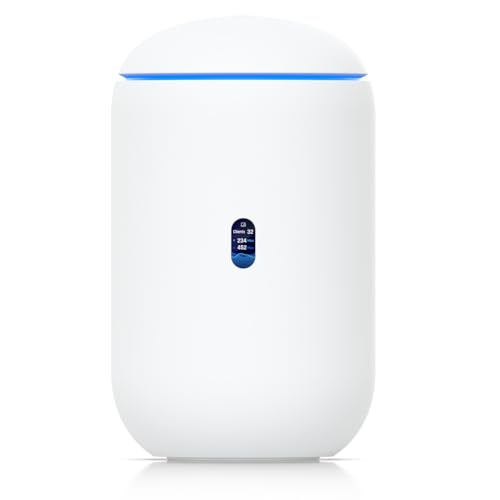
| Brand | Ubiquiti Networks |
|---|---|
| Router Type | Wireless Router |
| Wifi Standard | Wi-Fi 7 |
| Wifi Bands | Tri-Band |
| Coverage Area | 1750 sq ft |
| Ethernet Ports | 1 x 2.5 Gbps WAN, 3 x 2.5 Gbps LAN |
| Security Features | WPA2, VPN Support, Parental Controls |
Pros
- Low-latency, steady speeds
- Consistent multi-room coverage
- Stable with mature firmware
Cons
- Coverage placement variability
- UniFi gateway skepticism
This UniFi Dream Router 7 fits the Best with UniFi spot because it is built to work smoothly inside the UniFi ecosystem. The standout is its low-latency feel, which matters for gaming, video calls, and fast web browsing.
In day-to-day use, it holds steady speeds when many devices are active, and the latency stays even. Coverage is also strong for multi-room homes, with a tri-band design and a rated 1750 sq ft range. On top of that, it brings UniFi-friendly management, plus practical security and control tools like WPA2, VPN Support, and Parental Controls.
The main weakness is coverage placement variability, meaning some layouts need careful positioning to avoid weak spots. Also, if you are wary of UniFi gateway setup and how the controller experience feels, you may find it more work than you want. If you already run UniFi at home and want a responsive router that stays stable across rooms, this is a good fit.
Best Touchscreen

Specifications
| Brand | TP-Link |
|---|---|
| Router Type | Wireless Router |
| Wifi Standard | Wi-Fi 7 |
| Wifi Bands | Quad-Band |
| Max Wireless Speed | 24000 Mbps |
| Ethernet Ports | 2 x 10 Gbps WAN, 4 x 2.5 Gbps LAN |
| Usb Ports | 2 x USB 3 |
| Security Features | Parental Controls, VPN Support |
Pros
- Low-latency, steady speeds
- Consistent multi-room coverage
- Thoughtful, easy-to-use tools
Cons
- Some disconnects over time
- Version MLO inconsistency
- Short support window
The TP-Link Archer BE900 fits the Best Touchscreen role because it is built around a clean, guided setup experience that feels easy to use day to day. The touchscreen-style control mindset matters here, since families and multitaskers need quick changes without digging through menus for basics.
In everyday use, it keeps speeds steady and latency low, even when many devices run at once. Coverage stays consistent across multiple rooms, and the setup tools are thoughtful and simple. On the connection side, you also get Wi-Fi 7 with quad-band support, plus strong wired options like 2 x 10 Gbps WAN and 4 x 2.5 Gbps LAN, along with 2 x USB 3 ports. Security tools like Parental Controls and VPN Support make it easier to manage home networks.
The main drawback is that some users report disconnects over time, and there is a noted MLO inconsistency. Also, the support window is shorter than on some rivals. If you want fast, stable Wi-Fi behavior with easy home management, this is a good pick, but if you hate any chance of dropouts, look at more proven long-term options first.
Best for Small Homes

Specifications
| Brand | ASUS |
|---|---|
| Router Type | Wireless Router |
| Wifi Standard | Wi-Fi 7 |
| Wifi Bands | Tri-Band |
| Max Wireless Speed | 8648 Mbps |
| Coverage Area | 2750 sq ft |
| Ethernet Ports | 1 x 10 Gbps WAN, 4 x 2.5 Gbps LAN |
| Security Features | VPN Support |
Pros
- Low-latency, steady speeds
- Consistent multi-room coverage
- Latest Wi-Fi support
Cons
- AiMesh instability issues
- Memory utilization concerns
For small homes, this ASUS RT-BE92U makes a strong choice because it is built around Wi-Fi 7 with tri-band speeds up to 8648 Mbps. That mix helps keep modern devices fast in common rooms, even when you are streaming and gaming at the same time.
You see the payoff in everyday performance and reach. Real-world speeds stay steady with low latency, and it holds coverage across multiple rooms within about 2750 sq ft. The port selection also matters for smaller setups, with 1 x 10 Gbps WAN and 4 x 2.5 Gbps LAN for fast wired devices. It also brings VPN Support, which is useful if you want secure remote access.
The main downside is software behavior. Some users report AiMesh instability issues, and there are memory utilization concerns. If you want reliable Wi-Fi speed and strong multi-room coverage for a compact home, this is a good fit, especially if you are not heavily dependent on AiMesh.
Best Value

Specifications
| Brand | TP-Link |
|---|---|
| Router Type | Wireless Router |
| Wifi Standard | Wi-Fi 6 |
| Wifi Bands | Dual-Band |
| Max Wireless Speed | 2976 Mbps |
| Coverage Area | 3000 sq ft |
| Ethernet Ports | 1 x 2.5 Gbps WAN, 4 x Gigabit LAN |
| Usb Ports | 1 x USB 3 |
| Security Features | Parental Controls, VPN Support |
Pros
- Consistent multi-room coverage
- Faster multiport Ethernet
- Strong results for price
Cons
- 5GHz dropouts
- Need troubleshooting resets
- Limited power-user tuning
This TP-Link Archer AX55 is a solid fit for a Best Value router because it stays practical in everyday homes while adding modern Wi-Fi 6. The biggest standout is its consistent multi-room coverage, so rooms far from the router still feel usable.
In real use, it keeps things moving with a strong coverage score and solid feature set. You get Wi-Fi 6 on the 5 GHz and 2.4 GHz bands, plus a fast wired setup with 1 x 2.5 Gbps WAN and 4 x Gigabit LAN ports. There is also USB 3 for local sharing, and built-in Parental Controls and VPN Support for day-to-day needs.
The main drawback is some 5 GHz dropouts, and a few owners report needing troubleshooting resets to get it steady again. Limited power-user tuning also means you may not want to spend time tweaking advanced settings. If you need reliable coverage for streaming, work, and gaming across multiple rooms without going to a more complex router, this is the one to get.
What to Look For
Performance: Look for strong real-world throughput and low latency when multiple devices connect at once. Favor newer Wi-Fi generations and make sure the router can keep speed stable on the 5 GHz or 6 GHz band.
Coverage: Check the stated coverage area and, more importantly, whether the router is designed for your home size and layout. If you have thick walls or multiple floors, prioritize models known for consistent reach or add mesh support.
Reliability: Choose routers with steady uptime and mature firmware. If a model has a history of drops, reboot loops, or overheating, expect those issues to show up during long streaming sessions or heavy downloads.
Wi-Fi Standard: Match the Wi-Fi generation to your devices. Wi-Fi 7 gear can help in busy homes, but only if your client devices support it. Wi-Fi 6E models add 6 GHz for less congestion where available.
Wi-Fi Bands: Pick the band count that fits your use. Dual-Band can work for smaller homes, while Tri-Band helps when you have many devices or want more room for high-bandwidth tasks like video calls and 4K streaming.
Ethernet Ports: If you use game consoles, TVs, or access points, Ethernet reduces Wi-Fi strain. Confirm you have enough LAN ports and that the WAN and LAN speeds match your internet plan and network needs.
Security Features: Use modern encryption and basic protections. Prioritize WPA3, Automatic Updates, and tools like Guest Network, Parental Controls, Access Control, and VPN Support when you need them.
How We Selected These Products
We started with broad web research across review sites, buyer forums, and best-of roundups, so we did not rely on one test lab or one opinion. Then we read a large volume of customer reviews to find the real failure points, like range drop-off, frequent disconnects, slow setup experiences, or unstable performance under load.
After that, we verified each model's availability and core specs directly against Amazon listings, including router type, Wi-Fi generation, band count, combined max wireless speed, coverage area, Ethernet and USB ports, and supported security features. Each router was scored across the pillar names in our framework: Performance, Coverage, Reliability, Features, and Value.
Final selection emphasized role-based fit. We chose models that stand out for specific needs, such as larger homes, gaming, multi-gig Ethernet, UniFi setups, or tight budgets, rather than simply picking the highest overall score.
Frequently Asked Questions
Which router is best for a large home with many floors?
Choose a high-end mesh system made for whole-home coverage, not a single router for one room. Look for strong coverage ratings and mesh features like smart roaming. ASUS ZenWiFi BQ16 Pro Router stands out in this group for large-area performance and scaling. Still, you may need extra nodes in older or tough layouts.
What is the main difference between budget and premium routers in this category?
Budget routers often deliver good speeds near the unit, but they can struggle with consistency as the home gets bigger. Premium models usually handle more devices better and keep performance steadier across rooms. You also tend to get stronger radios, faster multi-gig Ethernet options, and more advanced mesh behavior. The tradeoff is higher price.
Do I need a multi-gig Ethernet router if my internet plan is only gigabit?
Not always. Multi-gig ports help if you have fast local transfers, a NAS, or you plan to upgrade internet later. If you mainly stream and browse, a gigabit WAN setup can still feel fast. NETGEAR Orbi 870 Mesh Router is best for people who want lots of wired speed for PCs and NAS devices.
Is a higher price always better for routers?
No. Some premium routers improve coverage and device handling, but reliability and features vary by model. In this set, the best performers also score well on performance and coverage, not just on price. TP-Link Archer AX55 Router shows that strong value is still possible at a lower cost.
Why do routers sometimes lose performance far from the main unit?
Walls and distance reduce signal strength, so real speeds drop even when the router advertises high max rates. Many models also change how they use bands, which can hurt throughput on older devices. Tri-band and quad-band designs can help, but mesh setup and placement matter a lot. You will usually see better results when you place nodes closer to dead zones.
Why can a great router still have issues after setup?
Some problems come from firmware maturity and settings like band steering or MLO behavior. A few models in this set show stronger performance once firmware stabilizes. If you see drops or slowdowns, rebooting and updating firmware often helps first. For advanced setups, avoid mixing too many different Wi-Fi generations in the same mesh.