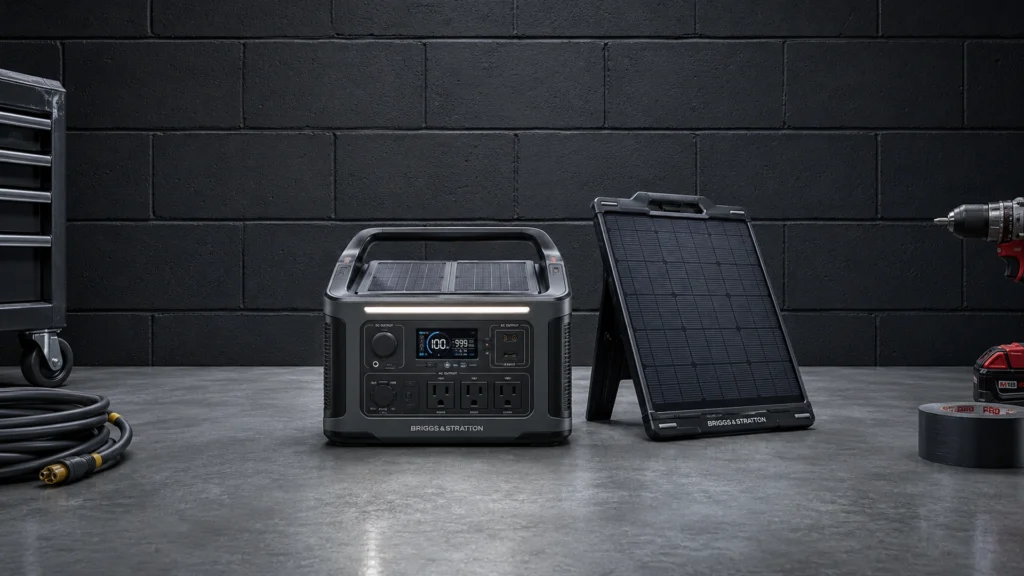
Solar Panel Included Portable Power Stations include solar panels in the box. That matters because your recharge plan starts at purchase, not later. In this sub-category, buyers need enough battery capacity for real runtime, stable AC power for devices, and charging that stays practical with solar.
Selection gets hard fast. Panel included units often cost more for the same battery size. Some models also use smaller panels, which can make solar charging slow in shade or off-season sun. You also need to check inverter power limits, since many stations will protect the battery when loads spike.
If you want help across the full range of power stations and not only panel-included models, see our Best Portable Power Stations.
Quick Overview
Our Top Picks
#1. BLUETTI AC70 Portable Power Station

Specifications
| Brand | BLUETTI |
|---|---|
| Battery Capacity Wh | 768 Wh |
| Ac Output Power W | 1000 W continuous / 2000 W surge |
| Ac Charging Input W | 950 W |
| Solar Input W | 500 W |
| Battery Chemistry | LiFePO4 |
| Weight Lb | 22.5 lb |
| Dimensions In | 10.1 x 12.4 x 8.2 in |
Pros
- Stable inverter under load
- LiFePO4 reliability
- Reliable ports and cooling
Cons
- Low capacity
- Listing ambiguity
- Variant feature confusion
For solar-powered camping and off-grid backup, the BLUETTI AC70 stands out for how steady it stays when you actually draw power. With a 1000 W continuous inverter and a 500 W max solar input, it can run common loads without the frequent dropouts people fear from smaller stations. The battery uses LiFePO4 chemistry, which also helps with day-to-day reliability when you cycle it through partial charges from panels.
The trade-off is runtime. At 768 Wh, it is not the choice for long overnight use of high-draw devices. It also sits in that middle ground where solar charging will feel great on clear days, but slower on cloudy ones compared with bigger, higher-solar-capacity models. If you want dependable inverter behavior for phones, lights, routers, and medium appliances, it is a strong fit.
#2. EcoFlow River 3 Plus Portable Power Station

Specifications
| Brand | EF ECOFLOW |
|---|---|
| Battery Capacity Wh | 286 Wh |
| Ac Output Power W | 600 W continuous / 1200 W surge |
| Ac Outlet Count | 3 Outlets |
| Battery Chemistry | LiFePO4 |
| Weight Lb | 10.4 lb |
| Dimensions In | 5.8 x 9.2 x 9.1 in |
Pros
- Competitive power per dollar
- Clean app control and display
- Compact footprint for travel
Cons
- Low capacity
- Limited inverter power
- Too few outlets
EcoFlow River 3 Plus stands out in solar-ready portable power because it pairs LiFePO4 battery chemistry with clean app control for real-time status while you recharge. In a category where panels are often treated as an add-on, this unit is aimed at off-grid use cases, and its compact 10.4 lb size makes it easier to bring along on short trips or for backup power. With 286 Wh on board and a 600 W continuous / 1200 W surge inverter, it is a practical match for powering small appliances and charging devices without hauling a larger station.
The trade-off is runtime and expansion. 286 Wh is limited if you run higher-draw loads, and the inverter is capped at 600 W, so bigger tools and some kitchen gear are out of range. It also has only 3 AC outlets, so people who need to run multiple devices at once may end up relying on adapters or a separate setup.
#3. Jackery Explorer 2000 Plus Portable Power Station

Specifications
| Brand | Jackery |
|---|---|
| Battery Capacity Wh | 2042 Wh |
| Ac Output Power W | 3000 W |
| Solar Input W | 1200 W |
| Battery Chemistry | LiFePO4 |
| Weight Lb | 96.7 lb |
| Dimensions In | 14.7 x 18.6 x 14.1 in |
Pros
- Stable inverter under load
- Reliable ports and cooling
- Clean app control and display
Cons
- Manageable weight, bulky bulk
- Crappy manual quality
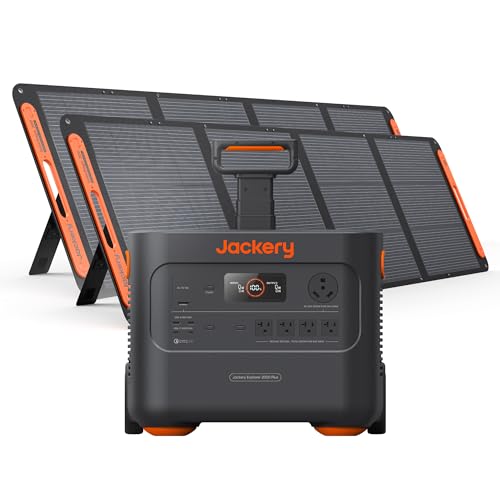
For solar-ready backup and off-grid camping, the Jackery Explorer 2000 Plus stands out for how it pairs big LiFePO4 storage (2042 Wh) with a high solar ceiling (1200 W max input). That combination matters when you want meaningful runtime from panels without constantly babysitting draw. It also runs a strong 3000 W class AC output with a stable inverter under load, and users report reliable cooling and ports, plus clean app control and an easy-to-read display.
The trade-off is portability. At 96.7 lb and a bulky footprint, it is more suited to car transport, stationary backup, or a wheel-out setup than true walk-in camping. If you plan to move it often, the weight will be your main limiter. Also note the build is generally dependable, but some manual quality issues show up, so expect a little less polish in the paperwork than in the unit itself.
#4. Anker SOLIX F3800 Portable Power Station

Specifications
| Brand | Anker |
|---|---|
| Battery Capacity Wh | 3840 Wh |
| Ac Output Power W | 6000 W |
| Solar Input W | 400 W |
| Battery Chemistry | LiFePO4 |
| Weight Lb | 132.3 lb |
| Dimensions In | 15.3 x 27.6 x 15.6 in |
Pros
- Stable inverter under load
- High capacity
- LiFePO4 reliability
Cons
- Heavy and hard-carry
- Accessory dependency
- Charging-time unverified
This Anker SOLIX F3800 stands out for solar-ready whole-home style power in a portable format. It pairs a large 3840 Wh LiFePO4 battery with a 400 W solar input, which helps a lot when you want to run gear for long stretches without relying only on outlets. Its inverter is also described as stable under load, so demanding loads are less likely to cause shutdowns during off-grid use.
The main trade-off is portability. At 132.3 lb, it is more for car camping, job sites, or fixed backup than for hiking or frequent moves. It also looks a bit accessory-dependent, so plan around the right solar setup and cables before you leave home. If you want to judge solar recharge speed for your exact panel and sun conditions, the charging time is still unverified, so expect some trial and error early on.
What to Look For
Solar Input vs. Included Panels: Check the solar input limit in watts, then confirm it matches the included panel output. A low solar input number means slower recharge, even with decent weather.
Battery Capacity for Solar Reality: Look at total battery capacity in Wh, not just peak wattage. Higher Wh usually means you can run more between sunny hours, especially overnight or in cloudy stretches.
AC Output Power for Your Highest-Draw Device: Match your planned devices to the station inverter ratings. Use the continuous and surge numbers to avoid shutoffs during startup loads like pumps, compressors, or certain microwaves.
Charging Speed from Wall and Solar: Prioritize stations with strong AC charging input as well as workable solar input. If the wall charge is low, you will wait longer to top off when solar falls short.
Build and Port Layout That Fits Outdoor Use: Choose a unit with solid build quality and a port layout you will use daily. Favor clear AC outlets plus USB and DC options that reduce adapter clutter at campsites or during outages.
How We Picked
Products were identified through broad research across review sites and buyer forums, then filtered to only those that qualify as Solar Panel Included Portable Power Stations.
Scoring used the same objective pillar framework as the main Portable Power Stations post, allowing direct comparison of products within this sub-category using performance, portability, build quality, features, and value.
Frequently Asked Questions
Do solar panel included power stations charge fast enough to be useful during a trip?
They can be useful, but charging speed depends on sunlight and weather. Many models include panels, yet the real input may still be lower than what you expect indoors. Plan to top up in full sun for a few hours, not to fully recharge in one short window.
How should I set up the included solar panels for best charging?
Place the panels in direct sun and keep them steady. Face them toward the sun and avoid shading from trees or the vehicle. If your unit supports it, use a panel angle that matches the sun direction for the hour.
What maintenance do solar panels included power stations need?
Wipe the panels with a dry or lightly damp cloth to remove dust. Check cables for nicks and keep connectors clean and dry. Store the unit and panels out of heat and humidity when not in use.
When should I choose a portable power station that does not include solar panels?
Choose no-panel models if you already own good solar panels or want a bigger solar setup. Included panels are convenient, but they may not match your charging goals. If you need faster recharging or more control, buying panels separately can be a better fit.
How do solar panel included portable power stations compare to other portable power stations for everyday backup use?
Solar-included models are better for off-grid camping and long outings. Other portable power stations often recharge faster from a wall outlet. If you mainly use backup at home, AC charging speed and outlet count may matter more than built-in solar.


