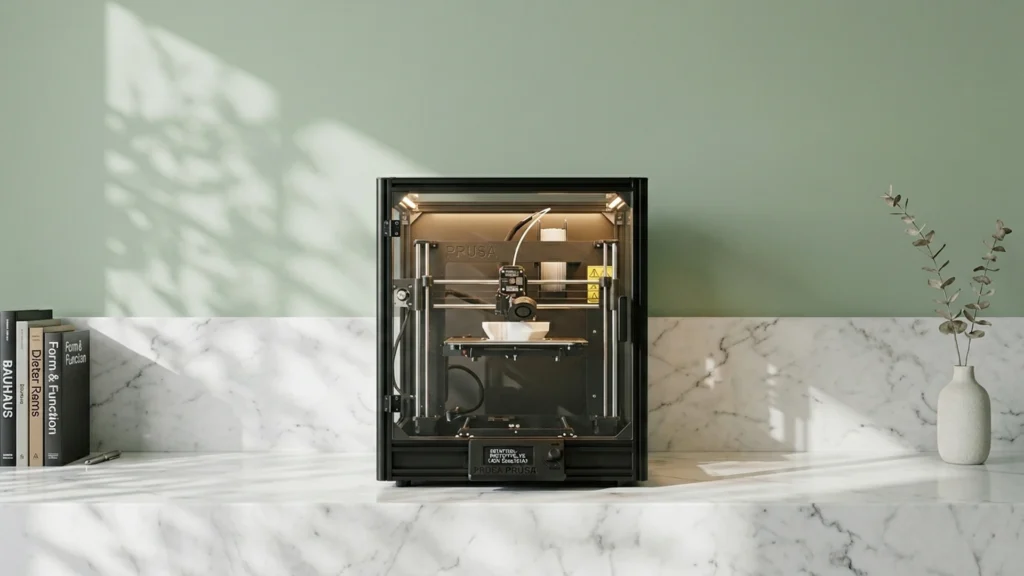
Enclosed 3D printers put the hot parts and most of the airflow inside a shell. For buyers, that means fewer drafts, more stable print conditions, and better control if you plan to print in less ventilated spaces. This sub-category also fits people who want less mess from stray filament, overspray, and fumes, compared with open-frame machines.
Picking the right enclosed printer is hard because the enclosure changes trade-offs. You may get better heat control and surface finish, but you can also face higher noise inside the box and more maintenance access issues. You must also check real temperature limits, bed stability, and how reliable the printer is on long prints, not just on short bench tests.
If you want the full landscape across every printer style and budget, start with our bigger guide: Looking for all types? See our Best 3D Printers.
Quick Overview
Our Top Picks
#1. Bambu Lab P1S 3D Printer

Specifications
| Brand | BAMBULAB |
|---|---|
| Printing Technology | FDM |
| Build Volume | 256 x 256 x 256 mm³ |
| Max Print Speed | 500mm/s |
| Max Nozzle Temperature | 300 °C |
| Supported Materials | PLA, PETG, TPU, PVA, PET ABS, ASA, PA, PC |
Pros
- Sharp layers, accurate dimensions
- Stays calibrated, rarely fails
- Smart convenience features, helpful extras
Cons
- Basic-detail limited
- Firmware authorization friction
- Occasional filament jamming
If you want an enclosed FDM printer that delivers consistently, the Bambu Lab P1S is a standout choice. The enclosure helps keep drafts down, which supports more repeatable print results for common materials like PLA, PETG, TPU, and engineering options such as ASA, PA, and PC. In practice, it produces sharp layers with accurate dimensions, with far less dialing-in than many hobby enclosed printers.
The main trade-off is that very small, ultra-fine detail can be a bit more limited than you might hope, especially if your goal is highly intricate parts with lots of micro-text. Also note occasional filament jamming and firmware authorization friction, which can slow you down compared to simpler printers. This is best for people who want a mostly set-and-forget enclosed machine for dependable parts rather than maximum tinkering flexibility.
#2. Flashforge Adventurer 5M Pro 3D Printer

Specifications
| Brand | FLASHFORGE |
|---|---|
| Printing Technology | FDM |
| Max Print Speed | 600 mm/s |
| Max Nozzle Temperature | 280 °C |
| Max Bed Temperature | 110 °C |
| Supported Materials | TPU, ASA, PLA, ABS, PETG, PLA-CF, PETG-CF |
Pros
- Strong results, reasonable costs
- Simple leveling, smooth workflow
- Fast printing speed
Cons
- Basic-detail limited
- Slicer compatibility limitations
- Nozzle clogging risk
For an enclosed FDM printer category, the Flashforge Adventurer 5M Pro stands out for being a practical all-in-one experience, not a tinkering project. It keeps prints cleaner by enclosing them, which helps reduce drafts during ABS, ASA, and PETG jobs. In daily use, leveling is simple and the workflow stays smooth. You can also run at high speeds up to 600 mm/s, so functional parts and prototypes do not take all day.
The trade-off is detail and slicer fit. Fine text and crisp, tiny features can look limited compared with slower, more precision-focused machines. Some users may also find slicer compatibility less forgiving than expected, and there is a real nozzle clogging risk if you skip good filament handling or regular maintenance. This is best for people who want dependable enclosed printing for common thermoplastics and can accept average detail quality for faster results.
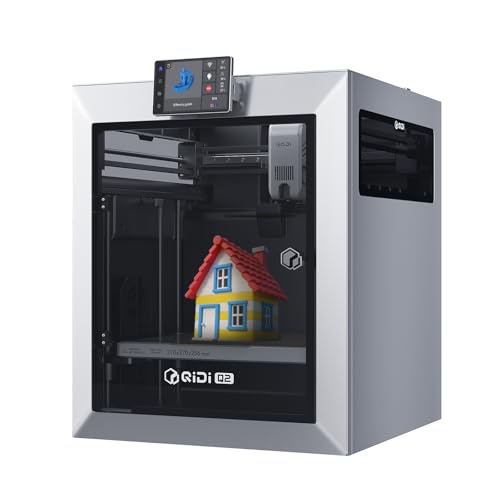
#3. QIDI Q2 3D Printer

Specifications
| Brand | R QIDI TECHNOLOGY |
|---|---|
| Printing Technology | FDM |
| Build Volume | 270 x 270 x 256 mm |
| Max Print Speed | 600 mm/s |
| Max Nozzle Temperature | 370 °C |
| Supported Materials | PLA, ABS, PETG, TPU, PA, PC |
Pros
- Sharp layers, accurate dimensions
- Large build capacity
- Fast printing speed
Cons
- Extrusion skipping
- Pause ignored
- Qidi Box unreliability
In an enclosed 3D printer lane, the QIDI Q2 stands out for producing sharp, accurate parts while keeping things more controlled than open-frame machines. Its enclosed setup helps with temperature stability, which shows in layer consistency and clean surface finish. A large 270 x 270 x 256 mm build area also makes it easier to use the enclosure for real work, not just small test prints. At high speeds up to 600 mm/s, it can move quickly without turning everything into a messy compromise.
The trade-off is that reliability and job handling are not always smooth. Extrusion skipping can happen, so you may need to watch the first layers and check the system if prints start to look thin or broken. It also has a pause behavior that can be ignored, which makes mid-print changes less dependable. This is a strong pick for experienced hobbyists who want enclosure benefits and good print detail, but are willing to troubleshoot occasional extrusion issues and power through imperfect pause control.
What to Look For
Consistent print quality in an enclosed chamber: Look for tight layer lines and accurate dimensions, especially on overhangs and bridging. Enclosure helps, but only if the machine controls temperature steadily across the build.
Long-print reliability: Enclosed printers may run longer with less draft risk, but you still need stable bed adhesion and dependable feeding. Check for issues like clogs, warped parts, and frequent re-leveling, since the enclosure can make fixes slower.
Ease of setup and maintenance access: A sealed build space can be harder to reach. Favor printers that level quickly, use dependable filament loading, and keep routine maintenance straightforward, like changing nozzles or cleaning without taking half the printer apart.
Enclosure-focused thermal capability: Verify the practical temperature ceiling for both the hotend and the heated bed. Buyers who care about enclosure benefits will prioritize higher nozzle temperature and a bed that can hold steady heat for the plastics they plan to print.
Materials that match your goals: Check supported materials listed by the manufacturer. Enclosed printers usually make the most sense when you plan to run more demanding filaments, like PETG or ABS-style plastics, not only basic PLA.
How We Picked
Products were identified through broad research across review sites and buyer forums, then filtered to only those that qualify as Enclosed 3D Printers.
Scoring used the same objective pillar framework as the main 3D Printers post, allowing direct comparison of products within this sub-category.
Frequently Asked Questions
Why should I buy an enclosed 3D printer instead of an open one?
An enclosure helps keep temperature steady during printing. That often improves part strength and reduces warping. It also helps contain fumes and dust from the printer. You may need less babysitting for tricky materials.
What materials work best with enclosed printers?
Enclosed printers usually handle higher temperature filaments better than open frames. Many models focus on PLA, PETG, and TPU, with some support for Nylon, ABS, ASA, and similar plastics. Always check the printer's max nozzle and bed temperatures first. You will also want proper ventilation for fumes.
Do enclosed printers need more maintenance than open printers?
They can need more care because heat and dust build up inside the box. You still do the same basics: keep the bed clean and watch for clogs. Use the enclosure to protect parts from drafts, but wipe surfaces and clear stray filament. Replace worn nozzles and tips the same way as any FDM printer.
How do print settings change on an enclosed printer for the same model?
You may get better results by using a higher, more stable chamber temperature. That helps with warping on materials like ABS-like plastics. Still, stick to the slicer profiles that match your filament. Start with test prints to confirm cooling and adhesion.
When should I choose a different type of 3D printer instead of an enclosed one?
Choose resin or MSLA if you need very smooth details on small parts. Choose FDM enclosed if you want larger, durable parts and easy-to-source filament. Also consider resin if you want miniatures and fine textures, and you can handle resin cleanup. Pick the type that matches your part size and finish needs.
How do enclosed 3D printers compare to other 3D printers in build volume and speed?
Enclosed printers often focus on practical reliability rather than extreme speed. Build volume varies widely by model, so check the exact W x D x H specs. Many enclosed FDM printers reach solid speeds for everyday parts. For the biggest prints, an enclosed printer may still be smaller than some open-frame options.


