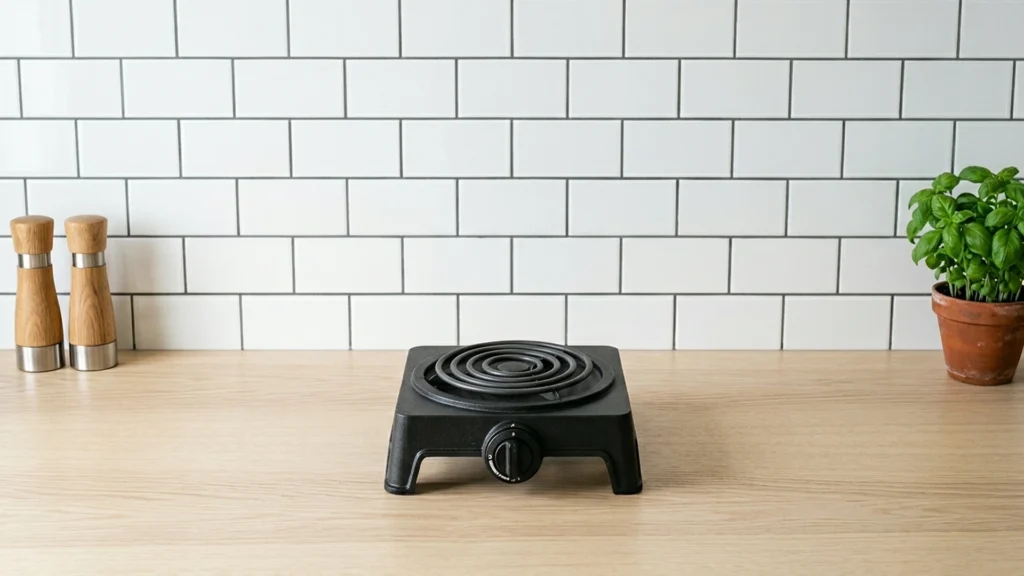
Cast iron countertop burners use a heavy cast iron cooking surface for direct, steady heat transfer to pans. Buyers in this sub-category usually want reliable boiling and simmering on a small, plug-in cooktop. They also want simple controls and a surface that resists warping under frequent heat cycles.
The hard part is trade-offs. Higher watt models heat faster but can run hotter at the edges, making low settings harder to manage. Double units save counter space for meal prep, yet the shared footprint can limit pan size. Some models also feel better built than others, especially around knobs, cord strain relief, and the stability of the base.
Looking for all types? See our Best Countertop Burners.
Quick Overview
Our Top Picks
#1. Cuisinart Cast-Iron Double Countertop Burner

Specifications
| Brand | Cuisinart |
|---|---|
| Power Source | Electric |
| Burner Type | Solid Plate |
| Number Of Burners | 2 |
| Max Power Output | 1800 W |
| Heat Settings | 6 Settings |
| Control Type | Knob |
| Dimensions | 5.75 x 22.50 x 15.25 in |
| Weight | 10.6 lb |
Pros
- Induction-powered performance
- More cooking capacity
- Easy setup and cleanup
Cons
- Slower coil heating
The Cuisinart Cast-Iron Double Countertop Burner stands out for its induction-powered heating, a big deal in the cast iron countertop burner space where many models rely on slower, more gradual heat. With two burners and up to 1800 W, it brings pans up to temperature quickly and keeps cooking steady enough for everyday tasks like boiling water and simmering sauces.
The main trade-off is slower coil heating, which can feel less responsive for rapid on and off changes. This makes it a better fit for meals that need steady heat more than constant adjustments, and it suits anyone who wants a simple knob control setup and straightforward cleanup without a complicated learning curve.
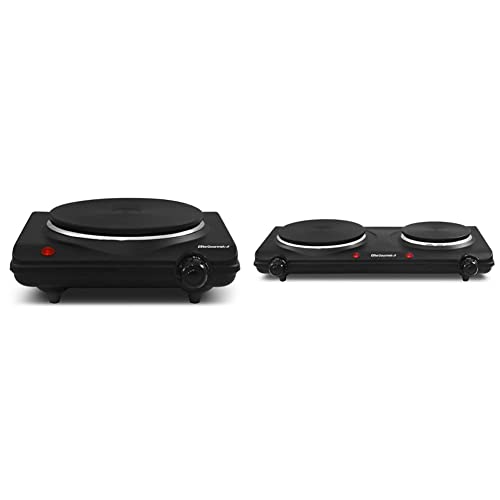
#2. Elite Gourmet Double Cast Iron Countertop Burner

Specifications
| Brand | Elite Gourmet |
|---|---|
| Power Source | Electric |
| Burner Type | Solid Plate |
| Number Of Burners | 2 |
| Max Power Output | 1500 W |
| Heat Settings | 5 Settings |
| Control Type | Knob |
| Weight | 7.7 lb |
Pros
- Induction-powered performance
- More cooking capacity
- Two-item cooking
Cons
- Limited temperature control
- Thin feature safety
- Slower coil heating
What makes this unit notable in the cast iron countertop burner world is its induction-powered design paired with a true solid-plate style cooking surface. With two burners, each up to 1500 W max, it is built for multi-pan meals instead of single-pot tasks. For everyday use, the knobs make it easy to switch between stronger heat for boiling or browning and steadier output for mid-range cooking.
The main trade-off is temperature control. With only 5 settings, simmering takes more patience than you would get from burners with finer control. It also warms up a bit more slowly due to the coil/plate approach, so it is less ideal when you want frequent, quick heat changes. This is a good fit for homes needing two-burner convenience and consistent hot output, especially when you cook simple meals and do not mind dialing in lower heat gradually.
#3. Elite Gourmet 1000W Cast Iron Countertop Burner

Specifications
| Brand | Elite Gourmet |
|---|---|
| Power Source | Electric |
| Burner Type | Solid Plate |
| Number Of Burners | 1 |
| Max Power Output | 1000 W |
| Heat Settings | 7 Settings |
| Dimensions | 9 x 9.2 x 3.25 in |
| Weight | 3.4 lb |
Pros
- Induction-powered performance
- Compact countertop size
- Great balance for cost
Cons
- Limited safety features
- Single-burner limitation
This Elite Gourmet single burner stands out for cast-iron style cooking in a small footprint, using a solid plate heating approach at up to 1000 W. The 7 power settings help you move from quicker boil starts to calmer simmer work without feeling like everything is either on or off. At 9 x 9.2 x 3.25 in and 3.4 lb, it fits well on tight counters for basics like reheating, melting, or keeping a pot warm.
The main trade-off is what you can do with one burner. It is a good choice for solo cooking or backup use, not for meal prep that needs multiple pans at once. Safety features are limited, so you will want to stay attentive around hot surfaces and keep cookware centered on the plate.
#4. Elite Gourmet Single 1000W Electric Countertop Burner

Specifications
| Brand | Elite Gourmet |
|---|---|
| Power Source | Electric |
| Burner Type | Solid Plate |
| Number Of Burners | 1 |
| Max Power Output | 1000 W |
| Control Type | Knob |
Pros
- Induction-powered performance
- Great balance for cost
- Easy wipe-clean plate
Cons
- Limited safety features
- Low heating power
- Single-burner limitation
This Elite Gourmet single burner stands out for cast iron countertop cooking because it is an electric solid-plate unit with a 1000 W output that focuses on reliable, steady heat for one pan at a time. The wipe-clean hot plate surface makes it easier to handle the mess that comes with cast iron cooking, from searing residue to simmer splatter. With knob control, it is straightforward to dial in heat for daily tasks like warming, boiling, or keeping a steady simmer.
The main trade-off is that it limits you to one pot or pan, which can slow down meals that need two burners. Also, with only 1000 W and a solid-plate design, it may take longer to reach stronger heat levels than higher-power models, and low and medium cooking needs a bit of patience as you fine-tune the knob.
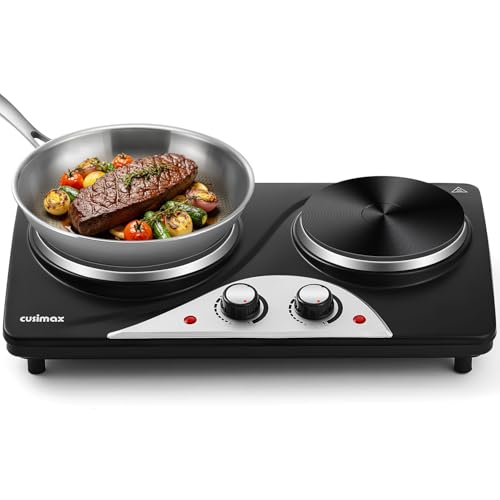
#5. CUSIMAX 1800W Double Cast Iron Countertop Burner

Specifications
| Brand | CUSIMAX |
|---|---|
| Power Source | Electric |
| Number Of Burners | 2 |
| Max Power Output | 1800 W |
| Heat Settings | 7 Settings |
| Weight | 8.2 lb |
Pros
- High boil performance
- More cooking capacity
- Induction-powered performance
Cons
- Uneven heat, shaky simmer
- Limited safety features
For cast iron countertop burners, steady heat matters, and this CUSIMAX model stands out mainly for how quickly it gets to a rolling boil. With 1800 W spread across 7 power levels on a dual-burner setup, it is a solid choice for fast water heating and everyday stovetop cooking. Induction-powered performance is also part of the appeal for users who want strong heating on a compact counter setup.
The trade-off shows up when you drop to low and medium cooking. Heat can be uneven, and simmering may feel shaky, so sauces and long, gentle reductions take more attention than on higher-end burners. Safety features are limited, so it is best for people who will stay nearby and use stable cookware on a flat surface while it runs.
What to Look For
Even heat and stable simmer: Cast iron plates should warm up evenly across the whole cooking area. Prioritize models that hold low and medium heat without constant cycling, since simmering is where weak control shows up most.
Power output for your cookware: Match wattage to what you cook most. If you mostly boil or sear, look for higher max power. If you rely on sauces and gentle warming, a moderate watt burner with good low control will feel more usable than a high-power unit with only coarse settings.
Control type and heat settings: Knob controls usually make it easier to find repeatable heat levels. More heat settings can help you dial in simmer range, but only if the burner responds smoothly rather than jumping between extremes.
Build quality that handles heat cycles: Since cast iron surfaces get very hot, durability matters. Check for a solid, stable base and sturdy knobs. A firm fit reduces wobble during stirring and helps the burner stay aligned with your pan.
Safety basics for daily countertop use: Look for stable feet, clear heat indicators, and protections that reduce the risk of overheating. A burner that sits level and keeps the exterior predictably warm is easier to live with around kids or foot traffic.
How We Picked
Products were identified through broad research across review sites and buyer forums, then filtered to only those that qualify as Cast Iron Countertop Burners.
Scoring used the same objective pillar framework as the main Countertop Burners post, allowing direct comparison of products within this sub-category.
Frequently Asked Questions
Are cast iron countertop burners good for simmering, or only high heat?
They can simmer well if the burner offers more than a few heat steps. Look for steady low or medium settings, not just a full on or off cycle. Using a smaller pot and stirring often helps you keep a stable simmer.
How do I clean a cast iron countertop burner after cooking?
Unplug the burner and let it cool fully first. Wipe spills with a damp cloth and mild soap, then dry right away. Avoid soaking the burner base, and do not use harsh abrasives that can damage the coating.
Do I need to season or treat the cast iron burner parts?
Some models use cast iron that benefits from light seasoning, but many are designed to work right out of the box. Check the product care instructions before adding oil or heat cycles. If seasoning is recommended, use a thin oil layer and heat gradually.
What is the main difference between a single and a double cast iron countertop burner?
A single burner heats one pot at a time. A double burner lets you run two pans, which helps for boiling plus simmering. Double units also take more counter space, so check the overall dimensions before buying.
When should I choose induction or a different type of countertop burner instead of cast iron?
Choose induction if you want faster response and tighter temperature control. Induction also heats the cookware more directly and often reduces heat on the burner surface. Choose cast iron if you want a simple, heavy-duty style and you cook with compatible cookware.
How do cast iron countertop burners compare to other countertop burners in heat-up speed?
Cast iron burners usually heat up slower than radiant and induction options. They also tend to hold heat longer once hot. If you cook often on and off, faster-response burner types may feel easier to control.


