The 3 Best Induction Countertop Burners in 2026

Transparency Note: This post contains affiliate links. As an Amazon Associate, we earn from qualifying purchases at no extra cost to you.

Induction countertop burners use an electromagnetic field to heat cookware directly. That means faster boil times, less wasted heat around the burner, and more stable low settings than most coil-style hot plates. For buyers, the core need is reliable day to day temperature control in a compact unit for quick meals, dorm cooking, or backup use at home.

Picking one is harder than it sounds. You must match cookware to induction, choose the right heat range for your recipes, and accept that smaller burners can feel less powerful under heavy pans. Control style also matters, because induction models with unclear settings can make simmering harder than it should be.

These picks focus on the details that matter most for induction use, including power output, control clarity, and safe operation on a countertop. Looking for all types? See our Best Countertop Burners.

Quick Overview

duxtop 1800W Induction Countertop Burner
#1 duxtop 1800W Induction Countertop Burner
Cuisinart Double Induction Countertop Burner
#2 Cuisinart Double Induction Countertop Burner
Amazon Basics 1800W Induction Countertop Burner
#3 Amazon Basics 1800W Induction Countertop Burner

Our Top Picks

#1. duxtop 1800W Induction Countertop Burner
duxtop 1800W Induction Countertop Burner
Our Score
7.8 / 10
hover for details
Performance
7.6
Build Quality
7.8
Usability
8
Safety
8.1
Value
7.7
Brandduxtop
Power SourceInduction
Burner TypeInduction
Max Power Output1800 W
Heat Settings20 Settings
Control TypeTouch
Dimensions2.5 x 11.4 x 14 in
Weight6.2 lb
  • High boil performance
  • More precise control
  • Auto-shutoff reliability
  • Surface shatter risk

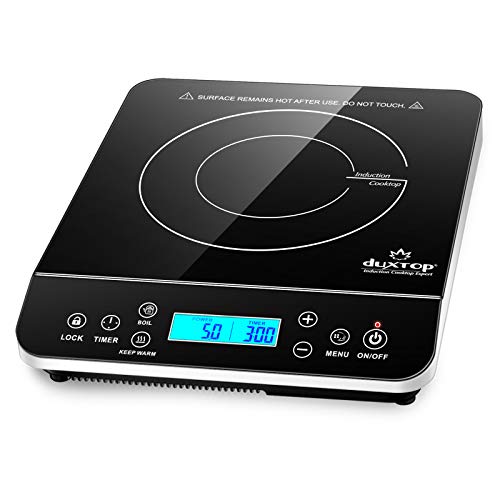
The duxtop 1800W induction burner stands out in countertop induction cooking for its fast boil and more precise day to day control. With 20 touch-based settings, you can ramp up quickly for boiling, then dial down for steady simmer work. In practical use, the heat response feels tight, so pots do not just sit at one level and slowly drift.

The main trade-off is the surface shatter risk, which matters because induction tops are often glass or similar materials. This unit is best for careful users who place cookware gently and keep the top clean, dry, and free of grit. If you treat the surface with respect, the auto shutoff reliability is a strong safety plus for regular countertop use.

→ Read full review

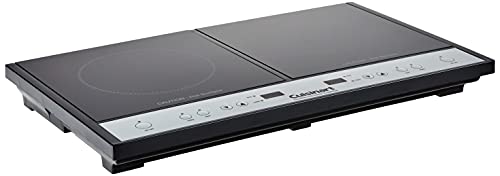
#2. Cuisinart Double Induction Countertop Burner

Cuisinart Double Induction Countertop Burner
Our Score
7.6 / 10
hover for details
Performance
7.2
Build Quality
7.4
Usability
8.3
Safety
7.9
Value
7.5
BrandCuisinart
Power SourceInduction
Burner TypeInduction
Number Of Burners2
Heat Settings8 Settings
Dimensions14.25 x 23.5 x 2.5 in
Weight11.6 lb
  • Induction-powered performance
  • Efficient induction heating
  • Easy setup and cleanup
  • Heavy and hard to move

This Cuisinart double induction countertop burner stands out for how quickly induction brings cookware up to temperature and how consistently it holds steady heat across two zones. With 8 power levels, it is easier to find a true simmer or a solid boil than many coil-style hot plates. Cleanup is also straightforward since the surface stays cooler than traditional burner tops, and spills wipe away with less hassle.

The main trade-off is mobility. At 11.6 lb, it is not ideal if you move it often between rooms or storage spots. It fits best for setups where it can stay in place, like an apartment kitchen, a workshop prep station, or backup cooking during busy weekends.

#3. Amazon Basics 1800W Induction Countertop Burner

Amazon Basics 1800W Induction Countertop Burner
Our Score
7.3 / 10
hover for details
Performance
6.7
Build Quality
7.3
Usability
7.9
Safety
7.6
Value
7.9
BrandAmazon Basics
Power SourceInduction
Burner TypeInduction
Max Power Output1800 W
Heat Settings8 Settings
Control TypeTouch
Weight2.8 lb
  • Induction-powered performance
  • Efficient induction heating
  • High boil performance
  • Uneven heat, shaky simmer
  • Limited low-temperature reliability

This Amazon Basics 1800W induction burner stands out for fast boiling and efficient heat transfer. Induction responds quickly, so it is a solid pick for everyday meals that start with getting water to a boil. In use, it gives strong top-end output and feels more immediate than many coil-style hot plates.

The main trade-off is fine-tuning at low power. Expect uneven heat and a shaky simmer, especially when you need steady low heat. It also appears less reliable for holding true low and medium temperatures for long simmering tasks, so it is best suited to boiling, reheating, and quick cooking rather than delicate sauces.

→ Read full review

What to Look For

Cookware Compatibility: Induction works only with magnetic cookware. Check that your pot or pan has a magnet-friendly base before buying, and plan for how well it sits on the burner surface for steady heating.

Heat Output and Pan Size Fit: Use the stated max power output to judge how quickly the burner can boil water and recover after you add food. Higher wattage typically handles larger pots better, while lower output may struggle with thick, heavy cookware.

Heat Settings and Temperature Control: Look for a clear number of heat settings and good control response at low and medium levels. Induction can simmer well, but only when the burner keeps steady power without wild swings.

Controls and Readability: Choose Knob, Touch, or Button controls based on how you set and track power during cooking. Clear indicators and easy adjustments help you move from boil to simmer without guessing.

Safety for Countertop Use: Focus on stability and protection features that reduce risk during daily use. A stable base, reliable indicator lights, and well-contained heat around the unit matter more on a crowded kitchen counter.

How We Picked

Products were identified through broad research across review sites and buyer forums, then filtered to only those that qualify as Induction Countertop Burners.

Scoring used the same objective pillar framework as the main Countertop Burners post, allowing direct comparison of products within this sub-category.

Frequently Asked Questions

How do induction countertop burners heat faster than other countertop burners?

Induction uses a magnetic field to heat the pot or pan directly. The burner surface stays cooler than hot-plate types. Most pans heat up quickly once they sit flat on the cooking zone. This helps with faster boils and easier simmer control.

Do I need special cookware for an induction countertop burner?

Yes. Your cookware must be induction compatible, usually marked on the bottom. If a magnet sticks firmly to the pan, it will usually work. If not, you will not get reliable heating.

What is the best way to clean and maintain an induction countertop burner?

Unplug the unit and let it cool fully before you clean it. Wipe the glass top with a soft, damp cloth and mild soap if needed. Avoid harsh scrubbers that can scratch the surface. Keep the air vents clear so the fan can cool the unit.

How do I choose between 1 burner induction models and a double burner setup?

Pick 1 burner if you often cook one pot at a time and want simpler use. Choose 2 burners if you need to run two temperatures at once, like boiling pasta and warming sauce. Double models also help when you cook bigger meals. Check that each zone has enough power for your largest pot.

When should I choose a different type of countertop burner instead of induction?

Choose another type if you have cookware that is not induction compatible. You may also prefer non-induction burners if you want simpler power needs or you cook with many different pans. Induction works best when you can match your cookware to the induction zone. If you cannot, you may feel limited.

How do induction countertop burners compare to radiant or hot-plate countertop burners?

Induction gives faster response and more precise control for low settings. Radiant and solid hot plates often keep heating after you turn down. Induction usually wastes less energy because it heats the pan instead of the surface. That makes it easier to simmer without as many hot spots.

See Also

Share:
On Key
You Might Also Like