Foldable smartphones are not just big screens. You buy a hinge, two display surfaces, and a phone that must handle daily flex. For this category, your priorities are reliability in day to day use, strong battery and charging, and software that does not slow down while multitasking across the inner and outer displays.
Picking one is harder because the trade-offs show up fast. Thinner designs often mean smaller batteries. Faster chips can raise heat during long sessions. Camera results also vary a lot because foldable designs have different sensor choices and tuning than slab phones. Finally, there is the durability question: hinges and screens are your most expensive moving parts.
If you also want non foldable picks for the rest of your shortlist, read across categories and compare what matters to you. Looking for all types? See our Best Smartphones.
Quick Overview
Our Top Picks
#1. Google Pixel 9 Pro Fold

Specifications
| Brand | |
|---|---|
| Display Size | 8 in |
| Refresh Rate | 120 Hz |
| Storage | 256 GB |
| Rear Camera | 48 MP |
| Battery Capacity | 4650 mAh |
Pros
- Reliable night shots
- Bright, vividly accurate
- High 120 Hz smoothness
Cons
- Fingerprint convenience issue
- Gemini not fully
For foldable shoppers, the Google Pixel 9 Pro Fold stands out because it feels like a practical two-screen phone, not a compromise machine. The outer and inner displays make everyday scrolling smooth at 120 Hz, and the image quality stays dependable, especially after dark. Night shots come out reliably, and colors look bright and true. Day to day speed also holds up well when you bounce between apps and layouts.
The main trade-off is small but real. Fingerprint unlock can be less convenient than you want, so quick access takes a bit more effort. If you rely on Gemini for daily help, the experience may not feel fully finished yet. This fold is a strong pick for people who want a large, fluid screen and consistent Pixel camera results, and who do not mind living with a couple of foldable-first-world quirks.
#2. Samsung Galaxy Z Fold6

Specifications
| Brand | Samsung |
|---|---|
| Display Size | 7.6 in |
| Display Type | AMOLED |
| Refresh Rate | 120 Hz |
| Processor | Snapdragon 8 Gen 3 for Galaxy |
| Ram | 12 GB |
| Storage | 512 GB |
| Rear Camera | 50 MP |
| Battery Capacity | 4400 mAh |
Pros
- High 120 Hz smoothness
- Flagship-grade chipset
- Well-built and sturdy
Cons
- Awkward cover ergonomics
- Limited software novelty
The Samsung Galaxy Z Fold6 stands out for foldable multitasking feel. It pairs a Snapdragon 8 Gen 3 for Galaxy chip with a 120 Hz AMOLED display, so apps stay responsive on both the large inner screen and the cover screen. In day to day use, the jump between single app and split view feels smooth, with little lag and steady performance when you switch tasks.
The main trade-off is comfort. The cover ergonomics can feel awkward in a one-handed grip, especially compared with a traditional slab phone. It is also not a huge leap in software novelty, so you will mainly notice gains if you use the fold for work apps, reading, or writing more than average.
#3. Samsung Galaxy Z Fold7

Specifications
| Brand | Samsung |
|---|---|
| Display Size | 8 in |
| Display Type | AMOLED |
| Refresh Rate | 120 Hz |
| Processor | Snapdragon 8 Elite |
| Ram | 16 GB |
| Storage | 512 GB |
| Rear Camera | 200 MP |
| Battery Capacity | 4400 mAh |
Pros
- Smooth under pressure
- Reliable night shots
- Well-built and sturdy
Cons
- Small battery capacity
- Doesn’t lie flat
- Limited cover zoom
The Samsung Galaxy Z Fold7 stands out in foldable phones for its comfort in demanding everyday use. With a Snapdragon 8 Elite and 16 GB of RAM, it stays smooth during multitasking on the 8 in AMOLED, 120 Hz inner display. Under heavy app use, it feels steady rather than laggy. It also nails one foldable skill many people care about: real-world low light, with reliable night shots from its 200 MP main rear camera.
The main trade-off is power and form. At 4400 mAh, battery life can feel tight if you fold often and keep brightness high. Also, it does not lie flat, so desk tasks and quick one-handed checks require a different habit. If you want a foldable for productivity or media and can accept those limits, this is a strong pick. If you mainly want long battery life and easy flat use, you may want to look elsewhere.
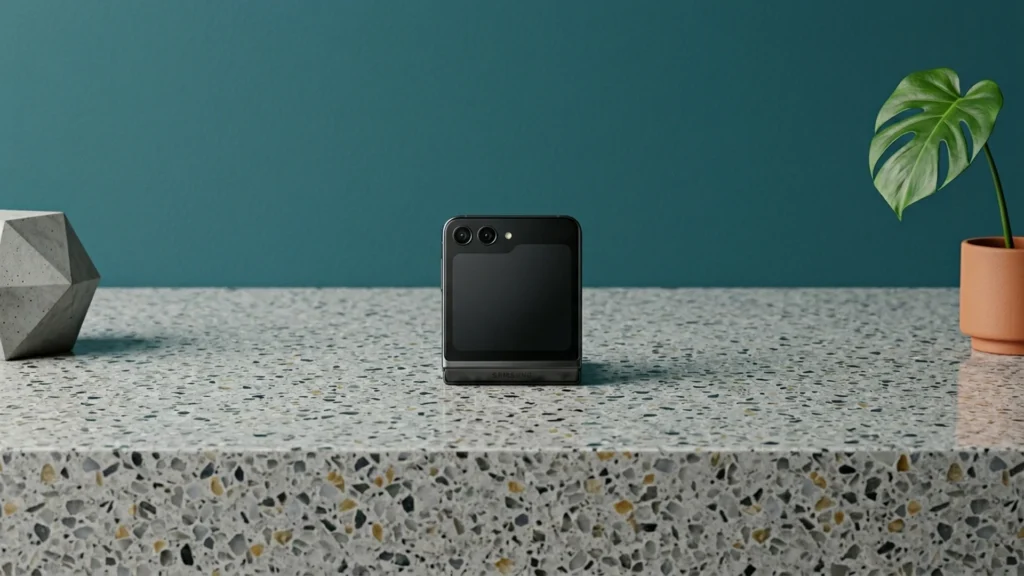
#4. Samsung Galaxy Z Flip6

Specifications
| Brand | Samsung |
|---|---|
| Display Size | 6.7 in |
| Display Type | AMOLED |
| Processor | Snapdragon 8 Gen 3 for Galaxy |
| Ram | 12 GB |
| Storage | 256 GB |
| Rear Camera | 50 MP |
Pros
- Well-built and sturdy
- Strong value at price
- OLED/AMOLED contrast
Cons
- Flex Window complexity
- Fold UX learning curve
Samsung Galaxy Z Flip6 stands out in foldable phones because it turns everyday use into a two-screen routine. The 6.7 in AMOLED panel delivers strong contrast and smooth viewing when the phone is open, while the compact closed shape makes it easier to carry than many larger foldables. Performance stays brisk for daily apps and multitasking, helped by the Snapdragon 8 Gen 3 for Galaxy paired with 12 GB of RAM.
The trade-off is the learning curve. The Flex Window approach and folded handling take time to get used to, and the fold UX can feel more complex than a straight phone. This makes it a better fit for people who want a phone that folds into your lifestyle and are willing to adapt to the new interaction style, not for anyone who wants the simplest day-to-day routine.
#5. Samsung Galaxy Z Flip7

Specifications
| Brand | Samsung |
|---|---|
| Display Size | 6.9 in |
| Display Type | AMOLED |
| Refresh Rate | 120 Hz |
| Ram | 12 GB |
| Storage | 256 GB |
| Rear Camera | 50 MP |
| Battery Capacity | 4300 mAh |
Pros
- High 120 Hz smoothness
- Well-built and sturdy
- Clean, feature-rich UI
Cons
- Small battery capacity
- Persistent crease factor
- Scratched inner screen risk
Samsung Galaxy Z Flip7 stands out in the foldable category because it keeps the classic clamshell idea simple, yet feels smooth every time you flip it open. The 6.9 in AMOLED screen runs at 120 Hz, so scrolling and basic apps look fast and responsive. In day to day use, the phone feels sturdy too, which matters for a device you fold many times.
The main trade-off is battery. With a 4300 mAh cell, it is easier to end the day with less charge than you would on a slab phone. Also plan for the crease factor and the risk of inner screen scratches if grit gets between layers. This is best for people who want a compact foldable and care more about the smooth inside screen than long battery life.
#6. Samsung Galaxy Z Flip7 FE

Specifications
| Brand | Samsung |
|---|---|
| Display Size | 6.7 in |
| Refresh Rate | 60 Hz |
| Processor | Exynos 2500 |
| Ram | 8 GB |
| Storage | 256 GB |
| Rear Camera | 50 MP |
| Battery Capacity | 3887 mAh |
Pros
- Well-built and sturdy
- Flagship-grade chipset
- Clean, feature-rich UI
Cons
- Drains faster than expected
- Limited RAM for multitasking
- Only 60 Hz scrolling
Samsung Galaxy Z Flip7 FE stands out in the foldable space by staying close to a normal phone experience while still giving you the flip form factor. The hinge design feels solid, and the 6.7 in main display is bright and pleasant for daily scrolling. Power comes from an Exynos 2500 chipset paired with 8 GB RAM, so apps open quickly and everyday multitasking stays responsive for most users.
The trade-off is simple: battery life can feel tighter than expected, and the foldable layout plus 60 Hz scrolling means it does not feel as smooth as higher refresh foldables. Camera performance is consistent in daylight, but low light can be less reliable. This model fits best if you want a sturdy flip phone and a clean, easy Samsung software experience more than you chase the smoothest display and longest endurance.
What to Look For
Performance under load: Foldables multitask across two displays and run heavy apps while you switch views. Look for a chip that stays responsive during gaming, camera use, and long sessions without obvious slowdowns.
Battery that lasts a full fold-day: Unfolding and using two screens can drain power faster. Check for endurance that makes it normal to get through work and evenings, plus charging speed that does not turn into a daily chore.
Camera consistency across scenes: You are buying a foldable with a main rear camera, but results depend on focus speed, stabilization, and processing. Choose the phone that gives fewer misses in mixed light, especially at night and indoors.
Display feel when you switch modes: You spend time on both the outer and inner screens. Prefer a smooth refresh rate for scrolling and animations, and a bright OLED panel that stays readable outdoors.
Build you can trust: Hinges and display layers take repeated stress. Prioritize models that feel sturdy in hand, have tight fit and finish, and include practical durability support for drops and daily wear.
How We Picked
Products were identified through broad research across review sites and buyer forums, then filtered to only those that qualify as Foldable Smartphones.
Scoring used the same objective pillar framework as the main Smartphones post, allowing direct comparison of products within this sub-category. Each phone was judged on performance, camera, battery, display, build, software, and value, then ranked from top to bottom based on the weighted total.
Frequently Asked Questions
How should I care for a foldable phone to make it last longer?
Keep the screen clean and free of dust at the fold. Use a microfiber cloth and avoid abrasive cleaners. Try not to fold or unfold when there is grit on the hinge. Also remove thick cases that rub near the hinge area.
Do foldable phones feel slower or less reliable than regular phones?
Most foldables run modern apps smoothly, especially after setup and updates. You may still notice slower performance in heavy multitasking or long gaming sessions. That is why performance scores matter, not just the fastest chip on paper. Good software and good thermal control usually make the experience steadier.
What is the biggest day to day difference between foldable and non foldable models?
The main change is screen size. You get a larger tablet style display when opened, and a compact phone size when closed. This affects how you read, watch videos, and type. It can also change battery habits because the larger screen drains faster.
When should I choose a non foldable phone instead of a foldable?
Choose a non foldable if you want the simplest durability and lowest risk of screen or hinge issues. Also pick one if you care most about battery life and charging speed. If you do not use a big screen often, the extra cost may not feel worth it. Many people prefer a candy bar style phone for daily reliability.
How do foldable phones compare to other phones for battery life and charging?
Foldables often have less battery life than typical slab phones under the same use because the inner screen is bigger. Charging speed can vary by model, but you usually want a top ups habit. If you watch videos or use split screen a lot, plan for more frequent charging. The best options still usually last a full day for normal use.