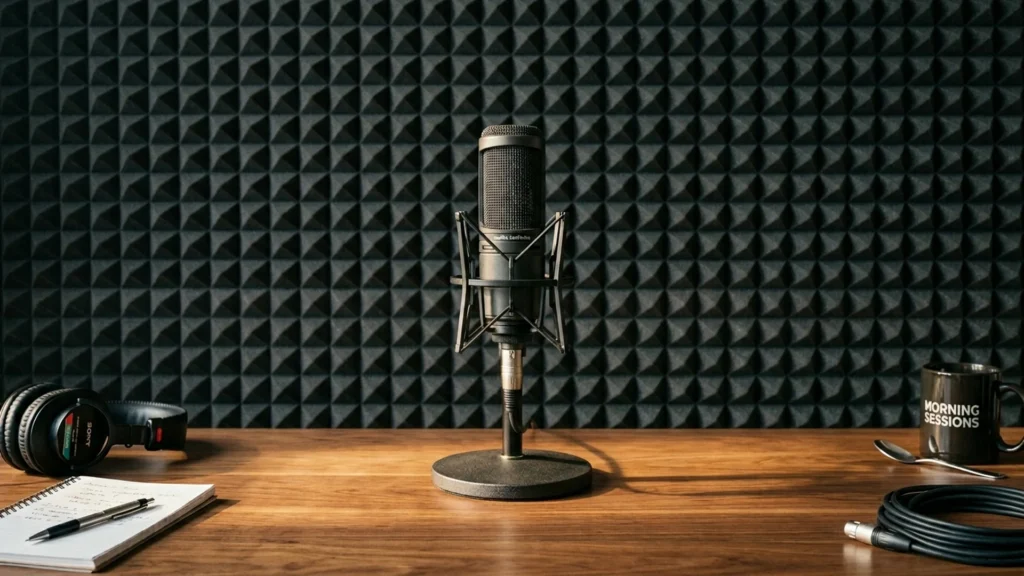
XLR condenser microphones use a powered circuit and phantom power to capture sound with more detail than most dynamic mics. For this buying guide, you need a mic that sounds clear on vocals and speech, stays quiet in normal rooms, and does not fall apart when you change placement.
Choosing an XLR condenser is hard because small differences in voicing can affect clarity and fatigue. You also trade off self-noise versus price, and plosive or sibilant control versus brightness. Finally, every condenser needs a stable recording chain, with proper gain and a reliable shock mount or stand setup.
Use this guide to match the mic to your source and your room, then sanity-check the result against placement and gain. Looking for all types? See our Best Microphones.
Quick Overview
Our Top Picks
#1. AKG C214 Large Diaphragm Microphone

Specifications
| Brand | AKG |
|---|---|
| Microphone Type | Condenser |
| Polar Pattern | Cardioid |
| Connector Type | XLR |
| Power Source | Phantom Power |
| Frequency Response | 20 Hz - 20000 Hz |
| Sensitivity | 20 mV/Pa |
| Max Spl | 156 dB SPL |
Pros
- Balanced, detailed and clean
- Flexible pattern for varied use
- Plug-and-play with stable mounting
Cons
- No included shock mount
- Limited low-cut frequency
- Brightness tonal tilt
The AKG C214 stands out in the XLR condenser crowd for its clean, balanced sound that stays detailed without turning harsh. With a cardioid pattern and a published max SPL of 156 dB SPL, it handles strong voices and louder takes with less worry about distortion. In a typical home studio or podcast setup, that means clearer consonants, smooth tonality, and a natural feel even when you push levels.
The main trade-off is practical: the package does not include a shock mount, so you may need to budget for isolation if you deal with desk vibrations. It also has a brightness tilt, and its low-cut is limited in how much it can tame rumble, so careful positioning and basic high-pass filtering in your signal chain matter. If you want one cardioid XLR condenser for vocals and speech that stays articulate across many recording situations, this is a strong fit.
#2. RØDE NT1 Signature Condenser Microphone

Specifications
| Brand | Rode |
|---|---|
| Microphone Type | Condenser |
| Form Factor | Desktop |
| Polar Pattern | Cardioid |
| Connector Type | XLR |
| Power Source | Phantom Power |
| Frequency Response | 20 Hz - 20000 Hz |
| Sensitivity | 25 mV/Pa |
| Max Spl | 142 dB SPL |
Pros
- Balanced, detailed and clean
- Sturdy metal and secure cable
- Professional XLR connection
Cons
- Cardioid-only limitation
- Phantom dependency
RØDE NT1 Signature stands out in XLR condenser mics for its clean, detailed sound with a very quiet noise floor for studio-style recording. In a category where hiss and harsh top end can matter, this one stays balanced and readable on vocals and voice work. The XLR connection also makes it fit naturally into most recording and broadcast setups, from audio interfaces to mixers. Build feels solid, and the included cable connection holds up well for everyday sessions.
The main trade-off is that it is cardioid-only and depends on phantom power to run. That means you need to place it carefully and control the room, especially if you record in a lively space. It is a strong pick for home studios, podcasting, and clean vocal tracking where you can face the mic toward the sound source and rely on the mic to stay steady under normal, loud performance.
#3. Audio-Technica AT2020 Microphone

Specifications
| Brand | Audio-Technica |
|---|---|
| Microphone Type | Condenser |
| Polar Pattern | Cardioid |
| Connector Type | XLR |
| Power Source | Phantom Power |
| Frequency Response | 20 Hz - 20000 Hz |
| Sensitivity | -37 dB (14.1 mV) re 1V at 1 Pa |
| Max Spl | 144 dB SPL |
Pros
- Professional XLR connection
- Broad frequency response
- Handles loud sound well
Cons
- Room-dependent tone
- Setup configuration friction
- Harsh treble perception
The Audio-Technica AT2020 stands out in the XLR condenser mic category for its clean, straightforward sound paired with a truly pro connection. With a cardioid pattern and a 20 Hz - 20000 Hz range, it captures vocals and speech with enough detail to feel “studio” without needing tricky setup. It also handles loud sources up to 144 dB SPL, so strong delivery does not force you to ride gain as tightly.
The main trade-off is that it can sound more room-dependent than you might expect. In untreated spaces, the darker and harsher parts of the treble can shift in ways that feel less natural, and small placement changes matter. It is best for home studio users who can control reflections and who want an easy XLR workflow with phantom power, but are willing to experiment with mic distance and angle.
#4. BOYA BY-GM18C Microphone

Specifications
| Brand | BOYA |
|---|---|
| Microphone Type | Condenser |
| Form Factor | Desktop |
| Polar Pattern | Cardioid |
| Connector Type | XLR |
| Power Source | Phantom Power |
| Frequency Response | 50 Hz - 15000 Hz |
Pros
- Professional XLR connection
- Studio power support
- Flexible pattern for varied use
Cons
- Narrow frequency response
The BOYA BY-GM18C stands out in the XLR condenser mic category because it combines a true XLR connection with phantom power support and a simple cardioid pickup. That makes it a practical choice for clean speech and vocal recording when you already have an interface, mixer, or recorder with standard mic inputs. The published range of 50 Hz to 15000 Hz supports natural voice fundamentals without needing a complex setup.
The main trade-off is its narrower frequency response. In practice, that can limit air and sheen on singers, and it may not capture very low-weight bass detail as convincingly as broader-range condensers. It is best for podcasts, streaming, and straightforward home studio recording where cardioid focus and easy XLR integration matter more than extended highs and lows.
What to Look For
Phantom power fit: Confirm the mic runs on 48V phantom power through your interface, mixer, or preamp. If your system does not provide stable phantom power, the mic will be unusable or unreliable.
Self-noise and hiss at close range: Condensers pick up room sound and electronics noise. If you record quietly, prioritize models known for low self-noise so pauses stay clean and background hiss stays minimal.
Polar pattern for your recording space: For home studios, cardioid and supercardioid patterns usually reject more room than omni designs. Choose based on how much reflected sound your room adds to vocals and podcasts.
Transient response and sibilance control: Look for a sound that handles consonants without turning s or t sounds sharp. Pay attention to how the mic behaves on loud speech and close vocal technique, especially with pop filters.
Build and included hardware: Check for a sturdy body, solid grille, and a connector that feels tight. Bundles matter for this sub-category, since good shock mounting and basic protection reduce handling noise and mic failures.
How We Picked
Products were identified through broad research across review sites and buyer forums, then filtered to only those that qualify as XLR condenser microphones.
Scoring used the same objective pillar framework as the main Microphones post, allowing direct comparison of products within this sub-category. Sound quality, build quality, usability, versatility, and value were weighted to reflect what XLR condenser buyers actually face: clean detail, low noise, consistent daily setup, and stable performance across vocals and speech.
Frequently Asked Questions
What do I need to power an XLR condenser microphone?
Most XLR condensers need phantom power from your mixer or audio interface. Look for 48V phantom power and turn it on for the mic input. Some condensers may also work with lower voltages, but 48V is the common standard. Keep phantom power off when connecting to reduce loud thumps.
How do I choose between a large diaphragm and a small diaphragm XLR condenser?
Large diaphragm condensers usually sound fuller for vocals and many acoustic sources. Small diaphragm condensers often capture more detail and can sound great on instruments like guitar and overhead drums. If you want a versatile choice for singing and everyday recording, large diaphragm is a strong start. If you focus more on fast, detailed capture, small diaphragm can help.
What setup and care tips matter most for XLR condensers?
Use a shock mount and a pop filter for clean voice recordings. Position the mic so your voice hits it near the front, and speak a consistent distance away. Avoid touching the grille and keep it dry, since condensers are sensitive. Store it in a case and handle the cable by the connector.
How do XLR condenser microphones compare to dynamic microphones for recording at home?
Condenser mics usually pick up more detail, including room sound and background noise. Dynamic mics often reject more noise and handle louder sources with less hiss. If your room is not treated and you want less unwanted sound, dynamic can be easier. If you have a quieter space and want crisp vocals, condenser is a better fit.
When should I choose a different microphone type instead of an XLR condenser?
Switch away from condenser if you need better noise rejection or louder live handling. If you record in a noisy room, a dynamic mic can sound cleaner. If you need simple plug-and-play with a computer, a USB microphone may be more convenient. Choose a ribbon mic only when you specifically want its smooth, darker tone for certain sources.