Skip to content

The 8 Best Solar Powered Weather Stations in 2026

September 12, 2026-By The Top Zone

Transparency Note: This post contains affiliate links. As an Amazon Associate, we earn from qualifying purchases at no extra cost to you.

Solar powered weather stations run the console or outdoor sensor hardware with a solar panel, usually with a battery backup for cloudy weeks. For buyers, the key need is simple: keep collecting steady outdoor readings without constant battery swaps.

Choosing one is harder than it looks. Solar performance drops in shaded spots and short winter days. Wireless links can also fail when the station is far from the display or blocked by walls. Finally, some models measure more variables than others, even though they all claim “weather” data.

Use this guide to compare solar stations on practical factors like power stability, sensor set, and connection reliability, then match the kit to your setup. Looking for all types? See our Best Weather Stations.

Quick Overview

Ambient Weather WS-5000 Weather Station
#1 Ambient Weather WS-5000 Weather Station
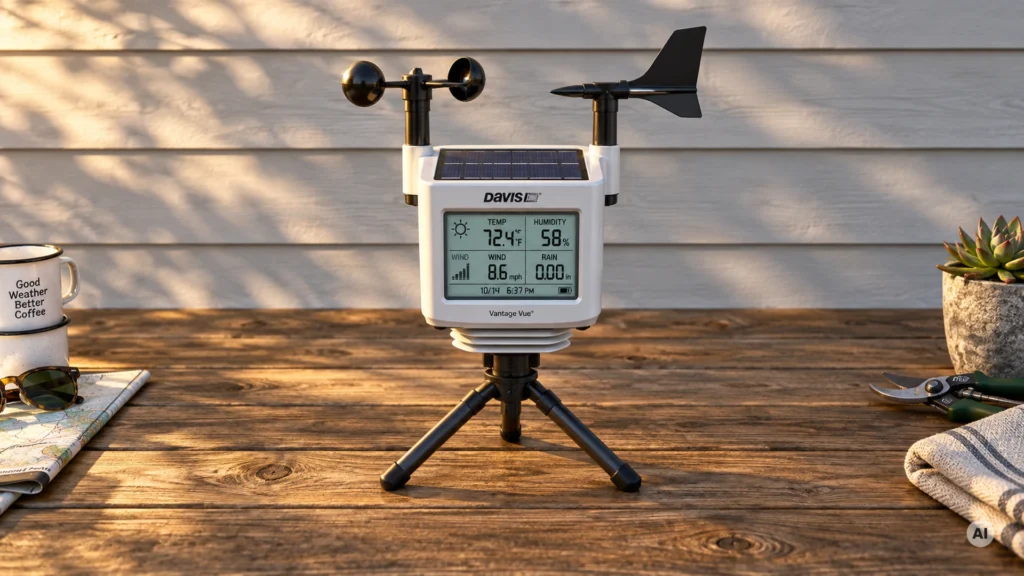
Davis Vantage Vue Weather Station
#2 Davis Vantage Vue Weather Station
Ambient Weather WS-2000 Weather Station
#3 Ambient Weather WS-2000 Weather Station
ECOWITT HP2560 Weather Station
#4 ECOWITT HP2560 Weather Station
Sainlogic Wireless Weather Station
#5 Sainlogic Wireless Weather Station
ECOWITT Wittboy Weather Station
#6 ECOWITT Wittboy Weather Station
Radioddity L7 LoRa Weather Station
#7 Radioddity L7 LoRa Weather Station
Newentor Q3 Weather Station
#8 Newentor Q3 Weather Station

Our Top Picks

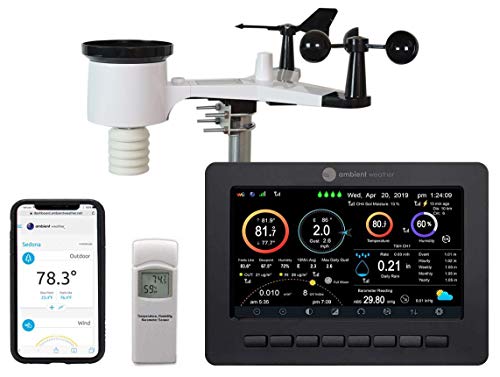
#1. Ambient Weather WS-5000 Weather Station
Ambient Weather WS-5000 Weather Station
Our Score
8.1 / 10
hover for details
Accuracy
8.6
Durability
7.7
Usability
7.9
Connectivity
8.3
Value
7.8
BrandAmbient Weather
Display TypeColor LCD
Measurement FunctionsTemperature, Humidity, Barometric Pressure, Rainfall
Sensors Included4 Sensors
Wireless Range1000 ft
ConnectivityWi-Fi
Power SourceSolar Powered
App Smart Home CompatibilityIFTTT / Google Assistant / Alexa
  • Consistently matches local sources
  • Reliable wireless and app link
  • Solar or AC powered
  • can be non-trivial

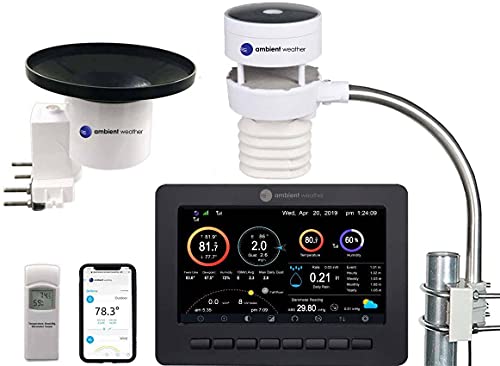
What stands out for solar powered weather stations is that this model stays on line of sight to your home without you needing to think about battery swaps. The WS-5000 runs on solar or AC power, and it also reports core conditions like temperature, humidity, barometric pressure, and rainfall. It uses Wi-Fi for steady sync and is strong about matching local sources, so the data feels dependable for day to day decisions, not just a quick look.

The main trade-off is setup. Getting the system dialed in can be non-trivial, especially if you want everything aligned across the app, your readings, and any smart home routines via IFTTT and voice assistants. If you are comfortable spending some time on installation and pairing, the solar and wireless combination makes it a practical choice for monitoring your area year round.

→ Read full review

#2. Davis Vantage Vue Weather Station

Davis Vantage Vue Weather Station
Our Score
8.0 / 10
hover for details
Accuracy
8.7
Durability
8.1
Usability
7.6
Connectivity
7
Value
7.8
BrandDavis Instruments
Display TypeLCD
Measurement FunctionsTemperature, Humidity, Rainfall, Wind Speed, Wind Direction
Wireless Range1000 ft
Power SourceSolar Powered / Battery Backup
  • Consistently matches local sources
  • Weatherproof, stays reliable
  • Solar or AC powered
  • WeatherLink integration friction
  • Wi-Fi posting limitations

This Davis Vantage Vue stands out among solar powered weather stations because it keeps running through the seasons with Solar Powered operation and backup power. In real use, it tends to line up closely with local sources, which matters when you are relying on outdoor sensors day after day. It tracks the core set of conditions most people want outdoors, including temperature, humidity, rainfall, wind speed, and wind direction, and the readings stay steady rather than drifting.

The main trade-off shows up once you want to share or view data through its WeatherLink connection. Setup and day to day use are generally straightforward, but integration can feel a bit fiddly, and there can be limits around Wi-Fi posting. This makes the station a better fit for people who prioritize solid outdoor measurement and local confidence, then treat apps and online posting as a secondary convenience.

#3. Ambient Weather WS-2000 Weather Station

Ambient Weather WS-2000 Weather Station
Our Score
7.8 / 10
hover for details
Accuracy
8.6
Durability
6.7
Usability
8.1
Connectivity
7.3
Value
7.9
BrandAmbient Weather
Display TypeColor LCD
Measurement FunctionsWind Speed, Wind Direction, Temperature, Humidity, Rainfall, UV Index, Solar Radiation
Wireless Range300 ft
ConnectivityWi-Fi
Power SourceAC Power
App Smart Home CompatibilityIFTTT / Alexa / Google Assistant
  • Consistently matches local sources
  • Clear display, easy pairing
  • More measurement types
  • Some long-term wear risk

This station stands out in the solar powered weather station category because it focuses on measurement depth rather than battery dependence. The Ambient Weather WS-2000 tracks Wind Speed, Wind Direction, Temperature, Humidity, Rainfall, UV Index, and Solar Radiation, so you get a broader look at conditions throughout the day. In real use, its readings stay close to local sources, which matters when you cannot easily run frequent calibrations in the background. Setup is also straightforward thanks to the clear color LCD display and easy sensor pairing.

The main trade-off is durability over the long haul. While it is usable and practical for day to day monitoring, some long term wear risk means you should inspect the outdoor sensor area and connections periodically, especially after harsh weather. It is also more of a Wi Fi station with smart home support through IFTTT, Alexa, and Google Assistant, so it works best for people who want weather data to keep updating online.

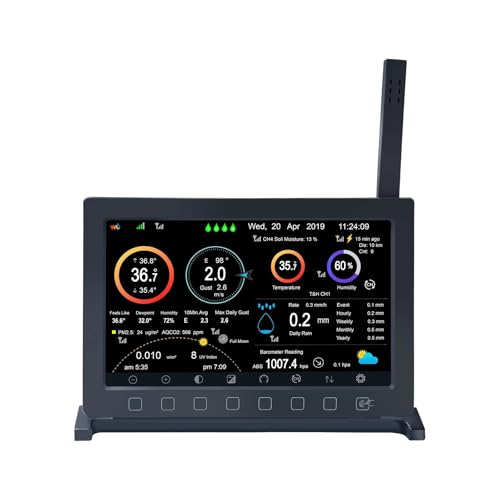
#4. ECOWITT HP2560 Weather Station

ECOWITT HP2560 Weather Station
Our Score
7.6 / 10
hover for details
Accuracy
7.6
Durability
7
Usability
8.1
Connectivity
7.4
Value
8
BrandECOWITT
Display TypeLCD
Display Size7 in
Measurement FunctionsTemperature, Humidity, Barometric Pressure, Wind Speed, Wind Direction, Rainfall
ConnectivityWi-Fi
Power SourceAC Power
App Smart Home CompatibilityWS View Plus / Ecowitt APP
  • More measurement types
  • WiFi + Bluetooth support
  • Solar or AC powered
  • Limited monochrome display

This ECOWITT HP2560 stands out for solar-focused buyers because it supports both Solar or AC power, so you are not stuck if sunlight is limited or seasons change. It also targets the full outdoor picture with temperature, humidity, barometric pressure, wind speed and direction, plus rainfall. That makes it a strong fit for people who want a weather station that keeps running through power swings, without giving up the basics needed for daily weather checks.

The main trade-off is the simple monochrome LCD display. You still get a clear station view, but it is not as friendly for quick scanning as larger or color screens. If you plan to rely more on the ECOWITT app and data sync than on the on-device display, this is a practical choice for a solar or mixed-power setup.

→ Read full review

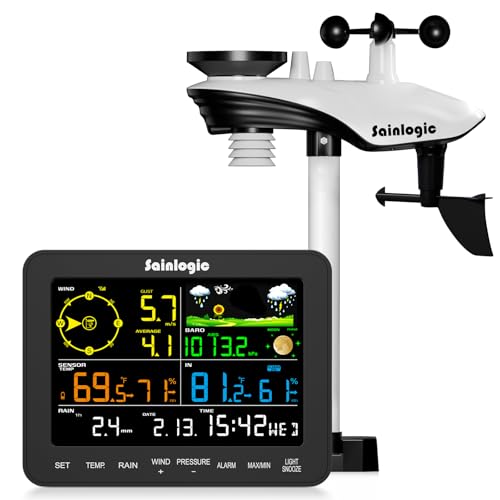
#5. Sainlogic Wireless Weather Station

Sainlogic Wireless Weather Station
Our Score
7.3 / 10
hover for details
Accuracy
7.2
Durability
7.2
Usability
7.9
Connectivity
6.5
Value
8.3
Brandsainlogic
Display TypeColor LCD
Display Size6.5 in
Measurement FunctionsTemperature, Humidity, Barometric Pressure, Wind Speed, Wind Direction, Rainfall, Dew Point, Feels like, Moon phase
Wireless Range328 ft
ConnectivityWi-Fi / Bluetooth
Power SourceSolar Powered / Battery Backup
App Smart Home CompatibilityAlexa / Google Assistant / Apple HomeKit
  • Strong features at the cost
  • Wi‑Fi + Bluetooth support
  • Solar or AC powered
  • Intermittent connection hiccups
  • Installation/setup can be time-consuming
  • Rain gauge doubts

The Sainlogic Wireless Weather Station stands out in the solar-powered category thanks to its dual power approach. It runs on solar power with battery backup, which helps keep readings going during long cloudy stretches. You also get a large 6.5 in color LCD for at-a-glance stats, including temperature, humidity, wind speed and direction, and rainfall, plus extra context like barometric pressure and dew point. For a solar station, that mix is practical because it reduces downtime while keeping the display easy to use outdoors.

The main trade-off is day-to-day reliability of the wireless link. Users may see intermittent connection hiccups, and setup can take longer than expected. There are also some doubts about the rain gauge, so if rainfall accuracy is your top priority, you may want to compare it against a trusted local gauge. This model fits best for people who want a mostly self-sustaining station with solar power and a clear display, and who can tolerate some extra setup and occasional syncing issues.

#6. ECOWITT Wittboy Weather Station

ECOWITT Wittboy Weather Station
Our Score
7.3 / 10
hover for details
Accuracy
7
Durability
7.1
Usability
7.4
Connectivity
7.3
Value
7.9
BrandECOWITT
Display TypeLCD
Display Size7 in
Measurement FunctionsTemperature, Humidity, Wind Direction, Wind Speed, Light, UV Levels, Rainfall
Sensors Included7 Sensors
Wireless Range500 ft
ConnectivityWi-Fi
Power SourceSolar Powered / Battery Backup
App Smart Home CompatibilityHome Assistant
  • Wi‑Fi + Bluetooth support
  • Multi-sensor setup
  • Home Assistant integration
  • No app or voice support
  • Limited monochrome display
  • Outdoor sensor dropouts

This Ecowitt Wittboy stands out in solar powered weather stations because it pairs solar power with a more flexible connection setup. You get Wi-Fi for sending data and Bluetooth for setup, plus Home Assistant integration for people who want their weather history in a smart home dashboard. The system also covers a wide range of outdoor readings, including UV levels, light, wind speed and direction, and rainfall, so you are not limited to basic temperature and humidity.

The main trade-off is day to day reliability across its network of sensors. Some users report outdoor sensor dropouts, and it uses a limited monochrome LCD for on-site viewing. It is best for buyers who mostly care about long term outdoor monitoring and smart home workflows, and who are willing to troubleshoot sensor stability rather than relying on the display alone.

#7. Radioddity L7 LoRa Weather Station

Radioddity L7 LoRa Weather Station
Our Score
7.1 / 10
hover for details
Accuracy
6.9
Durability
6.2
Usability
7.8
Connectivity
7
Value
7.9
BrandRadioddity
Display TypeColor LCD
Display Size7.2 in
Measurement FunctionsTemperature, Humidity, Barometric Pressure, Wind Speed, Wind Direction, Rainfall, UV Index
Sensors Included1 Sensor
ConnectivityWi-Fi
Power SourceAC Power
  • Wi‑Fi + Bluetooth support
  • More measurement types
  • Solar or AC powered
  • Occasional minor drift
  • Some long-term wear risk

This station stands out for people who want solar-friendly outdoor monitoring but also need a reliable home connection. The Radioddity L7 LoRa Weather Station supports Wi-Fi (and Bluetooth), so you can stream readings from a color 7.2 in display while keeping the outdoor unit powered by AC or solar, depending on your setup. It also tracks a broad set of conditions, including UV Index and wind direction, which makes it feel more complete than simpler “sun-only” weather dashboards.

The main trade-off is that it is not a set-and-forget accuracy option. Expect occasional minor drift, so it helps to compare against a trusted local station during the first couple of weeks. Durability scores are also a bit lower, so good mounting and protection matter, especially in harsh rain and cold. This is a solid fit for DIYers who want many measurements and flexible power, but are willing to do light calibration and occasional checks.

#8. Newentor Q3 Weather Station

Newentor Q3 Weather Station
Our Score
7.1 / 10
hover for details
Accuracy
7.3
Durability
6.5
Usability
7.2
Connectivity
6.1
Value
8.6
BrandNewentor
Display TypeColor LCD
Display Size7.5 in
Measurement FunctionsTemperature, Humidity, Barometric Pressure
Sensors Included1 Sensor
Power SourceAC Power / Battery Backup
  • Solar or AC powered
  • Touchscreen interface
  • Atomic timekeeping
  • Minimal sensor package
  • Intermittent connection hiccups
  • Some long-term wear risk

This station stands out in the solar-powered weather station crowd because it mixes solar or AC power with atomic timekeeping. The result is a clock that stays accurate without constant manual updates, and the station can keep running when sunlight is weak thanks to battery backup. If you want reliable time stamps for temperature and pressure trends, that atomic time base is a strong fit for a solar setup.

The trade-off is the sensor package and day-to-day connection behavior. It includes just 1 outdoor sensor, so you will not get a fuller picture across multiple locations. Also, there can be intermittent wireless hiccups, which matters more when you rely on steady updates for planning garden or outdoor tasks. This model fits best if you want a solar-friendly display and accurate time more than a multi-sensor, fully connected system.

→ Read full review

What to Look For

Power stability in real sun: Confirm the station is truly solar powered and not just “solar assisted.” Look for designs that include battery backup, so the station keeps logging during cloudy stretches and at night.

Sensor set that matches your priorities: Solar stations still need the right sensors for your goals. Check the listed measurement functions, such as Temperature, Humidity, Rainfall, Wind Speed, UV Index, and Barometric Pressure, rather than relying on broad feature claims.

Outdoor durability where solar panels matter: Outdoor sensors and the solar panel housing should resist rain, wind, and temperature swings. Prioritize weather-resistant housings and stable mounting hardware to avoid sensor dropouts after storms.

Wireless range you can actually use: Measure the distance between the outdoor unit and the display. If the station lists a wireless range in feet, use it as a rough ceiling, then plan for wall losses and tree cover.

Easy setup and clear daily reading: Solar setups can be fiddly at first. Choose a station with a readable display type, simple controls, and straightforward pairing so you can verify readings within minutes, not hours.

How We Picked

Products were identified through broad research across review sites and buyer forums, then filtered to only those that qualify as Solar Powered Weather Stations.

Scoring used the same objective pillar framework as the main Weather Stations post, allowing direct comparison of products within this sub-category. Accuracy, durability, usability, connectivity, and value determine the final ranking, with extra weight on power stability and connection reliability since solar gear tends to fail from shading, weak mounting, or unstable links.

Frequently Asked Questions

Do solar powered weather stations need backup batteries?

Most solar powered stations work best with a battery backup. The battery keeps data running during long cloudy spells or winter days. Look for a model that clearly states Solar Powered plus battery support or a similar backup plan.

How much sun exposure does a solar powered weather station need?

You need enough daily light to keep the sensor array powered. Place the outdoor unit where it gets direct sun for much of the day. If you live in a very shaded yard, plan for more maintenance or consider a different power option.

What is the biggest difference between solar powered weather stations in this category?

The key differences usually come from sensor quality and how well they connect to your phone or network. Some models focus on strong outdoor sensors and steady readings. Others prioritize easy setup, longer wireless range, or smoother app syncing.

How should I mount the outdoor sensor for best solar charging?

Mount the unit at an angle that lets sunlight hit the solar panel well. Avoid places blocked by trees, walls, or roof edges. Also choose a stable spot that still protects the sensors from driving rain and heavy wind.

When should I choose a non solar weather station instead?

Choose a different type if your location gets low sunlight year round. Roof overhangs, dense shade, or frequent winter clouds can hurt performance. If you need nonstop power and easy placement, AC powered models are often simpler.

How do solar powered weather stations compare to battery only models?

Solar powered models reduce how often you replace or recharge batteries. Battery only stations can be fine indoors, or in mild weather with frequent charging. Solar models usually handle outdoor use better, but they still need decent sunlight to stay reliable.

See Also