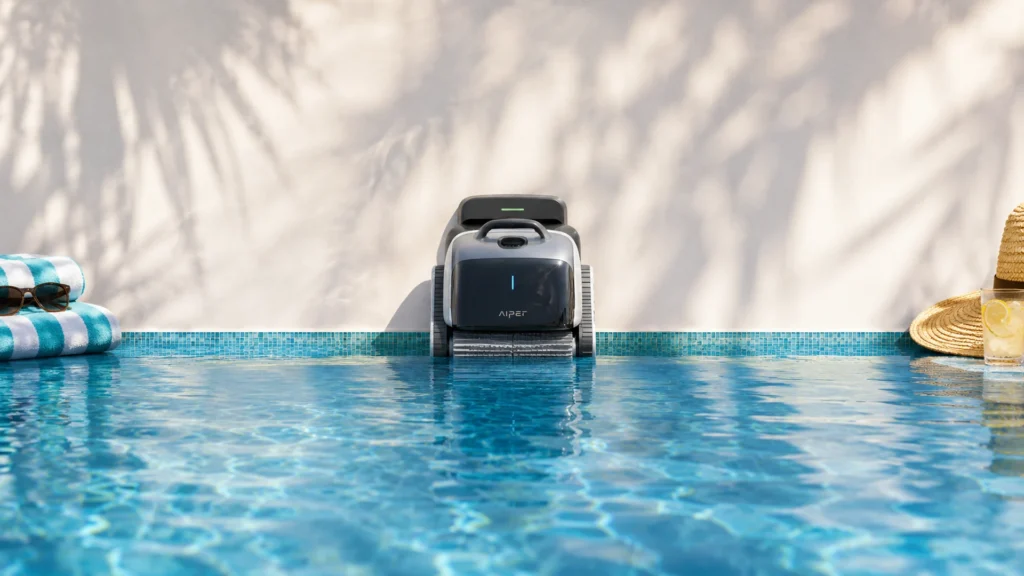
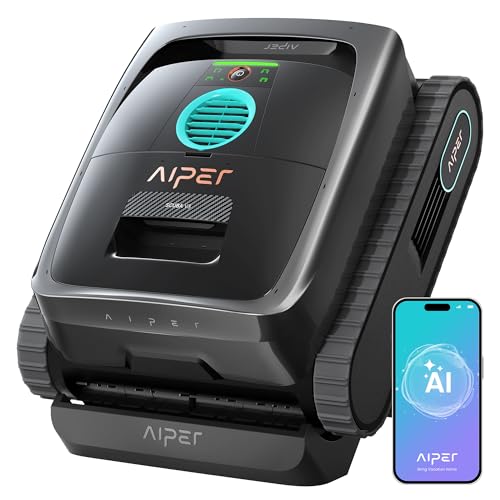
Self-parking robotic pool cleaners are built to finish a cleaning cycle and then move back to a dock or charging station on their own. For buyers, that means less fishing out the robot at the end of the day and fewer interruptions when you run a schedule. You still need strong floor pickup and steady coverage, because self-parking only matters if the cleaning is complete.
This sub-category is harder than it sounds. Some robots park well but leave debris behind. Others clean well but need help near steps, drains, lights, or uneven floor transitions. You also trade off run time, filter capacity, and maintenance access against the space and positioning needed for the dock to work.
If you want broader coverage across models that do not focus on docking, see our Best Robotic Pool Cleaners.
Quick Overview
Our Top Picks
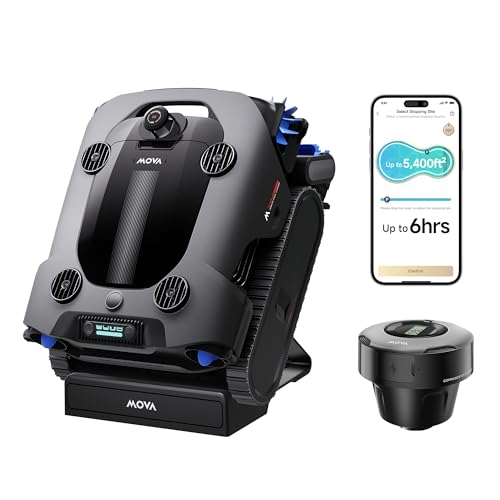
#1. MOVA Rover X10 Robotic Pool Cleaner
Specifications
| Brand | MOVA |
|---|---|
| Power Source | Cordless Battery |
| Filtration Level | 3 microns |
| Battery Runtime | 6 hr |
| Dimensions | 13 x 21 x 18 in |
Pros
- Fine debris filtration
- Few stalling moments
- Long runtime on charge
Cons
- Wear shows after months
- Slope instability risk
MOVA Rover X10 stands out in the self-parking robotic cleaner space thanks to its strong fine-debris pickup and steady run time. It uses 3-micron filtration to grab dust and sand-like particles, not just leaves. In real use, it tends to avoid frequent stalling, so you spend less time rescuing it and restarting cycles. With about 6 hr of cordless runtime, it is a good fit for whole-pool cleaning sessions while you leave it to do the work and then park back for easy retrieval.
The main trade-off is durability over time. The build can show wear after months of use, and its traction can be less stable on slopes. This makes it a better choice for mostly level floors and straightforward layouts, not for pools with noticeable incline changes or tricky transitions.
#2. Beatbot Sora 70 Robotic Pool Cleaner

Specifications
| Brand | Beatbot |
|---|---|
| Pool Type | In-Ground/Above-Ground |
| Power Source | Cordless Battery |
| Filtration Level | 3 microns |
| Battery Runtime | 5 hr |
| Weight | 22.9 lb |
| Dimensions | 17.1 x 16.9 x 11.2 in |
Pros
- Works for both pools
- Fine debris filtration
- Long runtime on charge
Cons
- Edge inconsistency
- Submerged app limits
- Support skepticism
The Beatbot Sora 70 is notable in the self-parking robotic cleaner space because it pairs long, steady run time with fine-debris filtration. With up to 5 hr per charge and a 3 micron filter, it is built for day-to-day cleanups that track fine dust and small grit, not just leaves and obvious junk. In real pool use, that combination means fewer pull-outs to deal with clogged baskets and less sweeping after the robot finishes.
The trade-off is around coverage details and control. Edge cleaning can be inconsistent, so corners and tight lines by walls may need a quick spot check. The app is also submerged-limited, so you mostly rely on the cleaner cycle rather than live commands. This is a strong pick for people who want reliable floor cleaning and self-parking convenience, but still plan on occasional manual touch-ups along edges.
#3. AIPER Scuba V3 Robotic Pool Cleaner

Specifications
| Brand | AIPER |
|---|---|
| Power Source | Cordless Battery |
| Filtration Level | 3 microns |
| Weight | 18.1 lb |
Pros
- Fine debris filtration
- Dependable cleaning value
- Light for easy handling
Cons
- Wear shows after months
- Sinking risk
- App limited underwater
This self-parking robotic cleaner stands out for its strong fine-debris pickup. With 3 micron filtration, it is a good fit for pools that collect dust and sand along with everyday debris. At about 18.1 lb, it is also easy to lift in and out without feeling bulky, which matters when you are running it often and storing it between uses. In real cycles, it tends to feel more dependable than “random wander” designs, so you spend less time checking for missed patches.
The trade-off is durability and handling. Some wear shows after months, so expect normal upkeep and be ready to check parts over time. Also, the app is limited when compared to fully guided models, and there is a sinking risk if it is not positioned or monitored properly during start-up. This is best for owners who want consistent floor cleaning and a true set-and-retrieve routine, and who can do a quick spot check when needed.
#4. Beatbot AquaSense 2 Ultra Robotic Pool Cleaner

Specifications
| Brand | Beatbot |
|---|---|
| Pool Type | In-Ground/Above-Ground |
| Power Source | Cordless Battery |
| Dimensions | 11 x 18 x 17 in |
Pros
- Few stalling moments
- Works for both pools
- Simple controls, tidy storage
Cons
- Safety ledge limitation
- High-price mismatch
This Beatbot AquaSense 2 Ultra stands out for self-parking convenience. After the clean, it is less likely to leave you waiting for a recovery. You also get tidy, simple controls that make retrieval feel straightforward for a cordless cleaner. In real pool use, it tends to stall less than many robots in the same category, so it keeps moving through the cycle instead of needing frequent rescues.
The main trade-off is its safety ledge limitation. If your pool has a deep ledge near the floor line, the robot may not handle that edge the way you would want. It is a good fit for most standard in-ground or above-ground setups, but it is not the best choice if your layout has tricky transitions or prominent ledges.
#5. Beatbot AquaSense 2 Robotic Pool Cleaner

Specifications
| Brand | Beatbot |
|---|---|
| Pool Type | In-Ground/Above-Ground |
| Power Source | Cordless Battery |
| Battery Runtime | 4 hr |
| Weight | 27 lb |
| Dimensions | 9 x 18 x 17 in |
Pros
- Dependable cleaning value
- Long runtime on charge
- Works for both pools
Cons
- Wall waterline inconsistency
- Poor value at price
This self-parking Beatbot AquaSense 2 stands out for how consistently it keeps running without babysitting. It is cordless, with about 4 hr of runtime per charge, and it is made for both in-ground and above-ground pools. In a self-parking role, that matters because you can drop it in, let it do its cycle, and spend less time restarting or rescuing it. The navigation also feels steady for routine floor coverage, with fewer missed passes than many wandering models.
The main trade-off is on the wall waterline. Users may see more spotty results there, so you might need to check corners and repeat attention after a few cycles. The other downside is that some buyers may find it less compelling overall performance for its position in the lineup, even though its runtime and day-to-day usability are solid. If you want a mostly hands-off cleaner focused on floors, this is a better fit than pools that demand near-perfect waterline pickup.
#6. UBoter S10 Robotic Pool Cleaner

Specifications
| Brand | UBoter |
|---|---|
| Pool Type | In-Ground/Above-Ground |
| Power Source | Cordless Battery |
| Cycle Time | 2.5 hr |
| Filtration Level | 180 microns |
| Battery Runtime | 2.5 hr |
| Weight | 17.2 lb |
| Dimensions | 16 x 14 x 8 in |
Pros
- Works for both pools
- Long runtime on charge
- App-based control
Cons
- Coarse debris filtration
- Fine filter clogging
- Sometimes misses corners
This UBoter S10 stands out in self-parking robotic cleaners for its app-based control paired with cordless operation. After each 2.5 hr cycle, you are not tied to a tethered setup. In practice, that makes it easier to start runs and manage the cleaner without fuss, especially if you want it to park and you can then move on with pool time. It also runs about 2.5 hr on a charge, which suits many standard cleaning sessions.
The main trade-off is filtration. It uses 180 micron filtration, and coarse debris gets through while fine debris can cause filter clogging. You may need to rinse the filter more often than expected, and it can sometimes miss corners. This is a good fit for owners who value cordless convenience and app control, and who can do quick filter maintenance when conditions include fine dust and sand.
What to Look For
Dock return reliability: Look for models that consistently return to the dock in real pools. Pay attention to how they behave near ladders, steps, and main drains, since these are common spots where robots lose their route.
Coverage and pickup quality: Prioritize debris removal for both fine dust and larger leaves or sand. The best self-parking units handle more of the pool in one cycle, so you do not need to restart them to fill missed sections.
Navigation on irregular shapes: Check whether the cleaner covers corners, gets into tight bends, and avoids repeating the same path. If your pool has slopes, benches, or uneven transitions, navigation strength matters more than marketing features.
Filter level and easy cleaning: Match filtration to your pool conditions, then confirm how fast you can access and rinse the filter. A self-parking dock does not help if you must spend time cleaning clogged filters after each run.
Run time and maintenance durability: Choose a unit that can cover your typical pool length within its cleaning cycle time. Also assess build quality, especially seals and moving parts, because dock-based charging adds frequent contact and handling over the season.
How We Picked
Products were identified through broad research across review sites and buyer forums, then filtered to only those that qualify as Self-Parking Robotic Pool Cleaners.
Scoring used the same objective pillar framework as the main Robotic Pool Cleaners post, allowing direct comparison of products within this sub-category.
Frequently Asked Questions
What makes a self-parking robotic pool cleaner different from other robotic pool cleaners?
A self-parking cleaner returns to a home spot at the end of the cycle. Many models use sensors or a planned path to line up with that docking point. This reduces the time you spend hunting for the unit after it finishes.
Will self-parking work on pools with steps, ladders, or a sloped floor?
It can, but results vary by pool shape. Self-parking mainly helps it finish near the dock, not automatically clean every tricky area. Look for strong corner coverage and a design that handles irregular shapes with fewer get-stuck moments.
How do I set the docking position and prevent the cleaner from missing it?
Place the dock where you want the robot to return. Keep the area around the dock clear so the robot can reach it smoothly. If the cleaner supports app or remote settings, confirm the docking or floor plan before regular use.
How should I clean and maintain the filter or debris basket for better self-parking results?
You should rinse the filter and remove debris after runs, especially in leafy seasons. A clogged filter can reduce suction and slow movement. That can make it harder for the cleaner to reach the dock on time.
When should I choose a different type of robotic pool cleaner instead of a self-parking model?
Choose another type if you often have unusual plumbing or a pool layout that makes docking hard. If your pool has many drain covers, deep corners, or very tight turns, mapping and coverage may matter more than docking. Also consider a different model if you want faster wall or waterline focus than self-parking features provide.
How do self-parking robotic pool cleaners compare to other robotic pool cleaners in power and run time?
Most self-parking robots use the same power approach as other robotic cleaners in this category. Many rely on an internal power unit for one full cleaning cycle, then return to dock. If you compare models, focus on battery runtime and cycle time, since both directly affect how much of the pool gets cleaned per run.


