In-Ground and Above-Ground Robotic Pool Cleaners clean pool floors using their own drive system and filtration, without you running a hose or skimmer every time. For this sub-category, buyers usually care about how well the robot reaches uneven areas like steps, ladders, and floor slopes, plus how easily it can be pulled, rinsed, and restarted after a full cycle.
Picking one is hard because strong cleaning and smart coverage rarely come from the same setup. A robot that filters fine particles well may need more run time. A robot that maps well may avoid drains and lights, but it can still get slowed by tight corners, irregular shapes, or debris that loads the filter quickly. Build quality also matters here, since these units must handle pool chemicals and constant water exposure.
Looking for all types? See our Best Robotic Pool Cleaners.
Quick Overview
Our Top Picks
#1. Dolphin Cayman Robotic Pool Cleaner

Specifications
| Brand | Dolphin |
|---|---|
| Pool Type | In-Ground/Above-Ground |
| Power Source | Cordless Battery |
| Max Pool Length | 33 ft |
| Cycle Time | 2 hr |
| Weight | 24.3 lb |
| Dimensions | 10.4 x 17.2 x 15.8 in |
Pros
- Handles fine debris well
- Works for both pools
- Faster cleaning cycles
Cons
- Limited coverage length
- Thin maintenance details
This Dolphin Cayman stands out for in-ground and above-ground setups because it handles fine debris well and keeps cleaning on a fast 2 hr cycle. In real pools, that matters more than chasing spotless floors. It also works across both pool types, so you are not switching to a different robot when you change houses or pool styles.
The main trade-off is coverage length. It is rated for up to 33 ft, and the “Limited coverage length” note is the kind that shows up in longer pools. It is a solid fit for most average-sized in-ground and above-ground pools, especially if you want strong dust and sand pickup with fewer reruns. Maintenance details are also a bit light, so plan on spending some time figuring out the easiest rinse and filter routine for your pool.
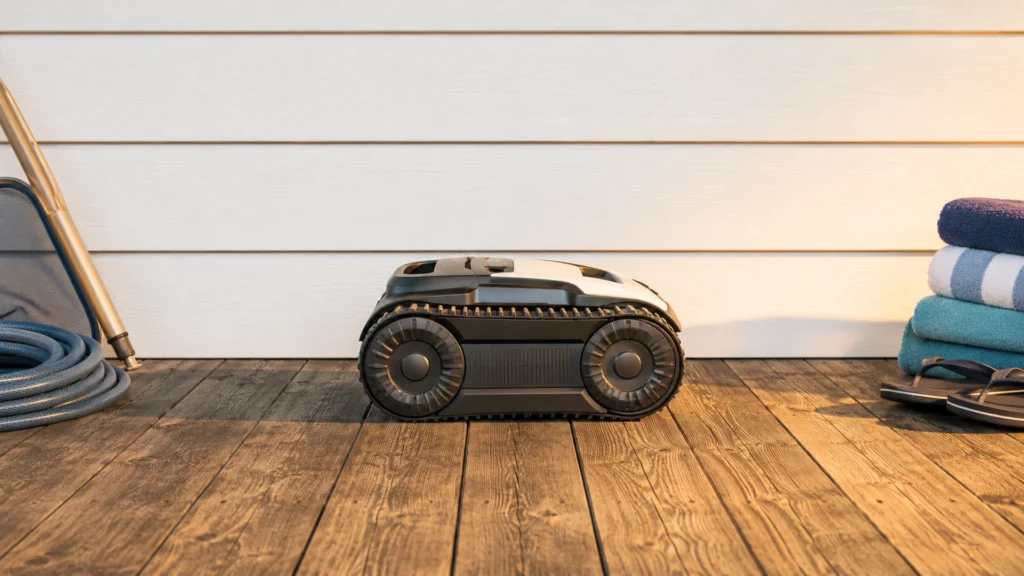
#2. Beatbot Sora 70 Robotic Pool Cleaner

Specifications
| Brand | Beatbot |
|---|---|
| Pool Type | In-Ground/Above-Ground |
| Power Source | Cordless Battery |
| Filtration Level | 3 microns |
| Battery Runtime | 5 hr |
| Weight | 22.9 lb |
| Dimensions | 17.1 x 16.9 x 11.2 in |
Pros
- Works for both pools
- Fine debris filtration
- Long runtime on charge
Cons
- Edge inconsistency
- Submerged app limits
- Support skepticism
Beatbot Sora 70 stands out for in-ground and above-ground owners who want long, cordless-style cleaning time without sacrificing fine debris pickup. It filters down to 3 microns and runs up to 5 hr per charge, which helps when you need to clear dust, sand, and small grit that builds up across larger pool surfaces.
The trade-off is coverage at the edges. Users may see missed striping along the perimeter, so you might still need occasional spot checks after a cycle. It also uses a submerged app approach, which limits control options when you prefer to stay hands off. This cleaner fits best for pools where most debris settles on the floor and where you can tolerate minor edge inconsistency for the overall runtime.
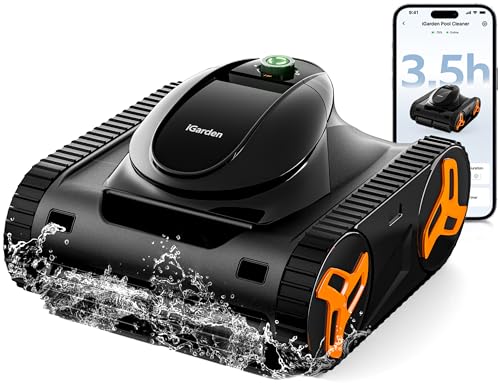
#3. iGarden KN Series Robotic Pool Cleaner

Specifications
| Brand | iGarden |
|---|---|
| Pool Type | In-Ground/Above-Ground |
| Power Source | Cordless Battery |
| Cycle Time | 2 hr |
| Filtration Level | 180 microns |
| Battery Runtime | 3.5 hr |
| Weight | 17.9 lb |
| Dimensions | 9.4 x 19.2 x 15.3 in |
Pros
- Dependable cleaning value
- Works for both pools
- Wall waterline coverage
Cons
- Coarse debris filtration
- Heavy-debris retouching
- Wear shows after months
The iGarden KN Series is notable for doing a straightforward job in both In-Ground and Above-Ground pools, with wall and waterline coverage that fits real-world cleaning needs. A typical 2 hr cycle and 3.5 hr cordless runtime make it practical for frequent cleanups, and its 180 micron filtration is solid for everyday dust and fine grit.
The main trade-off is how it handles heavier loads. Coarser debris filtration can leave some stuff behind, so you may need extra attention after storms or leaf drop. Durability also looks mixed over the long run, with noticeable wear after months, which makes it a better pick for owners who clean regularly rather than waiting for buildup.
#4. AIPER Scuba X1 Robotic Pool Cleaner

Specifications
| Brand | AIPER |
|---|---|
| Pool Type | In-Ground/Above-Ground |
| Power Source | Cordless Battery |
| Filtration Level | 3 microns |
| Battery Runtime | 3.08 hr |
Pros
- Works for both pools
- Fine debris filtration
- Long runtime on charge
Cons
- Wear shows after months
- Post-session cleanup hassle
The AIPER Scuba X1 stands out in the In-Ground/Above-Ground robotic cleaner category for its fine-debris filtration and strong run time. With a 3 microns filtration level, it targets dust and sand that many pool cleaners miss. It also keeps going for about 3.08 hr on a charge, which helps it complete a full floor pass without you needing to babysit short cycles.
The trade-off is maintenance. Users may notice wear after a few months, and you should plan on some post-session cleanup. This cleaner fits best for pool owners who want solid dust and sand removal across both in-ground and above-ground setups, but are willing to rinse and check the filter regularly to keep results consistent.
#5. UBoter S10 Robotic Pool Cleaner

Specifications
| Brand | UBoter |
|---|---|
| Pool Type | In-Ground/Above-Ground |
| Power Source | Cordless Battery |
| Cycle Time | 2.5 hr |
| Filtration Level | 180 microns |
| Battery Runtime | 2.5 hr |
| Weight | 17.2 lb |
| Dimensions | 16 x 14 x 8 in |
Pros
- Works for both pools
- Long runtime on charge
- App-based control
Cons
- Coarse debris filtration
- Fine filter clogging
- Sometimes misses corners
UBoter S10 stands out for in-ground and above-ground owners who want cordless convenience without giving up decent run time. It is battery powered, runs about 2.5 hr per charge, and lets you steer cleaning through an app. In real pool use, that combination matters because you can pull it out, rinse it, and start another cycle without wrestling with a control box. Coverage is generally solid for routine floor cleanup, with fewer issues than many robots that get stuck around irregular areas.
The main trade-off is filtration. With an 180 micron level and reports of fine filter clogging, it tends to do best after heavy debris is already skimmed. If your pool has lots of fine sand or silt, expect more filter checks and cleaning. Corners can also be hit or missed, so it is a better fit for pools that do not demand perfect corner detail every cycle.
What to Look For
Coverage for in-ground and above-ground layouts: Prioritize models that handle corners, steps, ladders, and floor transitions without frequent rescues. If your pool has tight geometry or multiple levels, look for coverage that is systematic, not random wandering.
Debris and fine-dust filtration: Check the filter micron rating and real-world cleaning claims for sand, fine dust, leaves, and larger bits. Better filtration helps you avoid visible debris after a cycle, especially in above-ground pools that tend to trap wind-blown material.
Cleaning cycle time that fits your routine: Compare cleaning cycle time and decide what is acceptable for your schedule. Longer cycles can improve results, but they also affect how often you will retrieve and rinse the unit.
Durability under pool water and chemicals: Look for sturdy housings, reliable seals, and a track or wheel system that resists wear. This matters for both in-ground and above-ground pools because exposure is constant and the robot runs on repeat.
Handling, filter access, and upkeep: Choose a cleaner that is easy to lift out, easy to open for filter cleaning, and simple to restart. If you hate maintenance, performance will not matter because you will skip cycles or rush cleanouts.
How We Picked
Products were identified through broad research across review sites and buyer forums, then filtered to only those that qualify as In-Ground and Above-Ground Robotic Pool Cleaners.
Scoring used the same objective pillar framework as the main Robotic Pool Cleaners post, allowing direct comparison of products within this sub-category.
Frequently Asked Questions
What should I check first to make sure a robotic cleaner works in my pool type?
Confirm the listing says it is compatible with In-Ground, Above-Ground, or In-Ground/Above-Ground use. Also check the max pool length so it can reach every area in one run. If your pool has steps, benches, or a steep slope, look for strong navigation scores and good corner coverage. Finally, check power setup needs like cord length or docking location.
Do these robotic pool cleaners clean walls and the waterline, or only the floor?
Many models focus on the pool floor, especially for above-ground shapes. Some models include features like wall and waterline cleaning, but performance can vary. If wall cleaning matters to you, prioritize navigation and performance scores, and look for claims about wall and waterline contact. Plan on extra effort if your pool has a heavy algae ring at the waterline.
How do I set up and maintain an in-ground or above-ground robotic cleaner for best results?
Start by removing toys, leaves, and large debris before the first run. Rinse the filter after each use when possible, or at least often during heavy leaf season. Keep the cable or power system untangled and away from sharp edges. If it gets stuck, check for pool fittings like ladders, lights, and drains that can block coverage.
When should I choose a different type of robotic pool cleaner instead of an in-ground and above-ground model?
Consider a different type if your pool is very irregular or you need strong waterline and wall cleaning every time. Also switch types if your pool size is beyond the cleaner maximum pool length. If you have lots of fine sand or very heavy debris, a model with higher filtration or stronger pickup helps. When in doubt, match the cleaner to your pool shape and debris type first.
How do in-ground and above-ground robotic cleaners compare to other robotic pool cleaners in terms of setup effort?
In-ground and above-ground models usually offer simple plug-in or docking style setup. They often run on a set cycle time, so you do not need manual steering. Compared with pool types that need more custom gear or special adapters, these are usually easier for most homeowners. Still, you may need to check and rinse the filter often for best cleaning.


