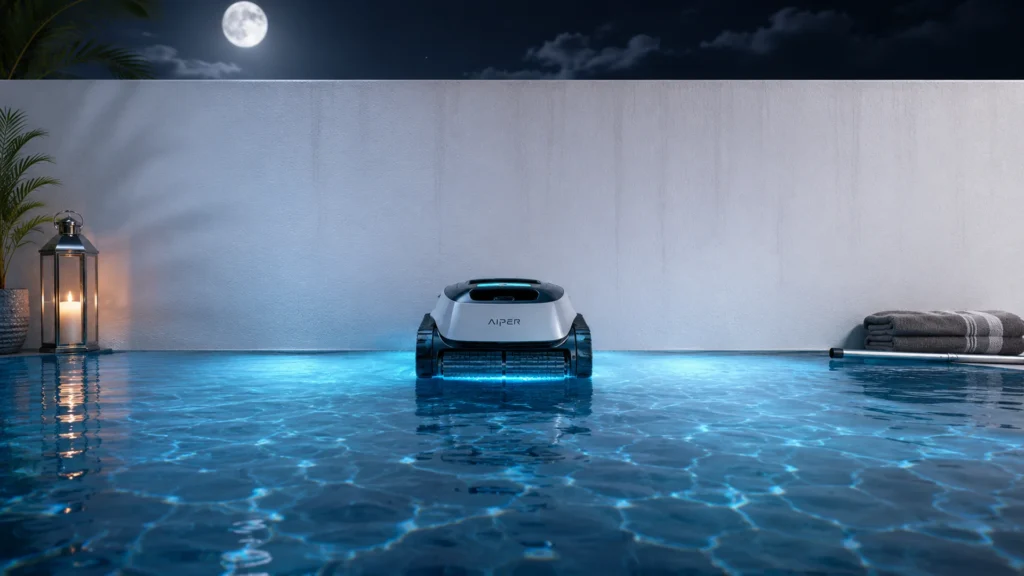
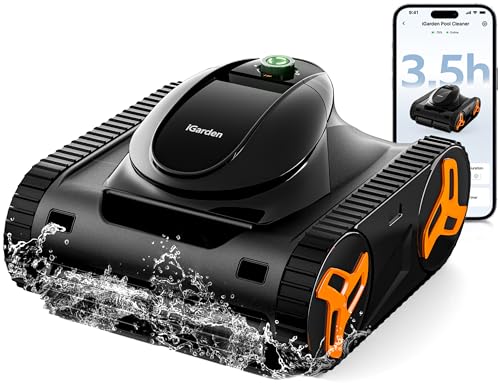
Waterline cleaning robotic pool cleaners target the ring where your pool wall meets the water. That is where sunscreen, fine dust, and algae film build up first. Buyers in this sub-category need more than floor-only cleaning. They need a robot that can lift debris from the tile line during the same run, even when the pool has steps, lights, or sloped floor transitions.
Picking the right one is hard because the trade-offs show up fast. Better waterline access often means more complex brush and airflow design, which can lower fine-debris capture in the deep end. Strong filtration can also mean slower flow, so some units take longer cycles to finish. And navigation matters more here than on floor-only robots, because the cleaner has to repeatedly visit the wall line instead of just wandering.
If you also want strong overall coverage beyond the waterline, you will get a wider shortlist. Looking for all types? See our Best Robotic Pool Cleaners.
Quick Overview
Our Top Picks
#1. Beatbot Sora 70 Robotic Pool Cleaner

Specifications
| Brand | Beatbot |
|---|---|
| Pool Type | In-Ground/Above-Ground |
| Power Source | Cordless Battery |
| Filtration Level | 3 microns |
| Battery Runtime | 5 hr |
| Weight | 22.9 lb |
| Dimensions | 17.1 x 16.9 x 11.2 in |
Pros
- Works for both pools
- Fine debris filtration
- Long runtime on charge
Cons
- Edge inconsistency
- Submerged app limits
- Support skepticism
In waterline cleaning, Beatbot Sora 70 stands out for its fine-debris handling while staying simple to run. It filters down to 3 microns and runs up to 5 hours per charge, which helps with the gritty film that builds at the wall line. In real pools, that long runtime matters because it gives the robot more passes to keep dust, sand, and small debris from piling up near steps and corners.
The main trade-off is edge behavior. Expect some missed spots at the margins, so you may need occasional touch-ups along the waterline. It also uses a submerged app approach, which can feel limiting if you prefer a fully open, easy-to-access control setup. This is a strong pick if you want dependable whole-floor vacuuming first, and you are willing to do a quick follow-up where your pool has extra tight edges.
#2. Polaris 9650iQ Sport Robotic Pool Cleaner

Specifications
| Brand | Polaris |
|---|---|
| Pool Type | In-Ground |
| Max Pool Length | 60 ft |
| Weight | 44.6 lb |
Pros
- Simple controls, tidy storage
- Works for both pools
- Covers more pool length
Cons
- Heavy and harder to carry
- Inconsistent edge coverage
This Polaris model stands out for waterline-focused cleaning with less fuss. In practice, it does a solid job moving across a larger 60 ft pool and staying in the action long enough to keep the floor clear of fine dust and everyday debris. That matters for waterline cleaning robots, because the toughest spots often end up being the edges where dirt settles between skimmer lines and return flow.
The main trade-off is edge behavior. Expect less consistent coverage along the perimeter, which can show up as missed buildup near the waterline after a run. It is also heavy at 44.6 lb, so carrying it to storage takes more effort than lighter options. Best for people who want hands-off daily floor and waterline touchups, and who do not mind giving the outer strip a quick manual check when needed.
#3. Dreame Z1 Pro Robotic Pool Cleaner

Specifications
| Brand | dreame |
|---|---|
| Pool Type | In-Ground |
| Power Source | Cordless Battery |
| Battery Runtime | 3 hr |
| Weight | 37.7 lb |
| Dimensions | 11.1 x 18.5 x 16.7 in |
Pros
- Handles fine debris well
- Dependable cleaning value
- Effective waterline cleaning
Cons
- First-run water ingress
- Limited pool type support
- Wear after months
If waterline scum and fine debris are your main headache, the Dreame Z1 Pro stands out because it handles both well in typical runs. It is built for cordless use with about 3 hr of runtime, and reviewers note it cleans floors thoroughly while also reaching the waterline more effectively than many robots in this group. You still need occasional manual checks, but it tends to reduce the back-and-forth that wastes time when dust and small grit keep resettling.
The trade-off is reliability early on and consistency across different pools. Some owners report water ingress on the first run, and long-term wear can show up after months. It is best for in-ground pools that do not have extreme shape complexity, and for buyers who are comfortable monitoring the robot at first use and keeping up with routine cleaning of the filtration path.
#4. Polaris Freedom Cordless Robotic Pool Cleaner

Specifications
| Brand | Polaris |
|---|---|
| Pool Type | In-Ground |
| Power Source | Cordless Battery |
| Max Pool Length | 50 ft |
| Cycle Time | 2.5 hr |
| Battery Runtime | 2.5 hr |
| Weight | 32 lb |
| Dimensions | 14.6 x 22.1 x 22.1 in |
Pros
- Few stalling moments
- Long runtime on charge
- Smart waterline pickup
Cons
- Charging-base defects
- Inconsistent scrubbing power
- Limited pool type support
Polaris Freedom is notable in the waterline-focused robotic cleaner category because it aims for smart waterline pickup while staying out of the way during the run. In practice, it tends to avoid frequent stalling and keeps a long working time on each charge, so you spend less time rescuing it and restarting sessions. Its mapping and coverage also look steady for an in-ground setup up to 50 ft, which helps it reach the full perimeter where waterline grime usually collects.
The main trade-off is cleaning strength you can feel at the brush level. Scrubbing power can be inconsistent, especially when you have mixed debris or heavier buildup. It also shows limited pool type support, so it is a better match for owners with a compatible in-ground layout who want dependable coverage and waterline pickup, not a cleaner that must handle every pool surface and shape without compromises.
#5. Beatbot AquaSense 2 Robotic Pool Cleaner

Specifications
| Brand | Beatbot |
|---|---|
| Pool Type | In-Ground/Above-Ground |
| Power Source | Cordless Battery |
| Battery Runtime | 4 hr |
| Weight | 27 lb |
| Dimensions | 9 x 18 x 17 in |
Pros
- Dependable cleaning value
- Long runtime on charge
- Works for both pools
Cons
- Wall waterline inconsistency
- Poor value at price
In the Waterline Cleaning Robotic Pool Cleaners group, the Beatbot AquaSense 2 stands out more for day-to-day reliability than for perfect edge work. It runs about 4 hr on a cordless battery and is built to handle both in-ground and above-ground pools. Navigation is generally steady, with fewer common coverage misses than random-wandering robots, so most users should see more consistent floor cleanup in a full cycle.
The main trade-off is waterline consistency. Many owners of waterline-focused models want a cleaner finish along the tile line, and this one can leave gaps there. It also has mixed results on that area, so it may take occasional help or extra attention. If your priority is dependable floor cleaning and you can tolerate some extra work at the waterline, this is a solid mid-pack choice.
#6. iGarden KN Series Robotic Pool Cleaner

Specifications
| Brand | iGarden |
|---|---|
| Pool Type | In-Ground/Above-Ground |
| Power Source | Cordless Battery |
| Cycle Time | 2 hr |
| Filtration Level | 180 microns |
| Battery Runtime | 3.5 hr |
| Weight | 17.9 lb |
| Dimensions | 9.4 x 19.2 x 15.3 in |
Pros
- Dependable cleaning value
- Works for both pools
- Wall waterline coverage
Cons
- Coarse debris filtration
- Heavy-debris retouching
- Wear shows after months
For waterline cleaning, the iGarden KN Series stands out because it hits both walls and the waterline, not just the pool floor. In real use, that matters when scum lines form where splash zone water dries. Its cycle time is about 2 hr, and it runs up to 3.5 hr on a charge, so you can usually plan one session to cover the whole clean-up. Navigation is steady enough for most layouts, with fewer missed areas than many lower-ranked robots.
The main trade-off is how it handles dirty conditions. Filtration is listed at 180 microns, so coarse debris can slip through and you may need some touch-up work after heavy leaf or grit days. Durability is also average for the group, since wear shows after months. This is a better fit for pools that see regular scum and routine debris rather than frequent, chunky clean-outs.
#7. AIPER Scuba X1 Robotic Pool Cleaner

Specifications
| Brand | AIPER |
|---|---|
| Pool Type | In-Ground/Above-Ground |
| Power Source | Cordless Battery |
| Filtration Level | 3 microns |
| Battery Runtime | 3.08 hr |
Pros
- Works for both pools
- Fine debris filtration
- Long runtime on charge
Cons
- Wear shows after months
- Post-session cleanup hassle
The AIPER Scuba X1 is a notable pick for waterline cleaning because it balances fine debris capture with a long 3.08 hr run time. With 3 microns filtration, it is better suited than many basic robots for the dust and grit that cling around the pool wall. In real use, this kind of suction-focused clean matters most near the waterline, where fine particles build up fast.
The main trade-off is maintenance. Some owners report wear after months, and filter cleanup tends to be a chore after each session. This robot fits best for people who want steady whole-pool work and do not mind doing some post-run rinsing, especially if you are picky about keeping the waterline visually clean.
#8. AIPER Scuba S1 Robotic Pool Cleaner

Specifications
| Brand | AIPER |
|---|---|
| Pool Type | In-Ground |
| Power Source | Cordless Battery |
| Filtration Level | 150 microns |
| Battery Runtime | 4.5 hr |
| Weight | <20 lb |
| Dimensions | 17.5 x 15.3 x 8.7 in |
Pros
- Dependable cleaning value
- Simple controls, tidy storage
- Long runtime on charge
Cons
- Wear shows after months
- Limited pool type support
- Coarse debris filtration
The AIPER Scuba S1 stands out for waterline cleaning in this lineup because it runs cordless for up to 4.5 hr and stays easy to handle. In practice, that matters when you want fewer interruptions while it works across the pool floor and climbs often enough to reach stained bands near the water. Controls are simple, and the robot is light enough to lift and rinse without making maintenance feel like a chore.
The trade-off is filtration and debris type. Its 150 micron filter is okay for fine dust, but it can struggle with coarse debris, and wear can show after months of use. It is also a better fit for basic in-ground layouts than for pools with lots of irregular shapes, where you may need to help it with coverage at time.
#9. UBoter S10 Robotic Pool Cleaner

Specifications
| Brand | UBoter |
|---|---|
| Pool Type | In-Ground/Above-Ground |
| Power Source | Cordless Battery |
| Cycle Time | 2.5 hr |
| Filtration Level | 180 microns |
| Battery Runtime | 2.5 hr |
| Weight | 17.2 lb |
| Dimensions | 16 x 14 x 8 in |
Pros
- Works for both pools
- Long runtime on charge
- App-based control
Cons
- Coarse debris filtration
- Fine filter clogging
- Sometimes misses corners
UBoter S10 stands out for waterline-focused cleaning because it pairs cordless battery operation with an app-based control experience, so you can run longer sessions and keep an eye on progress without dealing with a constant cord. In a typical 2.5 hr cycle, it aims to cover both in-ground and above-ground pools, making it a practical pick when your main goal is getting consistent grime and light debris off the floor and the upper portions of the pool walls.
The trade-off is filtration and corner coverage. Its 180 micron filtration level and coarse debris approach can let fine particles build up, and fine filter clogging is a real issue if your pool has lots of dust or pollen. It also sometimes misses corners, so you may need to run an extra cycle or spot-check high-detail areas like tight transitions and edges where waterline grime collects.
What to Look For
True waterline coverage: Look for models that explicitly clean the waterline as a supported feature. In real pools, tile and waterline buildup vary by sun exposure and plumbing returns, so the robot needs to reach that band without you stopping mid-cycle to brush it.
Wall and floor balance: Prioritize units that are not just “wall-capable.” For waterline users, wall access matters most, but you still need solid floor pickup so debris does not get pushed back up near the tile. Check that the same run covers both areas well.
Fine debris filtration: Waterline grime often includes fine dust and sunscreen residue. Choose a cleaner with a filtration level that is meant to trap small particles, not only leaf-size debris. Better filtration reduces the mess you otherwise have to vacuum again.
Navigation around obstacles: Steps, ladders, drains, and pool lights are where waterline cleaning fails. Favor robots that map or cover systematically and that do not get stuck near returns or transitions, because repeated rescues usually mean missed tile sections.
Cycle time you can live with: Waterline cleaning takes time to revisit the same height consistently. Compare cleaning cycle time in your pool length range, and choose a unit that finishes in a practical window for your schedule.
How We Picked
Products were identified through broad research across review sites and buyer forums, then filtered to only those that qualify as Waterline Cleaning Robotic Pool Cleaners. We kept the list focused on cleaners designed to address the waterline band as part of normal operation, not just occasional brush attachments.
Scoring used the same objective pillar framework as the main Robotic Pool Cleaners post, allowing direct comparison of products within this sub-category. Performance, navigation, durability, ease, and value were weighted so waterline results got meaningful emphasis, while still accounting for floor cleanup quality and day-to-day use.
Frequently Asked Questions
Do waterline cleaning robotic pool cleaners also clean the floor and walls, or just the waterline?
Most waterline-focused robots primarily target the waterline and the area right below it. Many also clean the floor, and some offer wall cleaning as well. If wall coverage matters to you, look for models that explicitly support wall cleaning or strong side coverage, not just waterline skimming.
How do I know if a robot will actually reach the waterline on my pool surface?
Waterline pickup depends on how the robot routes and how it scrubs near the surface. Choose a model that advertises waterline cleaning and has strong navigation for tight turns and stairs. Also check that your pool has a suitable floor for the robot to climb and maintain good contact near the waterline.
What maintenance helps keep waterline cleaning robots working well?
After each run, rinse the filter basket and clean the intake area so it does not clog. If your pool has fine dust or pollen, check the filter more often in the first few weeks. Also inspect the brushes and scrubbing parts for wear, since waterline cleaning relies on good contact.
Should I buy a waterline cleaning model, or choose a standard robotic pool cleaner instead?
Choose a waterline cleaner if you deal with visible scum lines, algae stains, or frequent ring buildup. If your main issue is leaves and debris on the floor, a standard cleaner may be enough. For best results, prioritize waterline cleaning features when the waterline is your biggest problem.
How do waterline cleaning robotic pool cleaners compare to other robotic pool cleaners in cleaning coverage?
Waterline cleaning robots usually focus on the band around the waterline and the band below it. Other robotic pool cleaners often spend more time covering the floor more thoroughly. If you want whole-pool balance, look for models that pair waterline cleaning with strong floor coverage and reliable mapping for full coverage.


