




Skip to content

The 6 Best Rugged External Hard Drives in 2026

September 28, 2026-By The Top Zone

Transparency Note: This post contains affiliate links. As an Amazon Associate, we earn from qualifying purchases at no extra cost to you.

Rugged external hard drives are built for work outside a desk. They typically use reinforced shells, protective covers, or resistance to dust, water, and drops. Buyers need a drive that can handle travel while still offering enough capacity, useful speed, and dependable connections.

Choosing one involves real trade-offs. Portable SSDs resist shocks and transfer files quickly, but they often cost more per terabyte. Rugged HDDs provide more storage for less money, but they are heavier, slower, and more sensitive to movement while operating. Security features, cable types, heat, and compatibility can also affect daily use.

This guide compares rugged models for different travel and backup needs. Looking for all types? See our Best External Hard Drives.

Quick Overview

Our Top Picks

#1. Samsung T7 Touch 2TB External SSD

Samsung T7 Touch 2TB External SSD
Our Score 8.1 / 10 Score details
Performance8
Reliability8
Portability8.6
Compatibility8.1
Value8.2
How we research & score
BrandSamsung
Capacity2 TB
Drive TypeSSD
InterfaceUSB 3.2 Gen 2
Max Read Speed1050 MB/s
Dimensions0.3 x 3.3 x 2.2 in
Weight0.1 lb
  • Stable, disconnect-free operation
  • Backups stay consistently fast
  • Great capacity for cost
  • Security behavior varies

For a rugged external drive, the Samsung T7 Touch 2TB stands out by combining a compact, shock-resistant SSD design with fingerprint security. Its USB 3.2 Gen 2 connection supports read speeds up to 1050 MB/s, making large backups and media transfers feel quick. The 0.1-pound body measures 0.3 x 3.3 x 2.2 inches, so it is easy to carry without an external power supply. Research-based user feedback also points to stable operation and few disconnects.

The fingerprint reader adds useful protection for files on the move, but security behavior can vary by device and setup. Confirm compatibility before relying on it for every computer or console. This drive suits travelers, photographers, and anyone who needs fast portable storage in a small, sturdy package.

→ Read full review

#2. LaCie Rugged SSD4 1TB External SSD

LaCie Rugged SSD4 1TB External SSD
Our Score 7.8 / 10 Score details
Performance8
Reliability7.2
Portability7.8
Compatibility8.6
Value7.9
How we research & score
BrandSeagate
Capacity1 TB
Drive TypeSSD
InterfaceUSB-C
Max Read Speed4000
Form Factor2.5 in
Weight0.3 lb
  • Backups stay consistently fast
  • Works smoothly across devices
  • High read speed
  • Lower bandwidth interface

For travel and field backups, this LaCie Rugged SSD4 stands out with SSD speed in a protective portable design. Its listed read speed reaches 4000 MB/s, while the 1 TB capacity leaves room for large photo, video, and project files. The 0.3 lb weight also keeps it easy to carry. Research-based scoring gives it 8.0 for performance and 7.8 for portability.

Its main trade-off is the lower-bandwidth USB-C interface, which can limit real-world transfers on compatible systems. Still, backups should stay consistently fast, and reported device support is broad. This drive suits users who need a compact rugged SSD for moving active files between computers and other devices.

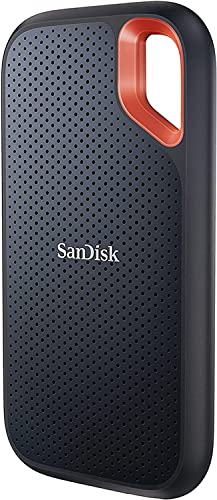
#3. SanDisk Extreme Portable 2TB External SSD

SanDisk Extreme Portable 2TB External SSD
Our Score 7.7 / 10 Score details
Performance7.8
Reliability7.1
Portability8.2
Compatibility8.1
Value8.1
How we research & score
BrandSandisk
Capacity2 TB
Drive TypeSSD
InterfaceUSB-C
Max Read Speed1050 MB/s
Form Factor2.5 in
Dimensions0.4 x 4 x 2.1 in
Weight0.1 lb
  • Works smoothly across devices
  • Great capacity for cost
  • High read speed
  • Lower bandwidth interface

For a rugged external drive, the SanDisk Extreme Portable 2TB External SSD stands out for its small, light design and fast 1050 MB/s read speed. Its USB-C connection and solid-state storage suit travel, field backups, and moving large files between devices. The compact 0.4 x 4 x 2.1 inch body weighs about 0.1 lb, so it adds little bulk to a bag.

The main trade-off is its lower-bandwidth interface compared with faster modern portable SSDs. It remains a strong fit for users who want a tough, easy-to-carry 2TB drive with broad device support. Published speeds are maximum figures, so actual results depend on the host device, cable, and workload.

#4. PNY RP60 1TB External SSD

PNY RP60 1TB External SSD
Our Score 7.7 / 10 Score details
Performance7.2
Reliability7.7
Portability7.9
Compatibility8
Value8.3
How we research & score
BrandPNY
Capacity1 TB
Drive TypeSSD
InterfaceUSB 3.2 Gen 2
Max Read Speed2000 MB/s
Dimensions3.83 x 2.36 x 0.49 in
Weight0.1 lb
  • High read speed
  • Great capacity for cost
  • USB-C cross-device support
  • No USB-A adapter

For a rugged-drive setup, the PNY RP60 stands out by pairing a compact 0.1-pound body with a stated read speed of up to 2000 MB/s. Its SSD design has no moving parts, which suits travel, mobile backups, and work near everyday bumps. The USB 3.2 Gen 2 interface and USB-C connection also make it a practical match for newer laptops, tablets, and other compatible devices.

The main trade-off is the included connection setup. PNY does not list a USB-A adapter, so older laptops and desktops may need a separate adapter or cable. This 1TB drive is best for users who want fast, light storage for modern USB-C devices and can handle their own protection during travel.

→ Read full review

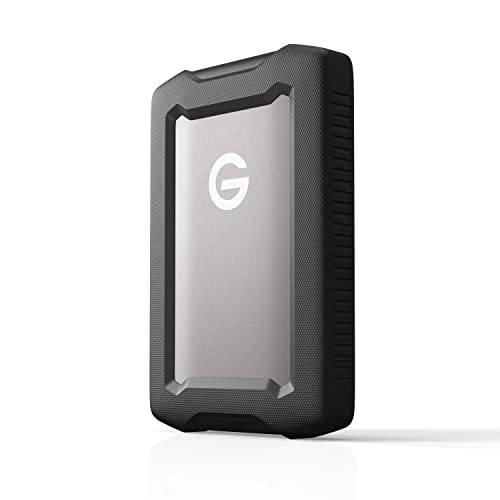
#5. Western Digital G-Drive ArmorATD 2TB External Hard Drive

Western Digital G-Drive ArmorATD 2TB External Hard Drive
Our Score 7.2 / 10 Score details
Performance6.6
Reliability7.2
Portability7.6
Compatibility7.2
Value8.1
How we research & score
BrandWestern Digital
Capacity2 TB
Drive TypeHDD
InterfaceUSB 3.2 Gen 1
Max Read Speed130 MB/s
Rotational Speed5400 RPM
Form Factor2.5 in
Dimensions0.9 x 5.1 x 3.4 in
Weight0.6 lb
  • Generous storage
  • Lightweight design
  • Mac out-of-box
  • Speed dips under load
  • Odd USB ejection
  • Windows detection issues

For a rugged travel drive, the Western Digital G-Drive ArmorATD 2TB stands out with a compact 2.5-inch body and a protective design. It weighs 0.6 lb and draws power through USB, so it is easy to carry with a laptop. Its 2TB HDD stores large photo, video, and backup libraries. The USB 3.2 Gen 1 connection reaches up to 130 MB/s in published specifications, which suits routine file transfers.

This drive fits Mac users well because it comes ready for macOS. Windows users may need setup, and some reported experiences mention detection or ejection issues. Transfers can also slow under heavier loads, so it is better for mobile backups and general storage than demanding work. Its rugged build and light weight make it a practical choice when travel protection matters more than top speed.

#6. iStorage diskAshur PRO3 5TB External Hard Drive

iStorage diskAshur PRO3 5TB External Hard Drive
Our Score 7.0 / 10 Score details
Performance5.9
Reliability7.1
Portability8
Compatibility7.8
Value7.7
How we research & score
BrandiStorage
Capacity5 TB
Drive TypeHDD
InterfaceUSB 3.2 Gen 1 Type-C
Max Read Speed171 MB/s
Dimensions0.8 x 5.2 x 3.3 in
Weight0.9 lb
  • Generous storage
  • Compact and low-heat
  • Transfers feel sluggish
  • Slower mechanical drive

For rugged-drive buyers, the iStorage diskAshur PRO3 stands out for its security-focused design and compact build. Its 5 TB HDD stores large backups while the 0.9 lb body remains easy to carry. The USB 3.2 Gen 1 Type-C connection suits modern laptops and supports a stated read speed of up to 171 MB/s.

That speed is modest for large transfers, and the mechanical drive can feel sluggish beside portable SSDs. Still, its low-heat design and generous capacity make it a practical choice for carrying protected work files or backup archives. It suits users who value rugged handling and secure storage more than quick transfers.

What to Look For

Protection and Build: Check the stated drop, water, dust, and crush protection. A rubberized shell or protective cover helps during travel, but confirm the actual rating instead of assuming every rugged label means the same thing.

Speed and Drive Type: Choose an SSD when quick photo backups, video transfers, and shock resistance matter most. An HDD can offer more capacity at a lower price, but its moving parts usually make it slower and less tolerant of movement. Compare the stated maximum read speed with the interface, such as USB 3.2 Gen 1, USB 3.2 Gen 2, or USB-C.

Portability: Review the dimensions, weight, form factor, cable length, and power needs. A bus-powered 2.5 in drive is easier to carry than a 3.5 in desktop model that needs a power adapter. Lower heat and noise also matter when working in the field.

Reliability and Security: Look for consistent user reports about disconnects, overheating, corrupted files, and long-term failures. For sensitive work data, hardware encryption or a PIN lock can provide protection if the drive is lost, though these features may add cost and setup steps.

Capacity and Value: Match storage to the files you carry, then compare price per TB. Leave free space for backups and growth. A cheaper rugged HDD may suit large archives, while a higher-priced SSD can make sense when faster transfers and better shock resistance save time.

How We Picked

Products were identified through broad research across review sites and buyer forums, then filtered to models that qualify as Rugged External Hard Drives. Published specifications and third-party experiences informed the comparison. This is desk research, not physical testing by The Top Zone.

Scoring used the same research-based pillar framework as the main External Hard Drives post, covering performance, reliability, portability, compatibility, and value. The weights support direct comparison within this rugged sub-category, but the scores are assessments rather than objective measurements, and unknown specifications remain unknown.

Frequently Asked Questions

What makes a rugged external hard drive different from a standard portable drive?

Rugged models use stronger cases and better seals to handle drops, dust, rain, or travel. SSD models also resist shock because they have no moving parts. Protection levels vary, so check the product's water and drop ratings before buying.

Should I choose a rugged SSD or a rugged HDD?

Choose a rugged SSD for faster transfers, quiet use, and better shock resistance. Choose a rugged HDD when you need more storage for less money. SSDs suit travel and active work, while HDDs work well for large backup libraries.

How should I care for a rugged external drive?

Keep the ports covered when the drive is not connected. Avoid unplugging it during transfers, and eject it safely from your computer. Rugged protection does not prevent damage from heat, moisture inside open ports, or repeated hard impacts.

Are rugged external drives compatible with Windows, Mac, and game consoles?

Most use USB connections and work with Windows and macOS after simple formatting. A drive may need reformatting for a console or another operating system. Check the included cable, file system, and device support before purchase.

When should I choose a standard external hard drive instead?

Choose a standard drive if it will stay at home and you mainly want low-cost storage. Rugged protection adds cost and may not improve daily use on a desk. For frequent travel, field work, or outdoor use, the extra protection is often worthwhile.

Are rugged external drives faster than other external hard drives?

Rugged design does not automatically improve speed. Rugged SSDs can reach much higher transfer rates than mechanical HDDs, while many rugged HDDs remain near typical portable drive speeds. Compare the interface, sustained speed, and capacity along with the protection rating.

See Also