




Japanese Chefs Knives focus on edge performance and cutting feel. Buyers in this sub-category usually want a sharp blade that slices onions cleanly, rocks through herbs, and pushes through proteins without tearing. In practice, that means paying attention to steel type, edge style, and how the knife carries weight during daily prep.
Choosing one is hard because the trade-offs are real. Harder steels can hold an edge longer, but they can feel more “precise” and demand better care. Some knives stay sharp longer yet may chip sooner if you hit hard surfaces. Finish and fit also vary, from light, easy-to-control profiles to heavier builds that can slow fast chopping.
Looking for all types? See our Best Chefs Knives.
Quick Overview
Our Top Picks
#1. MIYABI 5000MCD Black 8" Chef's Knife

Specifications
| Brand | MIYABI |
|---|---|
| Blade Length | 8 in |
| Overall Length | 14.8 in |
| Weight | 6.4 oz |
| Blade Material | Carbon Steel |
| Hardness | 66 HRC |
| Handle Material | Wood |
Pros
- Edge-retaining steel
- Comfortable for long prep
- Slice-and-glide cleanly
Cons
- Heavy and tiring
- Dishwasher risk
In a field where many Japanese chef knives are chosen for edge feel, the MIYABI 5000MCD Black 8 stands out for how it cuts. It slices and glides cleanly with little tearing, making it a strong match for the push-cut style common in Japanese prep. The 66 HRC carbon steel helps keep a biting edge longer than many kitchen knives, so daily chopping tasks feel sharper for more time between touch-ups.
The main trade-off is comfort and care. At 6.4 oz it is not light, and reviewers describe it as heavy enough to tire hands during long sessions. Also, it is risky to run it through a dishwasher, so it needs hand washing and basic drying to stay in good shape. If you want a sharp, responsive Japanese-style workhorse for vegetables, herbs, and proteins, this is a great pick, just not for people who want low-maintenance upkeep.
#2. MIYABI Kaizen 8" Chef's Knife

Specifications
| Brand | MIYABI |
|---|---|
| Blade Length | 8 in |
| Overall Length | 7.99 in |
| Weight | 11.2 oz |
| Blade Material | Stainless Steel |
| Hardness | 60 HRC |
| Handle Material | Composite |
| Edge Type | Plain |
Pros
- Sharp out of the box
- Sharpness-retaining hardness
- Comfortable for long prep
Cons
- Damascus cosmetic scratching
- Handle slightly bulky
The MIYABI Kaizen 8 stands out in Japanese Chefs Knives because it combines a very sharp out-of-the-box edge with strong edge staying power at 60 HRC. In real prep, it slices vegetables cleanly and glides through proteins without much tearing. The 8 in plain edge also feels controllable at the tip, so push cuts and quick chops stay accurate during everyday cooking.
The main trade-off is cosmetic. The Damascus pattern can show scratching with normal use, so it is less forgiving if you want a pristine look. The handle is also a bit bulky for some hands, which can affect grip comfort for very long sessions. This knife is best for home cooks who want Japanese-style bite and clean cutting, and are willing to handle the finish like a working tool.
#3. MIYABI Birchwood 8" Chef's Knife

Specifications
| Brand | MIYABI |
|---|---|
| Overall Length | 12.25 in |
| Blade Material | Carbon Steel |
| Hardness | 63 HRC |
| Handle Material | Wood |
Pros
- Sharp out of the box
- Dull slowly, rarely chips
- Edge-retaining steel
Cons
- Care-sensitive steel
- Technique acclimation
For Japanese Chefs Knives shoppers who want sharp, clean performance right away, this MIYABI 8 inch chef knife is a standout. Reviewers consistently note an out-of-the-box edge that slices smoothly and holds tip control well during push and pull cuts. It also pairs that cutting feel with strong edge retention, thanks to a carbon steel blade rated at 63 HRC, so it stays biting longer than many knives in the same “high sharpness” category.
The main trade-off is care. Carbon steel at this hardness is more care-sensitive, so you need to wipe it dry and avoid rough handling if you want to prevent dulling or damage. It also rewards practice. If you are still adjusting to thinner Japanese grinds and the way the edge bites, plan on a short learning curve for best results.
#4. Mac Knife Superior 8" Chef's Knife

Specifications
| Brand | Mac Knife |
|---|---|
| Blade Length | 8.13 in |
| Overall Length | 13.06 in |
| Weight | 8 oz |
| Blade Material | High Carbon Stainless Steel |
| Hardness | 61 HRC |
| Handle Material | Pakkawood |
Pros
- Sharp out of the box
- Tight fit, clean grind
- Comfortable for long prep
Cons
- Small handle fit
- Limited hand protection
Mac Knife Superior 8 stands out in the Japanese Chefs Knives category for its sharp out of the box performance and clean, tight grind. At about 8.13 in long, the blade makes smooth cuts on vegetables, herbs, and proteins with little tearing, and it stays controlled near the tip for more precise work. The 61 HRC high carbon stainless steel also gives it a lively edge feel that many cooks notice right away.
Most people will like the solid balance and comfortable grip during longer prep sessions, thanks to the Pakkawood handle. The trade-off is fit and protection. The handle can feel a bit small for larger hands, and there is limited hand protection, so it is better for cooks who keep their grip close and rely on technique rather than a wider guard.
#5. Global G-77 8" Chef's Knife

Specifications
| Brand | Global |
|---|---|
| Blade Length | 8 in |
| Weight | 8 oz |
| Blade Material | Stainless Steel |
| Hardness | 56-58 HRC |
Pros
- Sharp out of the box
- Tight fit, clean grind
- Comfortable for long prep
Cons
- Initial metal-handle skepticism
- Bold branding aesthetics
For a Japanese Chefs Knives focused buyer, the Global G-77 8 stands out less for a Japanese-style steel recipe and more for its practical feel: a sharp 8 in chef knife with a tight, clean grind and good tip control. In use, it slices and chops with little fuss, and the blade geometry keeps food moving without that constant readjusting you sometimes get from rougher edges.
The main trade-off is the handle. The stainless handle and bold branding look polarizing at first, and some users may need a few sessions to trust the grip. If you want a controlled all-purpose chef knife for everyday prep that stays comfortable during longer sessions, this one fits well, just be ready to adapt to its look and metal handle feel.
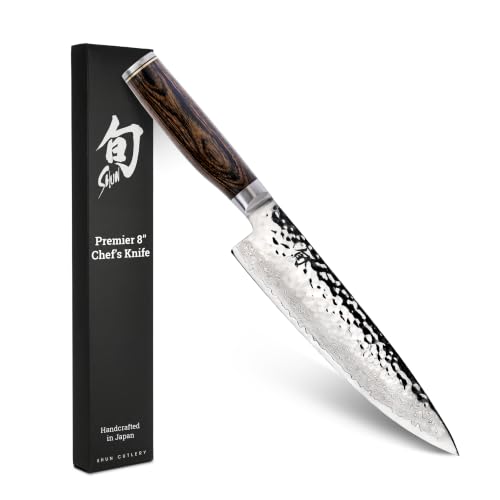
#6. Shun Premier 8" Chef's Knife

Specifications
| Brand | Shun |
|---|---|
| Blade Length | 8 in |
| Weight | 8 oz |
| Blade Material | Stainless Steel |
| Handle Material | Pakkawood |
| Construction | Full Tang |
Pros
- Sharp out of the box
- Tight fit, clean grind
- Comfortable for long prep
Cons
- Hard sharpening learning
- Geometry needs tuning
In a lineup of Japanese-style chef knives, the Shun Premier 8 stands out for its sharp out of the box edge and clean, tight grind. With an 8 in blade and full tang build, it feels nimble for common Japanese prep tasks like slicing scallions, portioning proteins, and working through herbs without much tearing. The tip control is steady, and the blade glides smoothly when you use a push-cut or a quick rock through board-stable ingredients.
The trade-off is in sharpening and the blade geometry. Expect a steeper learning curve if you are new to maintaining a keen Japanese edge, and the edge shape may need tuning to match your preferred angle and cutting style. This makes it best for cooks who want high performance right away and are willing to spend some time dialing in the sharpening routine.
#7. Shun Classic 8" Chef's Knife

Specifications
| Brand | Shun |
|---|---|
| Blade Length | 8 in |
| Weight | 6.4 oz |
| Blade Material | Damascus Steel |
| Hardness | 60-61 HRC |
| Handle Material | Pakkawood |
| Edge Type | Plain |
| Construction | Forged |
Pros
- Sharp out of the box
- Dull slowly, rarely chips
- Comfortable for long prep
Cons
- Care-required edge
- Hard-board sensitivity
Shun Classic 8 is a notable pick in Japanese Chefs Knives because it delivers a very sharp edge right out of the box, with clean cuts and smooth bite during prep. In practice, it chops, slices, and pushes through most home cooking tasks with little tearing, and its 8 in forged blade feels agile for day to day rock and pinch work. The Damascus steel and 60-61 HRC hardness help the knife stay lively for a long time, with dulling that tends to be slow and an overall low chip risk.
The main trade-off is care. The edge needs thoughtful maintenance, and it can feel a bit sensitive around hard boards. This makes it a better match for cooks who use a cutting board with some give and who are willing to wipe, store safely, and keep up with light sharpening habits rather than tossing it into harsh daily routines.
#8. Shun Kanso 8" Chef's Knife

Specifications
| Brand | Shun |
|---|---|
| Blade Length | 8 in |
| Weight | 6.4 oz |
| Blade Material | High Carbon Stainless Steel |
| Hardness | 60 HRC |
| Handle Material | Wood |
| Edge Type | Plain |
| Construction | Full Tang |
Pros
- Sharp out of the box
- Comfortable for long prep
- Worth every penny
Cons
- Dishwasher harm
- Not thinnest edge
This Shun Kanso 8 stands out in Japanese chefs knives for its sharp out-of-the-box bite and easy control at the tip. With a thin enough grind for a high-carbon stainless chef knife, it slices cleanly through vegetables and herbs and stays composed during push cuts. In prep work, the 8 in blade feels lively without being twitchy, and the full tang build adds confidence when you switch from rock chopping to more precise passes.
The main trade-off is edge toughness over time and daily care. It does not feel like the thinnest edge in the lineup, so you may notice slightly more effort on very dense items. Also, it should not go in the dishwasher, since heat and detergents can damage the edge and finish. This is a strong pick for home cooks who want Japanese-style cutting feel and will hand wash and dry right away.
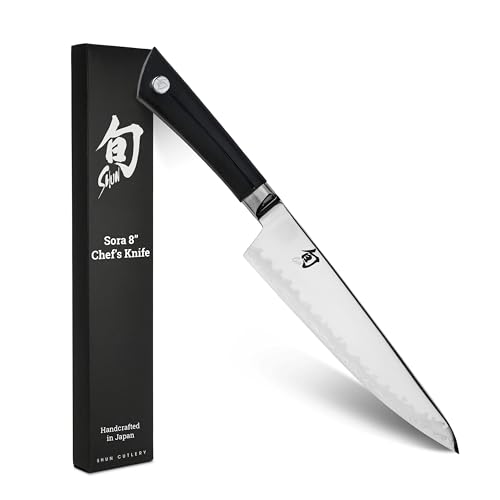
#9. Shun Sora 8" Chef's Knife

Specifications
| Brand | Shun |
|---|---|
| Blade Length | 8 in |
| Overall Length | 13.8 in |
| Weight | 6.4 oz |
| Blade Material | Stainless Steel |
| Hardness | 60-61 HRC |
| Handle Material | Composite |
| Construction | Full Tang |
Pros
- Sharp out of the box
- Sharpness-retaining hardness
- Comfortable for long prep
Cons
- Rocking motion chips
For shoppers who want a more Japanese feel in a chef knife, the Shun Sora 8 stands out with its sharp out-of-the-box performance and a hard edge setup (60-61 HRC). In day to day prep, it cuts cleanly through vegetables and proteins with good tip control, and it stays usable longer than many comparable stainless options. The knife is also easy to live with during longer sessions, thanks to a comfortable composite handle and a balanced 6.4 oz feel.
The main trade-off is durability at the edge during certain motions. Reviews flag that using a rocking technique can chip the edge, so it is better suited to a more forward, push cutting style. If you mostly rock to mince or chop, look for a knife that is more forgiving; if you match the Sora to a straight cut rhythm, it will feel like a sharp, controlled workhorse.
#10. Global G-48 7" Chef's Knife

Specifications
| Brand | Global |
|---|---|
| Weight | 4.8 oz |
| Blade Material | High Carbon Stainless Steel |
| Handle Material | Stainless Steel |
| Edge Type | Plain |
Pros
- Sharp out of the box
- Edge-retaining steel
- Comfortable for long prep
Cons
- Brittleness risk
The Global G-48 7 Chef's Knife stands out in the Japanese Chefs Knives conversation for its sharp, ready-to-use cutting performance. With an 8.0 Cutting score and a plain edge, it tends to slice cleanly right out of the box and feels easy to control through daily prep, including herbs, proteins, and mixed vegetables. The 4.8 oz weight also helps it stay nimble, which suits cooks who like a light, fast rocking or push cut without fighting a blade that drags.
The main trade-off is brittleness risk, which matters more than people expect with this style of high-performing steel. If you want a very forgiving knife for hard boards, lots of twisting, or careless contact with bones, this may not be the best match. It is better for cooks who use proper cutting technique and are willing to treat the edge with care, especially since edge retention is solid at 7.1 but not the highest in the group.
What to Look For
Cutting performance: Prioritize knives described as clean cutters with smooth glide. Look for reviews that mention less wedging, less drag, and good tip control for push cuts and rocking chops.
Edge retention under normal use: Many Japanese knives use harder steels or finer edges. That can mean fewer sharpenings, but only if the knife also resists chipping and rolling. Choose the one that keeps bite through weeks of regular home cooking.
Build quality and corrosion resistance: Check for solid construction and consistent grinds. Blade finish matters too. If you do not baby your knife, avoid models that reviewers report rusting or degrading quickly with basic care.
Ergonomics for long prep: Even excellent steel can feel wrong. Pick a knife with a grip and balance that match your hand size and cutting style. If a knife is front-heavy or slippery, you will feel it after 30 minutes.
Value for the steel and grind: Stay realistic about price. In this sub-category, you are paying for steel, heat treatment, and edge geometry. The best value is the knife that performs at the top of the list without asking you to pay for looks alone.
How We Picked
Products were identified through broad research across review sites and buyer forums, then filtered to only those that qualify as Japanese Chefs Knives. The list emphasizes 8 in class chef knives and a few close variants, using consistent sources so each model gets a fair read on real-world use.
Scoring used the same objective pillar framework as the main Chefs Knives post, allowing direct comparison of products within this sub-category. We weighted Cutting performance most, then Edge retention, Build quality, Ergonomics, and Value. The rank reflects total results across those categories, not just one standout feature.
Frequently Asked Questions
Do Japanese chef knives hold an edge longer than Western chef knives?
Many Japanese knives use harder steel and get very sharp out of the box. That can mean good edge life with normal home use. Harder steel can also be more sensitive to hard impacts, so cutting boards and careful technique matter. If you sharpen correctly, you will usually get strong performance for a long time.
What is the best cutting board material for Japanese chef knives?
Use wood or a quality plastic board that has some give. Avoid glass, stone, and very hard metal surfaces, because they can chip the edge. A good board also helps the knife glide and prevents dulling. This is one of the biggest factors behind long-term edge quality.
How often should you sharpen and what sharpening tools should you use?
Japanese knives often need less frequent sharpening than softer steels, but they still need periodic touch-ups. Many people sharpen every few months, depending on how much they cook. Use a whetstone for the most control, or a guided system if you want consistency. If you see chips or the edge feels rough, sharpen sooner rather than waiting.
When should I choose a different type of chef knife instead of a Japanese chef knife?
Choose a different style if you want more toughness for heavy prep or if you often cut on hard surfaces. Some knives also focus more on comfort and low maintenance than maximum sharpness. Japanese knives shine when you care about fine cuts and clean slices. If you are not ready for gentler use, a more forgiving option can be a better fit.
How do Japanese chef knives compare to other chef knives for cutting vegetables and herbs?
Japanese chef knives usually feel sharper and more precise for slicing and chopping. They often make cleaner cuts with less tearing, especially on onions and herbs. The thinner grind can also help you rock or push-cut with less effort. Technique matters, but many buyers notice the difference right away.


