




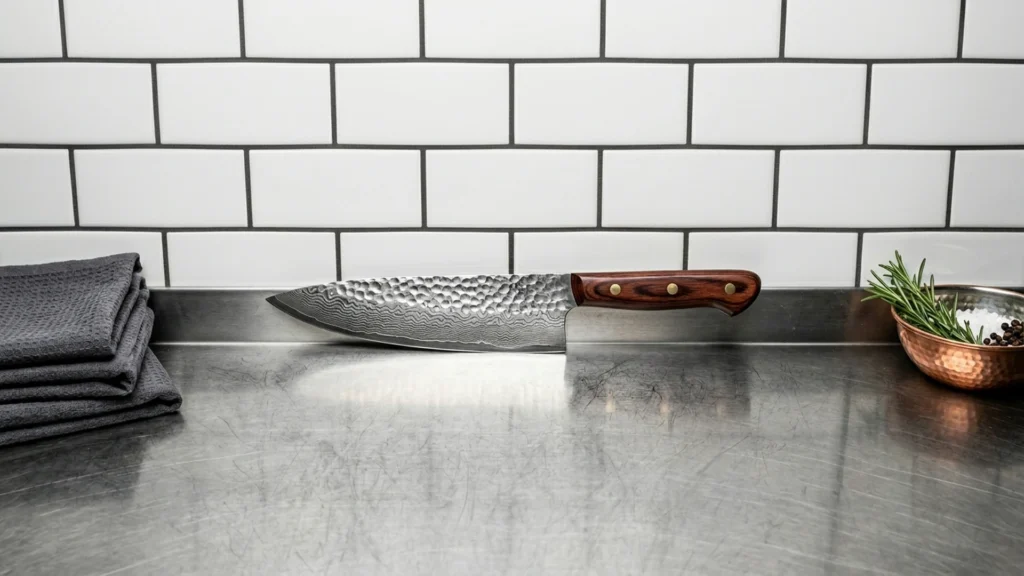
Damascus chefs knives are the option for buyers who want the look of Damascus steel and daily cutting performance in one chef knife. In this sub-category, buyers typically care most about how the edge slices through onions, herbs, and proteins, and whether the finish holds up to home sharpening and normal kitchen use.
Picking the right one gets hard because Damascus style knives often trade something. You may see a sharper feel at first, paired with edge care that demands more attention. You may also run into differences in steel hardness, grip comfort, and whether the blade geometry pushes cleanly or wedges when you chop hard.
To round out what matters beyond Damascus, including non-Damascus options that still cut exceptionally, see our Best Chefs Knives.
Quick Overview
Our Top Picks
#1. MIYABI 5000MCD Black 8" Chef's Knife

Specifications
| Brand | MIYABI |
|---|---|
| Blade Length | 8 in |
| Overall Length | 14.8 in |
| Weight | 6.4 oz |
| Blade Material | Carbon Steel |
| Hardness | 66 HRC |
| Handle Material | Wood |
Pros
- Edge-retaining steel
- Comfortable for long prep
- Slice-and-glide cleanly
Cons
- Heavy and tiring
- Dishwasher risk
If you want one chef knife that makes cooking feel easier, the MIYABI 5000MCD Black 8 is a standout pick in the Damascus Chefs Knives space because it hits the balance most people want: fast, clean cutting and smooth control. Reviewers describe slice-and-glide performance that stays tidy on vegetables, herbs, and proteins, with edge-retaining carbon steel that needs less frequent sharpening than many chef knives. The 8 in blade length is also a practical sweet spot for quick prep, from board work to fine tip control.
The main trade-off is weight. At 6.4 oz, it can feel heavy over long sessions, especially if you prefer a lighter, more agile knife. It also requires careful ownership habits since dishwashing can raise rust and wear risk, particularly for carbon steel. This is best for cooks who sharpen and dry their tools right away, and who do not mind a firmer feel in the hand.
#2. MIYABI Kaizen 8" Chef's Knife

Specifications
| Brand | MIYABI |
|---|---|
| Blade Length | 8 in |
| Overall Length | 7.99 in |
| Weight | 11.2 oz |
| Blade Material | Stainless Steel |
| Hardness | 60 HRC |
| Handle Material | Composite |
| Edge Type | Plain |
Pros
- Sharp out of the box
- Sharpness-retaining hardness
- Comfortable for long prep
Cons
- Damascus cosmetic scratching
- Handle slightly bulky
In the Damascus chef knife space, the standout trait here is the sharp feel paired with solid edge durability. The MIYABI Kaizen 8 lands an impressively sharp edge out of the box, and its hardness rating of 60 HRC helps it keep that bite longer than many comparable blades. In day-to-day prep, it slices cleanly through herbs and vegetables and stays controlled at the tip for more precise work. It also keeps its glide when you switch tasks from push cuts to quick chopping.
The trade-off is mostly cosmetic and grip feel. You may notice light scratching on the damascus-style finish, so it will not stay looking untouched after normal use. The composite handle can feel a bit bulky if you prefer a slimmer grip, but it is still comfortable for longer sessions. This is a strong pick for cooks who want a sharp, dependable workhorse and do not mind managing appearance and handle size.
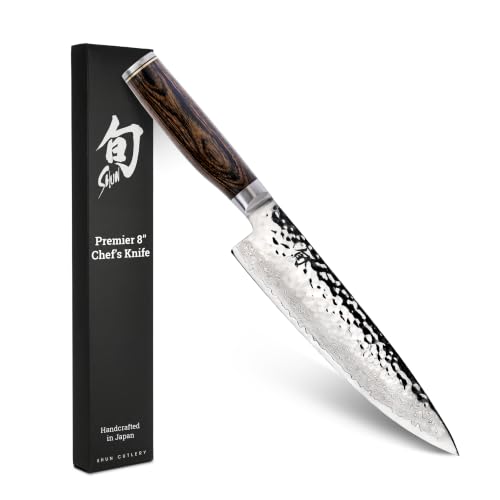
#3. Shun Premier 8" Chef's Knife

Specifications
| Brand | Shun |
|---|---|
| Blade Length | 8 in |
| Weight | 8 oz |
| Blade Material | Stainless Steel |
| Handle Material | Pakkawood |
| Construction | Full Tang |
Pros
- Sharp out of the box
- Tight fit, clean grind
- Comfortable for long prep
Cons
- Hard sharpening learning
- Geometry needs tuning
In a field of Damascus chef knives that often prioritize looks, the Shun Premier 8 stands out for performance you can feel right away. Reviewers consistently call out its sharp out of the box edge and a tight, clean grind that slices with minimal tearing. It also stays controlled in the tip work, so rocking and push cutting both feel predictable on onions, herbs, and proteins.
The main trade-off is sharpening. Learning the right technique takes practice, and the knife geometry may need tuning to match your exact board habits and sharpening routine. If you want a Damascus-leaning kitchen experience but are willing to invest time in maintenance and edge setup, it is a strong fit for long prep sessions thanks to its comfortable, balanced feel.
What to Look For
Cutting feel on real prep: Look for descriptions that match clean slicing and controlled rocking. In this category, the gap is often between knives that glide and knives that drag or wedge during faster chopping.
Edge retention you can live with: Prioritize buyers who report fewer touch-ups over time. Damascussed knives vary a lot in how quickly they lose bite, even when the first sharpness feels similar.
Steel and hardness that match maintenance: Check the stated HRC range and steel type. Higher hardness can mean better bite for some users, but it also raises the risk of chipping if you twist the knife or hit hard boards.
Build quality at the handle and edge: Seek reliable fit and finish along the edge line and a handle that stays secure. This is where Damascus models sometimes differ, with some feeling blade-forward or less stable during repeated cuts.
Ergonomics for long sessions: Choose a handle material that feels secure in wet prep. Then match weight and balance to your grip style, so you avoid hand fatigue when you chop herbs or break down proteins.
How We Picked
Products were identified through broad research across review sites and buyer forums, then filtered to only those that qualify as Damascus Chefs Knives.
Scoring used the same objective pillar framework as the main Chefs Knives post, allowing direct comparison of products within this sub-category.
Frequently Asked Questions
What makes a Damascus chef knife feel different during cutting?
Damascus knives often use a multi-layer steel pattern that helps the blade feel lively and smooth. Many models also aim for a thin edge and clean grind. That can mean easier push cuts and less tearing on vegetables.
How should I hold a Damascus chef knife for safe, controlled chopping?
Use a pinch grip between the thumb and index finger on the blade, near the bolster. Keep your other fingers wrapped firmly around the handle. Use a steady rocking motion for herbs and a push cut for most prep.
Do Damascus chef knives need special care to avoid dulling or staining?
Wash by hand and dry right away. Do not leave it in a wet sink or damp block. Use a wood or plastic cutting board to reduce edge wear and help the edge last longer.
How do I compare Damascus knives to standard chef knives for everyday value?
Look at edge retention, ease of sharpening, and how well the knife resists chips. Some Damascus blades stay sharp longer, but they still need proper board use. If the price is much higher, make sure performance matches your cutting habits.
When should I choose another type of chef knife instead of Damascus?
Choose a different chef knife if you want very low maintenance and minimal staining risk. If you do not want to hand wash and dry carefully, a more stain resistant stainless option may fit better. Also consider a different edge type if you often cut very hard foods.


