Chef knives are the workhorse of most home kitchens. They handle the big jobs, like slicing onions, chopping herbs, and breaking down proteins. They also work for lighter tasks, like portioning fruit and trimming vegetables.
Picking one is harder than it sounds. You must balance blade hardness, edge geometry, and steel type. A thinner blade often feels faster, but it can be more prone to chipping if you hit bones or twist food. Blade length and weight also change control, especially on a smaller board or for smaller hands. Finally, some specs get overhyped, like marketing terms for coating or edge finishes that do not noticeably change day to day cutting.
This guide explains what matters and what to ignore. You will learn how to judge cutting feel, edge retention, build quality, ergonomics, and value. You will also see what to check for on every product page before you buy.
Quick Overview
Top Picks
Best Overall

Specifications
| Brand | MIYABI |
|---|---|
| Blade Length | 8 in |
| Overall Length | 14.8 in |
| Weight | 6.4 oz |
| Blade Material | Carbon Steel |
| Hardness | 66 HRC |
| Handle Material | Wood |
Pros
- Edge-retaining steel
- Comfortable for long prep
- Slice-and-glide cleanly
Cons
- Heavy and tiring
- Dishwasher risk
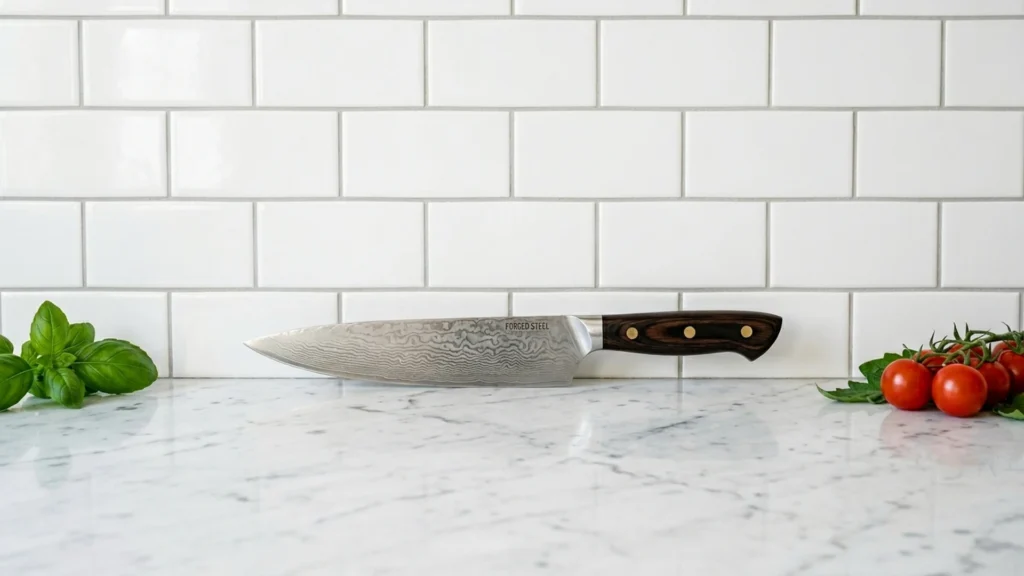
This MIYABI 8 inch chef knife earns the Best Overall spot for its standout slice-and-glide feel. It is the kind of blade that makes prep faster because it cuts cleanly with less stopping and re-adjusting.
The cutting score (9.1) matches what many cooks notice in use, it slices and pushes through produce smoothly. Its edge-retaining performance is also strong for a carbon steel blade, with a 7.9 edge retention score that typically means fewer touch-ups. Build quality rates well too at 8.3, with a solid, sturdy feel and a comfortable wood handle that stays pleasant during longer sessions.
The main drawback is comfort under heavier workload, it is heavy enough to feel tiring for some people. It is also risky in a dishwasher, which can shorten its best life. If you want a high-performing carbon steel chef knife with clean cuts and good control, this is the one to get, as long as you plan to wash it by hand.
Also ranked #1 in: 8-Inch Chefs Knives · Japanese Chefs Knives · Damascus Chefs Knives
Best Edge Retention

Specifications
| Brand | MIYABI |
|---|---|
| Overall Length | 12.25 in |
| Blade Material | Carbon Steel |
| Hardness | 63 HRC |
| Handle Material | Wood |
Pros
- Sharp out of the box
- Dull slowly, rarely chips
- Edge-retaining steel
Cons
- Care-sensitive steel
- Technique acclimation
This MIYABI 8-inch chef's knife is a strong fit for “Best Edge Retention” because it is built around carbon steel at 63 HRC and holds its bite well. Reviewers tend to notice that it stays sharp longer than many everyday blades, even during regular prep.
In use, it starts out sharp out of the box and keeps a clean, confident feel through vegetables, herbs, and proteins. The steel is described as dulling slowly and rarely chipping, so the edge tends to stay stable instead of degrading fast. Together, those traits support longer stretches between touch-ups and fewer interruptions during meal prep.
The trade-off is that the carbon steel is care-sensitive, so you need to dry promptly and store it properly to avoid wear. It also takes some technique acclimation. If you want a chef's knife that holds an edge well and you are willing to care for carbon steel, this is the one to get.
Best Build Quality

Specifications
| Brand | Wüsthof |
|---|---|
| Blade Length | 8 in |
| Weight | 8.5 oz |
| Blade Material | High Carbon Stainless Steel |
| Hardness | 58 HRC |
| Handle Material | Composite |
| Construction | Forged, Full Tang |
Pros
- Sharp out of the box
- Edge-retaining steel
- Comfortable for long prep
Cons
- Full bolster sharpening
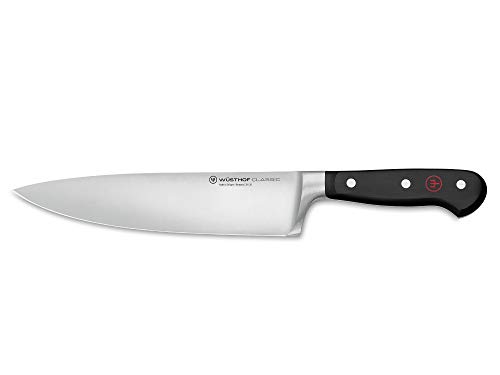
Built for chefs who want dependable performance you can feel, the Wusthof Classic 8-inch fits the Best Build Quality role thanks to its forged, full-tang construction. That solid build shows up in how stable the blade feels in your hand and how consistent it stays across everyday prep.
Sharp out of the box, it slices cleanly and handles typical chef tasks with steady control. The high carbon stainless steel at 58 HRC holds its bite well for normal home use, so you are not chasing the edge every few weeks. Balance and comfort are also strong, and the composite handle works well during long sessions.
The main trade-off is that the full bolster makes sharpening more work than with a simpler blade shape. If you want a durable, comfortable 8-inch chef knife with strong out-of-box cutting and good edge life, this is a great pick for regular cooks and serious home users.
Best Pakkawood Handle

Specifications
| Brand | Mac Knife |
|---|---|
| Blade Length | 8.13 in |
| Overall Length | 13.06 in |
| Weight | 8 oz |
| Blade Material | High Carbon Stainless Steel |
| Hardness | 61 HRC |
| Handle Material | Pakkawood |
Pros
- Sharp out of the box
- Tight fit, clean grind
- Comfortable for long prep
Cons
- Small handle fit
- Limited hand protection
This 8 in chef's knife is a strong pick for the Best Pakkawood Handle role, thanks to its comfortable Pakkawood grip and secure feel in motion. It is designed for fast, confident prep, with a handle shape that stays steady as you rock and push through food.
In cutting tests, the blade starts sharp out of the box. The grind feels tight, so slicing, chopping, and pushing tend to be clean with less drag. It also balances well for an 8 oz knife, which helps during long sessions where control matters.
The main drawback is practical fit. The handle can feel small, and hand protection is limited for larger hands or a tight pinch grip. If you want a comfortable pakkawood-handled chef's knife with sharp out-of-box cutting, this one is for you. Choose something else if you need more handle space and more room around the grip.
Best for Small Kitchens

Specifications
| Brand | Wüsthof |
|---|---|
| Blade Length | 7 in |
| Weight | 8 oz |
| Blade Material | High Carbon Stainless Steel |
| Hardness | 58 HRC |
| Handle Material | Composite |
| Construction | Full Tang |
Pros
- Sharp out of the box
- Tight fit, clean grind
- Comfortable for long prep
Cons
- Short reach
In a small kitchen, you want a chef knife that stays easy to control and does not demand a lot of counter space. The Wusthof Classic 7 fits that role with its 7-inch blade and tight, clean grind, making it a solid pick for everyday prep when your cutting area is limited.
On the cutting board, it starts sharp out of the box and slices cleanly with little tearing. The balance and comfort stand out too, especially for longer sessions, since the composite handle feels secure and the full tang build supports steady use. Edge retention is also strong for regular home work, so you do not need constant touch-ups.
The main trade-off is short reach, which can feel limiting for bigger boards or very large ingredients. If you mostly prep small to medium items and want a comfortable, controllable knife for tight spaces, this is the one to get.
Best Ergonomics

Specifications
| Brand | Global |
|---|---|
| Blade Length | 8 in |
| Weight | 8 oz |
| Blade Material | Stainless Steel |
| Hardness | 56-58 HRC |
Pros
- Sharp out of the box
- Tight fit, clean grind
- Comfortable for long prep
Cons
- Initial metal-handle skepticism
- Bold branding aesthetics
This 8-inch chef's knife fits the Best Ergonomics role thanks to how easy it is to control during long prep. The balance and grip feel steady, so you can keep your pinch grip comfortable and your cuts consistent, even when the work goes on.
The blade comes sharp out of the box, and it keeps that clean, efficient feel across common prep jobs. Reviewers note a tight fit and a clean grind, which helps it slice and push through food without much drag. In the cutting and build-quality pillars, it lands in the high range, and that usually shows up as smooth handling and good overall blade feel.
One trade-off is that the metal handle can feel a bit unusual at first, and some shoppers are skeptical until they get used to it. If you want a comfortable, controlled knife for daily chopping and slicing, and you do not mind the all-metal handle look and feel, this is a strong pick.
Best Cutting

Specifications
| Brand | MAC MIGHTY |
|---|---|
| Blade Length | 8 in |
| Weight | 6.4 oz |
| Blade Material | Stainless Steel |
| Handle Material | Pakkawood |
| Edge Type | Plain |
Pros
- Sharp out of the box
- Comfortable for long prep
- Durable grip material
Cons
- Care demanding
- Worse if damaged
For the Best Cutting spot, this MAC Mighty MTH-80 is all about fast, clean slicing. It ships sharp out of the box, so you get confident cuts on everything from onions and herbs to cooked proteins. The tip control feels steady during push cuts and quick chops, which helps reduce torn bits.
Cutting performance is the headline, backed by a strong glide through food. It also scores well for day-to-day edge life, so you are not chasing constant touch-ups. Grip comfort is another plus. The Pakkawood handle stays secure for long prep sessions, and the overall build feels durable in regular use.
The main downside is care demands, especially if you want to keep the edge and finish in good shape. If you are willing to store it properly and handle it gently, this is a great fit for cooks who want sharp, precise cutting with comfort, not a knife that you can ignore. If you need easy care above all else, look elsewhere.
Best Value

Specifications
| Brand | Mercer Culinary |
|---|---|
| Blade Length | 8 in |
| Overall Length | 8 in |
| Weight | 6.4 oz |
| Blade Material | High Carbon Stainless Steel |
| Handle Material | Santoprene®/polypropylene |
| Construction | Full Tang |
Pros
- Worth every penny
- Forged, stable full-tang
- Versatile chef length
Cons
- Needs frequent touch-ups
- Heavy and tiring
- Cheap slippery handle
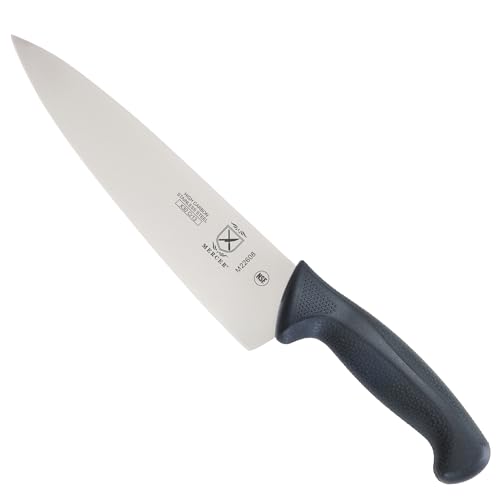
This Mercer Culinary 8-inch chef knife fits the Best Value role because it pairs a forged, stable full-tang build with practical everyday performance. The high carbon stainless blade is a strong all-rounder, and its chef length works well for most prep tasks.
In use, it delivers clean cuts across vegetables and proteins, with solid tip control for push chopping and rock chopping. Build quality also stands out, thanks to the full-tang construction that feels steady in hand. Balance and comfort are helped by the Santoprene and polypropylene handle, but it still weighs in at 6.4 oz, which keeps it nimble for many cooks.
The main drawback is edge upkeep. Reviewers note it needs frequent touch-ups, and the knife can feel heavy enough to tire some users during long sessions. The handle can also feel a bit slippery when your grip gets wet. If you want a reliable workhorse chef knife with strong construction and versatile length, and you do not mind more maintenance, this is a good pick.
What to Look For
Cutting: Look for a blade that slices with less force. In practice, this means clean cuts with less tearing on herbs and tomatoes, and smooth push cuts on vegetables. A good chef knife also keeps the tip steady when you rock through firm produce.
Edge Retention: Prioritize knives that stay sharper between touch ups. If reviewers say it dulls fast, rolls, or needs frequent sharpening after light use, skip it. Higher hardness ratings usually help here, but only if the steel and edge balance well.
Build Quality: Favor solid construction and strong fit and finish. Check whether the knife is forged versus stamped, and whether it uses full tang construction when that is stated. Also consider how resistant the blade seems to rust and edge chips, since that affects long term upkeep.Ergonomics: Grip comfort matters during long prep. Weight and balance should feel steady, not front-heavy. If you have smaller hands or prefer a pinch grip near the bolster, check that the handle shape and size let you control the blade without wrist strain.
Blade Length: Choose blade length based on your cutting board and your style. Common chef knife lengths fall around 8 in. Longer blades can rock more easily, but they can feel harder to maneuver in tight spaces.
Overall Length: Overall length affects storage, counter fit, and how far the blade extends past your board. Compare it to the space you actually have, not just the blade length.
Weight: Pick a weight you can use for minutes without fatigue. Heavier knives can add stability for chopping, while lighter knives often feel quicker for mincing and slicing. Read the listed weight in ounces and match it to your comfort.
How We Selected These Products
We started with broad web searches across review sites, buyer forums, and best of list pages to find the chef knives most often discussed. We then narrowed the set using real-world feedback, focusing on what people complained about and what they praised in daily prep.
Next, we verified key specs against Amazon listings, including blade length, overall length, weight, blade and handle material categories, hardness in HRC, edge type, and construction type. Each knife was scored across the pillar names, Cutting, Edge Retention, Build Quality, Ergonomics, and Value, using an objective framework tied to those verified details and recurring review patterns.
Final selection favored distinct strengths for different kitchens and cutting styles. The goal was not to crown one number one knife, but to pick options that genuinely fit different priorities.
Frequently Asked Questions
Which chef knife should I pick if my top goal is edge retention?
Choose a knife with strong edge retention scores, like MIYABI Birchwood 8" Chef's Knife. In this lineup, it leads the Edge Retention pillar at 8.6. It is a good fit if you want fewer sharpenings and longer-lasting performance.
What is the best chef knife for people who want maximum cutting performance on prep day?
Pick a knife with the highest Cutting pillar score, like MAC Mighty MTH-80 8" Chef's Knife. In this set, it scores 8.6 for Cutting. Users typically describe it as very sharp and efficient for daily chopping, slicing, and dicing.
How do you balance price and performance across budget versus premium chef knives?
Budget knives can feel sharp at first, but they often need more frequent touch-ups. In the scored set, Mercer Culinary Millennia 8" Chef's Knife wins Value, while premium options like MIYABI models score higher for Cutting and Edge Retention. Think of premium knives as paying for longer-lasting sharpness and smoother cutting.
Is a higher price always better for chef knives?
No, a higher price does not always mean a better knife in every category. Mercer Culinary Millennia 8" Chef's Knife has the highest Value score, even though its Edge Retention score is lower. Some premium knives also have trade-offs, like more care requirements for maintenance.
Why do many chef knives score lower on edge retention than on cutting?
A knife can cut well right out of the box, but still lose sharpness faster with normal use. Fine edges can also dull sooner if the knife sees hard boards or improper storage. In this dataset, several knives have strong Cutting scores but lower Edge Retention scores, showing the sharpness can drop sooner than buyers expect.
Do full-tang and build-quality scores matter for day-to-day cooking?
Yes, strong build quality supports long-term durability and consistent feel. Wüsthof Classic 8" Chef's Knife leads Build Quality with an 8.6, which supports confidence for daily prep. Still, build quality does not guarantee the best edge retention, so you should match the knife to your cutting and sharpening habits.


