




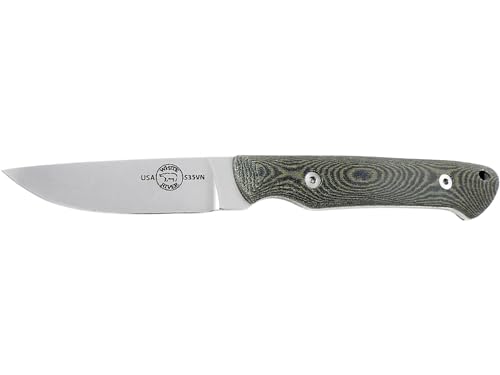
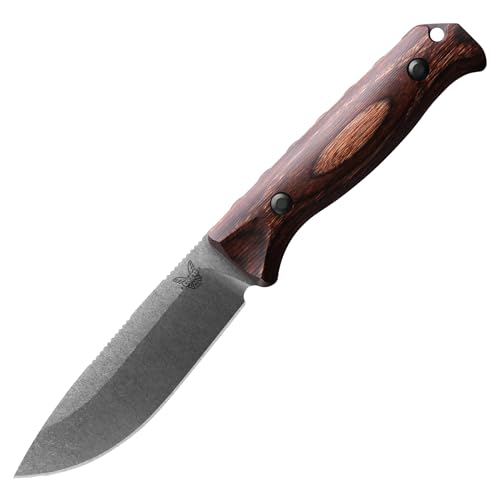
Hunting knives are utility blades for field work, like skinning, splitting hide, trimming fat, and slicing meat. They live outside the kitchen, where blood, moisture, and grit change how a knife behaves. The goal is simple, clean cuts with safe control.
Picking one is harder than it looks. Blade length and overall length can be misleading, since tip shape and handle reach matter more than size alone. Steel names and hardness numbers also get overplayed, since heat treatment affects edge toughness and how long the edge stays usable. Features can sound practical, but in the field you mostly care about grind geometry, edge type, and how well the handle stays grippy when wet.
This guide breaks those trade-offs into clear criteria and then compares real models for common roles. You will see what to prioritize, what to avoid, and which knife fits each job. The result is a short list that matches how you actually process an animal.
Quick Overview
Top Picks
Best Overall

Specifications
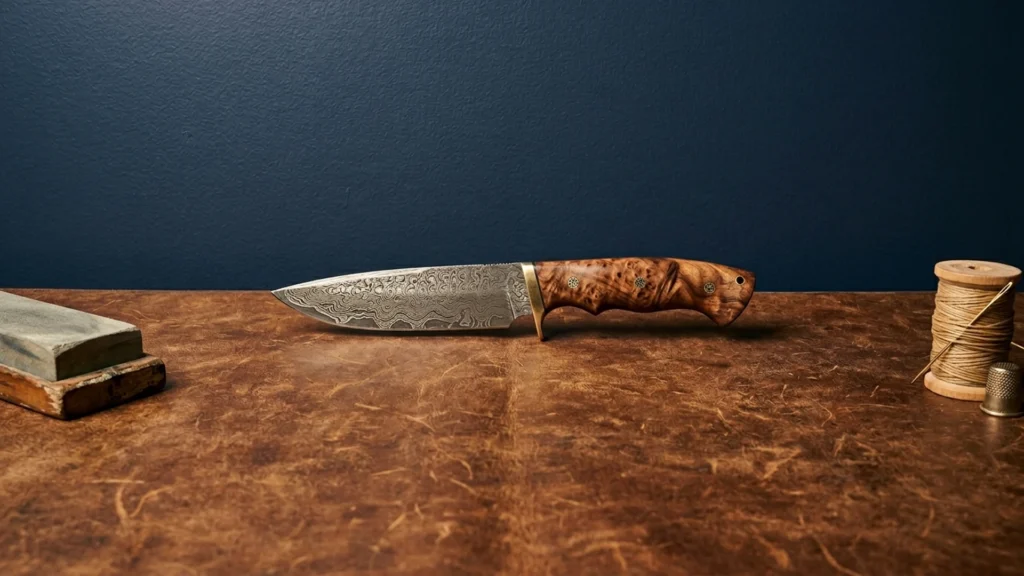
| Brand | Benchmade |
|---|---|
| Knife Type | Fixed Blade |
| Blade Length | 4.2 in |
| Overall Length | 8.70 in |
| Blade Material | CPM-S30V Stainless Steel |
| Blade Style | Drop Point |
| Blade Edge | Plain Edge |
| Handle Material | Wood |
| Weight | 4.8 oz |
Pros
- Clean, effortless skinning
- Tight fit and finish
- Balanced for precise control
Cons
- Harder sharpening effort
This fixed blade fits the Best Overall role thanks to its clean, effortless skinning feel. In real field dressing work, the drop point profile and plain edge keep cuts controlled and predictable, even when you are working slowly and up close.
The knife earns strong marks for cutting performance, with smooth slicing and tight, repeatable control. Build quality looks solid too, with a CPM-S30V stainless steel blade and a tight fit and finish that stays stable during use. Balance also helps, since the 4.8 oz weight and wood handle sit well for detailed work.
The main drawback is that it takes more effort to sharpen than some easier-to-touch-up steels. If you want a dependable all-around hunter for skinning and precision cutting without constant resharpening between trips, this is a strong pick.
Also ranked #1 in: Fixed Blade Hunting Knives · Skinner Hunting Knives
Best Micarta Handle

Specifications
| Brand | ESEE |
|---|---|
| Knife Type | Fixed Blade |
| Blade Length | 3.3 in |
| Overall Length | 7.3 in |
| Blade Material | A2 Steel |
| Blade Style | Drop Point |
| Handle Material | Micarta |
| Weight | 3.8 oz |
Pros
- Clean, effortless skinning
- Tight fit and finish
- Balanced for precise control
Cons
- Steel variant uncertainty
- Limited long-use feedback
The ESEE Sencillo earns the Best Micarta Handle spot because its micarta grip gives steady control during messy, wet work. The scales feel solid in-hand, and the knife balances well for close, careful cutting.
On the job, it delivers clean, effortless skinning and good slicing control. The fit and finish are tight, and the drop point shape works well for precision during field dressing. In daily use, the cutting feel stays composed, and the knife does not fight your hand.
The main downside is steel variant uncertainty, so you may need to confirm exactly what you are buying before trusting long-term edge behavior. If you want a micarta-handled fixed blade for skinning and detailed prep, and you prefer a grippy, controlled feel over lighter or more niche builds, this is a strong choice.
Best 1095 Steel

Specifications
| Brand | ESEE |
|---|---|
| Knife Type | Fixed Blade |
| Blade Length | 3.5 in |
| Overall Length | 8.25 in |
| Blade Material | 1095 Carbon Steel |
| Blade Style | Drop Point |
| Handle Material | Micarta |
| Weight | 5.1 oz |
Pros
- Clean, effortless skinning
- Balanced for precise control
- Tight fit and finish
Cons
- Low-grade/unknown steel
- Limited performance specifics
If you want a hunt knife in the Best 1095 Steel lane, this one makes a strong case with its 3.5 in 1095 carbon steel blade. That carbon steel choice pairs well with the day to day jobs that matter, skinning and field dressing. The drop point shape also gives you better control when you need tight, careful cuts.
In use, it is easy to move through hide without dragging. The knife feels balanced in hand, which helps with precision during trimming and detail work. The micarta handle stays secure even when things get wet and bloody, and the fit and finish come together cleanly for a solid, dependable feel.
The main downside is that the steel quality details are not laid out clearly, which makes it harder to judge exactly what to expect from edge life and sharpening behavior. If you need a controlled, skinning focused fixed blade with 1095 carbon steel and a grippy micarta handle, this is a good pick for backcountry hunters who plan to maintain their edge.
Best Bowie Blade

Specifications
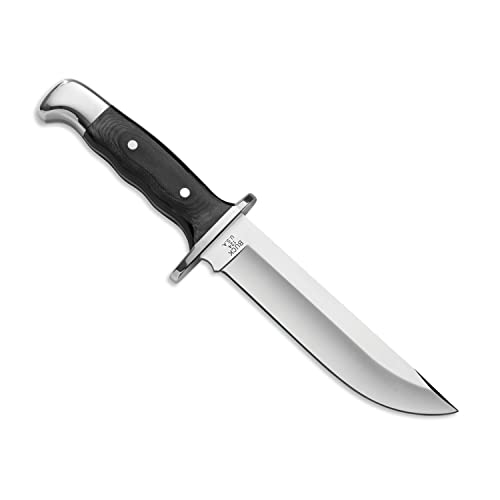
| Brand | Buck Knives |
|---|---|
| Knife Type | Fixed Blade |
| Blade Length | 6.25 in |
| Overall Length | 11.75 in |
| Blade Material | 420HC Stainless Steel |
| Blade Style | Bowie |
| Handle Material | Micarta |
| Weight | 13.3 oz |
Pros
- Clean, effortless skinning
- Tight fit and finish
- Secure wet/dry grip
Cons
- Too heavy for carry
- Too short for tasks
- Wide for small hands
This Buck 124 Frontiersman fits the Best Bowie Blade slot thanks to its Bowie-style profile and long 6.25 in blade. That shape helps with longer slicing cuts during field dressing, while still giving control for skinning work.
In real use, it delivers clean, effortless skinning, and it stays smooth through contact. The build quality feels tight, with solid fit and finish and a micarta handle that stays secure when your hands are wet or bloody. Grip and control are steady for the kind of careful, close work you do around hide and joints.
The main trade-off is practical size. At 13.3 oz and with a 11.75 in overall length, it is too heavy for people who want an easy carry, and the blade can feel short for some larger tasks. If you want a Bowie-style hunting knife that prioritizes skinning control over pack-friendly carry, this is a strong pick.
Best Folding

Specifications
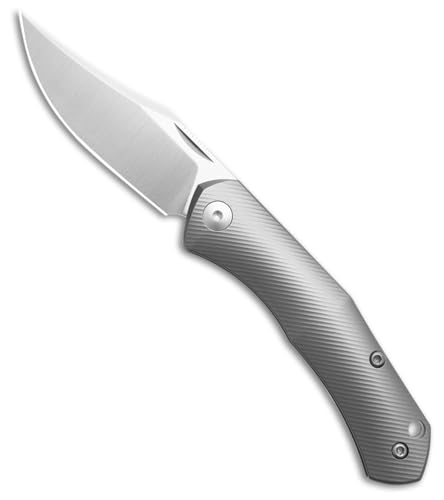
| Brand | GiantMouse |
|---|---|
| Knife Type | Folding |
| Blade Length | 3.35 in |
| Overall Length | 8.15 in |
| Blade Material | S90V Stainless Steel |
| Blade Style | Clip Point |
| Handle Material | Titanium |
| Weight | 4.4 oz |
Pros
- Clean, effortless skinning
- Balanced for precise control
- High-performance steel
Cons
- Slippery/maintenance-sensitive
- Stiff action tuning
This folding hunting knife fits the Best Folding spot thanks to its compact 3.35 in clip-point blade and the kind of control you want while skinning. It is built for careful, close-up cuts, not rough chops. At just 4.4 oz, it stays easy to carry in the field.
Cutting performance is the headline. The S90V stainless steel helps it slice cleanly during skinning and field work, with less drag than you get from many folders. The handle balances well for precision, and the titanium scales feel solid in hand when you are working slowly and close to the hide. Build quality matches that aim, with a tight, durable construction that holds up to real use.
The main trade-off is practical maintenance. The grip can feel a bit slippery when wet or bloody, so you may want a careful hand and quick wipe-downs. Also, the folding action can require some stiffness tuning before it feels fully natural. If you want a smaller, controlled folding knife for detailed skinning and dressing work without a bulky fixed blade, this is the one to get.
Best Lightweight

Specifications
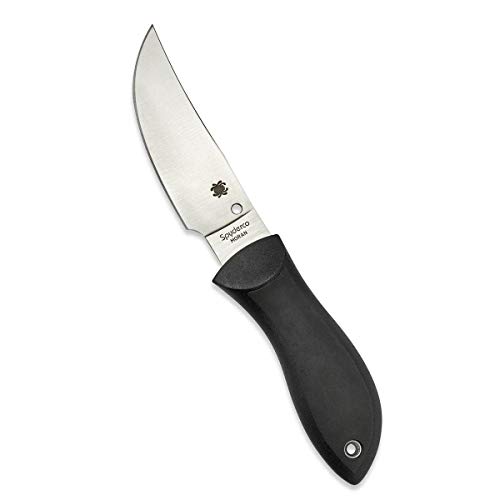
| Brand | Spyderco |
|---|---|
| Knife Type | Fixed Blade |
| Blade Length | 3.9 in |
| Overall Length | 8.1 in |
| Blade Material | VG-10 Stainless Steel |
| Blade Style | Drop Point |
| Blade Edge | Plain Edge |
| Handle Material | FRN |
| Weight | 3 oz |
Pros
- Field-reliable sharpness
- Balanced for precise control
- Tight fit and finish
Cons
- Edge fragility concerns
- Not for batoning
- Chopping leverage limits
This is a great pick for the Best Lightweight slot because it stays very manageable at just 3 oz. The small 3.9 in drop point blade and the FRN handle make it easy to keep steady during skinning and field dressing.
In real cutting work, it starts sharp and stays predictably sharp for fine slices. The drop point shape helps with controlled push and pull cuts, and the balance feels right for detail work. Fit and finish are tight, with a solid, dependable build that holds up to normal hunting abuse, including moisture exposure.
The main drawback is edge fragility. It can be less forgiving if you put too much force behind the cut, and it is not the right tool for batoning or heavy chopping. If you want a light fixed blade for clean, careful gutting and skinning without needing hard-driving leverage, this is the one to get.
Best for Small Game

Specifications
| Brand | White River |
|---|---|
| Knife Type | Fixed Blade |
| Blade Length | 2.62 in |
| Overall Length | 7.25 in |
| Blade Material | CPM-Magnacut |
| Handle Material | Micarta |
| Weight | 2.7 oz |
Pros
- Clean, effortless skinning
- Fixed blade reliability
- Secure wet/dry grip
Cons
- Detail-point preference
This fixed blade is a strong pick for small game because it keeps its shape and control in tight work. The big standout is the smooth, efficient skinning feel, helped by a blade that is built for close, steady cuts.
In real field use, it delivers clean, effortless skinning with good precision for trimming and follow-up passes. Performance stays consistent thanks to CPM-Magnacut steel, and the handle stays secure when hands are wet or bloody. Build quality is also dependable, with a fixed blade design that cuts without worry about lock movement.
The main limitation is that it seems more comfortable with point work than you might want. If you want a dependable small-game skinner that feels steady in both wet and dry conditions, this is the one to get.
Best Camping Utility

Specifications
| Brand | KA-BAR |
|---|---|
| Knife Type | Fixed Blade |
| Blade Length | 5.25 in |
| Overall Length | 10.5 in |
| Blade Material | 1095 Cro-Van Stainless Steel |
| Blade Style | Drop Point |
| Handle Material | Ultramid |
| Weight | 14.2 oz |
Pros
- Clean, effortless skinning
- Tight fit and finish
- Balanced for precise control
Cons
- Low-grade/unknown steel
- Too heavy for carry
- Corrosion requires care
This fixed-blade camp knife is a strong fit for Best Camping Utility because it is built for real campsite jobs, not just chores. The standout trait is how easily it handles skinning and field dressing. The drop-point shape and controlled tip work well when you need steady, close cuts.
In use, the edge feels clean and efficient on hide and meat. You also get a tight fit and finish that stays solid through the work. With an Ultramid handle and a balanced feel, it is easier to control for smaller, careful cuts than many bulkier camp knives. It also stays practical for long sessions.
The trade-off is that the 1095 Cro-Van Stainless steel is not the highest-end steel option, so care matters, and corrosion control is on you. At 14.2 oz, it is not a light carry knife, either. If you want a tough, reliable camp worker for processing game and meal prep, this is a good choice. If you want a lightweight knife or a low-maintenance steel, look elsewhere.
Best Value

Specifications
| Brand | OPINEL |
|---|---|
| Knife Type | Folding |
| Blade Length | 3.3 in |
| Overall Length | 7.5 in |
| Blade Material | Carbon Steel |
| Handle Material | Wood |
| Weight | 1.6 oz |
Pros
- Tight fit and finish
- Strong results for cost
- Good corrosion-aware durability
Cons
- Low-grade/unknown steel
- Slow one-handed opening
- No clip carry
This folding hunting knife fits the Best Value role thanks to its tight fit and finish for the money, plus a carbon blade that does real cutting work in the field. At about 3.3 in of blade length, it is compact enough for close tasks during skinning and field dressing.
Cutting performance is solid for a simple carbon-steel folder, with clean results when you use controlled strokes. Build quality is also a standout, the knife feels well made and the handle stays steady during use. It is also more corrosion-aware than many basic folders, which matters when you are working with wet game.
The main drawback is practical, one-handed opening is slow, and there is no clip carry for quick access. If you want a dependable carbon folder with good fit and finish and you do not need fast one-hand deployment, this is a strong pick.
What to Look For
Cutting Performance: Look for a blade profile that slices skin without snagging. A clean grind and a sharpened edge on arrival matter. Also favor steels and geometry that keep the edge stable during repeated cuts.
Blade Material and Heat Treatment: Use known steel types that are proven for outdoor cutting. Stainless steels work better for quick rinsing and lower upkeep. Carbon or high-carbon steels can cut well, but they need more care to prevent rust.
Blade Style for the Job: Choose the blade shape based on your most common task. A drop point suits general skinning and trimming. A clip point can help with tip control. A skinner-style blade is more about long, continuous draw cuts.
Edge Type: Prefer a plain edge for fine control and clean slicing. Partially serrated edges can help in abrasive or tough tasks, but they often trade off some smoothness on thin cuts. If you hunt mostly in cold, dry conditions, plain usually covers more cleanly.
Handle Material and Grip: Wet hands and slick gloves are common. Choose a handle material that stays secure with moisture. Avoid handles that rely on fine texture that can wear down or load with residue.
Ergonomics and Control: The handle must fit your grip without hot spots. Pay attention to balance, because a heavier front can feel tiring during long skinning. Also check that the blade sits in line with your wrist for controlled tip work.
Blade Length and Reach: Blade length affects leverage and clearance around joints. Too short limits reach for field dressing. Too long can get awkward in tight spaces. Pick a size that matches your typical game size and the way you trim.
How We Selected These Products
Products were discovered through broad web searches across review sites, buyer forums, and best-of lists. I did not rely on a single publication or a single “top ten” page, since hunting knives often get ranked differently by different users.
A large volume of real customer reviews was read to spot repeated problems and common praise. I tracked issues like edge rolling, rust after wet storage, loose handle scales, uncomfortable grip in longer sessions, and sheath fit or carry problems.
Availability and specs were verified directly against Amazon listings. Each knife was scored against the same pillar set, Performance, Build Quality, Ergonomics, and Value, using an objective framework based on cutting behavior, construction, and real-world maintenance needs. Final curation aimed to find knives that stand out in distinct roles, not just the highest overall score.
Frequently Asked Questions
What hunting knife is best for small-game cleaning and detail work?
Choose a smaller fixed blade with a thin, precise shape. CPM-Magnacut on a compact knife, like White River Small Game Hunter Hunting Knife, tends to give strong edge control for birds and trout. You will also get better control near the carcass because the blade has less bulk. If you expect mostly skinning and trimming, a small knife usually beats a big general-purpose blade.
What is the main difference between premium and budget hunting knives in this segment?
Premium knives usually use better steel and more careful heat treatment. You often get better edge stability and corrosion resistance, plus more consistent grinds. Budget knives can still cut well, but their edges may not last as long under tough use. You may also need more frequent touch-ups and extra care to prevent rust.
How do I prevent rust and keep edge performance after field dressing?
Rinse off blood and moisture as soon as you can, then dry the blade fully. Use a light coat of oil, especially on carbon steel options like OPINEL No. 08 Carbon Hunting Knife or other non-stainless blades. Avoid leaving the knife in a wet sheath, because trapped moisture speeds up corrosion. For the edge, wipe it clean, then do a quick honing or touch-up before the next hunt.
Is a higher price always better for hunting knives?
Not always. In this group, some mid-priced knives score very well on performance and build quality. Higher prices often buy premium steel, better heat treat, and nicer materials, but you still need the right blade shape and grind for your tasks. A less expensive knife can still be a great match if it fits your use style.
Why do some hunting knives struggle with edge durability?
Edge durability depends on steel, grind thickness, and how the knife handles impact. Thin, slicing-focused grinds can cut well, but they may chip if you hit bone hard. Spyderco Bill Moran Hunting Knife and other slicing-oriented designs are more sensitive to heavy abuse than tougher, thicker options. If you expect chopping or batoning, choose a thicker and more impact-tolerant build.
Do I really need a micarta handle, or will other handle materials work?
Micarta often helps because it stays grippy when wet or bloody. You get strong control during skinning and trimming, which reduces slips and fatigue. That said, FRN and other textured handles can also work well, especially when the knife stays light. The best choice is the one that feels secure in your hand with gloves and in messy conditions.


