




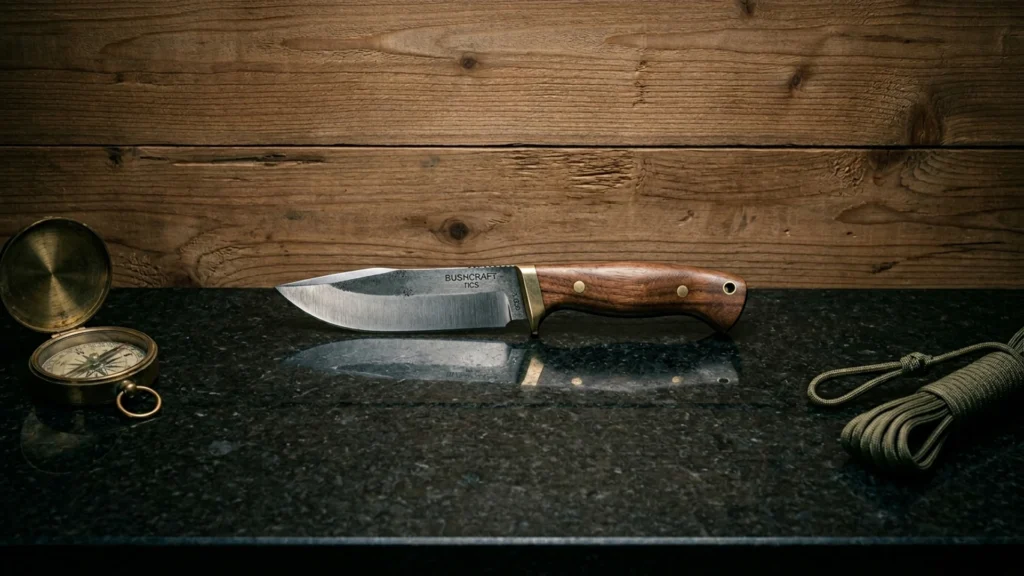
1095 steel hunting knives use a simple, high-carbon steel that takes a sharp edge and sharpens quickly. In this sub-category, buyers mainly want reliable cutting for skinning, slicing meat, and controlled tip work during field dressing.
The pick is harder than it sounds. 1095 can hold an edge well, but it is not as forgiving as tougher stainless steels for rust and edge damage. You also have to trade between grind style, blade shape, and how much work you want to do to keep it in top condition.
If you want one guide for every hunting knife style, see our Best Hunting Knives.
Quick Overview
Our Top Picks
#1. ESEE Ashley Game Hunting Knife

Specifications
| Brand | ESEE |
|---|---|
| Knife Type | Fixed Blade |
| Blade Length | 3.5 in |
| Overall Length | 8.25 in |
| Blade Material | 1095 Carbon Steel |
| Blade Style | Drop Point |
| Handle Material | Micarta |
| Weight | 5.1 oz |
Pros
- Clean, effortless skinning
- Balanced for precise control
- Tight fit and finish
Cons
- Low-grade/unknown steel
- Limited performance specifics
In the world of 1095 steel hunting knives, the ESEE Ashley Game stands out for how cleanly it skins. The 3.5 in drop point blade keeps a smooth cutting path during hide work and lets you control the tip for detail. At 5.1 oz, it feels nimble, and the micarta handle stays steady when your hands get wet or bloody. Fit and finish are tight, and that matters when you are doing long, careful field dressing cuts.
The trade-off is that the steel details are not clear beyond 1095, so you have to accept the usual carbon-steel behavior. It is a good pick for hunters who want simple sharpening and predictable edge work, and who will take basic care to limit rust. If you want a knife with fully spelled-out edge retention testing or corrosion-proofing, this one may not be the best match.
#2. KA-BAR Becker Campanion Hunting Knife

Specifications
| Brand | KA-BAR |
|---|---|
| Knife Type | Fixed Blade |
| Blade Length | 5.25 in |
| Overall Length | 10.5 in |
| Blade Material | 1095 Cro-Van Stainless Steel |
| Blade Style | Drop Point |
| Handle Material | Ultramid |
| Weight | 14.2 oz |
Pros
- Clean, effortless skinning
- Tight fit and finish
- Balanced for precise control
Cons
- Low-grade/unknown steel
- Too heavy for carry
- Corrosion requires care
This KA-BAR Becker Campanion stands out in the 1095 steel hunting knife crowd for its practical field manners. The drop point shape and the way it carries weight make skinning and field dressing feel controlled. In real use, it delivers clean, low-drama cuts and fine tip control when you need to trim hides or work around joints. Fit and finish are tight, and that helps it feel steady when your hands are slick with blood or moisture.
The main trade-off is that it is not built for carry comfort. At 14.2 oz, it feels heavy for packing all day compared with lighter hunting knives. It also needs attention to corrosion, since 1095 Cro-Van stainless is still not as forgiving as fully rust-resistant stainless options. This one fits best for hunters who prioritize reliable cutting during processing and can spare time for basic steel care.
#3. CRKT Soldotna Hunting Knife

Specifications
| Brand | CRKT |
|---|---|
| Knife Type | Fixed Blade |
| Blade Length | 3.48 in |
| Overall Length | 7.63 in |
| Blade Material | 1095 Carbon Steel |
| Blade Style | Drop Point |
| Blade Edge | Plain Edge |
| Handle Material | Micarta |
Pros
- Clean, effortless skinning
- Fixed blade reliability
- Secure wet/dry grip
Cons
- Low-grade/unknown steel
- Limited performance evidence
- No weight/balance data
The CRKT Soldotna stands out in the 1095 steel hunting knife set for its very predictable real-world feel: clean, effortless skinning with steady control from start to finish. The 3.48 in drop-point plain edge works well for field dressing cuts that need both pull and precision, and the micarta handle stays secure even when wet or bloody.
The main trade-off is the blade steel story. 1095 carbon steel can be a strong cutter, but the performance evidence and steel details are limited, so expect more hands-on sharpening care than with more proven stainless options. This is a good pick for hunters who want a fixed blade that makes skinning easier and who are willing to maintain a carbon edge.
What to Look For
Edge performance in real tasks: Look for a blade profile that matches your main cuts, like drop point for general skinning and slicing or a skinner-style tip for close work. A good 1095 knife should arrive sharp and keep that bite through repeated pulls.
Heat treat and edge stability: The same 1095 steel can perform very differently based on heat treat. Prioritize knives that do not chip in normal use and that can be brought back quickly with a field sharpener.
Corrosion resistance and upkeep: Since 1095 is high carbon, rust control matters. Choose a knife with a finish you can maintain, then plan on wiping it dry and oiling it after wet hunts.
Handle grip for wet blood work: Skinning and cleaning get slippery fast. Go for a handle material that stays secure when wet, and check that the knife balances well for push cuts and short, careful slicing.
Practical blade geometry: Pay attention to blade length and overall length so the knife stays controllable when you are close to the carcass. For most buyers, a medium hunting blade is easier to direct than very long, heavy options.
How We Picked
Products were identified through broad research across review sites and buyer forums, then filtered to only those that qualify as 1095 Steel Hunting Knives.
Scoring used the same objective pillar framework as the main Hunting Knives post, allowing direct comparison of products within this sub-category.
Frequently Asked Questions
What is 1095 steel good at for field dressing and skinning?
1095 steel is known for cutting well and taking a sharp edge. It works best on tasks like skinning and slicing meat where you want clean cuts. With proper care, it resharpens fairly easily in the field.
Is 1095 steel more likely to rust than stainless steels?
Yes, 1095 is not stainless, so it can rust faster in wet conditions. Wipe the blade dry soon after use. Store it with a light oil on the steel, especially if you pack it away damp.
How should I sharpen a 1095 hunting knife if I am in the woods?
Start with a simple sharpening stone or a guided sharpener that matches your angle. Use light strokes and check the edge often. After sharpening, wipe the blade clean and apply a thin oil layer to slow corrosion.
How do I choose between 1095 fixed blade styles like drop point and skinner profiles?
A drop point is a solid all around shape for general cutting and control. A skinner style often helps with skinning because of its thinner, more curved approach. Pick the shape based on what you do most in the field.
When should I pick a different Hunting Knives type instead of 1095 steel?
Choose another type if you want easy rust resistance or less maintenance. Stainless blade options can be better if you hunt in steady rain or high humidity. Pick 1095 if you are willing to wipe down and oil the blade.
How does 1095 steel compare to other hunting knife steels in edge holding?
1095 usually gives strong edge performance for cutting, but it can be softer than some premium stainless steels. It may need more frequent touch ups than harder alloys. If you sharpen often and keep it dry, you can get excellent results.


