




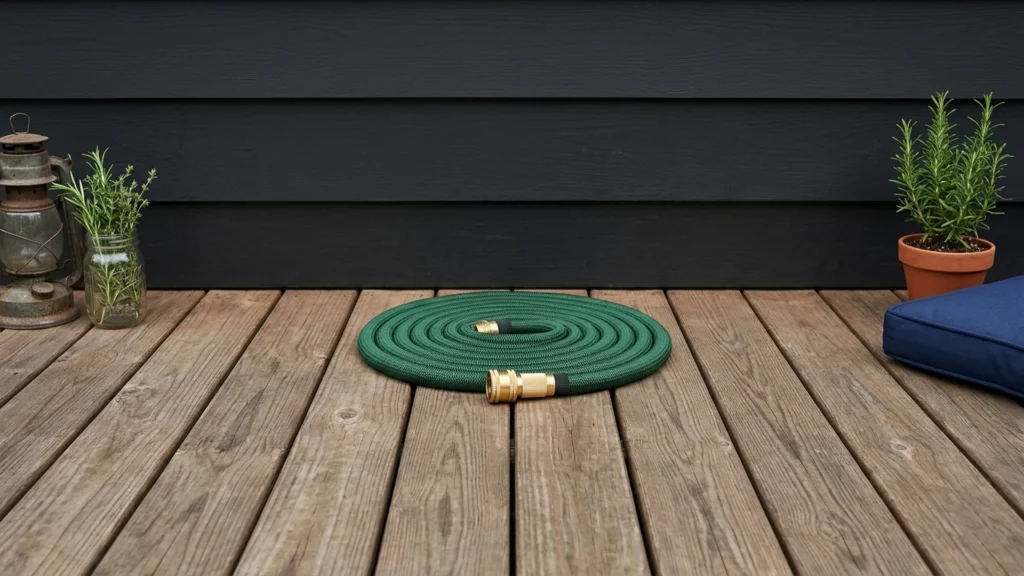
Expandable garden hoses are the stretchy style that grows when water flows and shrinks when you turn the tap off. In this sub-category, you need stable water delivery while the hose expands, plus connections that do not weep at the spigot or nozzle.
The trade-offs are real. Expandable hoses often use thinner walls than long-lasting heavy hoses, so burst resistance and leak resistance matter more than with standard designs. You also trade some flow power for the expand-and-contract behavior, so long lengths and weak pressure setups can show up as reduced spray and uneven water output.
Use the criteria below to match hose length and diameter to your water pressure and storage habits, then narrow to models with the best handling and connection quality. Looking for all types? See our Best Garden Hoses.
Quick Overview
Our Top Picks
#1. HydroTech Pro Series 100' Garden Hose

Specifications
| Brand | HydroTech |
|---|---|
| Hose Length | 100 ft |
| Hose Diameter | 0.75 in |
| Hose Material | Hybrid |
| Hose Type | Expandable |
| Fitting Material | Brass |
| Weight | 8 lb |
Pros
- Consistent flow delivery
- Secure threads, no leaks
- Durable rubber blend
Cons
- Expandable may fail
- Heavy and cumbersome
In an expandable hose category where water output can drop as the line stretches, the HydroTech Pro Series 100 ft stands out for steady flow. Users report consistent delivery, and the hose stays reliable enough for everyday tasks like watering beds at full reach. Brass end fittings thread securely and do not leak, which matters because expandable hoses often see stress at the connections.
The trade-off is handling. At about 8 lb, it can feel heavy and a bit cumbersome compared with lighter expandable models. Also, because this is still an expandable design, long-term durability may vary, so it fits best for people who want good day-to-day water performance and are willing to store it carefully between uses.
#2. Flexi Hose 50' Garden Hose

Specifications
| Brand | Flexi Hose |
|---|---|
| Hose Length | 50 ft |
| Ply Count | 4 Ply |
| Burst Pressure | 120 psi |
| Hose Type | Expandable |
| Fitting Material | Brass |
| Weight | 2.8 lb |
Pros
- Consistent flow delivery
- Secure threads, no leaks
- Reliable performance at fair cost
Cons
- Low burst strength
- Expandable may fail
- Nozzle operational issues
This Flexi Hose 50 ft stands out among expandable garden hoses for how steady the water feels in use. At typical yard lengths, the flow stays consistent rather than thinning out as the hose stretches. The connections also hold up well, with brass fittings and secure threading that help prevent leaks at the spigot and end.
The main trade-off is strength. Expandable hoses can be more vulnerable than traditional hoses when you push them hard, and this model lists a lower burst pressure at 120 psi. It is a good fit for routine watering and light duty tasks, especially if you want easier handling than heavy hose reels, but it is not the best choice for high-pressure blasting or jobs that demand maximum burst resistance.
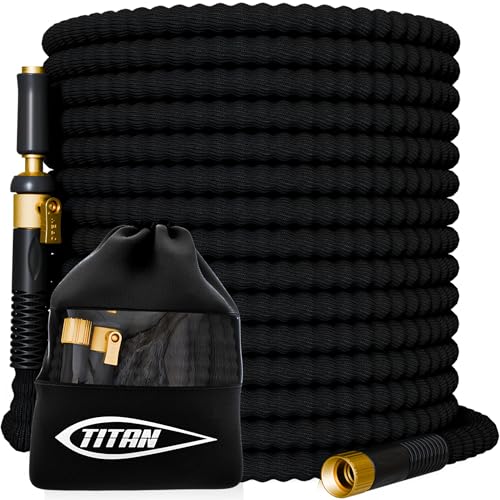
#3. TITAN 50' Garden Hose

Specifications
| Brand | Titan |
|---|---|
| Hose Length | 50 ft |
| Hose Material | Hybrid |
| Burst Pressure | 500 psi |
| Hose Type | Expandable |
| Fitting Material | Brass |
Pros
- Smooth coil and maneuver
- Durable rubber blend
- Corrosion-resistant fittings
Cons
- Low burst strength
- Expandable may fail
Titan 50 ft stands out in the Expandable Garden Hoses category because it handles real yard movement well. It coils smoothly and stays easy to maneuver around beds and corners. In use, the water delivery feels steady for a 50 ft expandable style, and the brass ends hold up to connection wear better than many rubber-and-plastic connectors. The result is a hose that is simpler to drag out and store than most expandables that feel bulky when fully stretched.
The main trade-off is durability under stress. The expandable design relies on its inner structure, and this model lists a burst strength of 500 psi, which is lower than what you usually want for harsh pressure or frequent full-stretch use. If you mostly water at normal garden distances and treat it gently, it can be a solid everyday option. If you need maximum ruggedness or you often crank pressure or kink-prone routing, look elsewhere.
#4. Pocket Hose Copper Bullet 100' Garden Hose

Specifications
| Brand | Pocket Hose |
|---|---|
| Hose Length | 100 ft |
| Hose Diameter | 0.75 in |
| Hose Material | Stainless Steel |
| Burst Pressure | 650 psi |
| Hose Type | Expandable |
| Fitting Material | Aluminum |
Pros
- Better flow capacity
- Durable rubber blend
- Corrosion-resistant fittings
Cons
- Threads loosen over time
- Coupling breakage
- Expandable may fail
This Pocket Hose model stands out for expandable hoses because it keeps strong water output for a typical 100 ft run. In real use, the flow feels capable without the hose turning into a weak trickle. It also uses a rubber blend and has corrosion-resistant end fittings, which helps it handle common outdoor conditions better than many budget expandable designs.
The trade-off is at the connections. Users may see the threads loosen over time, and coupling breakage can happen. Expandable hoses also have inherent risks, so this one is best for light to moderate yard tasks where you store it carefully and do not leave it under pressure for long periods.
#5. Pocket Hose Copper Bullet 50' Garden Hose

Specifications
| Brand | Pocket Hose |
|---|---|
| Hose Length | 50 ft |
| Hose Diameter | 0.75 in |
| Hose Material | Stainless Steel |
| Burst Pressure | 650 psi |
| Hose Type | Expandable |
| Fitting Material | Aluminum |
| Weight | 2.9 lb |
Pros
- Durable rubber blend
- Corrosion-resistant fittings
- Better flow capacity
Cons
- expandable may fail
- Leak reports
This Pocket Hose 50 ft expandable model stands out for its solid real-world water output and easier day to day handling. With a 0.75 in expandable hose and a 650 psi burst rating, it moves water well for typical yard tasks without feeling overly restricted. It also stays practical to use thanks to a lightweight build at 2.9 lb, and it uses corrosion resistant end fittings to hold up better where hoses sit outside.
The main trade-off with expandable hoses shows up here: the expandable design can be less reliable over time than traditional hoses. Some buyers report leaks, so it is worth checking connections closely after each use and avoiding rough handling when it is stretched out and under pressure. This one fits best for people who want convenient storage and decent flow, but can accept that expandable hoses may have a shorter lifespan and more connection care than sturdier non-expandable options.
What to Look For
Real Flow While Expanding: In daily use, the hose should not feel restricted once it stretches. Check for consistent output at the length you plan to use most often, not just when it is fully expanded on day one.
Leak and Burst Resistance: Expandable designs can fail at seams and end connections. Prioritize hoses with solid burst pressure ratings and good resistance to cracking or splitting after seasons of heat and cold.
Kink and Coil Behavior: The hose should retract without tangling and should not kink into creases that stay. If it kinks easily, it will reduce usable life and make storage harder.
Fitting Material and Seal Quality: Look for end fittings made from Brass or Stainless Steel when possible. Secure threading and corrosion resistance reduce the common problems of drips at the spigot adapter or a nozzle that loosens over time.
Length and Diameter Match: Choose length based on your yard layout, then confirm diameter fits your spigot and typical nozzle. A 50 ft model can suit smaller beds, while 100 ft options only make sense if your water pressure can maintain good spray across the expanded span.
How We Picked
Products were identified through broad research across review sites and buyer forums, then filtered to only those that qualify as Expandable Garden Hoses. We focused on models sold by length, with clear information for hose type, diameter, and connection details.
Scoring used the same objective pillar framework as the main Garden Hoses post, allowing direct comparison of products within this sub-category. We weighted Performance and Durability the most, then checked Handling, Fittings, and Value so the top picks stay practical for day-to-day use, not just for first-week performance.
Frequently Asked Questions
How do expandable garden hoses work, and what should I expect from water pressure?
An expandable hose stretches as water flows through it, then shrinks when water stops. Your flow depends on your faucet and water pressure. Some hoses deliver strong flow at short and mid lengths, but pressure can drop as the hose extends.
Why do expandable hoses sometimes kink, and how can I prevent it?
Kinks often happen when you drag the hose over sharp corners or let it twist while it is expanding. To prevent this, lay the hose flat before turning on the water. Avoid stepping on the hose and do not pull it around tight bends.
What is the best way to set up and store an expandable garden hose to help it last?
Let the hose drain fully after use before you coil or store it. Store it out of direct sun when possible, since UV light can age the material. If it is cold outside, warm it slowly before using to reduce stiffness and wear.
What key differences should I compare when choosing between expandable hoses?
Focus on hose length, diameter, and burst pressure ratings. Also check fitting material, since end connectors matter for leak-free use. A hose with better fittings and higher burst pressure usually feels more reliable over time.
When should I choose a different type of garden hose instead of an expandable hose?
Choose a standard or heavier-duty hose if you need steady pressure over very long runs. Expandable hoses can lose pressure more noticeably when fully stretched. If you plan to leave a hose connected outdoors for long periods, a non-expandable hose may hold up better.
How do expandable garden hoses compare to standard garden hoses for weight and handling?
Expandable hoses usually feel lighter and easier to move around the yard. They also take up less storage space when retracted. Standard hoses often feel less stretchy, but they can provide more consistent flow at longer lengths.


