





Buck 124 Frontiersman Hunting Knife Review
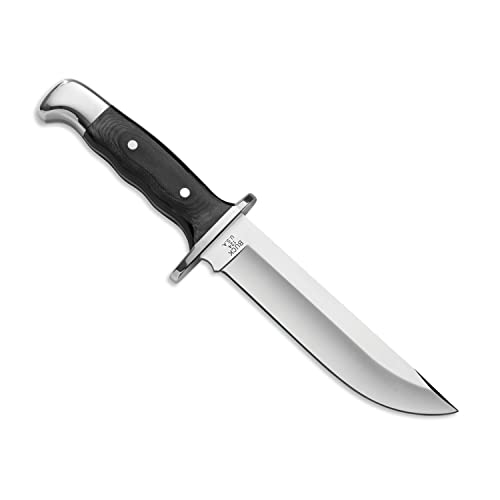
Specifications
| Brand | Buck Knives |
|---|---|
| Knife Type | Fixed Blade |
| Blade Length | 6.25 in |
| Overall Length | 11.75 in |
| Blade Material | 420HC Stainless Steel |
| Blade Style | Bowie |
| Handle Material | Micarta |
| Weight | 13.3 oz |
Pros
- Clean, effortless skinning
- Tight fit and finish
- Secure wet/dry grip
Cons
- Too heavy for carry
- Too short for tasks
- Wide for small hands
The Verdict
The Buck 124 Frontiersman is a Bowie fixed blade with a 6.25 in cutting length, aimed at efficient slicing during field dressing. It earns an 8.1 for real cutting performance, with clean skinning and steady control, but it is heavy at 13.3 oz and can feel short or wide depending on your hand size.
Who it's for: Hunters who want a skinning-first Bowie profile and accept a heavier, less pack-friendly carry for more control during careful work and longer slicing.
Who should skip it: People who need a lighter, more compact knife, or who have smaller hands and want a narrower blade for tight grip and fine tasks.
In-Depth Review
Performance
With a Performance score of 8.1, the Buck 124 Frontiersman lands in the “Clean, effortless skinning” range.
The shape helps. It is a 6.25 in Bowie with a straight back. That makes long, steady strokes easier during field dressing. It also keeps the tip working for detail around joints and connective tissue.
Expect the edge to matter most in the first phase of use: getting through hide and membrane. The blade is listed as 420HC stainless steel. That matters because 420HC can take and hold a working edge for outdoor cutting, but it depends on sharpening and how you treat the edge after contact with grit. This knife is built to stay “smooth through contact,” which supports the idea that it can keep cutting without sudden drag when your blade angle shifts during skinning.
Control is the other half of real performance. The knife weighs 13.3 oz and measures 11.75 in overall. That mass can help steady the blade on longer cuts. It can also slow you down on very short, wristy cuts. If your hunting style leans toward clean slicing and controlled skinning, the blade geometry supports that job well.
Build Quality
Build Quality scores 8.6, which maps to “Tight fit and finish.”
The construction feels like it was put together with care. The micarta handle is described as black micarta, and the fit is part of why it works in real use. When you are processing game, you need the handle to stay solid in your hand, even when your grip changes mid-task.
The hard spec story is simple. This is a fixed blade knife, not a folding design. The blade length is 6.25 in, and the overall length is 11.75 in. Those proportions keep the knife from feeling front heavy in hand. The blade material is listed as 420HC stainless steel. That steel choice points to corrosion resistance for outdoor environments, though real-world outcomes still depend on drying and storage.
Where build quality becomes practical is at the boundary between handle and blade. Micarta works in wet conditions. It also tolerates sweat and water better than many smooth polymers. In short use, the tight build reduces wobble and keeps your cutting strokes consistent.
Ergonomics
Ergonomics scores 8.3 and fits the “Balanced for precise control” template.
The knife uses a micarta handle, and you feel it when your hands are wet or bloody. The grip stays steady during careful work, which is exactly what you want when you move between skinning and trimming. The handle design also supports fine control around joints where you need short adjustments.
Still, the ergonomics are not universal. The knife is 13.3 oz, and that weight comes through when you work for long stretches. It can pull slightly on your wrist during repetitive motion. That is the kind of fatigue that shows up after an extended dressing session, not in the first few minutes.
Hand size also matters. One of the listed cons says “Wide for small hands.” That means the handle can feel larger than ideal if you grip with a shorter span. Combined with the overall length of 11.75 in, you may find you need to reset your hold more often for close, careful cuts.
Value
Value has a score of 7.7, which maps to “Okay value, mediocre materials.”
This is the only pillar that does not feel like a clean match to the knife’s strongest traits. The knife centers on 420HC stainless steel. That is a solid, familiar steel for working edges, but it is not the highest-end material on the market. In value terms, you get real field practicality, but you do not get an edge material that screams “top tier.”
The knife also has size trade-offs that affect how much use you will get. It weighs 13.3 oz, and one cons says “Too heavy for carry.” If you want one knife that disappears in a pack and stays easy to take on every hike, this is not the light option. Another con says “Too short for tasks.” With a 6.25 in blade and 11.75 in overall length, your cutting leverage can feel limited for some larger jobs.
Where value improves is when your task list matches the design. A Bowie-style profile with a 6.25 in blade suits skinning control more than long reach. The listed pros include “Clean, effortless skinning” and “Secure wet/dry grip.” If those match your hunting routine, the value holds up. If not, you will feel the compromises quickly.
Frequently Asked Questions
What are the blade length and overall length of the Buck 124 Frontiersman?
The blade measures 6.25 inches long, with an 11.75 inch overall length. This size works well for field dressing and skinning on medium to large game. If you prefer longer reach for cape or quarters, you may find this knife a bit short.
What steel does the Buck 124 use, and is it corrosion resistant?
The blade is made from 420HC stainless steel. In wet conditions, it resists corrosion better than carbon steels, but it still needs drying after use. Wipe the blade and keep it lightly oiled to reduce rust risk.
How does the Bowie blade shape perform for skinning and slicing?
The Bowie style gives a good mix of tip control and belly for smooth slicing. In real skinning, it cuts cleanly with less drag than many blunt-edged hunting knives. For very fine, tight work, you may still need careful technique because the blade is fairly wide.
Is the Micarta handle grippy when hands are wet or bloody?
Yes. The Micarta handle provides a secure wet and dry grip during extended processing. It helps reduce slip when your hands are slick with blood or moisture.
Is this knife too heavy for everyday carry?
At 13.3 oz, it is on the heavy side for carry. In a backpack or on a pack belt it feels manageable, but you may notice fatigue if you wear it all day. If you want something lighter for constant carry, consider a smaller fixed blade.
How should I sharpen and maintain the Buck 124 420HC blade?
Use a steady sharpening angle and focus on maintaining the factory bevel for best cutting feel. After skinning, rinse or wipe off debris, dry thoroughly, and apply a light oil layer. Store it in a dry sheath or wrap so moisture does not sit on the steel.
Final Verdict
Buck Knives delivers a capable Bowie style field tool with 8.2 overall. It earns a strong recommendation for hunters who focus on skinning and controlled slicing during camp work. The blade shows clean, effortless skinning, and the build feels tight and well finished. The weak point is that it can feel too heavy for carry, and its proportions can be limiting for finer tasks.
If you want a durable, grippy hunting knife for on site cutting and can handle the extra bulk, this is a sound pick.
Buck 124 Frontiersman Hunting Knife
As an Amazon Associate, we earn from qualifying purchases.