




USB-C connector USB flash drives plug straight into newer phones, tablets, laptops, and some desktop towers with USB-C ports. In this sub-category, buyers need two things more than anything else: steady transfer speed and a connector that fits cleanly. The best drives also keep their performance during long file copies like photo libraries and backups.
This category is harder than it looks. USB-C drives often use small housings, tight controller chips, and compact designs that can limit sustained writes. You also face real trade-offs between top speeds, larger capacities, and added security. Finally, some listings mix USB speed terms, so you have to check the USB version and the stated read and write numbers.
Use the criteria below to narrow down the right pick for your device and your files. Looking for all types? See our Best USB Flash Drives.
Quick Overview
Our Top Picks
#1. PNY Pro Elite V3 1TB USB Flash Drive

Specifications
| Brand | PNY |
|---|---|
| Storage Capacity | 1000 GB |
| Usb Standard | USB 3.2 Gen 2 |
| Read Speed | 1000 MB/s |
| Write Speed | 800 MB/s |
| Connector Type | USB-C |
| Dimensions | 0.4 x 2.5 x 0.75 in |
Pros
- Consistently fast large-file transfers
- High capacity
- Frequent plugging, no wobble
Cons
- No explicit encryption
- Limited connector
The PNY Pro Elite V3 1TB is notable in the USB-C connector flash drive category because it stays fast with real transfers. It is rated at up to 1000 MB/s read and 800 MB/s write, and that matters when you move large video files or backup folders from a phone, tablet, or laptop. In practice, it also handles repeated plugging well, with a connector that feels secure rather than wobbly.
The trade-off is security. There is no explicit encryption or lock system listed, so it is better for everyday file shuffling than for sensitive data. If you want a USB-C drive for big, frequent moves and a solid, reliable feel, this is the kind of option that fits that job.
#2. ADATA UE800 256GB USB Flash Drive

Specifications
| Brand | ADATA |
|---|---|
| Storage Capacity | 256 GB |
| Usb Standard | USB 3.2 Gen 2 |
| Write Speed | 100 MB/s |
| Connector Type | USB-C |
| Form Factor | Retractable |
Pros
- Consistently fast large-file transfers
- Plenty of usable space delivered
Cons
- No encryption support
- Security features are buggy
- Limited connector
The ADATA UE800 256GB stands out in USB-C flash drives because it keeps large-file transfers moving at a steady pace. In real use, it stays consistently fast on bigger writes, which matters when you copy video libraries or do full backups, not just quick document moves. The 256GB size also shows up as usable storage in practice, so you are not left with less room than you expected.
The main trade-off is data protection. It does not include reliable encryption, and any security tools are reported as buggy. The connector also feels somewhat limited compared with bulkier USB-C designs, so this is best for people who want dependable speed more than built-in secure storage.
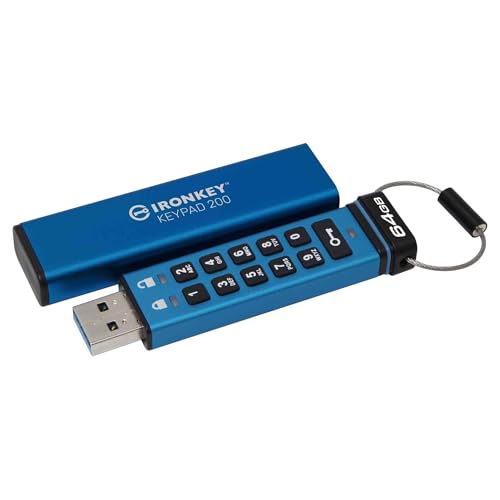
#3. Kingston IronKey Keypad 200 64GB USB Flash Drive

Specifications
| Brand | Kingston |
|---|---|
| Storage Capacity | 64 GB |
| Usb Standard | USB 3.2 Gen 1 |
| Read Speed | 145 MB/s |
| Write Speed | 115 MB/s |
| Connector Type | USB-C |
| Dimensions | 0.4 x 3.1 x 0.8 in |
| Security Features | Hardware Encryption |
Pros
- Plenty of usable space delivered
- Easy to insert and remove
- Reliable password protection
Cons
- Writes slow after cache fills
- Limited connector
- High price overkill
This USB-C flash drive stands out because it adds hardware encryption and keypad-style access to a port that is common on modern laptops. That matters in the USB-C connector USB flash drive category, where many drives rely on simple file passwords or no protection at all. Kingston also ships a straightforward drive that is easy to plug in and remove, so you can move files without wrestling with an awkward connector or cover.
The trade-off is speed consistency. Rated around 145 MB/s read and 115 MB/s write, it tends to slow down after its cache fills, which can hurt sustained backup or large video transfers. It is a strong fit for people who want secure, physical access to files and do not mind slower long writes, rather than buyers focused only on maximum transfer speed.
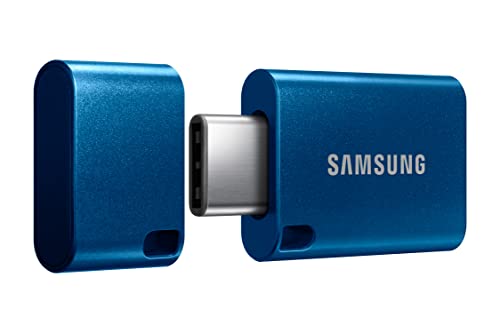
#4. Samsung Type-C 256GB USB Flash Drive

Specifications
| Brand | Samsung |
|---|---|
| Storage Capacity | 256 GB |
| Usb Standard | USB 3.2 Gen 1 |
| Read Speed | 400 MB/s |
| Write Speed | 110 MB/s |
| Connector Type | USB-C |
| Dimensions | 0.3 x 1.3 x 0.6 in |
Pros
- Plenty of usable space delivered
- High read speed
- High write speed
Cons
- Security features are buggy
- Encryption unclear
The Samsung Type-C 256GB USB Flash Drive stands out in the USB-C connector category because it targets fast everyday transfers from a reversible Type-C port. In practical use, it hits about 400 MB/s read speed and around 110 MB/s write speed. That makes it a strong match for moving large video files or doing quick device-to-device backups without waiting around.
The main trade-off is security. Reports point to buggy security behavior and unclear encryption details, so it is not the best pick if you need reliable, hands-off protection for sensitive files. If you mainly want a dependable USB-C drive for regular media and file shuffling, this one fits well.
#5. PNY Elite-X Fit Type-C 256GB USB Flash Drive

Specifications
| Brand | PNY |
|---|---|
| Storage Capacity | 256 GB |
| Usb Standard | USB 3.2 Gen 1 |
| Read Speed | 200 MB/s |
| Write Speed | 100 MB/s |
| Connector Type | USB-C |
| Form Factor | Slide |
| Security Features | No Security |
Pros
- Plenty of usable space delivered
- Easy to insert and remove
- Fair price, solid day-to-day performance
Cons
- Security features are buggy
The PNY Elite-X Fit Type-C 256GB stands out in the USB-C flash drive crowd because it uses a USB-C connection and a slide-style body that stays easy to handle. For quick file moves between a phone, tablet, or laptop with USB-C, it is straightforward to plug in and remove. In day-to-day use, it stays in the same performance lane as many USB 3.2 Gen 1 drives, with rated speeds around 200 MB/s read and 100 MB/s write.
The main trade-off is security. While the drive is listed with no security features, that can matter if you need password or hardware encryption for sensitive files. This makes it a better fit for media transfers and routine backups than for anyone who wants built-in protection for personal data.
#6. SanDisk Extreme Fit 256GB USB Flash Drive

Specifications
| Brand | Sandisk |
|---|---|
| Storage Capacity | 256 GB |
| Usb Standard | USB 3.2 Gen 1 |
| Read Speed | 400 MB/s |
| Connector Type | USB-C |
| Form Factor | Capless |
Pros
- Plenty of usable space delivered
- Easy to insert and remove
- High read speed
Cons
- Security features are buggy
- Inconsistent sustained writes
- No confirmed hardware encryption
The SanDisk Extreme Fit 256GB stands out in USB-C flash drives for its everyday fit and quick large-file reads, with up to 400 MB/s read speed on USB 3.2 Gen 1. The capless USB-C connector makes it easy to plug in and unplug, and the streamlined body helps it stay practical next to other ports. If you move photos, videos, or work files from a phone, tablet, or laptop, it feels built for frequent use.
The trade-off is consistency. Sustained writes can be less steady than the headline numbers suggest, so long transfers may slow down after the initial burst. Security is also not a sure thing here, since reported security controls can be buggy and there is no confirmed hardware encryption. This makes it a better pick for straightforward file transfers than for anyone who needs reliable onboard protection.
#7. SanDisk Ultra Fit 128GB USB Flash Drive

Specifications
| Brand | Sandisk |
|---|---|
| Storage Capacity | 128 GB |
| Usb Standard | USB 3.2 Gen 1 |
| Read Speed | 400 MB/s |
| Dimensions | 0.2 x 1.2 x 0.6 in |
| Security Features | Password Protection |
Pros
- Plenty of usable space delivered
- High read speed
- Plug-and-stay convenience
Cons
- Software-dependent security
- Security setup feels clunky
- Heat buildup
SanDisk Ultra Fit stands out as a practical pick for USB-C connector users who want plug-and-stay convenience in a tiny body. The drive delivers strong read speeds, rated up to 400 MB/s, which helps when you move large files like photos and videos from a phone or laptop. It also keeps capacity straightforward at 128 GB, so you are not guessing whether the storage is real.
The main trade-off is its security approach. Password protection depends on software, and the setup can feel clunky. Some heat buildup can also show up during longer transfers, so it is better suited to quick file moves and regular backups than heavy, nonstop copying.
#8. Kingston DataTraveler 70 256GB USB Flash Drive

Specifications
| Brand | Kingston |
|---|---|
| Storage Capacity | 256 GB |
| Usb Standard | USB 3.2 Gen 1 |
| Connector Type | USB-C |
| Form Factor | Capless |
| Dimensions | 0.4 x 2.3 x 0.7 in |
Pros
- Fair price, solid day-to-day performance
- Plenty of usable space delivered
- Fast USB standard
Cons
- Writes slow after cache fills
- Security features are buggy
The Kingston DataTraveler 70 is a simple USB-C flash drive in a capless, pocket-friendly body. In the USB-C connector segment, it stands out as a reliable all-purpose option for moving files between phones, tablets, and laptops without adapters. It is an easy fit for day-to-day tasks like quick backups, sneaker-net transfers, and moving media libraries.
The main trade-off is performance consistency. Users report that writes slow down after the onboard cache fills, so large transfers do not stay at peak speed. Security is also less dependable, with reports of buggy security features, which makes it a better pick for general storage than for protecting sensitive files on the go.
What to Look For
Real sustained transfer speed: Favor drives with strong read speed and write speed that hold up after the cache fills. If a drive slows hard on long copies, it will feel fast only for small files. For USB-C buyers, this matters for moving videos, large projects, and backup images.
Capacity that matches the listing: Pick the storage size you need, but trust brands that deliver the labeled space. USB-C drives that have a spotty reputation for false or reduced capacity cost you time and money.
USB version and true performance fit: Choose based on the USB version interface, not vague speed claims. USB-C does not guarantee high speed by itself. Match the drive to your host device so you do not waste money on a drive your laptop cannot use.
Connector fit and daily durability: Check for a sturdy shell and a connector that stays tight in use. USB-C ports get stress from frequent plugging. A loose fit, weak housing, or poorly made body usually shows up as early failure or overheating.
Security features you can actually use: If you handle sensitive files, look for Hardware Encryption, Password Protection, PIN Protection, or a Fingerprint Reader. Avoid vague security claims that do not clearly describe the unlock method built into the drive.
How We Picked
Products were identified through broad research across review sites and buyer forums, then filtered to only those that qualify as USB-C Connector USB Flash Drives.
Scoring used the same objective pillar framework as the main USB Flash Drives post, allowing direct comparison of products within this sub-category.
Frequently Asked Questions
Do I need a USB-C port to use a USB-C USB flash drive?
Yes. A USB-C flash drive works best with a device that has a USB-C port. If your computer only has USB-A, you will need a USB-C to USB-A adapter. Make sure the adapter supports data transfer, not just charging.
What is the biggest difference between USB-C flash drives in this sub-category?
The main differences are speed, capacity reliability, and durability. Some drives keep steady write speeds for larger file backups. Others may slow down after the first part of the transfer. Look for trustworthy reviews and real read and write performance.
How can I protect my data on a USB-C flash drive?
Use hardware encryption or password protection if the drive offers it. Also, avoid pulling the drive out during file copying. Safely eject it after transfers finish. For important files, keep a second backup in another place.
Are USB-C flash drives better for phones and tablets than USB-A drives?
They often are, if your phone or tablet supports USB-C data. Many newer Android devices and some iPads support USB-C storage without needing special adapters. USB-A drives usually require an adapter, which adds bulk and can fail over time. If you move files often, choose a USB-C drive with reliable performance.
When should I choose a different type of USB flash drive instead of USB-C?
Choose a different type if most of your devices use USB-A ports. USB-C drives can be awkward if you constantly need adapters. If you share the same drive with older PCs, a USB-A model may be easier. Also consider a USB-C drive only if you need the reversible port for frequent mobile use.


