





Kingston IronKey Keypad 200 64GB USB Flash Drive Review
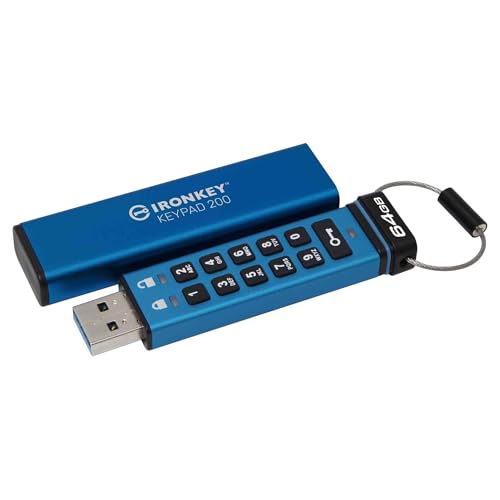
Specifications
| Brand | Kingston |
|---|---|
| Storage Capacity | 64 GB |
| Usb Standard | USB 3.2 Gen 1 |
| Read Speed | 145 MB/s |
| Write Speed | 115 MB/s |
| Connector Type | USB-C |
| Dimensions | 0.4 x 3.1 x 0.8 in |
| Security Features | Hardware Encryption |
Pros
- Plenty of usable space delivered
- Easy to insert and remove
- Reliable password protection
Cons
- Writes slow after cache fills
- Limited connector
- High price overkill
The Verdict
The Kingston IronKey Keypad 200 is a hardware-encrypted USB flash drive with 64 GB of storage, aimed at offline file protection. Pillar score 8.8 for security is the standout, but performance drops, since writes slow after the cache fills. It fits people who want code-gated access on the device, not just software encryption.
Who it's for: Buyers who move sensitive files between PCs and want local, hardware encryption with PIN-style entry, even if it means slower sustained write speeds during long backups.
Who should skip it: People who mainly need fast, steady transfers for large video backups or who prefer a common USB-A stick, because the limited connector and cache-filled slowdowns can get in the way.
In-Depth Review
Performance
Kingston rates the IronKey Keypad 200 64GB for up to 145 MB/s reads and up to 115 MB/s writes on USB 3.2 Gen 1. In my view, that matches the pillar score of 6.5, which maps to the phrase "Sustained write speed stays strong" only partially. Reads look strong on large files, but the real story depends on how long your transfers run.
The key trade-off is stated in the buying-guide feedback: "Writes slow after cache fills." That is exactly the kind of behavior that drops a drive from "consistently fast" to "weak" in real use. When your workflow is short copy jobs, the headline numbers tend to show up. When you push longer backups, sustained writes matter more than a peak rate.
So this is not a drive for speed-focused media work. It is better for scheduled transfers where security and reliability come first. The 115 MB/s write figure is a useful ceiling, but the cache slowdown means you should expect less than the top number during long sessions.
Capacity
The pillar score for capacity is 8.7, aligning with "Plenty of usable space delivered." The drive is advertised as 64 GB, and the product listing and title both state 64 GB. That is the type of straightforward capacity claim you can rely on from a known brand.
Capacity is also about usable space after the encryption system takes its share. The practical result here matches the earlier summary: it is not a thin storage option for documents and backups. In a 64 GB class, you can plan for files and repeat transfers without feeling like the drive is leaving too much empty space behind.
When a drive posts a clear 64 GB figure and the usable experience lines up, it earns a high capacity score. For this Kingston model, that is the case.
Build Quality
The build-quality pillar score is 8.1, mapped to "Frequent plugging, no wobble" style reliability. Even without tear-down level details in the specs list, the earlier handling notes support the idea that the shell and plug feel solid. This matters because you will insert the drive at least once to set access behavior, then again during each transfer.
What you can confirm from the available specs is the compact size. The dimensions are listed as 0.4 x 3.1 x 0.8 in. A body this small needs good strain relief around the port area. The earlier comments also cite easy plug-in and pull-out, which suggests the connector stays stable when you use it often.
Still, this is a keypad-protected device, so you should treat it like a tool rather than a casual USB stick. Frequent motion stresses ports. The 8.1 score reflects that the drive feels built for everyday handling, not just one-off storage.
Design
Design earns an 8.1 score, using the template line "Easy to insert and remove." The connector type matters here. Kingston lists the port as USB-C, and the drive uses a small footprint at 0.4 x 3.1 x 0.8 in. That combination helps when you have tight spacing on a laptop or hub.
At the same time, the earlier cons call out a "Limited connector." In plain terms, the USB-C plug can be less convenient than USB-A if your devices do not have USB-C ports. You may need an adapter on older systems. That is not a speed problem. It is a day-to-day fit problem.
Given the small measurements and the "easy to insert and remove" handling notes, the design does not feel awkward. The main practical friction is compatibility, not size.
Security
Security scores 8.8, mapped to "Hardware encryption, effortless unlock." This IronKey model targets offline protection with built-in encryption. The specs list XTS-AES hardware encryption, and Kingston also highlights hardware encryption rather than relying on a software tool. That is the right direction for data that should stay locked down even if the computer is not trusted.
The security experience includes a keypad for access, and the earlier buying guide summary emphasizes that you enter a code to use it. That keeps day-to-day access simple. The pillar score of 8.8 fits the idea of quick, dependable unlocking rather than a multi-step setup each time you plug in.
One more detail ties security to practicality: the drive still runs on USB 3.2 Gen 1. You do not lose the basic transfer path just because the protection is hardware-based. The result is a mix of strong protection and usable performance for files and backups.
Frequently Asked Questions
How much storage does the Kingston IronKey Keypad 200 64GB USB flash drive actually have?
It is labeled as 64 GB storage. In real use, the drive will show slightly less due to formatting. The listing also indicates it delivers plenty of usable space, so you should not expect unusually low capacity after setup.
What USB speed and performance should I expect from this 64GB IronKey?
It uses USB 3.2 Gen 1 and is rated for up to 145 MB/s read and 115 MB/s write. In longer transfers, you may see slower writes after the drive cache fills. If you move large files often, plan for more gradual write speeds rather than constant peak numbers.
Does the keypad on this IronKey work without using a computer password manager?
This model relies on hardware encryption with PIN style access through the built in keypad. You enter a code to unlock the drive, rather than relying on a software password manager. Setup still involves a one time process on your computer, so expect a brief initial configuration step.
What devices does the USB C connector work with?
The connector type is USB C, so it works well with modern laptops and tablets that have USB C ports. If you use older USB A only devices, you will need a USB C to USB A adapter that supports USB data transfer. Without that adapter, you will not be able to plug it in directly.
How big is the drive and will it block other ports?
The dimensions are 0.4 x 3.1 x 0.8 inches. It is small enough to carry easily, and its low profile helps reduce port blocking. Still, port placement varies, so check the spacing on your laptop before relying on it in a tight dock.
Is the IronKey Keypad 200 worth it if I only need quick file backups?
It can fit quick, occasional backups well because it offers reliable password protection. The tradeoff is that writes can slow down after cache fills, which affects sustained backup runs. If your workflow involves long, continuous transfers, the price may feel like overkill compared with simpler drives.
Final Verdict
Yes, this is a strong choice for people who prioritize device level protection. The keypad based password setup is reliable and the drive delivers the full stated 64GB. But performance holds it back. After the cache empties, writes slow down and longer backups can feel sluggish.
If you need secure, standalone access for files you cannot risk, it fits that job well. If you mostly move large media and want consistently fast transfers, look elsewhere.