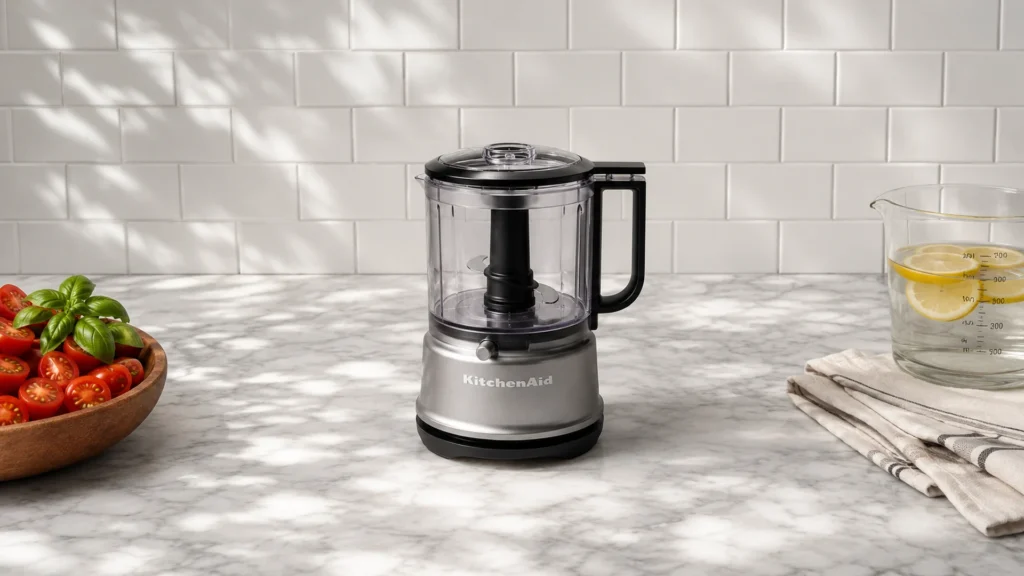
Dishwasher-Safe Food Processors are models designed so the parts you touch often are safe to wash in a dishwasher. For this sub-category, that usually means the bowl, lid, and key attachments or blades are dishwasher-safe, so you can clean up without hand scrubbing every time. Buyers also need solid cutting results, since cleaning convenience does not help if the unit leaves uneven chunks.
Picking the right model is hard because dishwasher-safe parts add trade-offs. Some machines use plastic bowls and lids that clean easily but may feel less rigid under heavy loads. Other models include many attachments, but only a few are truly convenient to remove, rinse, and load into a dishwasher. You also have to balance size and power against cleanup. A larger processor can process more food, but it can take longer to fully disassemble for thorough washing.
If you want help across all types and sizes, this guide fits into our larger roundup. Looking for all types? See our Best Food Processors.
Quick Overview
Our Top Picks
#1. Cuisinart Core Custom 4-Cup Mini Chopper

Specifications
| Brand | Cuisinart |
|---|---|
| Capacity Cups | 4 cups |
| Control Type | Buttons |
| Bowl Material | Tritan |
| Dimensions In | 7.2 x 9.3 x 5.6 in |
| Weight Lb | 3.7 lb |
Pros
- Reliable slicing and pureeing
- Secure locking, no wobble
- Strong power, fair cost
Cons
- Limited accessories, narrow range
- Small batch size
This Cuisinart 4-cup mini chopper stands out for easy cleanup in a dishwasher-safe food processor setup. The Tritan bowl and the parts meant for use with it are designed to go into the dishwasher after you chop onions, mince herbs, or puree soup ingredients. In day to day use, it keeps a steady rhythm for small jobs, so you get consistent cuts without stopping to scrape and restart.
The trade-off is size and versatility. It is better for small batches than big prep sessions, and it does not chase a long list of attachments or disc options. If you mainly run quick purees, toppings, and simple chopping tasks and want cleanup that does not turn into a project, this is a strong fit.
#2. Cuisinart Pro Custom 11-Cup Food Processor

Specifications
| Brand | Cuisinart |
|---|---|
| Capacity Cups | 11 |
| Power Watts | 625 W |
| Bowl Material | Tritan |
| Dimensions In | 14.5 x 11.2 x 7 in |
| Weight Lb | 16.27 |
Pros
- Reliable slicing and pureeing
- Secure locking, no wobble
- Strong power, fair cost
Cons
- Heavy countertop unit
- Bulky countertop size
The Cuisinart Pro Custom 11-Cup stands out for dishwasher-safe daily use because it focuses on dependable wet and dry prep with parts that are easy to keep clean. It turns out consistent slices and smooth purees, with a secure locking system that stays firm while the blade runs. That matters when you are cycling through multiple batches and want less time scrubbing around a shifting bowl or rescuing uneven cuts.
The main trade-off is how much counter space it takes. At about 16.27 lb and a compact footprint of 14.5 x 11.2 x 7 in, it is not ideal for small kitchens or for people who want a quick grab-and-go unit. This is best for cooks who do regular chopping, shredding, and pureeing and plan to leave it out or store it safely after cleaning.
#3. GE 12-Cup Food Processor

Specifications
| Brand | GE |
|---|---|
| Capacity Cups | 12 cups |
| Power Watts | 550 W |
| Number Of Speeds | 3 Speeds |
| Control Type | Dial |
| Dimensions In | 16 x 10.3 x 12.2 in |
| Weight Lb | 10 lb |
Pros
- Secure locking, no wobble
- Strong power, fair cost
- More batch capacity
Cons
- Limited speed control
- Disc size limitations
- Texture inconsistency
This GE 12-Cup Food Processor stands out for dishwasher-safe convenience backed by solid everyday handling. The secure locking system helps it stay steady, so you get more consistent cuts during real prep, not wobble on the counter. With 550 W of power and a 12-cup bowl, it works well for larger batches like chopped vegetables and thick blends, which means less stop-and-start when you are running through a big meal.
The main trade-off is control and texture consistency. It uses a simple dial with 3 speeds, so it can feel limited when you want finer control for varied textures. Some users may notice texture differences in mixed results, and disc options can be a bit constrained versus higher-end models, which matters if you rely heavily on specific slicing or shredding styles. This is a good pick for families or busy cooks who prioritize dependable cleaning and stable operation over ultra-precise texture control.
What to Look For
Dishwasher-Safe Parts That Matter: Check which pieces are actually dishwasher-safe, not just the blade. Prioritize bowls, lids, and the discs or choppers you use most. If a critical part requires hand washing, your day-to-day cleanup will still suffer.
Even Results Under Load: Choose models that handle chopping, slicing, shredding, and pureeing without slowing down. Dense tasks like shredding thick cheese or processing pie fillings should still produce consistent cuts, with fewer stops to scrape or reset.
Build Quality at the Lock and Bowl Fit: Dishwasher use increases wear on hinges, seals, and locking mechanisms. Look for a solid lid fit and a secure locking system that stays tight after repeated wash cycles. Wobble or looseness leads to uneven cutting.
Controls and Disassembly That Speed Up Cleaning: Daily use depends on how fast you can assemble and disassemble. Aim for clear control labels and attachments that detach with less effort. If you have to fight alignment or chase crumbs in crevices, dishwasher-safe parts will not fully fix the mess.
Attachment Mix for Real Work: Focus on the blades and discs you will use often, such as a multipurpose blade plus at least one slicing or shredding option. More accessories only help if the ones you use are easy to wash and store.
How We Picked
Products were identified through broad research across review sites and buyer forums, then filtered to only those that qualify as Dishwasher-Safe Food Processors.
Scoring used the same objective pillar framework as the main Food Processors post, allowing direct comparison of products within this sub-category.
Frequently Asked Questions
Which parts of a dishwasher-safe food processor should I actually put in the dishwasher?
Check the manual for the exact parts labeled dishwasher-safe. Usually, this includes the bowl, lid, and some blades or discs. Hand wash anything not clearly marked, especially the drive area and any electrical parts.
Will dishwasher cleaning affect blade sharpness or performance over time?
It can, if the blades are not truly dishwasher-safe or if harsh cycles are used. Use a gentle cycle and avoid high heat drying when possible. Rinse right after use, then dry fully before storage.
What is the best way to prevent odors and stains in a dishwasher-safe food processor?
Scrape out solids first and rinse the bowl right away. After washing, wipe the center spindle area and dry it well. For lingering smells, wash again with warm soapy water and a quick wipe-down before running the next job.
How do dishwasher-safe models differ from other food processors in daily cleanup time?
Dishwasher-safe models cut the time spent washing by hand for many parts. You still need to wipe the motor base and keep the spindle area clean. Overall cleanup feels faster for frequent small batches like chopping or shredding.
When should I choose a different type of food processor instead of dishwasher-safe?
Choose a non-dishwasher-safe or more heavy-duty type if you process dough often or need maximum slicing consistency. Some budget dishwasher-safe units may not handle dense tasks as well. If you do large batches weekly, you may want a model built for that workload and designed for easier manual cleaning.


