Transparency Note: This post contains affiliate links. As an Amazon Associate, we earn from qualifying purchases at no extra cost to you.
Food Processors for Dicing are built around one job: turning vegetables into even cubes fast. In this sub-category, buyers look for stable cutting results with common dicing targets like onions, peppers, carrots, and potatoes. The dicing process should stay controlled when you feed larger pieces in, not force you to stop and fix uneven chunks.
This category is harder than it looks because dicing performance depends on more than raw power. Blade and disc fit, how the feed tube guides pieces, and how the motor holds speed under load all affect cube size. Too much vibration or a loose lid can also turn clean edges into rough cuts, especially with denser vegetables.
For a wider look at all food processor styles and what they cover best, see our Best Food Processors.
For dicing and prep work, the Breville Paradice stands out for how cleanly it turns large batches into even textures. It delivers reliable slicing and pureeing, which helps when you need consistent thickness before you dice or finish a quick sauce. The locking system also stays tight during use, with no wobble that can lead to uneven cuts.
The main trade-off is power. With 625 W, it can feel a bit underpowered on tougher, denser loads, so you may need to work in smaller batches for stubborn ingredients. It is also a heavy countertop unit at 15.5 lb, so daily setup and storage will take a little commitment.
For dicing tasks, this Cuisinart 7-cup processor stands out for its steady, reliable cuts when you switch between chopping and smoother purees. The 600 W motor keeps speed consistent under typical prep loads, and the secure locking setup helps the bowl stay in place without wobble. That matters when you are trying to dice onions, mince garlic, or break down vegetables into uniform pieces without stopping to scrape and restart.
The main trade-off is size. With a 7-cup bowl, it is easier to end up working in smaller batches than with larger models. Speed control also feels a bit basic, since the unit relies on limited settings rather than fine-tuning for different textures. It is a strong pick if you mainly want dependable dicing results for everyday cooking and do not mind doing smaller runs.
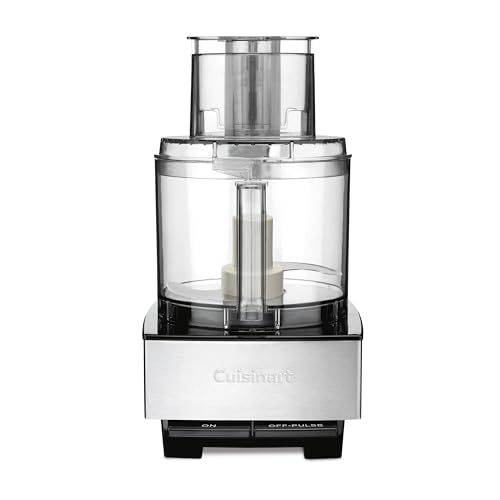
For dicing and prep-heavy jobs, the Cuisinart Custom 14-Cup stands out for how stable it stays under load. The secure locking system helps it avoid wobble, so diced pieces come out more consistent when you run tougher ingredients through the bowl. With 720 W power and a roomy 14 cups, it handles larger batches without bogging down, which matters when you are cutting onions, potatoes, or carrots for multiple meals.
The trade-off is daily convenience. Two speeds and button controls keep things simple, but you have less fine control for dialing in texture from quick pulses to slower runs. At 18 lb and with a bulky countertop footprint, it is not the most commuter-friendly option for small kitchens. This is a strong pick if you want steady, repeatable results for batch dicing and you have room to leave the unit out.
For dicing-style prep, this 16-cup Breville is notable for how consistently it chops, slices, and purees once food sits in the right position on the blade. With 1450 W of power and a stainless steel bowl, it tends to keep cuts even across batches, which matters when you are working toward uniform cubes for stir-fries or toppings. The locking system also feels solid on the counter, so the bowl does not wobble while you push food through the 5.5 in feed tube.
The main trade-off is reliability in the controls. Some users report button or control failures, and there is also mention of pulse malfunction. If you want a processor you can count on for frequent, daily dicing, you should be ready to test the buttons and pulse right away, and keep an eye on early performance issues.
This GE 12-Cup Food Processor stands out for dicing tasks because it stays steady while it runs. The locking system feels secure, with no wobble on the counter. With a 550 W motor and 3 Speeds controlled by a dial, it handles many chopping and mincing jobs with consistent feed-through, which matters when you want even pieces for salsa, mirepoix, or stir-fry mixes. Larger batch capacity also helps when you are dicing for a meal prep run.
The trade-off is dialing in texture. The limited speed control can lead to texture inconsistency if you switch between soft and firmer foods during the same session. Disc options are also somewhat limiting for specific dicing styles, so it may not match people who want lots of fine, uniform outcomes from different disc choices. This is a solid pick if your main goal is reliable chunking and dicing for everyday cooking, and you are okay using pulse-like control through shorter runs.
Dicing consistency with dense produce: Prioritize models that keep cube size uniform when dicing firmer items like carrots and potatoes. If the processor struggles under load, you will see a mix of small and large pieces instead of steady cubes.
Disc and blade system designed for even cuts: Dicing requires the right disc geometry and a secure blade mounting. Look for setups that support consistent alignment and repeatable results across multiple batches.
Motor speed stability under load: Higher wattage helps, but stability matters more when the bowl fills. Choose models that maintain steady cutting speed while dicing without bogging down or forcing frequent pauses.
Capacity you can use for batch dicing: Dicing often takes more space than chopping. Match bowl capacity cups to your typical volume so you can process in fewer batches while still feeding pieces evenly through the chute.
Daily usability for quick prep and cleanup: Dicing builds up mess fast. Favor processors with manageable cleanup, clear controls, and accessories that are not a chore to remove and rinse after each session.
How We Picked
Products were identified through broad research across review sites and buyer forums, then filtered to only those that qualify as Food Processors for Dicing.
Scoring used the same objective pillar framework as the main Food Processors post, allowing direct comparison of products within this sub-category.
Frequently Asked Questions
What features matter most in a food processor for dicing?
Look for the right dicing or julienne disc setup. A strong motor helps keep cuts even under load. Multiple speeds also help you match the cut to soft or firm foods. A good feed tube size reduces pushing and helps keep pieces consistent.
How do I get clean, even diced pieces instead of mushy chunks?
Start with food that is cut to tube-ready sizes. Use pulse for firmer foods like carrots and potatoes. For softer foods, use a lower speed and shorter runs. Keep the blade and discs clean so food does not build up and smear.
Do I need to pre-chill vegetables for better dicing results?
Often, yes. Cold vegetables dice more cleanly, especially for starchy foods. If your recipe uses very soft items, chill can help but do not freeze them. Pat vegetables dry before processing to reduce clumping.
How do I choose between a 7 cup, 9 cup, 12 cup, and larger processor for dicing?
Smaller bowls work best for small prep and quick meals. Larger bowls handle bigger batches without crowding the disc. Crowding can cause uneven dice and more mixing on the next pulse. Match bowl size to your typical batch, not your rare big cook.
When should I choose a different type of processor instead of dicing-focused models?
Choose another type if you mainly need shredding, slicing, or pureeing, not cubes. A dicing setup may not be ideal for thick dough or heavy kneading. If you rarely cube foods, a simpler slicing and shredding model can be enough. If you dice often, focus on disc support and motor strength.
How do food processors for dicing compare to blender-style processors for the same job?
Food processors use discs and blades to cut into defined shapes. Blenders usually chop into uneven bits and can turn foods into puree. For consistent cubes, discs give more control over size. Blenders can still help for sauces after you dice.