




The 6 Best Docking Stations in 2026

Transparency Note: This post contains affiliate links. As an Amazon Associate, we earn from qualifying purchases at no extra cost to you.

Docking stations turn a single laptop connection into a full desk setup. You plug in once and get displays, USB devices, Ethernet, and sometimes SD card access. This is the category for people who work from a laptop every day and want fewer cables at the monitor.

The hard part is the trade-off between video performance and port count. Some docks list multiple monitor outputs but share bandwidth in ways that cause flicker or drops. Others show good specs on paper while power delivery falls short when you run monitors and charge at the same time. You also have to match the dock to your host connection type, because Thunderbolt and USB-C do not behave the same for display and device compatibility.

This guide compares top docking stations with the same set of checks. You will see how many displays they support, what resolutions they can drive, how much power they deliver, and which ports they include. The goal is simple, help you pick a dock that works with your laptop and your monitor setup on the first try.

Quick Overview

CalDigit TS5 Plus Thunderbolt Docking Station
Best Overall CalDigit TS5 Plus Thunderbolt Docking Station
Kensington SD5780T Thunderbolt Docking Station
Best Thunderbolt 4 Kensington SD5780T Thunderbolt Docking Station
Kensington SD5900T DisplayLink Docking Station
Best with DisplayLink Kensington SD5900T DisplayLink Docking Station
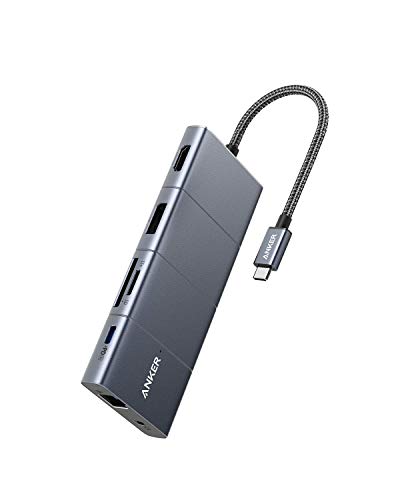
Anker Nano 13-in-1 Docking Station
Best Triple Monitor Anker Nano 13-in-1 Docking Station
Dell Thunderbolt Modular Dock
Best Swappable Modules Dell Thunderbolt Modular Dock
Anker 568 USB-C Docking Station
Best Value Anker 568 USB-C Docking Station

Top Picks

Best Overall

CalDigit TS5 Plus Thunderbolt Docking Station
Our Score
8.6 / 10
hover for details
Performance
8.7
Connectivity
8.7
Power
9.1
Compatibility
8.6
Value
7.7
BrandCalDigit
Host ConnectionThunderbolt 5
Max Displays Supported2 Displays
Video Output Ports1 x DisplayPort 2.1
Max Resolution Supported7680 x 4320 @ 60 Hz
Power Delivery140 W
Usb Ports Total10 Ports
Ethernet Speed10 Gbps
Memory Card ReaderSD/microSD
  • Crisp, stable video
  • Fast high-watt charging
  • Ultra-fast Ethernet
  • Limited display ports
  • Cable-sensitive display detection

This is a strong pick for the Best Overall spot because it stays stable under real work loads. The standout trait is its fast Thunderbolt 5 link, which keeps both video and data behavior predictable when you use the dock for hours.

On performance, you get crisp, steady video and smooth high-watt charging at 140 W. For networking, the ultra-fast 10 Gbps Ethernet connection helps when you move large files or run demanding cloud workflows. The port mix is also practical, with 10 USB ports plus an SD/microSD card reader for quick camera or phone transfers.

The main downside is limited display ports, and display detection can be a bit cable-sensitive. If you want one dock that handles charging, fast Ethernet, and clean video without fuss, this is the one to get, especially for power users who run a two-display setup.

Also ranked #1 in: Thunderbolt 5 Docking Stations

→ Read full review

Best Thunderbolt 4

Kensington SD5780T Thunderbolt Docking Station
Our Score
8.1 / 10
hover for details
Performance
8.1
Connectivity
8.1
Power
8.3
Compatibility
8.1
Value
7.9
BrandKensington
Host ConnectionThunderbolt 4
Max Displays Supported2 Displays
Video Output Ports1 x HDMI, 2 x Thunderbolt 4
Max Resolution Supported7680 x 4320 @ 30 Hz
Power Delivery100 W
Usb Ports Total4 Ports
Ethernet Speed1 Gbps
Memory Card ReaderSD UHS-II
  • Crisp, stable video
  • Well-balanced workstation ports
  • Stable PD under load
  • Too few USB ports
  • Gigabit-limited networking

This Kensington Thunderbolt 4 dock fits the Best Thunderbolt 4 role because it keeps display output steady while you work. Two-monitor support through HDMI plus two Thunderbolt 4 downstream ports helps you set up a clean workstation without fighting flicker or frequent re-detection.

In day-to-day use, performance stays consistent. Video looks crisp and stable, and the dock maintains power delivery up to 100 W while it is running your peripherals. For quick file transfers, the Thunderbolt link also handles external devices smoothly, and the SD UHS-II card reader is handy for cameras and field work.

The main trade-off is simpler connections. You only get 4 USB ports total, and Ethernet tops out at 1 Gbps. If you want reliable Thunderbolt video and strong pass-through charging but do not need lots of USB devices or faster-than-gigabit networking, this is the right dock to choose.

→ See full ranking

→ Read full review

Best Triple Monitor

Anker Nano 13-in-1 Docking Station
Our Score
8.0 / 10
hover for details
Performance
7.6
Connectivity
8.2
Power
8.1
Compatibility
8
Value
8.2
BrandAnker
Host ConnectionUSB-C
Max Displays Supported3 Displays
Video Output Ports2 x HDMI, 1 x DisplayPort
Power Delivery100 W
Usb Ports Total5 Ports
Ethernet Speed10 Gbps
Memory Card ReaderSD/microSD
  • Stable PD under load
  • Reliable sleep/wake behavior
  • Well-balanced workstation ports
  • Mac mirroring limitation
  • Adapter-spec search friction

This Anker dock fits the Best Triple Monitor role thanks to its simple, work-ready setup for three screens. It uses a USB-C host connection and routes video to 2 x HDMI and 1 x DisplayPort, which makes a classic three-display desk layout feel straightforward.

In day-to-day use, it holds up well. Performance stays steady with stable PD under load, so your laptop keeps charging while you run multiple displays and stay active on the dock. Connectivity is also practical, with an Ethernet connection rated up to 10 Gbps plus SD and microSD card slots for quick file transfers. Around work time, sleep and wake behavior remains reliable, so the displays are less likely to get stuck waking wrong.

The main catch is macOS mirroring limitation, which can change how you expect screen layouts to behave. There is also some adapter-spec search friction if your laptop and monitors need a very specific cable or dongle setup. If you run Windows on a USB-C laptop and want dependable triple-monitor output with solid charging and everyday workstation ports, this is the one to get.

→ See full ranking

→ Read full review

Best Swappable Modules

Dell Thunderbolt Modular Dock
Our Score
7.8 / 10
hover for details
Performance
7.6
Connectivity
7.6
Power
8.1
Compatibility
7.8
Value
7.9
BrandDell
Host ConnectionThunderbolt 4
Max Displays Supported1 Displays
Video Output Ports2 x DisplayPort 1.4, 1 x HDMI 2.0, 1 x USB-C Multifunction DisplayPort
Max Resolution Supported5120 x 2880 @ 60 Hz
Power Delivery130 W
Usb Ports Total4 Ports
Ethernet Speed1 Gbps
  • Stable PD under load
  • Thunderbolt performance
  • Multiple display outputs
  • Too few USB ports
  • Gigabit-limited networking
  • Firmware-related instability

This Dell Thunderbolt 4 dock fits the Best Swappable Modules role because it is built around Thunderbolt, not a fixed mystery mix. That makes it easier to treat as a stable base, then swap in the storage, network, and display needs your desk requires.

In daily use, the performance is steady. It keeps USB-C power stable under load and supports real Thunderbolt-class display output with 2 x DisplayPort 1.4 plus HDMI 2.0. For a common work setup, it targets up to 5120 x 2880 at 60 Hz, and the dock stays responsive with normal external device use. Power delivery is also strong at 130 W, so many laptops can charge while you run your monitors.

The main drawback is practical connectivity. You only get 4 total USB ports, and Ethernet is limited to 1 Gbps. There can also be firmware-related instability, which can show up as sleep or wake quirks. If you need dependable Thunderbolt video and solid laptop charging, but you do not require lots of USB ports or fast Ethernet, this is a smart fit.

→ Read full review

Best Value

Anker 568 USB-C Docking Station
Our Score
7.6 / 10
hover for details
Performance
7.3
Connectivity
7.7
Power
7.6
Compatibility
7.1
Value
8.6
BrandAnker
Host ConnectionUSB-C
Max Displays Supported2 Displays
Video Output Ports1 x HDMI, 1 x DisplayPort
Max Resolution Supported3840 x 2160 @ 60 Hz
Power Delivery100 W
Usb Ports Total4 Ports
Ethernet Speed1 Gbps
Memory Card ReaderSD/microSD
  • Fast high-watt charging
  • 4K+ clarity
  • Stable dual-display output
  • Too few USB ports
  • Gigabit-limited networking

This Anker dock fits the Best Value role because it keeps the core desk jobs simple. You get stable dual-display output with 4K at up to 60 Hz, using one HDMI and one DisplayPort. That mix makes it a practical pick for everyday office work and learning setups.

Charging stays quick and steady thanks to 100 W USB-C power delivery. In normal use, the dock handles multi-monitor video without the common flicker and wake headaches that can ruin a workflow. Port selection is also solid for daily peripherals, with 4 total USB ports plus SD and microSD slots for quick file swaps.

The main trade-off is fewer USB ports than many competing docks, so you may need a hub for extras. Ethernet is limited to 1 Gbps, which can feel tight for large file transfers. If you want reliable dual-monitor support and fast laptop charging without overthinking the setup, this is the one to get.

→ Read full review

What to Look For

Performance: Check that the dock can sustain the advertised monitor setup without flicker, wake issues, or lag. If you plan to use multiple external displays, confirm that the dock supports them at your target refresh rate, not just at a lower mode.

Connectivity: Look for the right mix of video outputs and USB data ports for your desk. Make sure the dock includes enough USB ports for storage, a mouse and keyboard, and any accessories you use daily. Confirm Ethernet is included if you rely on a stable connection.

Power: Verify the dock's power delivery wattage and whether it can charge while also running your monitors. If your laptop needs high-watt USB-C charging, a lower-watt dock can cause slow charging or unstable behavior under load.

Compatibility: Confirm your host connection type, then match it to the dock requirements. Thunderbolt docks tend to be more consistent with high-end display setups, while USB-C docks vary widely by laptop. Also consider operating system support and sleep and wake reliability.

Max Displays Supported: Choose a dock based on the number of monitors you want to use at the same time. Do not assume that two outputs means two fully independent displays at your preferred settings. Use this spec to avoid surprises when you plug in your second monitor.

Max Resolution: Pick a dock that supports the exact resolution and refresh rate you want, such as 3840 x 2160 @ 60 Hz. If your monitors run at higher refresh rates, confirm the dock supports those modes directly, not only at lower resolutions.

Ethernet Speed: If you transfer large files or use network storage, select a dock with a faster Ethernet option. The speed rating helps you avoid bottlenecks when using NAS drives or frequent media uploads.

How We Selected These Products

We found docking stations through broad web research across multiple review sites, buyer forums, and best-of lists, not a single publication. We then read a large volume of real customer reviews to learn what buyers actually struggled with, such as monitor flicker, sleep and wake problems, missing USB devices, and weak charging under load.

Next, we verified key specifications directly against Amazon listings and related product pages, including host connection type, maximum number of displays, video output ports, max resolution, power delivery wattage, total USB ports, Ethernet speed, and whether a memory card reader is included.

Each dock was scored across the same pillar names, Performance, Connectivity, Power, Compatibility, and Value, using an objective rubric tied to those specifications and recurring review issues. Final picks focus on docks that clearly fit distinct roles, like heavy multi-monitor use, strong Thunderbolt support, DisplayLink setups, or straightforward value for everyday work.

Frequently Asked Questions

Which docking station is best for most people who want one-cable setup?

Choose a top Thunderbolt dock if you want the smoothest, most consistent experience. The CalDigit TS5 Plus Thunderbolt Docking Station is the best overall pick in this group, because it pairs strong display support with high power and fast I O. Make sure your laptop uses the right host connection, like Thunderbolt 5 or USB4 v2, to get peak performance.

What docking station should I buy if I need the most monitors on a MacBook?

Pick a DisplayLink dock when your Mac model limits native multi display output. The Kensington SD5900T DisplayLink Docking Station supports up to four 4K displays, which helps when macOS blocks extra screens. Just plan on using the DisplayLink software, and expect some overhead compared to native display paths.

How do Thunderbolt 4 docks and USB-C docks differ by price tier?

Premium Thunderbolt docks cost more, but they usually deliver more reliable multi monitor video and faster single cable docking. Budget USB-C docks often work well for simple setups, but you may see limits on refresh rate, monitor count, or charging behavior. In this list, the jump to top tier Thunderbolt often brings stronger power and cleaner display stability.

Is a higher price always better for docking stations?

No. Higher prices often buy more power, better port mixes, and faster networking. But some expensive docks still show setup quirks, like HDMI needs, Ethernet glitches, or display detection problems. The best choice depends on your exact monitor and laptop setup.

Why do some docks struggle with multi monitor setups?

Multi monitor performance depends on both the dock and your laptop hardware. Some systems only allow one external display in certain modes, even if the dock supports more. Others need the right cables, port order, or host bandwidth, or the second screen may not show up reliably.

How can I reduce problems after plugging and unplugging a dock?

Avoid changing display cables while the dock is active. If monitors lose resolution or refresh rate after reconnecting, fully power cycle the laptop and replug the dock. Also check that you use the correct host link, like Thunderbolt 4 or USB4 v2, not a slower USB C path.

Share:
On Key
You Might Also Like