




Robotic lawn mowers are self-running mowers that cut grass on a schedule, then return to recharging. They work best on lawns that stay fairly consistent in shape, grass density, and access to a base station. Once set up, they reduce the time you spend pushing a mower around the yard.
Choosing one is harder than it sounds. The specs that matter most often get buried under marketing. Max lawn area can assume ideal grass and perfect scheduling. Battery runtime and charge time decide whether the mower finishes the job in a single shift. Navigation methods can sound similar, but they affect missed patches, boundary reliability, and how well the mower handles gates, narrow passages, and obstacles. Even connectivity can be misread, since some models need Wi-Fi for app control while others rely on short-range connections.
This guide breaks the decision into clear factors. You will see what to check for performance, navigation, day to day usability, build quality, and value. You will also find the key specs listed in a consistent format so you can compare models without guessing what each number really means.
Quick Overview
Top Picks
Best Overall

Specifications
| Brand | Husqvarna |
|---|---|
| Max Lawn Area | 1.2 acre |
| Cutting Height | 0.8-2.4 in |
| Battery Runtime | 135 min |
| Navigation Boundary System | Boundary Wire |
| Connectivity Smart Control | App Control |
Pros
- Reliable, consistent mowing
- Smart mapping, minimal repeats
- App control feels intuitive
Cons
- Boundary wire breakage
- Obstacle detection underperformance
- Wet-sensor omission
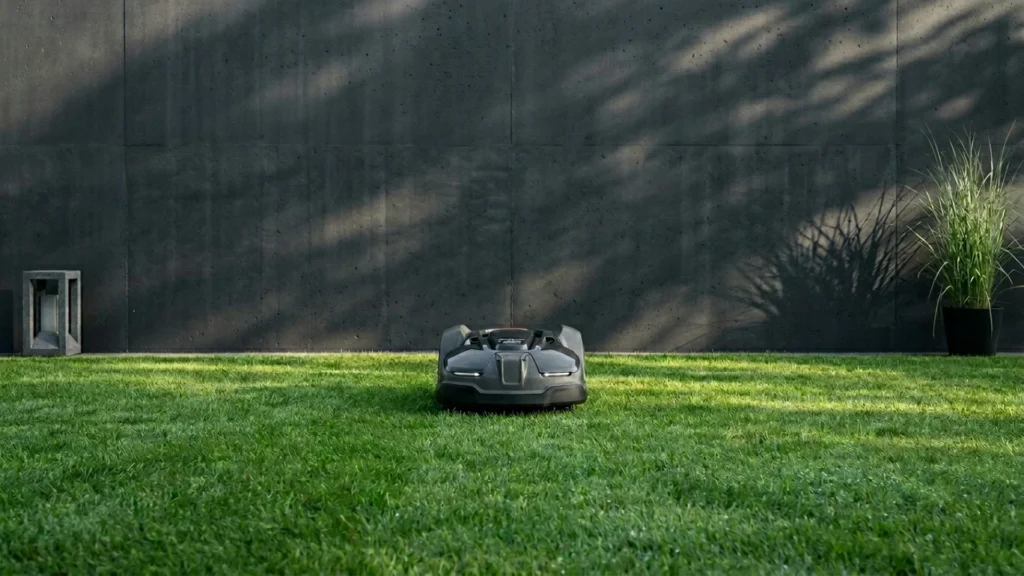
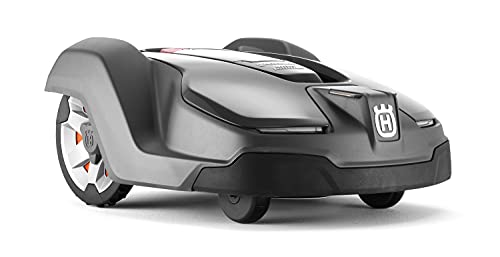
This Husqvarna is a smart fit for the Best Overall slot because it delivers steady, repeatable lawn coverage with a simple, wire-guided setup. The standout trait is how reliably it keeps mowing day after day while using its mapped patterns to reduce missed spots.
Cut quality stays even for an up to 1.2 acre yard, with adjustable cutting height from 0.8 to 2.4 in. Navigation is a strong point, too, with boundary wire guidance and smart app control that helps you steer the schedule and confirm coverage. In real use, it tends to avoid constant rework, meaning fewer passes over the same areas.
The main downside is that boundary wire issues can interrupt mowing, and obstacle detection can be less dependable in cluttered areas. If you want dependable, hands-off mowing for a wired boundary and you can keep the boundary line in good shape, this is the one to get.
Best LiDAR Navigation

Specifications
| Brand | Mammotion |
|---|---|
| Max Lawn Area | 1.25 acre |
| Cutting Height | 2.2-4 in |
| Battery Runtime | 215 min |
| Max Slope | 80% |
| Navigation Boundary System | Lidar |
Pros
- Reliable, consistent mowing
- Smart mapping, minimal repeats
- Covers more yard
Cons
- Firmware hiccups
- Raised-edge confusion
- Channel support variability
This mower is a strong fit for Best LiDAR Navigation because it uses lidar to map and follow the yard with less guesswork than many boundary-based systems. In day to day use, that shows up as smooth coverage and fewer missed spots, even when the lawn is not perfectly uniform.
The cutting results stay steady across large areas, which matters when you want a clean look without constant supervision. It runs up to 215 min per charge, and users tend to see consistent mowing rather than long gaps. Navigation also feels efficient, with smart mapping and minimal repeat passes that help it cover more of the yard.
Still, there are some rough edges. Firmware hiccups can make behavior unpredictable at times, and it may get confused around raised edges. Channel support can also vary depending on your setup. If you want dependable lidar navigation and consistent mowing across an acre plus, but can handle occasional app or firmware bumps, this is the one to get.
Also ranked #1 in: 4WD Robotic Lawn Mowers
Best 45-Slope

Specifications
| Brand | Husqvarna |
|---|---|
| Max Lawn Area | 1.25 acre |
| Cutting Height | 0.8-2.4 in |
| Max Slope | 45% |
| Navigation Boundary System | Wire-Free |
| Connectivity Smart Control | App Control |
Pros
- Reliable, consistent mowing
- Smart mapping, minimal repeats
- App control feels intuitive
Cons
- Hardscape transition issues
- Layout sensitivity
This Husqvarna model fits the Best 45-Slope role because it is built to mow steep lawns. The key is the wire-free boundary approach, which helps it stay on track even when the layout gets challenging. With up to 45% slope capability, it is a strong match for sloped yards where many robots hesitate.
In daily mowing, it delivers consistent cuts and avoids lots of repeat passes. Mapping and navigation tend to be efficient, so it covers the yard without wasting time. App control is also straightforward, and the routine feels easy to manage once it is set up.
One common weak spot is how it handles hardscape transitions, like tight stops along patios or steps. It can also be more sensitive to yard layout than you might expect. If your priority is reliable mowing on a steep slope and you can keep boundary setup clean around edges, this is a solid pick.
Best 0.75-Acre

Specifications
| Brand | ECOVACS |
|---|---|
| Max Lawn Area | 0.75 acre |
| Cutting Width | 13 in |
| Cutting Height | 1.2-3.6 in |
| Charge Time | 70 min |
| Navigation Boundary System | Wire-Free |
| Connectivity Smart Control | App Control |
Pros
- Reliable, consistent mowing
- Smart mapping, minimal repeats
- App control feels intuitive
Cons
- Less dependable mapping
- Inconsistent real-world coverage
This ECOVACS model fits the Best 0.75-Acre role because it is built for medium-sized yards, where steady area coverage matters. Its standout trait is wire-free navigation with smart mapping, so you can start without laying a boundary wire in the ground. That makes it a good match for homeowners who want a simpler setup process than boundary-wire systems.
In daily mowing, it delivers reliable, consistent cuts with even results across the lawn. Navigation is generally efficient, with smart mapping that keeps repeat passes low. The app control is also intuitive, so scheduling and day-to-day control feel straightforward. Charging is set to about 70 min, which helps it get back into the yard without long downtime.
The main downside is less dependable mapping, which can lead to inconsistent real-world coverage and missed areas. If you have a yard that is not too cluttered and you want mostly hands-off mowing with app scheduling, this is a strong pick. If you need near-perfect coverage every time, especially in tricky layouts, you may want to look elsewhere.
Best 0.5-Acre

Specifications
| Brand | ECOVACS |
|---|---|
| Max Lawn Area | 0.5 acre |
| Cutting Height | 1.2-3.1 in |
| Charge Time | 50 min |
| Navigation Boundary System | Wire-Free |
| Connectivity Smart Control | App Control |
Pros
- Reliable, consistent mowing
- Smart mapping, minimal repeats
- App control feels intuitive
Cons
- Layout-dependent coverage
- Battery runtime unknown
This ECOVACS Goat A2000 fits the Best 0.5-Acre role because it is built for smaller yards and uses wire-free boundary navigation to keep mowing moving. That setup choice matters if you want autonomy without laying perimeter wire first.
In real mowing, it turns in consistent results, with clean cutting across most of the lawn and effective edge work where the machine can reach. Navigation is a standout too, with smart mapping that tends to avoid lots of repeated passes. The app control also feels straightforward for scheduling and daily operation, which makes it easier to keep up with routine mowing.
Its biggest trade-off is layout-dependent coverage, so oddly shaped areas may need a bit more attention. Battery runtime is also not clearly stated, so you will want to sanity-check whether it can finish a full session in your yard. If you want wire-free, app-controlled mowing for up to about half an acre and you have a yard that matches the mower's typical layout, this is a strong pick.
Best 0.25-Acre

Specifications
| Brand | NAVIMOW |
|---|---|
| Max Lawn Area | 0.25 acre |
| Charge Time | 120 min |
| Max Slope | 30% |
| Navigation Boundary System | Wire-Free |
| Connectivity Smart Control | App Control |
Pros
- Reliable, consistent mowing
- Smart mapping, minimal repeats
- Feature-rich for the price
Cons
- Level-yard requirement
- Limited lawn-line aesthetics
This Segway Navimow i110N fits the Best 0.25-Acre role because it uses a wire-free boundary system and smart mapping to mow small lawns with less setup time. If you want autonomous mowing on a quarter-acre lot, it is built for that size and workflow.
In real use, it delivers consistent mowing and avoids a lot of repeated passes, which helps keep the yard looking even. Navigation stays efficient thanks to its smart mapping approach, so it tends to cover the lawn without many missed patches. App control also makes daily operation simple, with scheduling that is easy to manage.
The main catch is that it works best on a fairly level yard, so uneven ground can limit how smoothly it runs. Limited lawn-line aesthetics may also be noticeable if you care about crisp, traditional-looking edge detail. This is a good pick if you want reliable weekly auto mowing for up to 0.25 acre and prefer wire-free setup, but you should look elsewhere if your yard is very uneven.
Best Wire-Free Setup

Specifications
| Brand | Husqvarna |
|---|---|
| Max Lawn Area | 0.5 acre |
| Cutting Height | 1-4 in |
| Max Slope | 45% |
| Navigation Boundary System | Wire-Free |
| Connectivity Smart Control | App Control |
Pros
- Reliable, consistent mowing
- Smart mapping, minimal repeats
- App control feels intuitive
Cons
- Less dependable mapping
This Husqvarna Automower 410iQ is a strong fit for the Best Wire-Free Setup role because it uses a wire-free boundary system. That means you can skip the usual perimeter cable work. For many homeowners, that alone makes setup faster and less disruptive.
In real mowing, it delivers reliable, even results for yards up to 0.5 acre. Its smart mapping helps it cover the lawn with minimal repeats, so you are not seeing the same areas get worked over and over. App control is straightforward, and the system is easy to manage day to day.
The main trade-off is less dependable mapping, which can affect how consistently it plans its route in some yards. If you want wire-free installation and consistently clean mowing on a small to medium lawn, and you can tolerate occasional mapping hiccups, this is the one to get.
Best Value

Specifications
| Brand | ECOVACS |
|---|---|
| Max Lawn Area | 0.25 acre |
| Max Slope | 45% |
| Navigation Boundary System | Wire-Free |
| Connectivity Smart Control | App Control |
Pros
- Reliable, consistent mowing
- Smart mapping, minimal repeats
- Feature-rich for the price
Cons
- Small coverage limit
- Less dependable mapping
- Thick-grass struggles
This ECOVACS mower fits the Best Value slot because it balances smart mapping with everyday control. It uses a wire-free boundary system and app control, so you can get set up without laying perimeter wire. For many smaller yards, that simplicity matters as much as how well it mows.
In real-world mowing, it delivers steady, consistent cutting and keeps up with routine maintenance. Navigation is strong, with smart mapping that avoids lots of repeated paths and helps cover the lawn efficiently. On top of that, the app makes scheduling and day-to-day commands straightforward, so you are not constantly babysitting the mower.
The main downside is coverage and thickness handling. Its max lawn area is 0.25 acre, and thick or slightly overgrown grass can be harder for it. If you have a smaller yard and want reliable automation without a wire install, this is the one to get.
Best for Steep Slopes

Specifications
| Brand | WORX |
|---|---|
| Max Lawn Area | 0.25 acre |
| Max Slope | 84% |
| Navigation Boundary System | Wire-Free |
| Connectivity Smart Control | App Control |
Pros
- Reliable, consistent mowing
- Smart mapping, minimal repeats
- App control feels intuitive
Cons
- Small coverage limit
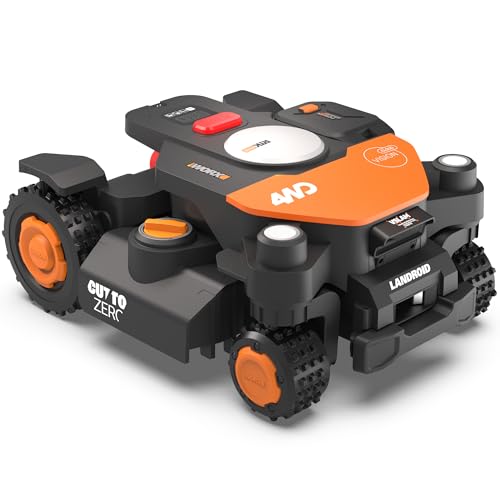
This robotic mower fits the Best for Steep Slopes role thanks to its high max slope rating of 84%. It is built for uneven yards where many robots slow down or stop, using smart navigation to keep work moving even on challenging ground.
In real use, it delivers a consistent cut and stays steady across the lawn. Its smart mapping helps it cover more area with fewer repeated passes, which is especially helpful when the yard layout changes in elevation. App Control makes day to day operation simple, and it is easy to send schedules and monitor mowing from your phone.
The main drawback is the small coverage limit of 0.25 acre, which can mean more overlap work on larger properties. If you have a small yard with steep grades and want reliable cutting with minimal remapping, this is the right pick.
Best for Taller Grass

Specifications
| Brand | SUNSEEKER |
|---|---|
| Max Lawn Area | 0.75 acre |
| Cutting Height | up to 4 in |
| Max Slope | 70% |
| Navigation Boundary System | RTK GPS |
| Connectivity Smart Control | App Control |
Pros
- Reliable, consistent mowing
- Smart mapping, minimal repeats
- High-precision navigation
Cons
- Setup friction
- Battery-cycle burden
If you are shopping for robotic mowers that can handle taller grass, the SUNSEEKER X7 0.75-Acre is a strong fit thanks to its 4 in max cutting height. That extra headroom matters when growth gets away from you, or when you mow less often than planned. It is also built for a full 0.75 acre yard, so it can keep up without constant attention.
In real-world use, it turns in steady mowing results and stays on track. Its navigation uses RTK GPS for high-precision positioning, and the mapping behavior tends to minimize missed areas and repeated passes. That shows up as clean coverage across the lawn, with fewer reroutes when the yard layout is not simple.
The main downside is setup friction, along with a battery-cycle burden that can make long sessions feel like more work than expected. If you want reliable mowing on a medium-sized property and you need the ability to cut taller grass without dropping your cutting height too low, this is the one to get.
What to Look For
Max Lawn Area: Use this to match mower capacity to your grass size. Pick a model with enough headroom so it can cut consistently, not just at the limit. If your lawn is close to the max, you will likely need more frequent cycles and you may see slower coverage.
Cutting Width: Wider cutting width can reduce the time needed to cover a lawn. It matters most if you have open space and few obstacles. If your yard has many tight turns and narrow paths, cutting width helps less than navigation accuracy and boundary behavior.
Cutting Height: Look for a range that matches your grass type and how often you plan to run the mower. If the mower only supports a small range, you may end up with scalping or uneven results when grass grows faster. A practical range also lets you tune the cut seasonally.
Battery Runtime: Runtime tells you how long the mower can cut between charges. Compare it against real yard size and how much time your mower will spend navigating. Short runtime can force more interruptions, especially on yards with obstacles or complex layouts.
Charge Time: Charge time affects how quickly the mower can rejoin the job. Even with decent runtime, long charge cycles can leave parts of your lawn unfinished until the next day. Shorter charge time supports more consistent daily cutting.
Max Slope: Slope capability determines whether the mower can handle driveways, hills, and raised beds. Use the max slope as a hard constraint. If your yard has wet grass or uneven ground, real grip will be lower than the headline number.
Navigation / Boundary System: Choose a system that matches your yard layout. Wire systems rely on a perimeter setup, which can be precise when installed well. Wire-free options simplify installation but may depend more on obstacle handling and positioning confidence. The best choice for you is the one that avoids missed areas and keeps coverage consistent.
Connectivity / Smart Control: Check how you will manage schedules and receive status updates. Wi-Fi, Bluetooth, or app control affects whether you can change settings away from home. If remote access matters to you, confirm the connection type before you buy.
How We Selected These Products
Products were discovered through broad web searches across review sites, buyer forums, and best-of lists, then cross-checked against multiple independent sources. We did not rely on a single ranking or a single publisher because robotic mowers fail in specific ways, and those issues show up differently across reviews.
A large volume of real customer reviews was read to identify the problems buyers actually faced, such as boundary setup trouble, navigation errors, uneven cutting, battery behavior, and maintenance friction. We also pulled out what people valued most, like scheduling control, how often the mower needed attention, and whether it handled their yard layout without constant babysitting.
Availability and key specs were verified directly against Amazon listings. Each mower was scored across the pillar categories in this guide, using an objective framework aligned to real-world mowing and ownership. Final picks focused on distinct strengths for different yard roles, not just the highest overall score on paper.
Frequently Asked Questions
Which robotic lawn mower is best for steep yards?
For steep yards, prioritize models with the highest slope ratings and strong traction. In this guide set, Husqvarna 520H EPOS Robotic Lawn Mower is labeled as Best 45-Slope, and WORX Landroid Vision Cloud 4WD 1/4-Acre Robotic Lawn Mower is Best for Steep Slopes. These picks handle inclines better than smaller 2-wheel designs. Still, keep the area within the mower limits and plan boundary placement carefully.
What is the main difference between wire-free and boundary-wire robotic lawn mowers?
Boundary-wire mowers use a buried or placed wire to mark the mowing area. Wire-free mowers use RTK GPS or LiDAR to map the yard and define boundaries in software. Wire-free setups usually avoid trenching, but they depend more on yard conditions and sensor performance. Boundary-wire setups often work well in tricky spots, but they require wire maintenance if the wire gets damaged.
How often do blades and maintenance need to be done on robotic lawn mowers?
Most robotic lawn mowers use small blades that you replace periodically. Plan to check blades every few weeks during the mowing season, then replace them when cutting looks uneven. Clean the deck and sensors often, especially after heavy growth or wet weather. Basic upkeep is usually quick, but broken boundaries or stuck conditions can add extra time.
Is a higher price always better for robotic lawn mowers?
Not always. Some premium models score best overall, but several mid-priced mowers still deliver strong results for their yard size. Value varies a lot by navigation quality, battery runtime, and how well the mower fits your layout. For example, ECOVACS Goat O1000 1/4-Acre Robotic Lawn Mower earns the Best Value label, even though it is not the top total score.
Why do some robotic lawn mowers do worse on complex layouts?
Complex lawns need reliable mapping, accurate boundary tracking, and good recovery when the mower gets near obstacles. If the mower cannot read the yard well, it may miss areas or repeat the same paths. In this guide set, several products highlight different strengths, like LUBA lidar navigation for difficult terrain or Husqvarna EPOS for systematic coverage. Your best choice depends on whether your complexity is mostly narrow passages, slopes, trees, or hardscape barriers.
Do robotic lawn mowers struggle with taller or thicker grass?
They can, especially if the mower’s cutting system and battery runtime do not match your grass growth. Some models handle thicker grass better due to drivetrain power and cutting design, while others work best on regular maintenance schedules. If you let grass get too long between mowing runs, you may see more passes and slower progress. Choose a mower whose cutting height range and performance match how often you maintain the yard.


