




The 3 Best 4WD Robotic Lawn Mowers in 2026

Transparency Note: This post contains affiliate links. As an Amazon Associate, we earn from qualifying purchases at no extra cost to you.

4WD robotic lawn mowers use four-wheel drive to keep traction on slopes and in rougher patches. In this sub-category, buyers usually want steady mowing on uneven terrain, fewer get-stuck moments, and reliable coverage when the yard is not perfectly flat.

Choosing is harder because 4WD does not remove the trade-offs. You still need a boundary setup or mapping system, you still need enough run time for your lawn size, and you still must match mowing power to grass thickness and edge needs. Many models also differ in how fast they recharge, which changes how often they pause during the week.

To compare the full range outside 4WD, use our yard-wide guide: Looking for all types? See our Best Robotic Lawn Mowers.

Quick Overview

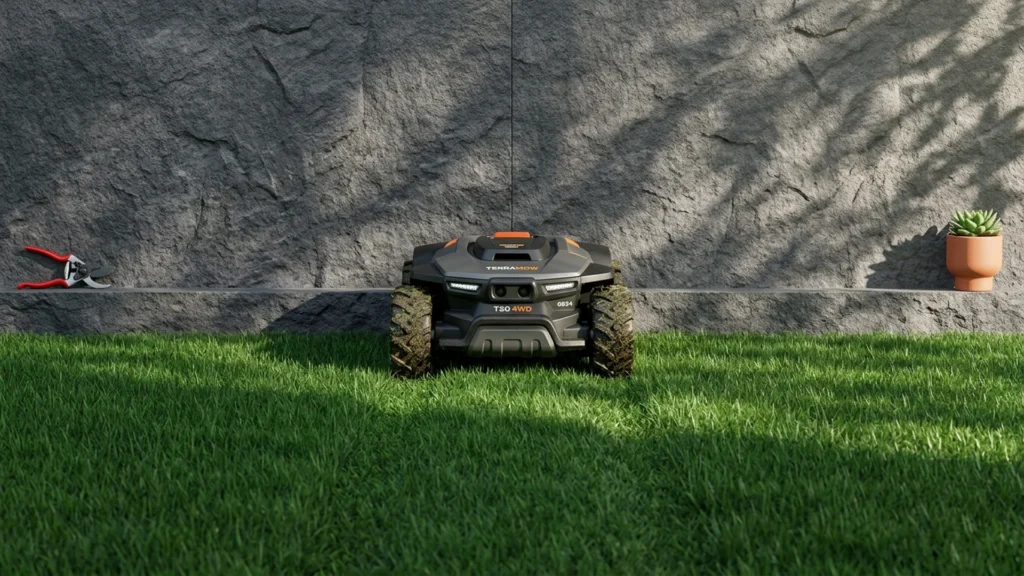
Mammotion LUBA 3 AWD 1.25-Acre Robotic Lawn Mower
#1 Mammotion LUBA 3 AWD 1.25-Acre Robotic Lawn Mower
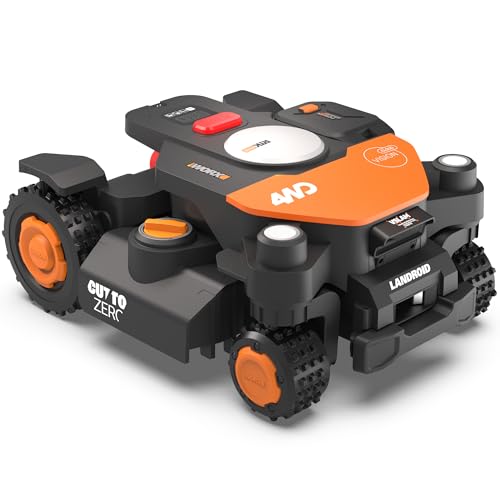
WORX Landroid Vision Cloud 4WD 1/4-Acre Robotic Lawn Mower
#2 WORX Landroid Vision Cloud 4WD 1/4-Acre Robotic Lawn Mower
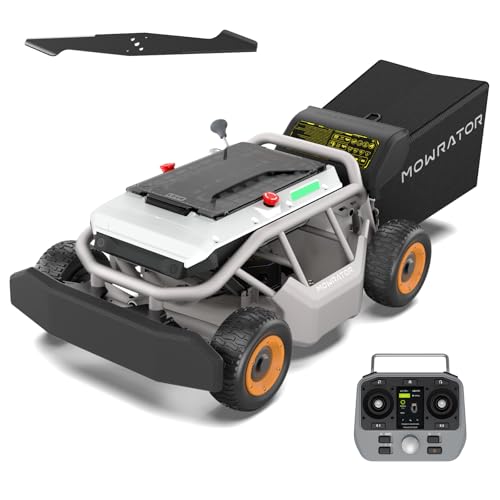
Mowrator S1 4WD 0.75-Acre Robotic Lawn Mower
#3 Mowrator S1 4WD 0.75-Acre Robotic Lawn Mower

Our Top Picks

#1. Mammotion LUBA 3 AWD 1.25-Acre Robotic Lawn Mower

Mammotion LUBA 3 AWD 1.25-Acre Robotic Lawn Mower
Our Score
8.4 / 10
hover for details
Performance
8.7
Navigation
8.9
Usability
8.3
Build Quality
7.6
Value
7.9
BrandMammotion
Max Lawn Area1.25 acre
Cutting Height2.2-4 in
Battery Runtime215 min
Max Slope80%
Navigation Boundary SystemLidar
  • Reliable, consistent mowing
  • Smart mapping, minimal repeats
  • Covers more yard
  • Firmware hiccups
  • Raised-edge confusion
  • Channel support variability

This mower stands out for 4WD yard work because it keeps mowing patterns steady while it powers through real lawn changes. With smart Lidar mapping and a 1.25 acre coverage target, it tends to avoid missed spots and keeps repeats low. In practice, the cut looks even across open areas, and it keeps running long enough to feel like a true regular mower, not a constant babysitting job.

The main trade-offs are day to day smoothness. Some owners report occasional firmware hiccups, and raised edges can confuse it, especially where transitions are subtle. Channel support can also vary, so if you want hands on help, make sure you can reach the right support path before you commit. It is best for homeowners who want autonomous mowing that handles larger lawns, and who are willing to do a careful boundary setup and small tweaks if the first layout does not behave perfectly.

→ Read full review

#2. WORX Landroid Vision Cloud 4WD 1/4-Acre Robotic Lawn Mower

WORX Landroid Vision Cloud 4WD 1/4-Acre Robotic Lawn Mower
Our Score
8.0 / 10
hover for details
Performance
8.1
Navigation
8.1
Usability
8.1
Build Quality
7.3
Value
8
BrandWORX
Max Lawn Area0.25 acre
Max Slope84%
Navigation Boundary SystemWire-Free
Connectivity Smart ControlApp Control
  • Reliable, consistent mowing
  • Smart mapping, minimal repeats
  • App control feels intuitive
  • Small coverage limit

This WORX Landroid Vision Cloud model stands out in 4WD robotic mowers because it pairs all-terrain traction with smart, map-based navigation. The 4WD layout helps it keep moving across uneven ground and tighter spots, while Vision Cloud helps it steer with fewer wasted passes. In real yards, that means more steady mowing and less time correcting itself, so results look more even from week to week.

The main trade-off is the smaller coverage limit at 0.25 acre. If you have a larger lawn or lots of complex borders, you may end up scheduling more often than you want. It fits best when your yard is within the stated range and your priority is reliable cut quality with simple app control.

→ Read full review

#3. Mowrator S1 4WD 0.75-Acre Robotic Lawn Mower

Mowrator S1 4WD 0.75-Acre Robotic Lawn Mower
Our Score
7.3 / 10
hover for details
Performance
8.1
Navigation
5.8
Usability
7.6
Build Quality
7.9
Value
7.6
BrandMowrator
Max Lawn Area0.75 acre
Cutting Width21 in
Cutting Height1.5-4.3 in
Battery Runtime90 min
Charge Time70 min
Max Slope75%
Connectivity Smart ControlRemote Control
  • Reliable, consistent mowing
  • Covers more yard
  • Handles steeper slopes
  • Gets stuck too often
  • Wet-grass reliability drop
  • Android-only updates

With 4WD and a max slope rating of 75%, the Mowrator S1 stands out for uneven lawns. In real use, it delivers steady, even mowing across its 0.75 acre limit, and it handles steeper areas better than many rear-wheel or lighter robots. The typical cycle runs about 90 min, with a 70 min charge time, so it can keep up without constant babysitting.

The main drawback is navigation reliability. It can get stuck too often, which can turn a normal mow day into a cleanup job. Wet grass also hurts consistency, so plan for extra caution after rain. Setup and controls are straightforward, but Android-only updates and the Remote Control approach may be limiting if you rely on iOS for app updates.

What to Look For

Max lawn area match: Pick a model that clearly covers your total yard area. If your lawn sits near the mower limit, you will feel it in missed patches and longer cycles.

Runtime and charge time: Look for enough battery runtime to finish a mowing pass, then check how long it takes to recharge. Short charge times help 4WD models recover quickly after climbing, turning, or tackling thicker spots.

Max slope capability: Use the stated max slope to judge whether the mower can handle your yard’s steepest sections. For yards with frequent uphill sections, you want more slope headroom, not just a close match.

Navigation and boundary system: Confirm how the mower finds the work zone and handles boundaries. A strong system reduces repeated tracks and helps it return to mowing lines after obstacles or wet grass.

Edge cutting support: In real yards, mowing quality drops near sidewalks, beds, and driveways. Choose based on how well the mower handles edges, because 4WD traction does not automatically fix edge misses.

How We Picked

Products were identified through broad research across review sites and buyer forums, then filtered to only those that qualify as 4WD Robotic Lawn Mowers.

Scoring used the same objective pillar framework as the main Robotic Lawn Mowers post, allowing direct comparison of products within this sub-category.

Frequently Asked Questions

What does 4WD change on a robotic mower compared to 2WD?

4WD helps when your yard has inclines, wet spots, or uneven ground. The mower can keep cutting even if one side loses grip. It also handles thicker grass a bit more steadily because traction stays consistent.

Do 4WD robotic mowers need a different setup than other robotic mowers?

Most 4WD models still use boundary setup, like a perimeter wire or defined zones. Plan the boundary path to avoid tight turns and steep ramps when possible. After setup, set mowing zones and schedules in the app so the mower can charge and return smoothly.

How should I care for a 4WD robotic mower during the season?

Clean the underside often to reduce grass buildup. Check the blades and replace them when cuts look ragged. Also inspect wheels and drive parts for debris, especially after mowing in wet or seedy conditions.

When is a 4WD robotic lawn mower a better choice than a wire-free or navigation-focused model?

Choose 4WD when you expect slopes, uneven areas, or trouble spots that cause slipping. Choose another type if your main problem is getting around boundaries or navigating complex layouts. The best fit depends on your yard risks, like hills, wet zones, and narrow passages.

How do 4WD robotic mowers compare to 2WD in battery and charging?

4WD can use more power, so you may see shorter runtime under heavy conditions. Charging time can also feel less forgiving if the mower struggles with steep or thick areas. A good plan is to match the mower to your lawn size and set zones so it finishes before the battery gets too low.

See Also

Share:
On Key
You Might Also Like