




The 10 Best Wood Chippers in 2026

Transparency Note: This post contains affiliate links. As an Amazon Associate, we earn from qualifying purchases at no extra cost to you.

Wood chippers turn branches and other woody yard waste into wood chips you can use for mulch or compost, or bag up for disposal. They range from small electric units for light yard cleanup to larger gas models for tougher branch loads. The best fit depends on what you plan to chip, how often you will use it, and how messy your yard waste is.

Picking one gets hard fast because the specs can mislead. A higher stated max branch diameter does not mean the machine will feed well with wet leaves or side-loaded branches. The cutting system matters, but so does feeding type, like gravity or self-feeding, because jams often start at the feed chute. Power source also matters in real use, gas units handle bigger loads better, while electric models trade raw capacity for easier start-ups and lower maintenance.

This guide breaks the decision into practical checks and then compares real options across common roles. You will see what power type, engine size, cutting system, feed style, branch capacity, reduction ratio, weight, and overall size imply for daily use. By the end, you will know which chipper to choose for light cleanup, 3-inch work, electric convenience, or more aggressive chip reduction.

Quick Overview

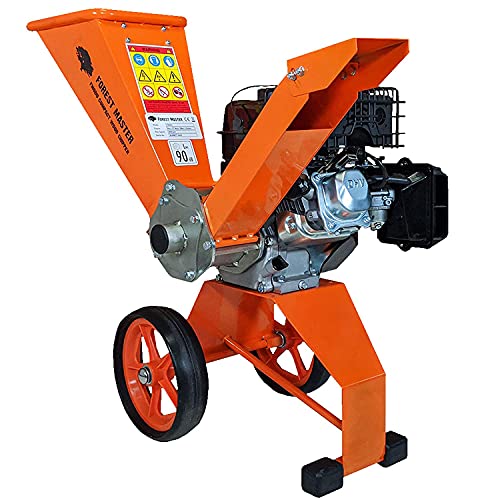
Forest Master FM6DD 2" Wood Chipper
Best Overall Forest Master FM6DD 2" Wood Chipper
SuperHandy 4" Wood Chipper
Best Large Capacity SuperHandy 4" Wood Chipper
GreatCircleUSA 3" Wood Chipper
Best 3-Inch GreatCircleUSA 3" Wood Chipper
Patriot CSV-2515 Wood Chipper
Best Electric Patriot CSV-2515 Wood Chipper
Sun Joe CJ603E 1.7" Wood Chipper
Best Up to 1.8-Inch Sun Joe CJ603E 1.7" Wood Chipper
Earthquake K32 3" Wood Chipper
Best Aggressive Reduction Earthquake K32 3" Wood Chipper
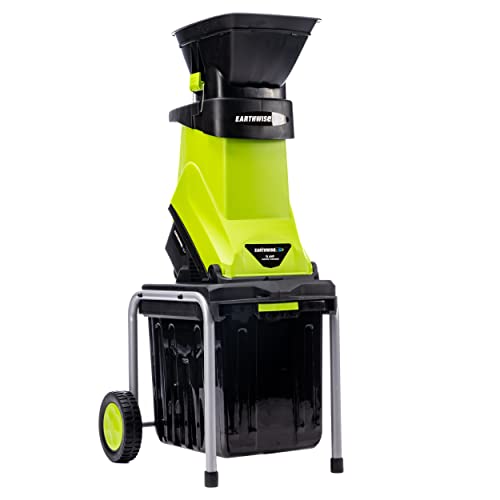
Earthwise GS70015 15-Amp Wood Chipper
Best Cleanup Bag Earthwise GS70015 15-Amp Wood Chipper
SuperHandy Mini 3" Wood Chipper
Best for Stairs SuperHandy Mini 3" Wood Chipper
Yeryork 1.8" Electric Wood Chipper
Best Value Yeryork 1.8" Electric Wood Chipper
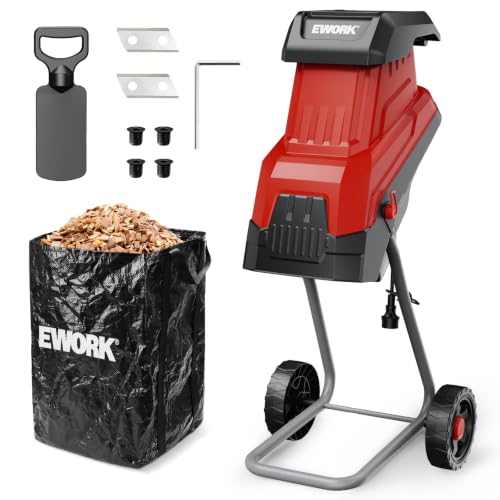
EWORK 1.77" Electric Wood Chipper
Best Lightweight EWORK 1.77" Electric Wood Chipper

Top Picks

Best Overall

Forest Master FM6DD 2" Wood Chipper
Our Score
7.9 / 10
hover for details
Performance
8
Build Quality
7.9
Ease Use
7.6
Portability
8
Value
7.9
BrandForest Master
Power SourceGas
Engine Displacement208 cc
Feed TypeSelf-Feeding
Max Branch Diameter2 in
Weight88.2 lb
Dimensions35.8 x 30.9 x 18.9 in
  • Consistent, low-jam chipping
  • Smooth tow-and-go mobility
  • Self-feeding efficiency
  • Limited chipping capacity

This Forest Master FM6DD 2 fits the Best Overall spot because it chips yard waste with steady, low-jam action and easy, tow-and-go mobility. For a 2-inch class gas chipper, that balance matters when you want fewer stops and faster cleanup.

The self-feeding intake helps it pull in branches and keep the work moving, so processing feels smooth instead of stop-and-start. It also holds up well under typical loads, with consistent chipping results that do not require constant babysitting. At the same time, the build and design feel solid for regular yard use, and the 88.2 lb weight is manageable for positioning and storage.

The main trade-off is limited chipping capacity, maxing out at 2 in. If you have mostly small branches, leaves, and yard trimmings and you want reliable performance without frequent clogging, this is the one to get.

Also ranked #1 in: Gas Wood Chippers

→ Read full review

Best Large Capacity

SuperHandy 4" Wood Chipper
Our Score
7.8 / 10
hover for details
Performance
7.9
Build Quality
7.6
Ease Use
7.9
Portability
7.8
Value
7.5
BrandSuperHandy
Power SourceGas
Cutting SystemDisc
Max Branch Diameter4 in
  • Handles larger branches
  • High-duty power
  • Durability-related downtime
  • Limited owner feedback

If you are tackling bigger yard cleanup, this gas disc chipper fits the Best Large Capacity slot. It is built for larger branches, up to 4 in, so you spend less time trimming everything down first.

In real use, the main win is heavy-duty power. That helps keep the feed moving and the chips more consistent when you are running through branches and mixed brush. Setup and daily use also feel straightforward, with controls that are easy to reach and a design that makes clearing and cleaning less of a chore than many smaller chippers.

The trade-off is durability-related downtime. Some buyers report mechanical issues that break work sessions, and there is limited owner feedback to confirm long-term reliability. If you need a large-capacity chipper for frequent branch loads and you can handle the risk of repairs, this is the one to get.

→ Read full review

Best 3-Inch

GreatCircleUSA 3" Wood Chipper
Our Score
7.7 / 10
hover for details
Performance
7.6
Build Quality
7.8
Ease Use
7.6
Portability
7.7
Value
7.9
BrandGREAT CIRCLE
Power SourceGas
Engine Displacement212 cc
Max Branch Diameter3 in
Reduction Ratio15:1
Dimensions41.6 x 30 x 24.1 in
  • High-duty power
  • Efficient chipping
  • Quick start
  • Clogging wet leaves
  • Bolt vibration loosening

This 3-inch class GreatCircleUSA unit fits the Best 3-Inch role for people who want strong cutting power in a yard chipper. The standout trait is its high-duty gas engine, rated at 212 cc, which helps it stay capable with typical branches up to 3 in.

In real yard use, it processes debris efficiently and starts quickly, so you can keep moving once work begins. The consistent chipping performance supports faster cleanup, and the overall build feels sturdy enough for regular residential runs. Controls and day-to-day handling are straightforward, making it easier to feed material and keep the workflow going.

The main drawback is that it can clog when you push wet leaves through the chute. Some users also report bolt vibration that can loosen over time, so you will want to check fasteners regularly. If you mainly chip dry brush and want a responsive gas-powered 3-inch chipper without slowdowns, this is the one to get.

→ See full ranking

→ Read full review

Best Electric

Patriot CSV-2515 Wood Chipper
Our Score
7.7 / 10
hover for details
Performance
7.6
Build Quality
7.9
Ease Use
7.6
Portability
7.6
Value
7.6
BrandPatriot
Power SourceElectric
Max Branch Diameter2.5 in
Reduction Ratio20:1
Weight95 lb
Dimensions37 x 35 x 24 in
  • More aggressive reduction
  • Easier to move
  • Quiet operation
  • Cord power limit
  • Chute clogging

This electric wood chipper fits the Best Electric role for people who want serious yard-waste reduction without gas noise. The standout trait is its more aggressive reduction, with a 20:1 ratio that turns twigs and small branches into much smaller chips.

It is also easy to live with. Moving and storing are simpler than many heavier chippers, and it runs quietly for an electric unit. Build quality feels solid for the class, and the operation stays steady when you keep within its 2.5 in max branch size.

The main drawback is cord power limits, which can slow down bigger cleanup jobs. It can also clog the chute if you feed too much at once or use awkward, leafy material. If your goal is small-branch yard cleanup with lower noise and easier handling, this is a good pick, as long as you can manage the cord and avoid wet or leafy loads.

→ See full ranking

→ Read full review

Best Up to 1.8-Inch

Sun Joe CJ603E 1.7" Wood Chipper
Our Score
7.6 / 10
hover for details
Performance
7.6
Build Quality
7.7
Ease Use
7.4
Portability
7.3
Value
8.3
BrandSun Joe
Power SourceElectric
Max Branch Diameter1.7 in
Weight38.6 lb
Dimensions31 x 8 x 15 in
  • Reliable value, fewer issues
  • Jam shutoff safety
  • Compact footprint
  • Limited chipping capacity
  • Leaf shredding limitation

This Sun Joe electric chipper fits the Best Up to 1.8-Inch slot because it is built for lighter yard jobs, up to a 1.7-inch branch limit. Its standout trait is the jam shutoff safety system, which helps protect the motor when material gets stuck.

In daily use, it tends to deliver steady results for common yard waste like small limbs and dry branches. Owners also tend to like how compact it is for its class, which makes it easier to position in a garage or shed. The overall build feels solid for an electric model, and the machine weighs 38.6 lb, so it is not hard to move around a typical work area.

The main drawback is capacity. It is not meant for thicker wood, and it can struggle with leaf shredding when the leaves are heavy or wet. If you mainly need to chip small limbs and keep clean-up simple, this is a good pick, but skip it if you want strong leaf shredding and higher diameter performance.

Also ranked #1 in: Collection Bag Wood Chippers

→ See full ranking

→ Read full review

Best Aggressive Reduction

Earthquake K32 3" Wood Chipper
Our Score
7.6 / 10
hover for details
Performance
8
Build Quality
7.1
Ease Use
7.8
Portability
7.6
Value
7.8
BrandEARTHQUAKE
Power SourceGas
Engine Displacement212 cc
Max Branch Diameter3 in
Reduction Ratio20:1
Weight118 lb
Dimensions25.4 x 29.9 x null in
  • Consistent, low-jam chipping
  • Higher engine power
  • More aggressive reduction
  • Limited beyond-capacity performance
  • Less ideal for larger branches

This Earthquake K32 3 fits the Best Aggressive Reduction role because it is built to break material down fast. With a 20:1 reduction ratio and a 3 in max branch rating, it aims to turn yard waste into smaller chips, even when you want quicker processing.

You can feel the difference in day-to-day use. It delivers strong engine power with an 212 cc gas motor, and it tends to keep chips coming with consistent results. The standout is low-jam chipping, so you spend less time clearing the chute and more time feeding loads through. The 118 lb weight and wheel-based setup also make it easier to reposition than many larger chippers.

The main weakness shows up when you push it beyond its range. It is not as ideal for larger branches, and that is when performance can fall off. If you mostly chip small to medium brush and want a reduction-focused machine that stays moving, this one is a solid pick.

→ Read full review

Best Cleanup Bag

Earthwise GS70015 15-Amp Wood Chipper
Our Score
7.5 / 10
hover for details
Performance
7.7
Build Quality
7.4
Ease Use
7.3
Portability
7.1
Value
8.3
BrandEarthwise
Power SourceElectric
Max Branch Diameter1.8 in
Reduction Ratio15:1
Weight29.8 lb
  • Reliable value, fewer issues
  • Easier to move
  • Quick cleanup bag
  • Limited chipping capacity
  • Instruction gaps

If your main goal is fast yard cleanup, this Earthwise 15-Amp chipper fits the Best Cleanup Bag role well because it uses a quick cleanup bag setup. You can move debris through the hopper and keep shredded material contained for easier haul-away.

In daily use, it feels manageable and practical, with a lighter 29.8 lb build for this class. Chipping is steady for typical yard waste within its 1.8 in max branch limit, and the 15:1 reduction helps turn material into more uniform chips instead of just long chunks. Ease of use is also decent, with clear day-to-day handling and fewer hassles than many electric chippers in this size range.

The main drawback is limited chipping capacity, so thicker branches will push it beyond its comfort zone. Also, the instructions have gaps, so plan to rely on common sense and careful safety checks when you first set it up. If you need a lighter electric chipper for bagged cleanup of small limbs and yard scraps, this is the one to get.

→ Read full review

Best for Stairs

SuperHandy Mini 3" Wood Chipper
Our Score
7.5 / 10
hover for details
Performance
7.3
Build Quality
7.6
Ease Use
7.6
Portability
7.6
Value
7.8
BrandSuperHandy
Power SourceGas
Engine Displacement212 cc
Max Branch Diameter3 in
Reduction Ratio15:1
  • Smooth mulch output
  • Sturdy powder-coated frame
  • Stair-friendly handling
  • Wet debris jamming
  • Fuel-condition sensitivity
  • Knife-access limitation

This mini gas chipper fits the Best for Stairs category because it is designed for easier handling in tight spaces. The stair-friendly move and stance matter most when you need to relocate the chipper around a home, not just in a flat yard.

On the yard-waste side, it turns brush into smooth mulch. The powder-coated frame feels sturdy, and it holds up well while you feed material through. In day-to-day use, it is also relatively straightforward to start and control for its 3 in max branch size, with a 15:1 reduction that helps keep chips consistent.

The main drawback is that wet debris can jam it, which slows the job down. It can also be sensitive to how you run and store fuel, so plan for regular maintenance. If you mostly chip dry branches and want a small, stair-manageable machine, this is the one to get.

→ Read full review

Best Value

Yeryork 1.8" Electric Wood Chipper
Our Score
7.4 / 10
hover for details
Performance
7.4
Build Quality
6.8
Ease Use
7.6
Portability
7.4
Value
8.5
BrandYeryork
Power SourceElectric
Max Branch Diameter1.8 in
Reduction Ratio21:1
Dimensions37 x 17.3 x 14.2 in
  • Reliable value, fewer issues
  • More aggressive reduction
  • Compact footprint
  • Limited chipping capacity
  • Some flex and thin metal

This electric chipper fits the Best Value slot because it balances useful yard work results with a more manageable size. At 37 x 17.3 x 14.2 in, it stores easier than many larger units, while still targeting a 1.8 in max branch limit.

In day-to-day use, it keeps reduction fairly aggressive at 21:1, which helps turn mixed yard waste into smaller chips for easier cleanup. Ease of use also lands well, with straightforward feeding and controls for a smaller electric chipper. The build feels solid enough for routine yard debris, and the design aims to reduce fuss, which shows up as fewer issues compared to rougher budget picks.

The main trade-off is limited chipping capacity, so thicker limbs need attention or an alternate tool. Some flex and thin metal also mean you should feed steadily and avoid forcing it. If you want a compact electric chipper for small branches, leaves, and light yard waste without a lot of hassle, this is a good fit.

→ Read full review

Best Lightweight

EWORK 1.77" Electric Wood Chipper
Our Score
7.4 / 10
hover for details
Performance
7.3
Build Quality
7.3
Ease Use
7.2
Portability
7
Value
8.5
BrandEWORK
Power SourceElectric
Max Branch Diameter1.77 in
Reduction Ratio15:1
Weight21 lb
Dimensions38 x 17 x 11 in
  • Reliable value, fewer issues
  • Overload protection
  • Safety interlock
  • Limited chipping capacity
  • Less aggressive reduction

This electric wood chipper fits the Best Lightweight spot because it is only 21 lb and designed for small, yard-scale cleanup. The 1.77 in max branch size keeps expectations clear for sticks, brush, and light trimmings rather than big limbs.

It scored well for build and ease of use, with reliable value, fewer issues, and simple safety steps like an interlock. Overload protection helps it avoid the common failure mode of pushing too hard. In everyday use, you should expect steadier, controlled chipping at its stated capacity, thanks to a 15:1 reduction ratio and a compact 38 x 17 x 11 in footprint.

The main trade-off is limited capacity, and the reduction can feel less aggressive, especially with thicker or tougher material. If you want a light, safer electric chipper for regular small yard debris, this is a good match. If you need to process larger branches quickly, look for a higher-capacity class instead.

→ Read full review

What to Look For

Power Source: Match the power type to your work. Gas models usually handle larger, stickier loads with fewer slowdowns. Electric models start fast and stay simple, but they often perform best with smaller branches and shorter sessions.

Engine Displacement: For gas chippers, higher cc generally means more steady cutting power under load. If you plan to chip often, prioritize displacement that aligns with the stated branch limit instead of buying the smallest engine just to get a bigger number.

Cutting System: Choose between Disc, Drum, and Flywheel. In practice, this affects how the chipper bites, how it handles irregular branches, and how consistent the output stays. If you chip mixed material, a well-reviewed cutting system tends to produce fewer partial cuts that lead to clogs.

Feed Type: Look for Gravity Feed or Self-Feeding based on your yard habits. Self-feeding usually reduces the effort of holding material in place and can lower jam frequency when branches do not line up perfectly. Gravity feed works, but you will need a steadier, more careful feed to avoid stalls.

Max Branch Diameter: Treat this as a limit for dry, properly fed material, not a guarantee. Stay conservative if your branches are thick, rough, or loaded with leaves. For mixed debris, the chipper that feeds smoothly at a smaller size often beats one that hits its maximum only in perfect conditions.

Reduction Ratio: A higher reduction ratio often means smaller chips. That can help with mulch, but it also increases cutting demand and can make the machine more sensitive to wet material. Use reduction ratio to predict how easily the chipper will clear and how fine your output will be.

Weight: A lighter chipper is easier to position and store, especially if you move it after each job. Heavier units usually stay steadier during feeding, but they cost you time and effort during setup. Consider both how far you will move it and whether you can lift it safely.

Dimensions: Check width and height for storage fit and for clearing space around the discharge. A compact footprint matters if you store in a garage or shed. Also confirm you have enough room to feed and avoid crowding the hopper when branches are awkward lengths.

How We Selected These Products

Products were discovered through broad web searches across review sites, buyer forums, and best-of lists, then cross-checked against the product lineup for this segment. I did not rely on a single publication because chipper problems often show up only after real driveway or backyard use.

I read a large volume of customer reviews to identify the issues buyers actually encountered, like frequent jams, poor feeding, uneven chip size, and difficulty clearing clogs. I then verified availability and key specs directly against Amazon listings so the comparisons matched what you can buy today.

Each chipper was scored using the same pillar framework: Performance, Build Quality, Ease Use, Portability, and Value. Final curation emphasized distinct roles, so a compact electric option can win for cleanup convenience, while a larger gas model can win for bigger branch work, rather than forcing one overall ranking for every situation.

Frequently Asked Questions

Which type of wood chipper is best for small yard cleanups?

For small branches and regular yard waste, an electric chipper is often the easiest choice. It starts quickly and needs less routine care than gas models. If you regularly chip larger branches, a 3-inch or 4-inch gas chipper handles more material with less time spent forcing feed.

Are gas wood chippers worth it over electric for most homeowners?

Gas chippers usually give you more power and more headroom when wood gets tougher. They also work farther from outlets, which helps during long cleanup sessions. Electric units can be great for light to medium debris, but they may struggle more with thicker or wetter material.

How often should I check bolts and blade parts on a wood chipper?

You should check bolts after the first hour of use, then every few sessions. Vibration can loosen fasteners on some models. Also inspect blades regularly, and replace them when they dull or chipper output gets worse.

Is a higher price always better for wood chippers?

Not always. Some budget options earn strong value scores because they work well within their rated branch size. Higher prices often buy more capacity and better jam resistance, but performance still depends on feeding correctly and staying within the max diameter.

Why do some wood chippers clog more than others?

Clogs usually happen when the machine sees too much dense material at once. Wet leaves, green plant material, and forcing thicker branches can increase jam risk. Chippers also differ in cutting setup, so two models with similar branch limits can behave very differently.

Share:
On Key
You Might Also Like