




Portable solar panels for solar-powered gadgets are for buyers who need power off the grid. In this category, the “gadget” side usually means USB devices like lights, small fans, GPS units, phones, and power banks. You need enough usable solar output to matter, plus safe, easy connections that match how you already charge.
Picking the right panel is hard because the biggest trade-off is not raw wattage. Foldable panels often trade efficiency and real charging speed for portability. You also have to balance build quality, since panels live on trips and get folded, carried, and sometimes rained on. Finally, solar charging time can vary a lot with clouds and angle, so the best choice depends on your typical daylight conditions.
If you want guidance across all solar-powered gadget types, see our Best Solar-Powered Gadgets.
Quick Overview
Our Top Picks
#1. Renogy 100W Foldable Solar Panel Solar Panel

Specifications
| Brand | Renogy |
|---|---|
| Product Type | Solar Panel |
| Solar Panel Wattage | 100W |
| Water Resistance Rating | IP65 |
| Weight | 7.3 lb |
| Dimensions | 23 x 22.5 x 1.6 in |
Pros
- Meaningful recharge in daylight
- Reliable, consistent brightness
- Sturdy with secure seals
Cons
- Solar input disconnect
- Setup compatibility friction
- Large and bulky
The Renogy 100W Foldable Solar Panel stands out in portable solar panels for solar-powered gadgets because it delivers real, steady output in daylight, not just a trickle for emergencies. In real use, that means your solar lights and other small USB devices get a more consistent charge, even as conditions change. With an IP65 water resistance rating and secure seals, it is built for the outdoor routine of camping, tailgates, and backyard setups.
The main trade-off is portability. At 7.3 lb and in a larger folded footprint, it takes more room and effort than smaller panels. It also can have setup compatibility friction due to the way solar inputs connect, so it works best when you plan your charging setup ahead of time and match it to your gadget or battery system.
#2. Jackery SolarSaga 100W Solar Panel Solar Panel

Specifications
| Brand | Jackery |
|---|---|
| Product Type | Solar Panel |
| Solar Panel Wattage | 100W |
| Water Resistance Rating | IP65 |
| Weight | 6 lb |
| Dimensions | 2.4 x 22.8 x 19.7 in |
Pros
- Sturdy with secure seals
- Strong solar output
- Better weather protection
Cons
- Heavy to carry
- Large and bulky
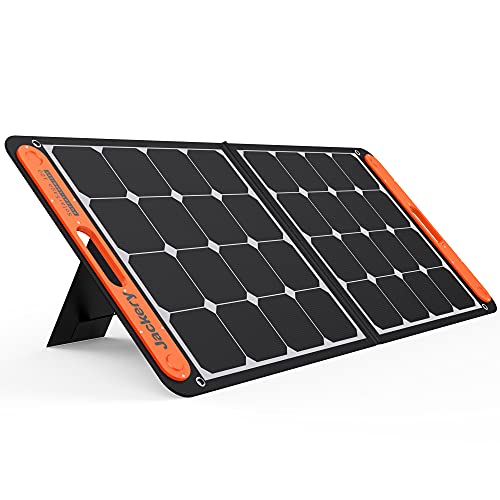
For solar-powered gadgets, this Jackery 100W panel stands out because it balances real output with solid outdoor protection. At 100W, it is a better fit than many smaller portable panels when you want to keep phones, tablets, and power banks moving for longer stretches. The panel has an IP65 rating, so it is built for outdoor use when weather changes. The housing also feels secure, with seals that help it handle trips and daily setup.
The main trade-off is portability. At 6 lb and about 22.8 in long, it is not the easiest thing to throw in a daypack for quick top-ups. This is best for car camping, base-camp charging, or any trip where you can set it down, angle it, and leave it working while you use your solar-powered gadgets.
#3. EcoFlow Portable Solar Panel 220W Solar Panel

Specifications
| Brand | EF ECOFLOW |
|---|---|
| Product Type | Solar Panel |
| Solar Panel Wattage | 220W |
| Water Resistance Rating | IP68 |
| Weight | 15.4 lb |
| Dimensions | 72 x 32.3 x 1 in |
Pros
- Meaningful recharge in daylight
- Sturdy with secure seals
- Strong solar output
Cons
- Heavy to carry
- Large and bulky
- Variable charge speed
This 220W EcoFlow panel stands out in the portable solar gadget space because it can actually drive meaningful charging from real daylight. It is built for outdoor use, with secure seals rated IP68, so it is more confidence-inspiring than the flimsy panels people often bring on trips. In practice, the solar output stays strong enough to matter for recharging solar-powered gadgets when conditions are decent, not just as a last-resort trick.
The trade-off is portability. At 15.4 lb and with a large, bulky form factor, it is not a grab-and-go option for small gadgets. Plan on it for basecamp, longer outings, or setups where weight is less important. Charge speed can also vary with sun angles and partial shade, so it helps to place it carefully and expect slower recovery when the sky is less than ideal.
#4. Goal Zero Nomad 100 Solar Panel Solar Panel

Specifications
| Brand | Goal Zero |
|---|---|
| Product Type | Solar Panel |
| Solar Panel Wattage | 100W |
| Water Resistance Rating | Water Resistant |
| Weight | 12 lb |
| Dimensions | 2 x 20.5 x 20.5 in |
Pros
- sturdy with secure seals
- Simple setup, intuitive operation
- Strong solar output
Cons
- Slow solar recovery
- Heavy to carry
- Large and bulky
The Goal Zero Nomad 100 stands out in portable solar panels for solar-powered gadgets because it pairs a full 100W panel size with a rugged, outdoor-ready build. In real use, that higher output translates into more dependable charging when you are trying to top off power-hungry devices, rather than treating solar as a last resort. Setup is straightforward, and the panel feels built for transport and weather, with secure seals that help it hold up in the field.
The trade-off is portability and charging behavior. At 12 lb and with bulky dimensions, it is not the panel you toss into a daypack. It also shows slow solar recovery when sun conditions change, so you will get better results by keeping it aimed steadily at the light. This is a solid pick for basecamp style use, or when you can place the panel in good sun for longer stretches.
What to Look For
Real charging output: Check whether the panel’s stated watts translate into steady power for USB charging. Higher wattage helps, but only if reviews show dependable output as light drops.
Solar charging time in daylight: Look for evidence of reasonable recharge time in partial sun, not just full sun. If solar charging takes days for a small battery, the panel will feel like an emergency feature.
Build quality for outdoor handling: Favor panels with solid hinges, secure cable strain relief, and durable frames. Outdoor use is physical use, so watch for reports of loose parts or cracked corners after folding.
Usability and connection options: Choose a panel that makes it easy to plug into your existing charging setup. Clear ports, straightforward cabling, and a simple workflow matter more than extra accessories you will not use.
Value per watt and per trip: Compare price to practical output and durability, not just headline wattage. In this sub-category, the better buy is the one that recharges your gadgets consistently on real outings.
How We Picked
Products were identified through broad research across review sites and buyer forums, then filtered to only those that qualify as Portable Solar Panels for Solar-Powered Gadgets.
Scoring used the same objective pillar framework as the main Solar-Powered Gadgets post, allowing direct comparison of products within this sub-category.
Frequently Asked Questions
What should I check before buying a portable solar panel for my solar powered gadgets?
Check the panel watt rating and what charging method it supports, like USB or a battery input port. Look for real charging performance in normal sun, not just peak claims. Also check whether it includes the right cables or needs adapters. Finally, confirm the panel size and weight match how you will carry it.
How long does it usually take to recharge a small solar gadget battery with a portable panel?
Times vary by sunlight strength and battery size. In good sun, you can often see useful charging in a few hours. Full recharge can take longer, especially if clouds or shade limit output. If the gadget supports pass-through charging, it may charge and run at the same time in bright conditions.
Do folded or foldable solar panels need special care to keep performance high?
Yes. Avoid walking on the panel and do not scratch the glass or cover layer. Let it cool before storing, and keep it dry when folded. If you use it outdoors, gently wipe dust off the panel surface to help it capture more light.
What is the key difference between 100W and 220W portable solar panels for daily gadget charging?
Higher watt panels can recharge batteries faster and run bigger loads. A 100W panel often covers phones, lights, and small electronics with more patience. A 220W panel usually helps when you want quicker top ups, longer off grid runtime, or multiple devices. Bigger panels also tend to take more space and weigh more.
When should I choose a different Solar-Powered Gadget instead of a portable solar panel?
Choose a solar light, solar power bank, or a built-in solar charger when you only need small, simple charging. If you want quick setup with no extra cables, those all-in-one options are easier. Pick a portable panel when you already have a battery system or need flexible power for different gadgets. Also pick a panel if you plan to stay outdoors long enough to justify the extra gear.
How do portable solar panels compare to built in solar gadgets in terms of convenience?
Portable panels require setup and cable connections, but they offer more power for more devices. Built in solar gadgets are plug and play, so they work with less planning. Panels also let you change your charging setup over time. The tradeoff is added bulk and the need to position the panel toward the sun.


