




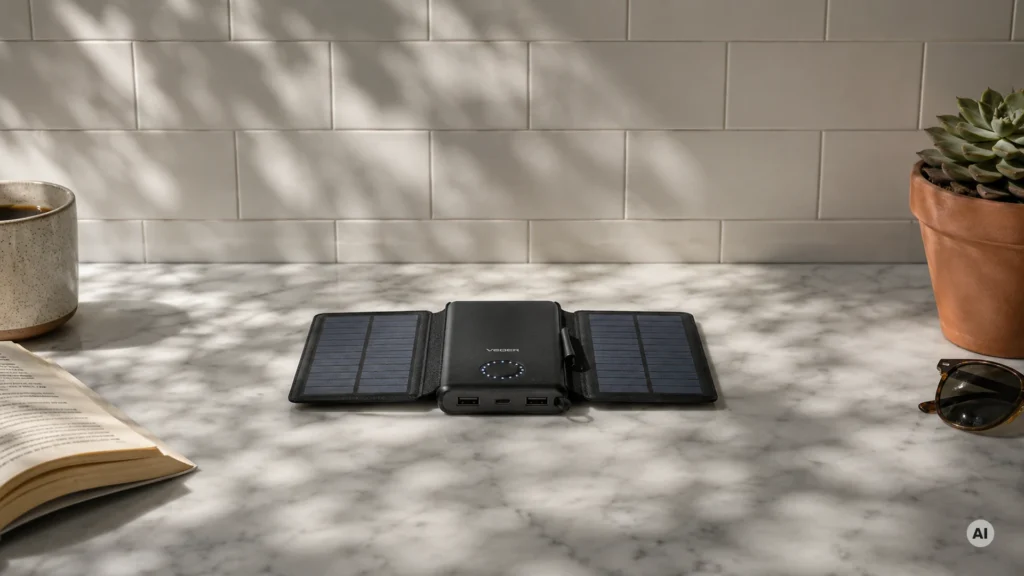
Solar powered gadgets run on built in batteries and recharge from a solar panel. They fit well for camping, emergency kits, and outdoor use where outlets are not easy to find. The best options make solar a real power source, not just an emergency backup.
Picking one is harder than it sounds because the trade-offs are baked in. Small panels charge slowly in real weather. Battery capacity can look big on paper, but runtime drops when brightness, output, or power use rises. Some listings also blur the details, mixing panel wattage with marketing claims, or using vague charging time ranges that depend on sun angle.
This guide breaks down what matters and what to ignore. You will learn how to compare solar panel wattage, battery capacity, solar charge time, runtime, water resistance, weight, and size. It also explains how to match the gadget to your use case, so you avoid underpowered lights and chargers that miss the stated goals.
Quick Overview
Top Picks
Best Overall

Specifications
| Brand | Brightech |
|---|---|
| Product Type | String Lights |
| Solar Panel Wattage | 4 W |
| Battery Capacity | 4000 mAh |
| Solar Charge Time | 6 hr |
| Runtime | 6 hr |
| Water Resistance Rating | Waterproof |
Pros
- Reliable, consistent brightness
- Better weather protection
- Dusk auto-switching
Cons
- Weak solar output
- Low capacity storage
- Runtime variability
Brightech Ambience Pro string lights earn the Best Overall spot because they strike a good balance between bright light and simple outdoor operation. The standout touch is dusk auto-switching, so you do not have to remember to turn them on each evening.
In real use, the brightness stays steady rather than fading quickly as the battery drops. The build also feels made for outdoor life, with better weather protection and a waterproof design that holds up to day-to-day exposure. Setup and mode switching are straightforward, and the lights are easy to run without babysitting.
The main trade-off is solar performance. Solar output can be weak, and that leads to low storage capacity and runtime that varies depending on sun. If you want reliable outdoor ambiance with automatic dusk control, and you can give the panel real sun exposure, this is the one to get.
Best Portable Solar Panels

Specifications
| Brand | Renogy |
|---|---|
| Product Type | Solar Panel |
| Solar Panel Wattage | 100W |
| Water Resistance Rating | IP65 |
| Weight | 7.3 lb |
| Dimensions | 23 x 22.5 x 1.6 in |
Pros
- Meaningful recharge in daylight
- Reliable, consistent brightness
- Sturdy with secure seals
Cons
- Solar input disconnect
- Setup compatibility friction
- Large and bulky
Foldable panels make solar power easy to bring on trips, and the Renogy 100W design is built for that kind of outdoor use. Its biggest draw is the meaningful output you can actually use for charging in daylight, not just a small trickle for emergencies.
In real use, it delivers consistent performance for powering and recharging connected gear. Reviewers also point to solid water protection with an IP65 rating and a sturdier build, including secure seals that hold up during transport. Solar charging tends to recover well when conditions are decent, so you are not stuck with slow, weak gains all day.
The main trade-off is that the solar input connection can be finicky, and setup can feel awkward if your camping or battery setup does not match its needs. It is also large and bulky to carry, even when folded. If you want a higher-watt portable panel for regular charging outdoors and you can work around connection and setup quirks, this is a strong choice.
Also ranked #1 in: Foldable Solar Panels for Solar-Powered Gadgets
Best 21W Output

Specifications
| Brand | Anker |
|---|---|
| Product Type | Solar Charger |
| Solar Panel Wattage | 21 W |
| Solar Charge Time | 0.5 hr |
| Water Resistance Rating | Water Resistant |
| Weight | 0.9 lb |
| Dimensions | 6.3 x 11.1 x 1.1 in |
Pros
Cons
A solid pick for the Best 21W Output role, this Anker solar charger centers on a 21W panel. That higher output is meant for faster daytime charging when you have sun and time to set it out.
In real use, it tends to deliver strong charging performance for its class, helped by Anker's focus on consistent power output. Build quality also earns points, with a compact, 0.9 lb body that is easy to carry on camping trips. The water resistant design makes it more practical when weather shifts.
The main weakness is that solar charging still depends on daylight and angle, so it will not behave like a wall charger. If you want the quickest solar top-ups for phones or small power needs while camping or traveling outdoors, this is the one to get.
Best Value

Specifications
| Brand | Aootek |
|---|---|
| Product Type | Motion Sensor Light |
| Solar Charge Time | 6 hr |
| Water Resistance Rating | IP65 |
| Weight | 1.8 lb |
| Dimensions | 3.5 x 5.1 x 2.1 in |
Pros
- Reliable, consistent brightness
- Worth the price premium
- Better weather protection
Cons
- Limited mode adjustment
- Flimsy mounting hardware
This Aootek Solar Motion Sensor Light earns a Best Value spot for a simple reason, it keeps its light output steady in real use. If you want reliable motion-activated lighting without fuss, this model is a practical pick.
The brightness stays consistent, which matters more than paper specs once the battery starts dropping. It also charges in a reasonable window, with a listed solar charging time of about 6 hr. Outdoor readiness is another win, thanks to an IP65 water resistance rating and better weather protection for daily exposure.
The main drawback is limited mode adjustment, so you have fewer ways to fine-tune how it behaves. It also ships with flimsy mounting hardware, which may require an upgrade for a secure setup. If you want dependable motion lighting for walkways, garages, or entry steps, this is the one to get.
Best for Off Grid

Specifications
| Brand | EF ECOFLOW |
|---|---|
| Product Type | Power Station |
| Solar Panel Wattage | 220W |
| Solar Charge Time | 2.3 hr |
| Water Resistance Rating | IP68 |
| Weight | 13.3 lb |
| Dimensions | 7.7 x 10.6 x 10.2 in |
Pros
- Strong solar output
- Fast solar charging
- Better weather protection
Cons
- Heavy to carry
- Value-pricing concerns
- Solar panel optionality
This power station fits the Best for Off Grid role because it leans hard on solar input. The standout trait is its 220W solar panel setup, which can take the edge off cloudy days when you can keep the unit in sun. With an IP68 rating, it is built for messy outdoor conditions.
In day to day off grid use, solar charging is one of its strong points. The stated solar charge time is about 2.3 hr, and real solar output tends to stay consistent when you have good light. Build quality also holds up well, helped by the IP68 water resistance and a rugged, outdoor-ready design. It is still easy to manage with clear controls, which matters when you are switching modes in the field.
The main trade off is portability. At 13.3 lb, it is not something you toss into a day bag. It also comes with value-pricing concerns, and the solar panel is described as optional, so plan your kit accordingly. If you need a durable off grid power hub that can recharge quickly from strong sun, this is a smart fit. If you want something light for frequent carries, look elsewhere.
Best Long Battery

Specifications
| Brand | Garmin |
|---|---|
| Product Type | Solar Watch |
| Runtime | 75 hr |
| Water Resistance Rating | Water Resistant |
| Weight | 0.12 lb |
Pros
- Reliable, consistent brightness
- Sturdy with secure seals
- Long-lasting runtime
Cons
- Cannot accept calls
- UI limitations
Garmin Instinct 3 Solar fits the Best Long Battery role because the watch is built to keep going for days, with a claimed 75 hr runtime. The key idea is simple, rely less on charging and more on staying outdoors. That makes it a good fit for long hikes, weekend trips, and everyday wear when you do not want to think about battery life.
The standout strength is steady, reliable performance. In real use, it delivers consistent brightness, and the build feels tough enough for outdoor life, with secure seals for water resistance. You also get the kind of long runtime that lets you run regular activity tracking without constantly hunting for an outlet. Usability is solid too, with controls and a display that work well once you learn Garmin's menu flow.
The main downside is that you cannot accept calls, and the user interface can feel limiting compared to more phone-like smart features. If you want an outdoor-focused solar watch for long battery life and dependable day-to-day tracking, but do not need call handling, this is the one to get.
Best for Phone Charging

Specifications
| Brand | SunJack |
|---|---|
| Product Type | Solar Charger |
| Solar Panel Wattage | 25 W |
| Battery Capacity | 10000 mAh |
| Water Resistance Rating | IP67 |
| Weight | 1.7 lb |
| Dimensions | 11 x 7.8 x 1 in |
Pros
- Strong solar output
- High capacity storage
- Better weather protection
Cons
- Heavy to carry
- Variable sun dependency
- Limited indicator clarity
This foldable solar charger fits the Best for Phone Charging spot because it pairs a 25W panel with a 10,000mAh battery. In practice, that means you can recharge a phone when you have sun, then use the stored power when you do not. The all-in-one build also aims at real outdoor use, not just short demos.
Charging performance is one of the stronger points, helped by its higher solar output and solid storage size. Build quality holds up better outdoors thanks to an IP67 water resistance rating. It is also designed to be practical for travel, with a foldable setup that keeps the panel usable without taking over your whole bag.
The trade-off is that you still depend on sun, and results can swing with partial shade. It is also a bit heavy at 1.7 lb, and the indicator clarity is not as easy as you would like. If you need a reliable backup charger for phones while camping, hiking, or during outages, and you can manage with occasional sun dependency, this is a strong pick.
Best with Goal Zero

Specifications
| Brand | Goal Zero |
|---|---|
| Product Type | Solar Panel |
| Solar Panel Wattage | 100W |
| Water Resistance Rating | Water Resistant |
| Weight | 12 lb |
| Dimensions | 2 x 20.5 x 20.5 in |
Pros
- sturdy with secure seals
- Simple setup, intuitive operation
- Strong solar output
Cons
- Slow solar recovery
- Heavy to carry
- Large and bulky
This 100W Goal Zero panel is a strong match for the Best with Goal Zero slot because it is designed to work smoothly in the Goal Zero ecosystem. If you already use Goal Zero power stations or systems, this panel is an easy way to add reliable solar input outdoors.
The build holds up well for real camping use. It has secure seals for outdoor conditions, and the panel is simple to set up and operate. In the field, it also delivers strong solar output, which helps keep your connected gear running longer between charges.
The main downside is solar recovery. It can take longer to bounce back when clouds or partial shade move across the panel. It is also heavy and bulky, at 12 lb with a 2 x 20.5 x 20.5 in footprint. If you want a rugged 100W panel for Goal Zero setups and you can handle the weight, this is the one to get.
What to Look For
Performance: Check how well the gadget does its main job in real use. For lights, look for steady brightness rather than “max brightness” that fades fast. For chargers and power stations, prioritize claimed output that stays stable as the battery drops. For sensors and watches, focus on consistent day to day operation, not one strong test result.
Solar Charging: Compare solar panel wattage and the stated solar charge time together. A higher watt panel usually shortens charging time, but it still depends on sun hours and panel exposure. Favor products that recover after partial sun, since clouds and shade are common in real settings.
Build Quality: Look for durable housings, solid ports, and buttons that do not get loose. Outdoor use means heat, transport bumps, and light rain. If the device has a battery compartment or cable access, check how well it appears sealed and protected.
Usability: Setup should be quick. You want clear status indicators for charging and battery level, plus simple controls for modes. Check whether you can access ports without awkward placement, and whether the gadget supports the everyday settings you will use most.
Water Resistance Rating: Use the IP rating when it is listed, or the standardized protection label if not. Match the rating to your environment. For outdoor decks or car camping, you usually want at least water resistant protection, not just “outdoor use” wording.
Battery Capacity: Use battery capacity to estimate how long the gadget can run between charges. Higher mAh usually supports longer runtime, but only if the power draw is reasonable. Treat battery size as one part of the runtime equation, not a guarantee.
Portability: Weight and dimensions decide whether you will actually bring the gadget. For packs and car travel, lighter and slimmer options matter. For string lights or panels, size affects setup time and storage space. Pick the format you can live with after a few trips.
How We Selected These Products
We found products through broad web searches across review sites, buyer forums, and best-of lists, not just one publisher. We then read a large volume of customer reviews to see which problems repeat, like slow solar recovery, dimming over time, or ports that fail after outdoor use.
Next, we verified availability and specifications directly against Amazon listings, including solar panel wattage, battery capacity, solar charge time, runtime, water resistance rating, weight, and dimensions. Each product was scored using an objective framework tied to the same pillar names: Performance, Solar Charging, Build Quality, Usability, and Value.
Final selection focused on role based excellence. We aimed to include gadgets that stand out for distinct needs, like lights for basic outdoor use, chargers with stronger phone output, and systems suited to longer off grid demands, rather than only choosing the highest overall score.
Frequently Asked Questions
Which solar-powered gadget is best if I want reliable outdoor lighting?
Choose a solar string light that performs well after it charges, not one that only claims fast charging. Brightech Ambience Pro Solar Outdoor String Lights earned the Best Overall spot, with reported runtime of about 5-6 hours when it gets good sun. Plan placement carefully so the panel gets strong direct light.
What is the key difference between budget and premium solar-powered gadgets here?
Budget options often deliver usable results, but they show more variation in brightness or charge speed. Premium picks tend to hold their performance closer to the claim, even as conditions change. In this set, the biggest gap shows up in solar charging consistency and real-world output.
Why do many solar-powered gadgets struggle with solar charging consistency?
Solar charging depends on sun strength, angle, and how much the device uses each hour. Many gadgets also lose charging help when the battery is near full, so solar input may get limited. When light is indirect or cloudy, charge speed drops fast.
Is a higher watt rating always better for solar-powered gadgets?
Higher watts can help, but real-world results depend on matching the gadget to the right conditions. A 100W panel can still deliver less than expected if the sun angle or setup is not ideal. Look for reviews that confirm output, not just the watt number.
Do I need direct sunlight for solar gadgets, or will normal daylight work?
Most solar gadgets need strong direct sun to hit their best performance. Indirect light can work, but it usually means shorter runtime or slower charging. For example, solar string lights often dim sooner if the panel does not get enough direct exposure.


