




Mini computers are small desktop PCs built for everyday tasks like web browsing, office work, and media playback. They save space and often run quietly, but they also trade away some upgrade flexibility. The best models balance speed, thermals, and practical connectivity in a compact box.
Picking one can feel confusing because specs can look similar on paper. CPU and memory determine how smooth multitasking feels, yet many listings hide key details like sustained performance and storage speed. Wireless ratings can also be misleading, since older Wi-Fi can still look fast in benchmarks. Ports matter too, because a mini PC with the wrong USB mix forces you into adapters and hubs.
This guide explains what to look for in a mini computer and how to compare options without getting distracted. You will also find a short, role-based selection approach so you can match the right mini PC to your needs, whether you want everyday speed, strong Wi-Fi, or better value.
Quick Overview
Top Picks
Best Overall

Specifications
| Brand | MINISFORUM |
|---|---|
| Processor | AMD Ryzen 9 9955HX |
| Memory | 96 GB |
| Storage | 2 TB SSD |
| Wireless | Wi-Fi 6E, Bluetooth 5.2 |
Pros
- Smooth multitasking performance
- Stable thermals under load
- Fast modern CPU
Cons
- Weaker iGPU graphics
MINISFORUM MS-A2 is a strong match for the Best Overall mini computer slot thanks to its fast AMD Ryzen 9 9955HX CPU. In everyday use, it feels quick to wake up and responsive across apps. It also stays steady when you keep it busy.
Multitasking is smooth, and the system holds up well during longer loads. Cooling looks well managed, with stable thermals that reduce the chance of slowdown mid-task. Connectivity also stands out, with Wi-Fi 6E and Bluetooth 5.2 for modern wireless reliability and easy pairing.
The main drawback is weaker iGPU graphics. That means it is not the best pick for heavier gaming or GPU-heavy creative work without extra graphics solutions. If you want a compact PC that feels fast for office, web, and light creation tasks while keeping thermals in check, this is the one to get.
Also ranked #1 in: AMD Ryzen Mini Computers
Best for Apple Users

Specifications
| Brand | Apple |
|---|---|
| Processor | Apple M4 Pro |
| Memory | 24 GB |
| Storage | 512 GB SSD |
| Wireless | Wi-Fi 6E, Bluetooth 5.3 |
| Usb Ports | 5 Ports |
| Dimensions | 5 x 5 x 0.2 in |
| Weight | 1.6 lb |
Pros
- Blazing-fast responsiveness
- Fast modern CPU
- Enough RAM for multitask
Cons
- USB-C instability
- Fan noise underload
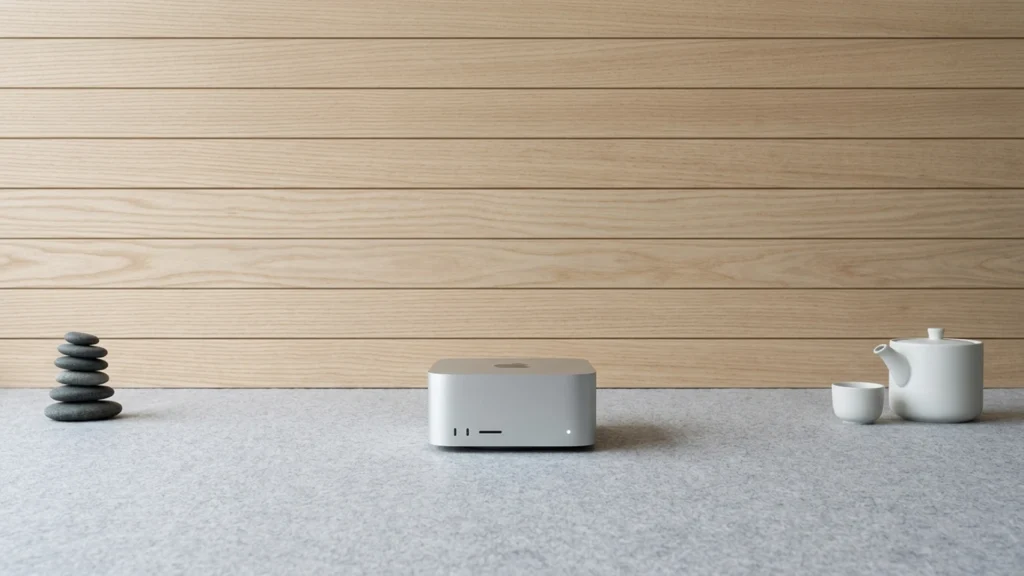
This mini PC is a strong match for Apple users because it stays fully in sync with macOS, and its distinctive trait is the Apple M4 Pro chip. In day-to-day work, it feels instant, from waking up to opening apps, and it handles multitasking with ease.
Performance is the standout pillar here, with a 24 GB RAM setup and a 512 GB SSD that keep launches quick and system behavior smooth. Cooling support is solid for sustained use, and the small 5 x 5 x 0.2 in footprint makes it easy to tuck behind a monitor. For wireless, Wi-Fi 6E and Bluetooth 5.3 are reliable for typical web, calls, and peripheral use.
The main catch is USB-C instability, and the fan can get audible under heavier loads. If you want a compact Mac mini for responsive everyday work, and you are comfortable working around USB-C quirks, this is the one to get.
Best AI-Powered

Specifications
| Brand | GEEKOM |
|---|---|
| Processor | AMD Ryzen AI 9 HX 370 |
| Memory | 32 GB |
| Storage | 1 TB SSD |
| Graphics | Radeon 890M |
| Wireless | WiFi 7, Bluetooth 5.4 |
| Usb Ports | 4 Ports |
| Dimensions | 1.8 x 5.3 x 5.2 in |
| Weight | 3.7 lb |
Pros
- Smooth multitasking performance
- Reliable Wi-Fi and Bluetooth
- Spacious fast SSD
Cons
- Bulky and heavy
- Thermal evidence thin
- Premium durability unknown
This mini PC fits the Best AI-Powered role thanks to its AMD Ryzen AI 9 HX 370 chip and Radeon 890M graphics. That combo makes it feel quick for everyday AI tasks, plus it handles normal work without waiting around. It is also a strong choice for users who want local processing on a small footprint.
In daily use, it delivers smooth multitasking, helped by 32 GB of RAM and a spacious 1 TB SSD. You also get dependable wireless, with Wi-Fi 7 and Bluetooth 5.4 that stay stable in typical office and home setups. The compact size scores well for desk placement, even though it is not the lightest option in the lineup.
The main drawback is cooling, with thermal evidence that looks thin, so sustained workloads may run hot or throttle more than you would like. It is also bulky and heavy, which can limit where you want to place it. If you want a small AI-capable mini computer for steady daily use and light creation work, this is the one to get.
Best Gaming

Specifications
| Brand | ASUS |
|---|---|
| Processor | Intel Core Ultra 9 (Series 2) ARL-HX |
| Memory | 32 GB |
| Storage | 1 TB SSD |
| Graphics | NVIDIA GeForce RTX 5070 Mobile |
| Wireless | Wi-Fi 6E, Bluetooth 5.3 |
| Usb Ports | 6 Ports |
Pros
- Smooth multitasking performance
- Stable thermals under load
- Compact footprint, practical layout
Cons
- High price premium
- Limited user wireless proof
For a mini PC aimed at gaming, this ASUS ROG NUC stands out with a laptop-class NVIDIA GeForce RTX 5070 Mobile GPU. That makes it a strong fit for playing modern titles while still keeping the footprint small. It also feels responsive for everyday use, not just benchmarks.
In real-world multitasking, the setup stays smooth, backed by 32 GB of RAM and a fast 1 TB SSD. Cooling is another win, with stable thermals under sustained load and no obvious performance wobble. On top of that, it is compact and easy to place behind a monitor, with a practical layout and 6 USB ports for common devices.
The main downside is a high price premium, and the wireless experience may be less proven than some rivals. It also ships as a gaming-focused unit, so casual buyers should expect higher expectations for setup and updates. If you want compact gaming power in a mini PC and you are okay with paying extra for the RTX 5070 class experience, this is the one to get.
Best with WiFi 7

Specifications
| Brand | MINISFORUM |
|---|---|
| Processor | Intel Core i9-14900HX |
| Memory | 32 GB |
| Storage | 1 TB SSD |
| Wireless | Wi-Fi 7, Bluetooth 5.4 |
Pros
- Smooth multitasking performance
- Reliable Wi-Fi and Bluetooth
- Stable thermals under load
Cons
- Rear-port inconvenience
This Mini computer fits the Best with WiFi 7 role thanks to its Wi-Fi 7 wireless and Bluetooth 5.4 combo. That means faster, more stable connections for streaming, cloud apps, and big downloads, especially in busier home networks.
In day-to-day use, it feels quick and smooth. The Core i9-14900HX handles multitasking with less lag, and the system stays stable during longer workloads. Thermals also look well managed for a small form factor, with steady performance instead of obvious slowdowns.
The main downside is rear-port inconvenience. If you plan to plug in lots of devices often, you may find the layout less comfortable than front-facing I/O. If you want a compact mini PC with reliable Wi-Fi 7 for daily work, streaming, and light creation tasks, this one is a strong match.
Best Value

Specifications
| Brand | GEEKOM |
|---|---|
| Processor | Intel Core i5-12450H |
| Memory | 16 GB |
| Storage | 512 GB SSD |
| Graphics | Intel Quick Sync UHD graphics |
| Wireless | Wi-Fi 6E, Bluetooth 5.2 |
Pros
- Smooth multitasking performance
- Reliable Wi-Fi and Bluetooth
- Feature-rich and fairly priced
Cons
- Graphics-limited
This GEEKOM IT12 fits the Best Value slot because it keeps everyday computing smooth without forcing you into a high-end setup. The standout trait is its strong day-to-day responsiveness, backed by an Intel Core i5-12450H paired with 16 GB of RAM and a 512 GB SSD.
In real use, it handles multitasking well and stays responsive for web browsing and office work. Wireless performance is also dependable, thanks to Wi-Fi 6E and Bluetooth 5.2. Cooling is solid for a compact mini PC, with steady behavior during longer sessions, and the chassis feels sturdy for the class.
The main trade-off is graphics-limited performance, so it is not the best choice for heavy gaming or demanding creative GPU work. If you want a compact mini PC for school, work, streaming, and light content creation without fuss, this one is a smart pick.
Also ranked #1 in: Business Mini Computers
Best for Pro Workflows

Specifications
| Brand | HP |
|---|---|
| Processor | Ryzen AI MAX PRO 385 |
| Memory | 32 GB |
| Storage | 1 TB SSD |
| Graphics | AMD Radeon 8050S Graphics |
| Dimensions | 11.5 x 19.6 x 7.6 in |
| Weight | 5.1 lb |
Pros
- Smooth multitasking performance
- Reliable Wi-Fi and Bluetooth
- Compact footprint, practical layout
Cons
- Warms up noticeably
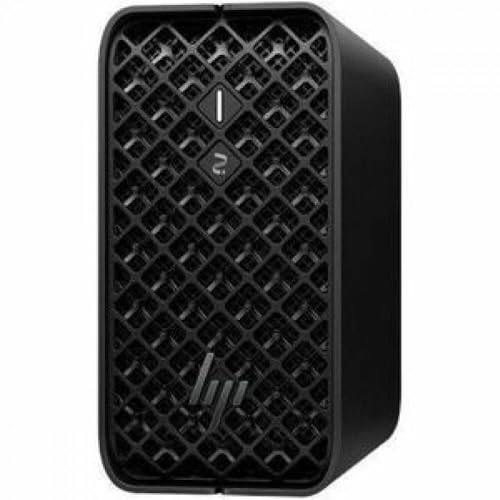
This HP Z2 Mini is a strong fit for the Best for Pro Workflows role, thanks to its smooth day-to-day multitasking. The Ryzen AI MAX PRO 385 and 32 GB of RAM make common office and creator tasks feel quick and responsive. It is the kind of mini PC that keeps up when you have many apps open at once.
In everyday use, performance stays stable for work that mixes browsing, office work, and light production tasks. Connectivity also holds its own, with reliable Wi-Fi and Bluetooth for a consistent workspace. The compact footprint is another plus, making it easier to tuck behind a monitor or fit on a small desk without dominating the area.
The main drawback is that it warms up noticeably during use. That does not ruin the experience, but it is something to expect in a small chassis. If you need a compact mini PC for pro office work and light creation with strong multitasking, this is the one to get.
Best with USB Ports

Specifications
| Brand | Beelink |
|---|---|
| Processor | AMD Ryzen 5 6600U |
| Memory | 24 GB |
| Graphics | AMD Radeon 660M |
| Wireless | Wi-Fi 6, Bluetooth 5.2 |
| Usb Ports | 6 Ports |
| Dimensions | 4.92 x 4.92 x 1.97 in |
Pros
- Smooth multitasking performance
- Reliable Wi-Fi and Bluetooth
- Feature-rich and fairly priced
Cons
- Buzzing fan noise
This Beelink EQR6 fits the Best with USB Ports role because it gives you 6 USB ports in a small box. That is a practical setup for everyday gear like a keyboard, mouse, external drive, and a few extras without constantly swapping cables.
It also feels smooth in daily use, backed by its AMD Ryzen 5 6600U and 24 GB of RAM. You get dependable Wi-Fi 6 and Bluetooth 5.2 for stable connections, plus multitasking stays responsive during web browsing and office work. Integrated graphics are strong enough for light media playback and simple creative tasks, so it does not feel overly constrained for a mini PC.
The main drawback is buzzing fan noise, which can stand out in quiet rooms. If you want a compact mini computer with enough USB options for regular peripherals and solid wireless reliability, this one is a good match.
What to Look For
Performance: Choose a CPU and memory combo that stays responsive under load. Look for enough RAM for your workload, and prioritize fast SSD storage for quick app launches and system wake-ups. If you plan to do more than light office tasks, also check for smooth sustained performance, not just short benchmark results.
Connectivity: Count real USB ports and think about your devices, keyboard, mouse, external drive, and any docking needs. Confirm stable Wi-Fi and reliable Bluetooth support, since weak wireless often shows up as dropped connections. A good layout reduces the need for extra adapters.
Cooling: Mini PCs pack powerful parts into a small case, so cooling affects real speed. Look for systems that run cool enough to avoid frequent throttling. Also consider noise, since some models ramp fans during normal use and become distracting.
Compactness: Measure how small it will feel on your desk and where it will fit behind a monitor. Pay attention to dimensions and weight so you know whether it will sit comfortably or require a specific mounting setup. A truly compact design still needs room for airflow.
Build Quality: Check how solid the chassis feels and how reliable the ports are over time. Look for clean fit and finish, and pay attention to reports of loose components or repeated port failures. Consistent build quality matters more in this segment because there is less room for cooling and cable slack.
Value: Use the asking price as a final filter against what you actually get. A better CPU, enough RAM, and a fast SSD usually beat vague feature claims. If a model needs costly upgrades to feel competitive, it lowers value.
Graphics: Match the GPU to what you do. For basic desktops, integrated graphics can handle everyday visuals and light media. If you want video editing, casual gaming, or light creation tasks, verify the graphics performance expectations from reviews rather than relying on generic “integrated” labels.
How We Selected These Products
We started with broad web research across review sites, buyer forums, and best-of lists to find the mini computers most often recommended in practice. Then we read a large set of customer reviews to identify recurring issues, like fan noise, Wi-Fi dropouts, slow storage performance, and port limitations.
Next, we verified key specs and availability directly against Amazon listings. Each model was scored using an objective framework across the same pillar names, Performance, Connectivity, Cooling, Compactness, Build Quality, and Value, with weightings tuned for how the systems behave day to day. Final picks focused on distinct roles, so you get options that actually fit common needs instead of a single generic ranking.
Frequently Asked Questions
Which mini computer is best for demanding work and multitasking?
Look for models built around top-end CPUs and plenty of memory. In this guide, the MINISFORUM MS-A2 Mini Computer leads overall, thanks to very strong CPU performance plus up to 96GB RAM and fast SSD storage. If you want a more balanced option with strong performance but different tradeoffs, the Apple Mac mini Mini Computer is also a top pick. Choose based on whether you prefer Windows-style upgrade flexibility or the Apple workflow.
Which mini computer should I choose for gaming or light 3D work?
Pick a mini PC that includes a capable GPU, not only fast CPU performance. The ASUS ROG NUC Mini Computer is the best match here, because it targets gaming workloads with an RTX mobile GPU. Other picks may feel fast for office work, but integrated graphics can limit smoothness in more graphically heavy apps. If you mostly play casual 1080p games, look for better iGPU support, but expect less headroom over time.
Do mini computers differ a lot by price?
Yes, price often tracks performance and feature depth. Premium models usually bring faster CPUs, more RAM, and better cooling for sustained loads. Budget models can still handle office work and streaming, but they often slow down with heavier tasks. You also see fewer ports and weaker graphics at lower prices.
Is a higher price always better for mini computers?
Not always. Some higher priced mini computers mainly improve graphics and cooling, but the value can drop if you do not use those strengths. For example, GEEKOM IT12 Mini Computer focuses on strong everyday value at a mid price. Meanwhile, Apple Mac mini Mini Computer costs more but shines in compact design and Apple ecosystem performance.
Why do some mini computers struggle with graphics heavy tasks?
Many mini computers rely on weaker integrated graphics. That can create stutter in graphics heavy websites, light creation tools, or casual 3D work. The MINISFORUM MS-A2 Mini Computer is a good example of a system with excellent CPU power, but reports note weaker iGPU smoothness. If visuals matter most, prioritize a model with a stronger GPU, not just a faster CPU.
What causes mini computers to get noisy or throttle under load?
Cooling design limits how long a mini PC can hold peak speed. When the fan curve runs late or the heatsink is small, the system heats up and may slow down. In this guide, the Apple Mac mini Mini Computer has mixed reports about heat and audible fans under sustained load. On the other hand, the ASUS ROG NUC Mini Computer and MINISFORUM AtomMan G7 PT Mini Computer show more evidence of sustained performance through stronger cooling.


