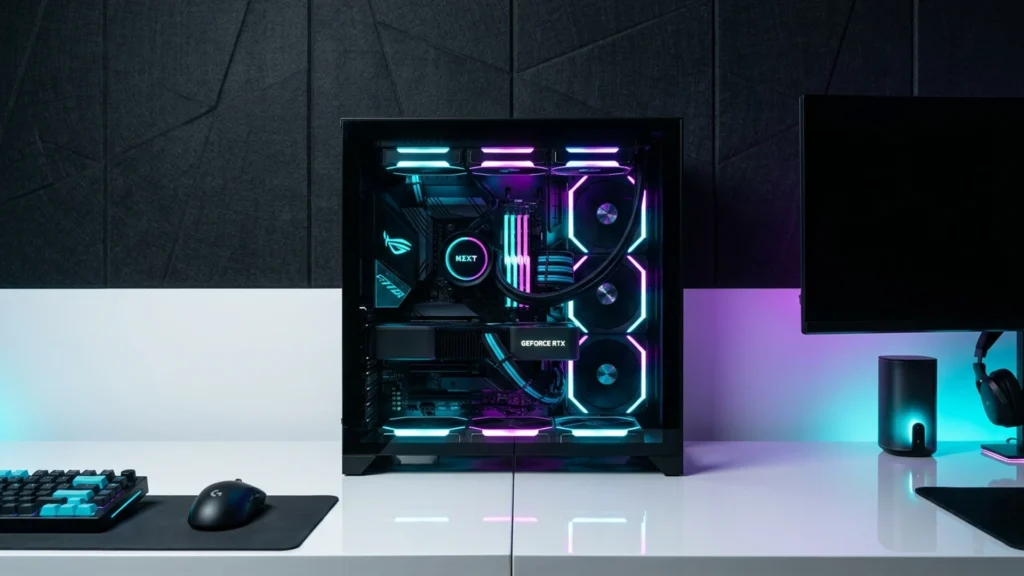
Gaming PCs are desktop systems built to run modern games with fast load times and high frame rates. They sit above consoles for people who want more control over settings and upgrades. Within this category, the parts matter, but so do the choices that glue them together.
Picking a good one is hard because gaming performance depends on the whole balance of CPU, GPU, memory, storage speed, and power delivery. Some listings also mislead you with specs that sound impressive but do not change gameplay much. Other systems look strong on paper, then run hot, get loud under load, or throttle after the first gaming session.
This guide compares top options using real buying criteria, not marketing lines. You will learn what to check before you buy, how to spot mismatches, and which models fit different needs. The goal is simple, get you to a PC that stays smooth in the games you play, without surprises later.
Quick Overview
Top Picks
Best Overall
Specifications
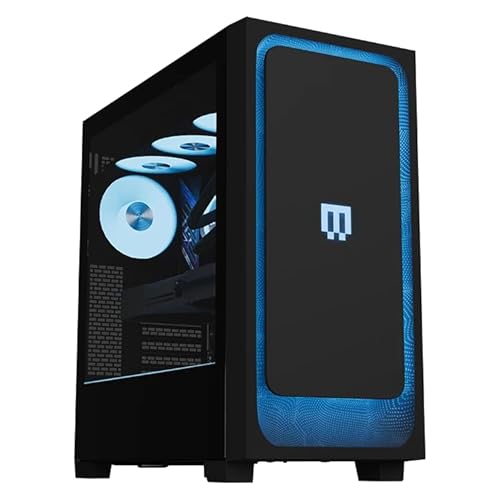
| Brand | MAINGEAR |
|---|---|
| Processor | AMD Ryzen 9 9950X3D2 Dual Edition |
| Graphics Card | NVIDIA GeForce RTX 5090 |
| Memory | 64 GB |
| Storage | 4 TB NVMe SSD |
Pros
- Blazing high FPS
- Quiet fans, steady temps
- Solid build with reliable parts
Cons
- Limited benchmark proof
- Value pricing premium
This MAINGEAR MG-1 is a strong fit for the Best Overall slot because it targets smooth, high-end gaming with a focus on real-world experience. The standout trait is raw frame rate, backed by a top-tier CPU and an RTX 5090-class graphics setup that keeps gameplay feeling responsive.
In practice, the pillar scores show why it is so consistent. Performance lands high for fast, stable gaming output, while thermals score well thanks to quiet fans and steady temperatures under load. Build quality also holds up, with solid construction and reliable components that do not feel fragile.
The main drawback is limited published benchmark proof, so you are trusting hands-on impressions more than big public test results. If you want a high-FPS gaming PC that stays cool and quiet for long sessions, this is the one to get.
Also ranked #1 in: GeForce RTX 5090 Gaming PCs
Best Liquid-Cooled
Specifications
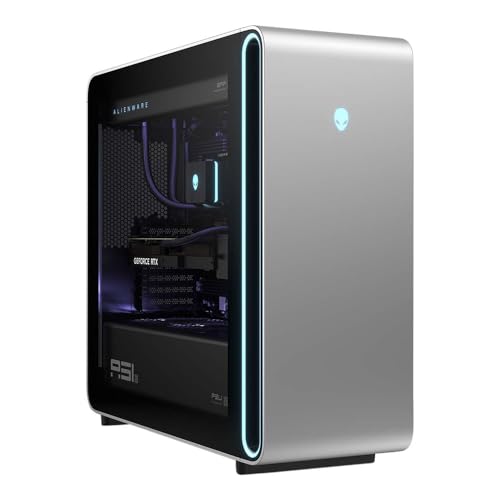
| Brand | Dell |
|---|---|
| Processor | Intel Core Ultra 9 285K |
| Graphics Card | NVIDIA GeForce RTX 5090 |
| Memory | 64 GB |
| Storage | 4 TB SSD |
| Power Supply | 1500 W |
| Operating System | Windows 11 Home |
| Dimensions | 22.4 x 24 x 9.1 in |
Pros
- Blazing high FPS
- Solid build with reliable parts
Cons
- Premium value gap
- Proprietary constraints
This Dell Alienware Area-51 fits the Best Liquid-Cooled slot because its cooling strategy is built around keeping top-end parts stable under long gaming sessions. With an Intel Core Ultra 9 285K and an NVIDIA GeForce RTX 5090, it is designed for high, consistent frame rates rather than letting heat or power limits set the pace.
You see the payoff in performance, with blazing high FPS and strong day-to-day smoothness. Thermals score well for sustained load behavior, and the system stays composed enough to avoid that common drop-off during extended play. Build quality is another highlight, with a solid chassis and reliable parts that feel dependable inside and out.
The main drawback is the premium value gap, plus proprietary constraints that can make maintenance and upgrades less straightforward than with a more standard case layout. If you want a high-end, liquid-cooled gaming rig that prioritizes smooth play and stable output, this is the one to get, but only if you are comfortable with Dell's upgrade limits.
Best GeForce RTX 5070

Specifications
| Brand | ASUS |
|---|---|
| Processor | Intel Core Ultra 7 265F |
| Graphics Card | NVIDIA GeForce RTX 5070 |
| Memory | 32 GB |
| Storage | 1 TB SSD |
| Power Supply | 850 W |
| Operating System | Windows 11 Pro |
| Dimensions | 18.9 x 9.4 x 20.1 in |
| Weight | 40.4 lb |
Pros
- Smooth, stable frame pacing
- Solid build with reliable parts
- Strong gaming for the cost
Cons
- Rear USB-C malfunction
- Audible fan ramp-up
- Value tradeoff concerns
This ASUS ROG G700 is a great match for a Best GeForce RTX 5070 pick thanks to its focus on smooth, stable gaming performance. The system is built to keep frame pacing even during busy scenes, which is often what players feel most in real games.
On the Performance pillar, it scores strongly for day to day speed, and the reports back up “smooth, stable frame pacing.” Build quality is also a plus, with a solid chassis and reliable parts that feel dependable over long sessions. Thermals are decent for this class too, though they are not the quietest when the load rises.
The main drawback is a rear USB-C malfunction, plus some audible fan ramp up under stress. If you want a smooth RTX 5070 gaming PC with strong overall build quality, and you can live with occasional extra fan noise, this is the one to get. If USB-C ports matter for your setup, you should look elsewhere or plan a workaround.
Best Compact

Specifications
| Brand | ASUS |
|---|---|
| Processor | Intel Core Ultra 9 (Series 2) ARL-HX |
| Graphics Card | NVIDIA GeForce RTX 5070 Mobile |
| Memory | 32 GB |
| Storage | 1 TB NVMe SSD |
| Power Supply | 380 W |
| Dimensions | 11.1 x 7.4 x 2.2 in |
| Weight | 6.9 lb |
Pros
- Smooth, stable frame pacing
- Solid build with reliable parts
- Strong gaming for the cost
Cons
- No/unsupported OS
- Underpowered PSU
- Limited CPU/GPU swapping
This compact system fits the Best Compact role thanks to its small footprint and laptop-class parts. It is easy to place in tight spaces, while still targeting smooth gameplay with a balanced CPU and GPU setup.
In real games, the ASUS ROG NUC Gaming PC focuses on steady frame pacing, so motion feels even instead of choppy. The cooling also holds up well, with solid thermals for longer sessions. You also get a sturdy build with dependable components, which matters in a smaller chassis that runs close to the edge.
The main catch is the 380 W power supply, which limits headroom for future upgrades. It also uses a layout that is not great for swapping the CPU or GPU. If you want a small gaming PC for modern titles and you plan to keep its parts as-is, this is the one to get.
Best with Windows 11
Specifications
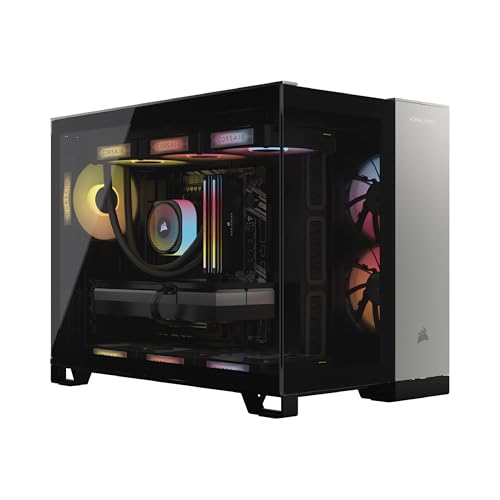
| Brand | Corsair |
|---|---|
| Processor | Intel Core Ultra 9 285K |
| Graphics Card | NVIDIA GeForce RTX 5090 |
| Memory | 64 GB |
| Storage | 2 TB M.2 SSD + 2 TB M.2 SSD |
| Operating System | Windows 11 Pro |
| Dimensions | 14.8 x 18.4 x 12 in |
| Weight | 36.5 lb |
Pros
- Smooth, stable frame pacing
- High-end gaming CPU
- Powerful dedicated GPU
Cons
- Potential thermal throttling
- Long startup time
- Limited real-world proof
This Corsair gaming PC fits the Best with Windows 11 role because it runs the latest Windows Pro setup smoothly, with a focus on high frame output. The most distinctive trait is the combo of an Intel Core Ultra 9 285K CPU and an NVIDIA GeForce RTX 5090, tuned for fast, consistent gameplay in modern titles.
In day-to-day use, it stands out for smooth, stable frame pacing, which helps games feel responsive and steady. Performance scores are strong thanks to the high-end CPU and dedicated GPU balance. Build quality also comes through in the overall assembly and solid component selection, while the 64 GB RAM and 2 TB + 2 TB M.2 SSD storage setup make multitasking and loading times feel quick.
The main downside is potential thermal throttling, plus reports of a long startup time. If you want a Windows 11 Pro gaming system that prioritizes smooth gameplay and top-tier GPU power, this is a solid pick. If you hate slow boot times or you play long sessions and want zero thermal risk, look elsewhere.
Best GeForce RTX 5060

Specifications
| Brand | CyberpowerPC |
|---|---|
| Processor | Intel Core Ultra 5 225F |
| Graphics Card | NVIDIA GeForce RTX 5060 8GB |
| Memory | 32 GB |
| Storage | 2 TB NVMe SSD |
| Operating System | Windows 11 Home |
| Dimensions | 19.9 x 17.7 x 8.6 in |
| Weight | 35 lb |
Pros
- Strong gaming for the cost
- Plenty of RAM
- Large SSD game drive
Cons
- Weak/low-tier GPU
- PSU transparency lacking
This CyberPowerPC Gamer Xtreme VR PC fits the Best GeForce RTX 5060 role thanks to its focus on pairing the RTX 5060 with a strong midrange CPU, aiming for smooth, everyday gaming rather than chasing peak graphics settings. The standout move is the 32 GB of RAM, which helps keep modern games responsive as scenes get heavier.
In real use, the system leans into solid gaming speed for the class, with performance scoring at 7.7. Thermals and noise land in the middle of the pack at 7.0, suggesting it should stay stable during longer sessions, though it is not the quietest design here. On the practical side, build and upgradeability both score 7.3, and the setup includes a 2 TB NVMe SSD, which reduces time spent juggling installs and updates.
The main downside is a weak or lower-tier choice on the GPU side, which limits how far you can push demanding titles, especially at higher settings. There is also PSU transparency lacking, so buyers have less certainty about power supply specifics. If you want a straightforward PC for VR and mainstream gaming with lots of RAM and ample SSD space, this is a good pick, as long as you match expectations to the RTX 5060 tier.
Best White Chassis

Specifications
| Brand | HYPER CYBER |
|---|---|
| Processor | AMD Ryzen 7 7800X3D |
| Graphics Card | NVIDIA GeForce RTX 5090 |
| Memory | 32 GB |
| Storage | 2 TB SSD |
| Operating System | Windows 11 Home |
| Dimensions | 14 x 20 x 22 in |
| Weight | 35 lb |
Pros
- Powerful dedicated GPU
- High-end gaming CPU
- Large SSD game drive
Cons
- Warms up during long sessions
- Limited expansion, tight clearance
This HYPER CYBER Ultra White Gaming PC is a strong pick for the Best White Chassis slot because its all-white look stands out without sacrificing serious gaming hardware. Under the clean exterior, you get a top-tier CPU and a dedicated, high-end GPU aimed at smooth play at high settings. If you want a bright build that still targets modern performance, it fits the brief.
Gaming speed is the headline here, with an AMD Ryzen 7 7800X3D paired to an NVIDIA GeForce RTX 5090 and 32 GB of RAM. Storage is also generous, with a 2 TB SSD for installed games. The result is a well-balanced setup for fast loads and steady frame output, and the overall system build quality scores well, with a solid configuration and dependable parts choices.
The main trade-off is thermals. It can warm up during long sessions, which may affect comfort and sustained noise levels. Expansion is also limited, with tight clearance that can make upgrades and inside access harder. If you care most about a striking white case plus high-end gaming performance, and you are not planning frequent internal changes, this is the one to get.
Best Value

Specifications
| Brand | GMKtec |
|---|---|
| Processor | AMD Ryzen 9 8945HS |
| Memory | 32 GB |
| Storage | 1 TB SSD |
| Operating System | Windows 11 Pro |
Pros
- Strong gaming for the cost
- Plenty of RAM
- Large SSD game drive
Cons
- Warms up during long sessions
- Inaccurate preload
- Support reliability concerns
This GMKtec K11 fits the Best Value role thanks to its strong gaming results for the hardware you get, with 32 GB of RAM and a 1 TB SSD aimed at modern game libraries. It is a good choice if you want a system that feels responsive without needing a big upgrade plan right away.
In day to day gaming, the balance of a Ryzen 9 8945HS and ample memory helps keep things smooth, especially when you are multitasking in the background. The build also feels well put together for the category, and the storage size means fewer “manage your space” moments. Upgrade paths look solid too, since it uses standard components and leaves room to expand later.
The main downside is that it can warm up during long sessions, which may mean higher fan noise as workloads continue. There are also some support reliability concerns, so buyers should be comfortable troubleshooting if needed. If you want a straightforward gaming PC with lots of memory and fast SSD storage, without overthinking upgrades, this is the one to get.
What to Look For
Performance: Match the GPU to the resolution and refresh rate you want. Look for steady frame rates and good CPU-GPU balance, not just a higher core count. If a system uses a weaker CPU with a higher-end GPU, you may see stutter in busy scenes.
Thermals: Check for effective cooling and low noise during gaming. A good gaming PC keeps temperatures in check so it does not throttle mid-session. If reviews mention loud fans right after launch, treat it as a warning sign.
Build: Judge the chassis and assembly quality. Pay attention to how well the PC is put together, including cable routing, solid power delivery, and consistent component quality. A reliable power supply and decent airflow often matter more than extra LED lighting.
Upgrade: Look for room to grow, especially GPU clearance and accessible internals. Confirm the number of RAM slots and storage bays. Also check whether the power supply has enough headroom for future upgrades, not just the current parts.
Value: Compare the full hardware mix to similar systems at the same price. Avoid builds that spend too much on cosmetics while using mid-tier parts elsewhere. If the listed components feel mismatched, you likely pay for the wrong thing.
Processor: Use the exact CPU model to judge gaming suitability. In most games, a strong gaming CPU supports smooth frame pacing, especially at 1080p and 1440p. If the CPU is dated or unusually low-power for the class, it can limit even a good GPU.
Graphics Card: Use the exact GPU model, since it drives the real gameplay frame rates. For the best results, pair the GPU with enough RAM and a fast SSD so load times and in-game streaming stay quick. If the PC uses a lower-end GPU, higher refresh targets may be unrealistic.
How We Selected These Products
We started with broad web searches across review sites, buyer forums, and best-of list pages to find the gaming PCs that come up most often. We then read a large volume of real customer reviews to learn what buyers actually complained about, such as noise, heat, stuttering, missing parts, or slow storage performance.
Next, we verified current availability and the exact specs directly against Amazon listings. When possible, we used the stated processor, graphics card, memory, storage, power supply, operating system, dimensions, and weight to remove guesswork. Each pick received an objective score across the five pillar categories: Performance, Thermals, Build, Upgrade, and Value.
Final selection focused on fit for distinct roles, not just highest overall scores. We kept systems that clearly earn their place for a specific buyer need, such as quieter gaming, compact setups, strong Windows 11 readiness, or better value for mainstream GPUs.
Frequently Asked Questions
Which gaming PC is the best choice for most people who want the safest high-end performance?
MAINGEAR MG-1 Gaming PC takes the top spot overall in this set. It pairs a very high-end CPU and an RTX 5090-class GPU with strong scores for performance and build quality. You still pay a premium, and some games may vary a bit by configuration, but it is the best all-around pick here.
What is the main difference between premium and value gaming PCs in this guide?
Value gaming PCs often focus on getting good FPS at a lower cost, but they can cut corners on noise and cooling tuning. Premium systems usually balance CPU and GPU better, and they tend to keep performance steadier during longer sessions. In this set, the biggest premium jump shows up in build and sustained experience, not only peak FPS.
Why do some gaming PCs feel loud even when benchmarks look fine?
Many reviews focus on frame rates, but fan noise comes from how cooling is tuned. If the system uses a louder CPU cooler or ramps fans aggressively, you can still hit high FPS. Over time, that noise can make gameplay feel less smooth and less comfortable.
Is a higher price always better for gaming PCs?
No. In this set, the best overall pick is not the highest price option, and value can beat expectations at lower costs. Some very expensive systems also lose points on value because buyers get less practical benefit than they hoped.
Why do gaming PCs sometimes score lower on upgradeability?
Upgradeability depends on the physical case and how easy parts are to reach. Compact systems may use laptop-style parts or small power supplies that limit future upgrades. Also, some prebuilts have fewer open slots, so you cannot expand RAM or storage as easily.