




Buying the right Headsetss can feel overwhelming — so many models, confusing specs, and wildly different user experiences. That’s why we’ve made it our mission to help you cut through the noise and find options that actually deliver. We’re a small team of audio enthusiasts and tech researchers who dig into the details so you don’t have to: we analyze thousands of customer reviews, cross-check specs, and compare features across competing models to identify headsets that stand out for real-life use, not just marketing copy.
Our approach is straightforward and practical. We look at core factors that matter day-to-day — comfort for long sessions, sound quality for music and gaming, microphone clarity for calls and streaming, wireless stability and latency, battery life, build quality, and overall value. For each candidate, we synthesize what hundreds or thousands of owners are saying, spot consistent strengths and weaknesses, and compare those findings to other products in the same price range. That gives you a clear picture of expected performance instead of relying on single impressions.
We also keep things transparent: you’ll find options grouped by use case (gaming, commuting, office calls), with trade-offs highlighted so you can pick what matters most to you. Whether you’re after plush over-ears for marathon workdays or a compact pair for travel, our goal is to make your purchase decision simple, confident, and satisfying.
Quick Overview
Top Picks
Best Overall

Specifications
| Brand | SteelSeries |
|---|---|
| Microphone Type | ClearCast Stealth Microphone |
| Battery Life | 30 h |
| Dimensions | 7.6 x 3.5 x 6.6 in |
| Weight | 0.8 lb |
Pros
Cons
What puts the Arctis Nova Elite at the top is how it blends studio-grade audio and practical gaming features into one package. The hi-res 96kHz/24-bit wireless performance over 2.4GHz and Bluetooth, paired with rigid carbon-fiber drivers, delivers clear, detailed sound that’s great for both music and pinpointing in-game cues. Its ANC is genuinely class-leading and the onboard AI does an impressive job cutting background noise for voice chat. The Infinite Power System with swappable batteries and fast-charge logic keeps you playing without interruption, while Omniplay’s multi-source mixing and the GameHub OLED give unusually seamless control across PC, console and mobile.
On the flip side, this is a premium headset and the experience reflects that: setup and learning the many options take a little time, and comfort and fit are solid but not dramatically different from other high-end models. Still, for most users looking for an all-around champion, the Elite earns its Best Overall spot.
Best for Apple Users

Specifications
| Brand | Apple |
|---|---|
| Microphone Type | Built-in Microphone |
| Battery Life | 20 h |
| Dimensions | 9.8 x 9.5 x 3.2 in |
| Weight | 13.6 oz |
Pros
Cons
Apple AirPods Max feel like the over-ear extension of Apple’s ecosystem — their custom dynamic driver and computational audio produce detailed, high-fidelity sound, and Personalized Spatial Audio with dynamic head tracking really heightens movies and Dolby Atmos mixes. Pro-level Active Noise Cancellation is strong and Transparency mode flips the experience back to the room quickly. The H1 chip brings truly seamless pairing and automatic switching between iPhone, iPad, and Mac, which is exactly why these rank best for Apple users. Comfort-wise, the knit-mesh canopy and memory-foam ear cushions create a secure, isolating fit, and the Digital Crown offers precise, tactile control. USB-C charging is a practical plus.
A few elements are more expected than groundbreaking — the five color choices are fun, and the included Smart Case is convenient but offers only minimal protection. Also, many of the headline features shine brightest when you stay inside Apple’s ecosystem. Still, for someone with multiple Apple devices who values integrated features and premium sound, AirPods Max are hard to beat.
Best for Streamers

Specifications
| Brand | SteelSeries |
|---|---|
| Microphone Type | ClearCast Stealth Microphone |
| Battery Life | 22 h |
| Dimensions | 8.7 x 9.2 x 2.6 in |
| Weight | 0.8 lb |
Pros
Cons
For streamers who need reliable comms and flexible routing, the Arctis Nova Pro Wireless nails the essentials. Its dual audio streams let you game over lag-free 2.4GHz while handling Discord, calls, or music via Bluetooth, so you can monitor chat and gameplay without messy setups. The OLED base station makes swapping consoles and tweaking EQ or ChatMix quick and painless during a live broadcast.
Sound quality and mic clarity are where it really shines. Premium high‑fidelity drivers combined with Sonar’s pro-grade parametric EQ give you full control over your signature sound, and 360° spatial audio adds meaningful positional cues. The ClearCast Gen 2 AI noise‑cancelling mic keeps voice comms crystal clear and even tucks away when not in use. Active noise cancellation with a transparency mode helps you focus or stay aware of your surroundings as needed. Hot‑swappable batteries ensure uninterrupted streaming sessions.
A small caveat: Bluetooth may need an occasional reset, but overall the feature set and streamer‑friendly workflow make this a top pick for content creators.
Best for Competitive Gaming

Specifications
| Brand | Logitech G |
|---|---|
| Microphone Type | Electret Condenser Microphone |
| Battery Life | 50 h |
| Dimensions | 7.4 x 3.7 x 6.9 in |
| Weight | 0.8 lb |
Pros
Cons
If you’re chasing every audio advantage in competitive play, the Logitech G Pro X 2 Lightspeed is built with that goal in mind. The LIGHTSPEED wireless connection gives the low-latency performance you need for split-second reactions, while 50mm graphene drivers deliver crisp, detailed sound so footsteps and directional cues stand out. Comfort isn’t an afterthought either — durable rotating hinges and soft memory foam pads (choose leatherette or breathable velour) keep long practice sessions fatigue-free. The long 50-hour battery and 30-meter range mean you won’t be worrying about charging mid-tournament, and the headset’s pro-focused design reflects real input from esports players.
A few things are just standard rather than standout: Bluetooth and the 3.5mm aux option are useful for versatility but aren’t the go-to for competitive, lowest-latency play compared with LIGHTSPEED. The built-in mic and noise-isolating fit are more than adequate for clear team comms, even if they don’t aim to be studio-grade. Overall, this headset nails the essentials that matter most for competitive gamers.
Best for Travel

Specifications
| Brand | Bose |
|---|---|
| Microphone Type | Noise-Cancelling Microphone |
| Battery Life | 24 h |
| Dimensions | 7.7 x 2 x 5.5 in |
| Weight | 0.6 lb |
Pros
Cons
If you travel a lot, the Bose QuietComfort Ultra headphones make a strong case for the top pick. Their multi-mode noise cancellation — Quiet, Aware, and Immersion — handles engine roar and airport bustle impressively, and the soft ear cushions plus an evenly distributing headband keep you comfortable on long flights. CustomTune and spatial audio give music and in-flight movies a richer, more personalized sound that helps pass hours on the road.
Battery life is generous — up to 24 hours under normal use and quick 15-minute charging for a couple hours of playback — though immersive mode shortens that to about 18 hours. Bluetooth 5.3 provides reliable connectivity, and the mics do a good job isolating your voice for clearer calls in noisy terminals. Touch controls and head-motion power on/off are convenient on the go. A few features (like app updates and SimpleSync) are more standard than standout, but overall these headphones combine comfort, noise control, and sound quality that travelers will appreciate.
Best Noise Cancellation

Specifications
| Brand | Sony |
|---|---|
| Microphone Type | Six-Microphone Array with AI Beamforming |
| Battery Life | 30 h |
| Dimensions | 9.1 x 8 x 3.1 in |
| Weight | 0.6 lb |
Pros
Cons
Sony’s WH-1000XM6 stands out primarily because its noise cancellation feels genuinely proactive. The new QN3 processor and an array of microphones analyze ambient sound in real time and generate counter-signals fast enough that planes, trains, and busy cafes melt into the background. The Adaptive NC Optimizer and Auto Ambient Sound make that experience effortless — they tweak cancellation for pressure changes, hats or glasses, and let important announcements through when you need them.
Beyond the ANC, call quality and sound fidelity are strong points. A multi-microphone, AI-driven beamforming setup cuts down on wind and background chatter, and the LDAC-enabled drivers deliver detailed, high-res playback that’s faithful to recordings. Comfort and battery life (about 30 hours) mean you can wear them all day without fuss.
A couple of features are more expected than revolutionary — the foldable design, compact case, and USB charging are now common at this price — but overall the WH-1000XM6 pairs industry-leading noise cancellation with premium sound and practical usability.
Best Battery Life

Specifications
| Brand | HyperX |
|---|---|
| Microphone Type | Noise-Cancelling Microphone |
| Battery Life | 300 h |
| Dimensions | 8 x 6.4 x 3.6 in |
| Weight | 0.7 lb |
Pros
Cons
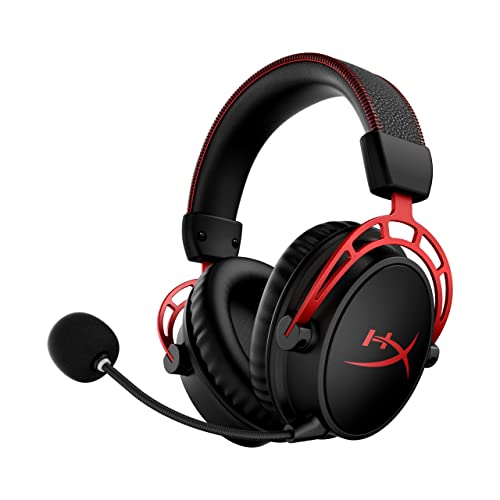
If you care most about battery life, the HyperX Cloud Alpha Wireless is hard to beat: a quoted 300-hour runtime means you can forget charging for weeks of regular use, and that freedom alone makes long sessions and travel so much less stressful. In everyday use the headset feels reliably ready — you won’t be cutting sessions short or hunting for cables, which is exactly what you want from a wireless gaming set.
The rest of the package backs that endurance up with solid performance. DTS Headphone:X spatial audio and the dual-chamber drivers deliver a clear, well-separated soundstage that helps with in-game positioning and keeps music from sounding muddy. The noise-canceling mic gets the job done for team chat, and the aluminum frame gives the unit a reassuringly durable feel. None of those extras are shocking innovations, but together they form a dependable, well-rounded headset where the battery life is the standout feature.
Best for Dual-Console Switching

Specifications
| Brand | Logitech G |
|---|---|
| Microphone Type | 48 kHz Boom Microphone |
| Battery Life | 40 h (90 h without RGB) |
| Weight | 0.6 lb |
Pros
Cons
If you regularly flip between an Xbox or Switch and a PlayStation or PC, the Astro A20 X really earns its spot for dual-console switching. The PLAYSYNC AUDIO and built-in MixAmp make switching painless and let you balance game and chat without fumbling through menus. The combination of 24-bit LIGHTSPEED, Bluetooth, and USB-C wired options means you can stay connected to whatever setup you’re using, and the 40 mm PRO-G drivers deliver a clear, punchy soundstage that helps with both immersion and competitive play.
Comfort and voice clarity are strong suits too — it’s surprisingly light at under 300 g and the 48 kHz mic with Blue VO!CE customization keeps your comms crisp. The 8-zone LIGHTSYNC RGB is a nice bonus if aesthetics matter. The description doesn’t call out battery life or price as standout points, so those feel average compared with some rivals, but for straightforward, reliable dual-console versatility the A20 X is hard to beat.
Best Budget-Friendly

Specifications
| Brand | HyperX |
|---|---|
| Microphone Type | Noise-Cancelling Microphone |
| Battery Life | 20 h |
| Dimensions | 3 x 10.5 x 9.7 in |
| Weight | 0.6 lb |
Pros
Cons
For gamers on a tight budget, the HyperX Cloud Stinger 2 hits the sweet spot between comfort and performance. It’s surprisingly lightweight and designed for long sessions — the signature HyperX cushioning and adjustable, rotating earcups mean you can wear it for hours without feeling strained. The DTS Headphone:X spatial audio really helps with in‑game positioning, so footsteps and directional cues are clearer than you’d expect at this price.
Voice chat stays clean thanks to the noise‑cancelling swivel microphone, and the choice of wired or USB wireless plug‑and‑play connectivity makes setup painless. Sound is balanced and punchy, which suits most game genres well.
A few elements are more typical of budget headsets: build materials aren’t premium and wireless battery life and range are average compared with higher‑end models. Still, for reliable comfort, clear communication, and solid spatial awareness without breaking the bank, the Cloud Stinger 2 is hard to beat.
What To Look For
Choosing the right headset is about finding the best mix of sound, comfort, and practical features for how you use it. Consider the traits below to match a model to gaming, commuting, or professional calls.
- Sound quality: Evaluate clarity, bass response, imaging and driver size to ensure a balanced or tailored sound signature that fits your listening preferences.
- Comfort and fit: Look for cushioning, adjustable headbands and appropriate earcup size so you can wear the headset for long sessions without fatigue.
- Microphone performance: Prioritize clear voice pickup, noise suppression and a flexible or detachable boom for better call quality and reduced background noise.
- Wired vs wireless: Decide between the near-zero latency and consistent quality of wired models or the freedom and convenience of wireless connectivity.
- Battery life and charging: Check rated playtime, typical real-world endurance and fast-charging options to avoid interruptions during travel or extended use.
- Active noise cancellation (ANC): ANC effectiveness and transparency modes matter for travel and noisy environments, so test how well the headset isolates sound.
- Build quality and durability: Prefer sturdy materials, reinforced hinges and replaceable parts plus a reliable warranty to ensure the headset survives daily wear.
- Compatibility and codecs: Confirm platform support, Bluetooth codecs like aptX, AAC or LDAC and multi-device pairing for optimal audio performance across devices.
- Controls and software: Intuitive physical or touch controls and a good companion app with EQ settings improve usability and let you fine-tune sound.
- Portability and storage: Consider foldability, included carrying case and overall weight if you plan to carry the headset in a bag regularly.
- Price and value: Balance essential features against cost, choosing a model that delivers the performance you need without paying for unused extras.
Weigh these features against your daily habits and budget to pick a headset that delivers the best combination of comfort, sound and long-term value.
How We Select Our Products
Picking the headsets that make it into our “best of” list isn’t random — it’s a careful, repeatable process we take seriously so you can trust our recommendations. We start broad, gathering hundreds of candidate models from major brands and promising newcomers. From there, we narrow the field using hard data and real-world signals: average customer ratings across retailers, the depth and tone of user reviews, and patterns in recurring complaints or praise.
Next comes feature and performance comparison. We evaluate sound signature, microphone clarity, comfort and fit, battery life, wireless stability, latency (for gaming), and build materials. Where possible we test headsets ourselves, listening across genres, trying voice calls, and wearing them over extended sessions to judge comfort. We also compare technical specs side-by-side — driver size, frequency response, codec support, and charging speeds — to see what you actually get versus what’s promised.
Value for money is a big factor. We weigh each headset’s features and performance against its price, factoring in warranty length, customer service reputation, and firmware update history. We also consult expert reviews, user forums, and return trends to catch long-term reliability issues that initial tests might miss.
Finally, we use a weighted scoring system so no single metric dominates the outcome, and we re-evaluate picks periodically to reflect firmware updates, price changes, or new releases. Our goal is simple: deliver clear, well-researched recommendations so you can buy with confidence.
Final Thoughts
Picking the right headset can feel a bit like choosing a new pair of shoes: comfort, fit, and what you’ll be doing in them matter more than the brand on the box. The biggest benefit of matching a headset to your specific needs is that it solves real problems—clearer calls for work, immersive sound for gaming, reliable isolation on the commuter train, or sweat-proof stability during workouts. When a headset aligns with how you’ll use it, you get better audio, fewer distractions, and a more comfortable daily experience.
Different priorities deliver different wins. If you spend hours on video calls, a headset with a noise-cancelling microphone and long battery life reduces misunderstandings and fatigue. Gamers gain a tactical edge and immersion from low-latency wireless or wired options and accurate surround sound. Audiophiles will appreciate wide frequency response and build quality, while frequent travelers benefit most from active noise cancellation and compact folding designs. For fitness, secure fit and water resistance are non-negotiable.
Beyond performance, choosing the right headset helps you avoid wasted money and frustration. Consider comfort and materials, platform compatibility, warranty and customer support, and whether you can tweak sound with EQ or firmware updates. Trying a model on, checking return policies, and reading real-user feedback are simple steps that pay off.
In short, thinking about how you’ll use a headset—rather than following trends—leads to smarter purchases. Prioritize the few features that matter most to you, test when possible, and opt for reliability over flashy extras. That’s how you end up with a headset that feels like it was made for you.


