Exercise bikes are stationary bikes you can use indoors, with resistance controlled by a knob or buttons. They fit home workouts, shared spaces, and training plans where you want steady progress without going outside. The best models feel smooth and stable, even after many minutes of hard pedaling.
Picking one is harder than it looks. Resistance type and setup can feel very different from brand to brand. Resistance levels may sound precise, but they often map to vague jumps instead of fine control. Other specs get overstated, like “quiet” electronics that still creak, or app features you never touch. Comfort also varies a lot, especially seat fit and handle reach.
This guide narrows the choice by focusing on how the bike rides, not just how it is marketed. You will get clear criteria for resistance, build, comfort, and useful features. Then you will see a selection built for distinct training needs, from quiet spinning to heavier users.
Quick Overview
Top Picks
Best Overall
Specifications
| Brand | Schwinn Fitness |
|---|---|
| Bike Type | Air Bike |
| Resistance Type | Air |
| Drive System | Belt |
| User Weight Capacity | 350 lb |
| Dimensions | 26.5 x 53 x 53 in |
| Product Weight | 113.1 lb |
Pros
- Consistent, responsive resistance
- Sturdy frame, quality hardware
- Useful metrics, solid connectivity
Cons
- Hard to move
- High price perception
- Occasional calibration
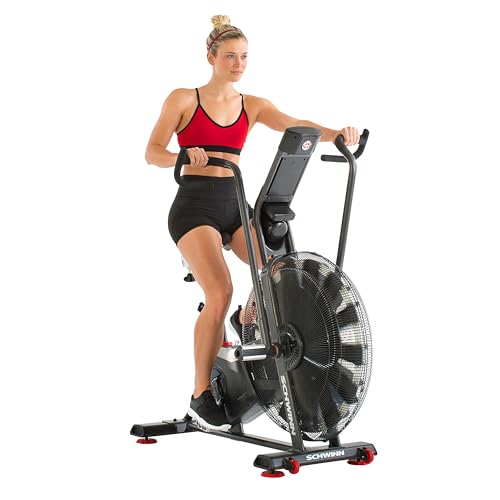
This Schwinn AD7 Airdyne earns the Best Overall spot because the air-resistance setup stays smooth as your effort changes. The ride feels consistent, even when you shift from steady work to fast, hard bursts. It is a fan-style air bike that many people can use for short workouts or longer sessions.
Performance is the big win. Resistance feels responsive, and the belt drive helps keep the action stable and low-noise. The frame also feels solid, with quality hardware that holds up to regular use. On the tech side, the bike includes useful metrics and has solid connectivity, so tracking workouts feels straightforward.
The main downside is practical, not training-related. It can be hard to move, and some users report occasional calibration needs. If you want an air bike with steady, responsive resistance and a tough build for everyday cardio, this is the one to get.
Best with Workout Membership

Specifications
| Brand | Peloton |
|---|---|
| Bike Type | Indoor Cycling |
| Resistance Type | Magnetic |
| User Weight Capacity | 297 lb |
| Dimensions | 60 x 54 x 22 in |
| Product Weight | 187 lb |
Pros
- Consistent, responsive resistance
- Sturdy frame, quality hardware
- Useful metrics, solid connectivity
Cons
- Subscription lock-in
This Peloton Bike+ fits the Best with Workout Membership slot because it is built around a subscription-led training experience. Its standout trait is the way the resistance changes feel predictable and smooth during guided rides, which makes it easier to follow along minute to minute.
Ride quality is a big strength. Resistance feels consistent and responsive, so you can hold steady effort without surprise jumps. The frame and hardware also feel solid for an at-home bike, with a stable platform that does not wobble much when you push harder. On the tech side, the workout metrics are clear, and connectivity stays reliable enough for most users to track sessions and heart-rate data during classes.
The main drawback is subscription lock-in, so you are tied to Peloton for the full experience. If you want guided indoor cycling with accurate, responsive resistance and you are comfortable paying for the membership, this is a strong pick.
Best Value

Specifications
| Brand | DeskCycle |
|---|---|
| Resistance Type | Magnetic |
| Resistance Levels | 8 Levels |
| User Weight Capacity | 270 lb |
| Dimensions | 20.1 x 24 x 10.2 in |
Pros
- Consistent, responsive resistance
- Strong value for performance
Cons
- Limited weight capacity
- Few resistance steps
- Noise during hard pedaling
This under-desk bike fits the Best Value slot because it stays focused on what matters for daily movement, a consistent magnetic resistance feel while you work. With 8 magnetic resistance levels, it is simple to dial in and keep your legs moving without making a big setup in your space.
Ride quality is the standout. Resistance changes feel responsive, so your effort level follows your adjustments. The build also feels solid for the category, with a stable platform that supports repeat use. On top of that, the bike includes useful workout tracking through its display so you can watch time and effort as you go.
The main drawback is noise during hard pedaling, and there are not many resistance steps if you want fine-tuned intensity. Limited weight capacity may also matter for some riders. If you want a quiet-ish, desk-friendly way to add low-impact activity without overthinking settings, this is the one to get.
Best Heavy Flywheel

Specifications
| Brand | Sunny Health & Fitness |
|---|---|
| Bike Type | Indoor Cycling |
| Resistance Type | Magnetic |
| Flywheel Weight | 44 lb |
| Drive System | Belt |
| User Weight Capacity | 300 lb |
| Dimensions | 50.8 x 47.6 x 23.4 in |
| Product Weight | 125.7 lb |
Pros
- Consistent, responsive resistance
- Sturdy frame, quality hardware
- Smooth magnetic resistance
Cons
- Limited weight capacity
- Hard to move
- Delivery delays
For the Best Heavy Flywheel spot, the standout is the 44 lb flywheel. That weight helps the bike keep momentum during harder efforts, so it feels steadier than lighter resistance systems. Pair that with magnetic resistance and you get a ride that stays consistent across changing intensities.
Riding quality is the main strength here. Resistance feels smooth and responsive, and the magnetic system makes small shifts easier to control. The belt drive also keeps the drivetrain quieter and helps maintain a stable pedaling feel. Build quality matches that smoothness, with a sturdy frame and quality hardware that feel made for regular use.
The main drawback is practical, not mechanical. It can be hard to move, and some buyers report delivery delays. If you want a stable, heavy-flywheel indoor bike for consistent training and you can handle a less-easy-to-store setup, this is the one to get.
Best for Heavy Riders

Specifications
| Brand | Schwinn Fitness |
|---|---|
| Bike Type | Indoor Cycling |
| Resistance Type | Magnetic |
| Resistance Levels | 100 Levels |
| Flywheel Weight | 40 lb |
| Drive System | Belt |
| User Weight Capacity | 330 lb |
| Dimensions | 51.8 x 48.7 x 21.2 in |
| Product Weight | 112 lb |
Pros
- Useful metrics, solid connectivity
- Smooth magnetic resistance
- Low-maintenance belt drive
Cons
- Limited weight capacity
- Hard to move
- Pedal reliability issues
The Schwinn IC4 fits the Best for Heavy Riders label thanks to its sturdy 40 lb flywheel and belt drive. The ride feels steady during hard efforts, and the bike stays quiet in the drivetrain for longer sessions. That combination helps heavier users keep a consistent cadence without extra fuss.
It earns strong marks for performance and build quality. The magnetic resistance uses 100 levels, so you can fine-tune intensity rather than jumping between big steps. The belt drive is low maintenance, and the connectivity and metrics on the console are useful for tracking workouts. For most users, it feels stable enough to handle regular training.
One weak point is pedal reliability, and the bike also has a limited weight capacity of 330 lb, so it is not a fit for everyone. It is also harder to move because it is a 112 lb unit. If you weigh 330 lb or less and want smooth magnetic resistance with a belt-driven, low-noise ride, this is a solid pick.
Best Quiet

Specifications
| Brand | ProForm |
|---|---|
| Bike Type | Upright |
| Resistance Type | Magnetic |
| Resistance Levels | 20 Levels |
| Flywheel Weight | 14 lb |
| User Weight Capacity | 275 lb |
| Dimensions | 57.7 x 35.1 x 21.2 in |
| Product Weight | 68.2 lb |
Pros
- Strong value for performance
- Smooth magnetic resistance
- Everyday quietness
Cons
- Limited weight capacity
- Membership dependency
- Interval stability limit
For a Best Quiet pick, the ProForm 225 CSX is built around magnetic resistance and an everyday, low-noise feel. That matters if you share space or prefer workouts without rattles and loud braking sounds.
Ride quality stays smooth at steady effort levels, with 20 levels of magnetic resistance for gradual changes. The 14 lb flywheel helps the pedals feel consistent, not twitchy. Comfort is solid for an upright bike, thanks to a standard fit and practical ride posture for most shorter, average, and taller users. A clear workout setup and heart-rate support also make it easier to track effort while you train.
The main downside is the user weight capacity listed at 275 lb, which may limit heavier riders. It also leans on a membership service for some training options, so your experience depends on staying subscribed. If you want a quiet upright bike for regular workouts and you are under 275 lb, this is a good match.
Best Lightweight

Specifications
| Brand | Saris |
|---|---|
| Bike Type | Indoor Cycling |
| Resistance Type | Magnetic |
| User Weight Capacity | 300 lb |
| Product Weight | 20 lb |
Pros
- Useful metrics, solid connectivity
- Smooth magnetic resistance
- Strong value for performance
Cons
- Limited weight capacity
- Okay comfort, gets sore
- Calibration confusion
If you want a lighter indoor bike for regular workouts, the Saris M2 fits the "Best Lightweight" role. Its magnetic resistance keeps the ride smooth, which matters when you are not looking for a heavy, stationary trainer.
For day-to-day use, the bike scores well on performance and build quality. The magnetic resistance feels consistent, and the ride stays quiet enough to use at home. It also has useful metrics and solid connectivity, so you can track sessions without fighting the display. Overall, it is a strong pick for steady pedaling and simple training goals.
Comfort is the main trade-off. The seat can get sore on longer rides, and the calibration process can feel confusing at first. Limited weight capacity is another factor to keep in mind. If you need a relatively easy-to-handle indoor cycling bike with smooth magnetic resistance and clear tracking, this is the one to get.
Best Magnetic Resistance

Specifications
| Brand | JOROTO |
|---|---|
| Bike Type | Indoor Cycling |
| Resistance Type | Magnetic |
| Flywheel Weight | 40 lb |
| Drive System | Belt |
| User Weight Capacity | 350 lb |
Pros
- Consistent, responsive resistance
- Low-maintenance belt drive
Cons
- Unrealistic calorie data
- Stopwatch glitching
This JOROTO M1 is a strong fit for the Best Magnetic Resistance spot because its magnetic system keeps resistance changes feeling steady and controlled. Pair that with a 40 lb flywheel and a belt drive, and you get a ride that stays smooth even when your effort ramps up.
On the performance side, resistance feels consistent and responsive, with less drivetrain drama than many budget setups. The belt drive also cuts down on upkeep and helps keep noise low. Build quality holds up well for regular training, and comfort stays solid thanks to an indoor-cycling style fit and practical adjustability.
The main letdown is the console data, with unrealistic calorie numbers, plus an occasional stopwatch glitch. If you want reliable magnetic feel and low-maintenance belt drive for steady workouts, this is a good pick, as long as you do not rely on calorie burn or perfect timing.
What to Look For
Bike Type: Start by matching your position to your body and goals. Upright bikes are best for an active, lean-forward feel. Recumbent bikes suit longer sessions and people who want more back support. If you see an Air Bike, expect a fan-driven blast that ramps with your effort.
Resistance Type: Choose based on the feel you want. Magnetic resistance usually gives smooth changes and low noise. Friction resistance can be simple and budget-friendly, but it may feel less consistent. Air resistance rewards faster pedaling and creates natural intensity without power plugs.
Resistance Levels: Look for an actual useful range, not just a big number. When possible, aim for mid to high levels so you can start easy and progress without skipping from light to hard. In reviews, pay attention to whether each step feels clearly different and easy to dial in.
Flywheel Weight: Heavier flywheels typically feel steadier at higher efforts. If the bike is light, you may feel more bounce or speed drops when you change cadence. For heavier riders, a heavier flywheel often supports a smoother ride under load.
Drive System: Belt drive usually runs quieter and needs less maintenance than chain drive. Chain drives can last a long time, but they may require more attention over time and can sound noisier. If noise matters in your home, treat drive system as a practical spec.
User Weight Capacity: Respect the max rating. A bike that is “rated high” but feels unstable in reviews may still not suit your body size. Use capacity as a safety margin, especially if you pedal hard or train in short bursts.
Comfort: Seat adjustment range matters more than seat looks. Look for easy height changes and stable support during longer rides. Check pedal position and handle reach for strain risk, especially if you plan to train daily.
How We Selected These Products
Products were found through broad web searches across review sites, buyer forums, and best-of lists, then cross-checked against the same core specs. This helped avoid a list that only repeats the same popular picks.
Next, we read a large volume of real customer reviews to spot recurring problems. We looked for patterns like resistance that feels jerky, seats that turn uncomfortable fast, noise that shows up after a few months, and electronics that fail sooner than expected.
Finally, we verified availability and key specs directly against Amazon listings. Each bike was scored using an objective framework mapped to the pillar names, then curated to cover distinct roles instead of simply ranking every model by a single blended score.
Frequently Asked Questions
Which exercise bike is best for high-intensity interval training?
An air bike is usually the best match for HIIT because it keeps feeding resistance as you push harder. The Schwinn AD7 Airdyne is a top pick in this set for smooth, stable high-output training. If you want full-body work and a challenge that scales fast, choose an air bike style.
What changes most between budget and premium exercise bikes?
Premium bikes usually deliver smoother resistance changes and more reliable tracking. They also tend to feel more stable during harder efforts. Budget bikes can still be quiet and effective, but you more often see less consistent metrics or fewer comfort and build upgrades.
How do I keep an exercise bike quiet and running smoothly?
Tighten bolts after setup and recheck them every few weeks. Keep the drive area clean and avoid getting dust into the resistance system. If you use a friction system, expect more wear than magnetic bikes, and belt drives often stay quieter with less routine work.
Is a heavier flywheel always better for comfort and performance?
A heavier flywheel often makes pedaling feel steadier, especially when you change effort. The Sunny Health & Fitness SF-B1805SMART earned strong performance because it has a 44 lb flywheel. For smoother motion at home, flywheel weight matters, but fit and resistance type still decide comfort.
Is paying for a workout membership worth it?
It helps most if you plan to ride often and want auto-resistance coaching. Peloton Bike+ stands out here because its training experience works best with its membership features. If you ride casually, you may not get enough value from the higher price.
Why do some exercise bikes get lower performance scores, even when they feel smooth?
Smooth feel does not always mean accurate resistance steps or reliable tracking. Some models show inconsistent resistance behavior at higher efforts or require more calibration to keep metrics trustworthy. Others feel fine but may still struggle with accurate data like calories or power.