Golf irons with cavity back use a hollow cavity behind the face to move weight low and around the head. That design helps you launch the ball easier and get more stable ball speed, especially on off-center strikes. Buyers in this sub-category typically want less punishment on toe and heel hits while keeping a workable flight through the set.
Picking the right cavity-back iron set is hard because forgiveness can trade off with control. More help often means more help on mishits, but it can also mean less spin feel and less predictable gapping from one loft to the next. You also have to match launch and turf interaction to your swing, or the same forgiving head can still miss your distance targets.
Looking for all types? See our Best Golf Irons.
Quick Overview
Our Top Picks
#1. PXG 0311P Iron Set

Specifications
| Brand | PXG |
|---|---|
| Set Makeup | 5-PW |
| Head Design | Cavity Back |
| Shaft Material | Steel |
| Shaft Flex | Stiff |
| Hand Orientation | Right Hand |
Pros
- Reliable launch and carry
- Toe/heel penalty reduced
- Cavity-back forgiveness
Cons
- Limited set coverage
- Cavity affects softness
- gapping consistency uncertain
The PXG 0311P Iron Set stands out among cavity-back irons for its balance of launch, carry, and stability from shot to shot. In this category, cavity backs are often chosen to help with forgiveness, but these irons also hold up well when you need consistent trajectory control across the set. You get strong distance with less toe and heel drop-off, which helps keep your gapping more dependable when contact varies.
There is a trade-off. Cavity backs can soften the feedback, and some players will notice a less precise feel compared to more compact designs. Also, the set stops at 5-PW, so golfers who want a full iron range may need to add additional clubs. Best fit: players who want cavity-back forgiveness for scoring while still caring about launch and repeatable yardages from their mid irons through the wedges.
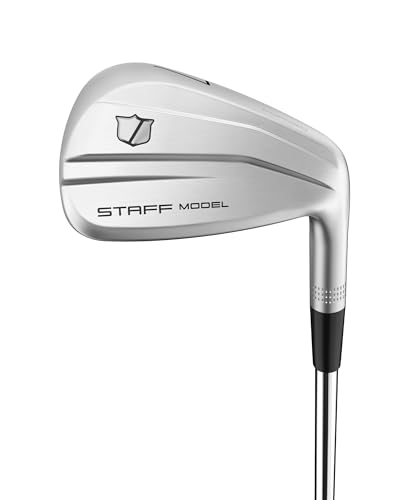
#2. Wilson Staff Model XB (2026) Iron Set
Specifications
| Brand | WILSON |
|---|---|
| Iron Type | Players Distance |
| Set Makeup | 4-PW |
| Head Design | Cavity Back |
| Shaft Material | Steel |
| Shaft Flex | Stiff |
| Hand Orientation | Right Hand |
Pros
- Toe/heel penalty reduced
- Clean sound and feedback
- Durable finish and alignment
Cons
- Softer sound
Wilson Staff Model XB (2026) stands out in cavity back irons because it reduces the toe and heel penalty while keeping a cleaner, more controlled strike feel than many higher-game-improvement designs. In a 4-PW set, that translates to steadier ball speed and tighter distance gapping when contact is not right on the center. The sound is solid and the feedback is clear, so you usually know what the face did at impact, even if the strike is slightly off.
The main trade-off is sound. It is not unpleasant, but it comes across a bit softer than you might expect for an iron that is otherwise tuned for crisp feedback. This set fits golfers who want cavity back help without giving up the more player-like feel and alignment focus, especially players distance golfers who hit a range of shots and want consistency from 4 iron through the wedge.
#3. Honma TR20 P Iron Set

Specifications
| Brand | Honma |
|---|---|
| Iron Type | Players Distance |
| Set Makeup | 4-10 |
| Head Design | Cavity Back |
| Shaft Flex | Stiff |
| Hand Orientation | Right Hand |
Pros
- Reliable launch and carry
- Clean sound and feedback
Cons
- Moderate forgiveness feel
- Forging authenticity doubts
Honma TR20 P stands out in cavity back iron territory with a strong, repeatable launch and dependable carry. In this players distance lane, where yardage control matters as you move from mid irons to short irons, this set keeps trajectories steady and gapping feels more consistent than you might expect from a cavity back design. The impact sound is clean, and the feedback helps you read strike quality without feeling muted or harsh.
The main trade-off is forgiveness. You still get a noticeable penalty on off center hits, so misses can turn into distance loss and tighter dispersion than some more forgiving cavity backs. Also, if you care about traditional forged player identity, there may be some doubts about authenticity versus a pure forged feel. This is best for golfers who want help launching the ball, but still want enough feedback to shape shots and manage distances.
What to Look For
Distance gapping across the set: Check how consistently the irons cover yardage from 4- to PW. If the set bunches up or spreads too much, your scoring will suffer. Favor models known for predictable carry and repeatable trajectory from one loft to the next.
Launch and spin that match your strike: Cavity backs often help launch. Still, you need the right window for your height and spin. If you tend to hit down and produce too much spin, look for heads that keep stopping power without ballooning your trajectory. If you hit up or sweep, prioritize irons that build spin reliably from the turf.
Mishit forgiveness without a big direction penalty: Off-center hits should lose distance, but not wildly change direction. Focus on irons that keep face stability so toe and heel strikes do not swing wide. This matters more in mid irons, where mistakes often happen at full swing.
Impact feel and feedback you can trust: The best cavity-back irons give clear feedback on strike quality. You should hear and feel a consistent center strike, and you should quickly notice when you miss it. Avoid sets that feel harsh, overly clicky, or dead, since they make it harder to adjust.
Build consistency and specs that hold up: Look for tight loft and lie consistency through the set. Small spec issues can show up as uneven distance and missed targets. Also check finish and head shaping quality, since these irons get constant bag and bag-face wear over time.
How We Picked
Products were identified through broad research across review sites and buyer forums, then filtered to only those that qualify as Golf Irons with Cavity Back. The intent was to keep the comparison focused on cavity-back forgiveness and the typical trade-offs it brings, not on blades, hollow bodies, or non-cavity designs.
Scoring used the same objective pillar framework as the main Golf Irons post, allowing direct comparison of products within this sub-category. Each set was judged on performance, forgiveness, feel, build quality, and value, with heavier weight on how reliably the irons deliver distance, flight, and gapping when you hit them imperfectly.
Frequently Asked Questions
What makes cavity back irons more forgiving than blade style irons?
Cavity back irons move weight around the head. That helps you get more stable ball speed on off center hits. You also tend to see less left right miss on toe and heel strikes.
How do I know if a cavity back set will launch the ball easily enough?
Look for a design that supports higher launch, like perimeter weighting and internal weighting behind the face. Many cavity back irons also use optimized loft and sole shape for easier contact. A good sign is that your shots reach the right height without needing to swing harder.
Will cavity back irons feel too soft or too clicky on impact?
Feel depends on face design, materials, and how the head is tuned. Many cavity backs give a solid, smooth sound with clear strike feedback. If you hate harsh or hollow feedback, try hitting a few wedges and mid irons at your usual pace.
What is the best way to care for cavity back irons?
Wash the heads after play, especially if you hit from wet or sandy lies. Dry them fully to prevent rust around the hosel. Check the grooves with a flashlight and clean them when spin drops.
How do cavity back irons compare to hollow body irons for distance?
Cavity backs focus on forgiveness and steady launch. Hollow body irons often feel faster and may launch higher, but they can be less consistent if you miss the face. Choose cavity back if you want stable distance across more shot types.
When should I choose players irons or other iron types instead of cavity back?
Consider a more players focused model if you strike the center of the face often. You might also want that option if you want tighter shot shape control. If you struggle with launch height, direction, or gapping, cavity back irons usually fit better.