





Mastering Power Bank Capacity and Charging
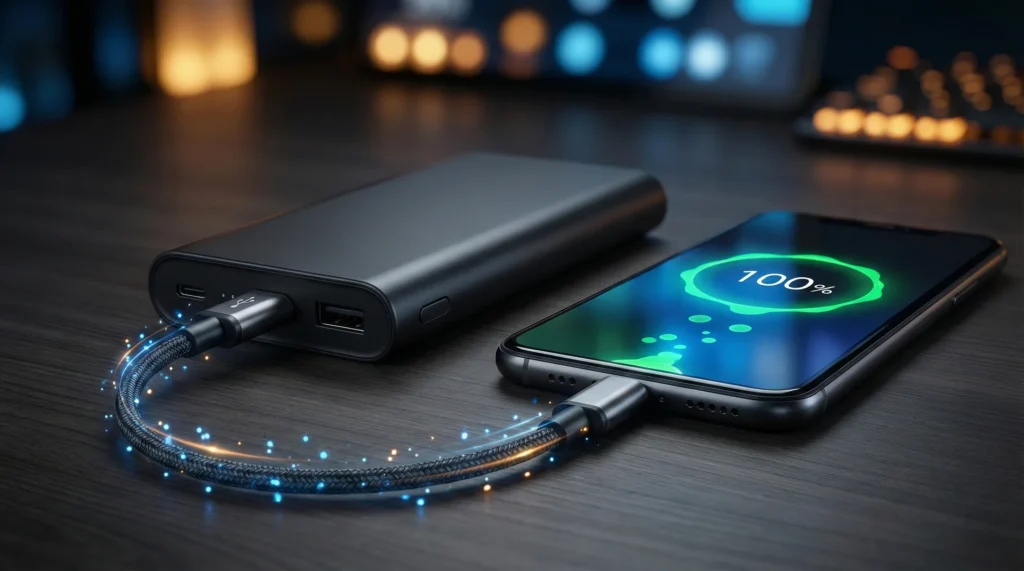
We have all been there. You are out for a long day of sightseeing, or maybe you are stuck in a middle seat on a cross-country flight, and that dreaded '10% battery remaining' notification pops up. In our hyper-connected world, a dead phone isn't just an inconvenience; it can feel like a genuine crisis. This is where the humble power bank steps in to save the day. But if you have ever shopped for one, you know that the market is a dizzying maze of numbers, acronyms, and marketing jargon.
Why does a 10,000mAh power bank only charge your 3,000mAh phone twice instead of three times? What is the difference between Power Delivery and Quick Charge? And do you really need that massive brick that looks like it could jump-start a truck? In this guide, we are going to pull back the curtain on power bank technology, explaining everything from capacity loss to fast-charging protocols so you can make an informed decision.
The Math Behind the mAh
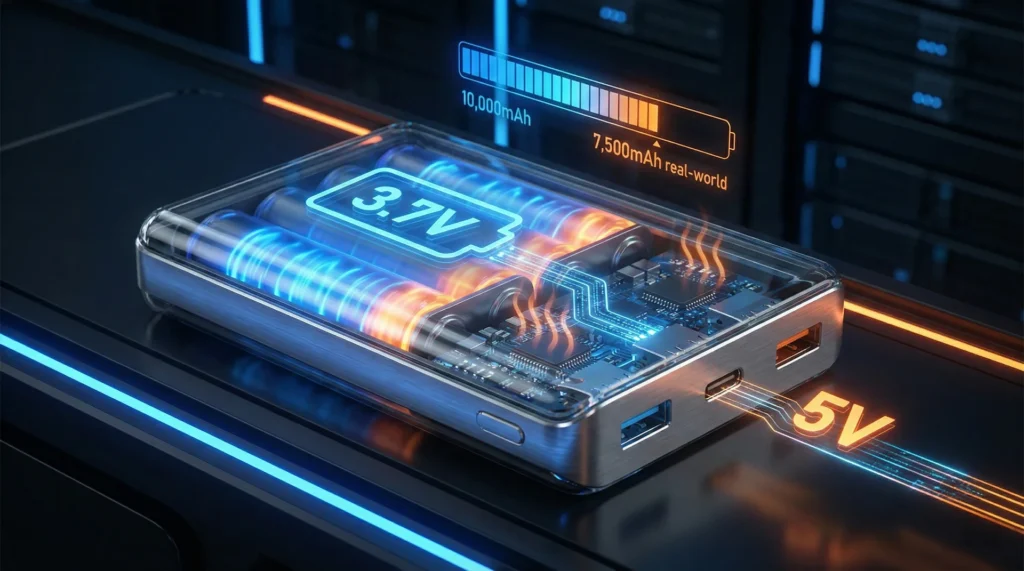
The most prominent number you will see on any power bank is its capacity, measured in milliamp-hours (mAh). At first glance, the math seems simple. If your smartphone has a 4,000mAh battery and you buy a 20,000mAh power bank, you should get five full charges, right? Unfortunately, the reality of physics is a bit more complicated. Most power bank manufacturers list the capacity of the internal battery cells, which usually operate at 3.7 volts.
However, the USB standard for charging most mobile devices is 5 volts (or higher for fast charging). To move electricity from the power bank to your phone, the internal voltage must be 'stepped up' from 3.7V to 5V. This conversion process isn't 100% efficient. During this step-up, energy is lost as heat. On top of that, your phone’s internal charging circuitry has its own level of resistance and energy loss. If you are currently shopping for a new device, it is worth looking at the best power banks to see how they handle these efficiency ratings.
Generally, you can expect an efficiency rate of about 65% to 75%. This means a 10,000mAh power bank actually provides about 6,500mAh to 7,500mAh of 'real-world' juice to your devices. This 'usable' energy is often referred to as the rated capacity, and more transparent brands will list this figure in the fine print on the back of the device.
Understanding Fast Charging Protocols
Capacity tells you how much energy a power bank holds, but the charging protocol determines how fast that energy gets into your device. In the early days of portable chargers, 5W or 10W was the standard. Today, we are seeing power banks capable of delivering 100W or more. To take advantage of these speeds, both your power bank and your device need to speak the same language.
USB Power Delivery (USB-PD)
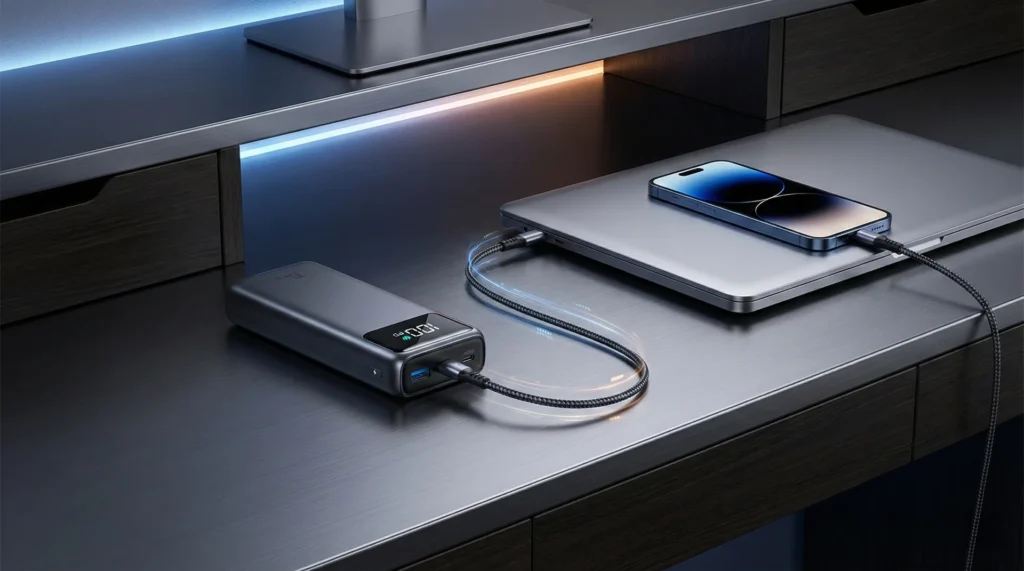
USB Power Delivery is the current gold standard. It is a universal protocol that works over USB-C and can scale from 5W to 240W. This is the protocol used by iPhones (since the iPhone 8), Google Pixel phones, and most modern laptops like the MacBook Air or Dell XPS. If you want a power bank that is future-proof and versatile, look for one with a USB-C PD port. It allows the charger and the device to 'negotiate' the highest safe power level, ensuring your phone doesn't get fried while still charging as fast as possible.
Qualcomm Quick Charge (QC)
While USB-PD is becoming the universal norm, many Android devices still use Qualcomm’s Quick Charge technology. Currently in its 5th generation, QC is designed to charge devices incredibly quickly by varying the voltage and amperage. The good news is that many of the best power banks now support both USB-PD and QC 3.0 or 4.0, so you don't necessarily have to choose one over the other.
Choosing the Right Size and Weight
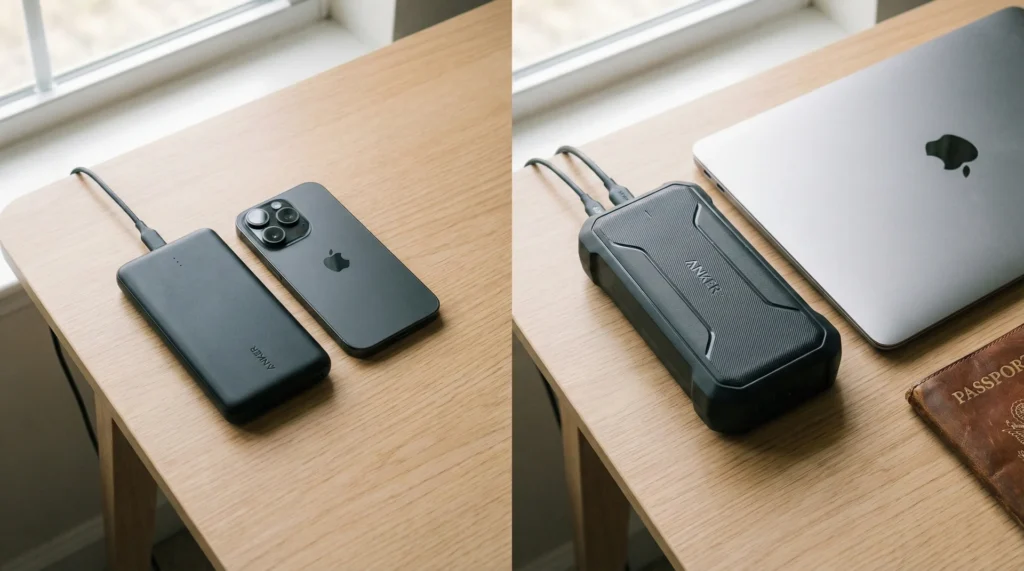
There is a direct trade-off between power bank capacity and portability. A 26,800mAh beast might keep your phone alive for a week-long camping trip, but it will feel like a literal brick in your pocket. Conversely, a lipstick-sized 5,000mAh charger is great for an emergency boost but won't even provide two full charges for a modern flagship phone.
For daily commuting, a 10,000mAh power bank is generally considered the 'sweet spot.' It is usually slim enough to fit in a jacket pocket or a small purse and provides enough energy to charge most phones about 1.5 to 2 times. If you are a digital nomad or a frequent flyer, you might want to step up to 20,000mAh. This size can typically charge a smartphone 4-5 times or provide a significant boost to a tablet or laptop. Just keep in mind that the TSA (and most international aviation authorities) limits the size of lithium batteries in carry-on luggage to 100 watt-hours (Wh), which is roughly equivalent to 27,000mAh.
Safety Features and Battery Chemistry
Not all power banks are created equal when it comes to the quality of the internal cells. Most modern chargers use either Lithium-Ion (Li-ion) or Lithium-Polymer (Li-po) batteries. Li-ion cells are generally more energy-dense and affordable, while Li-po cells can be made thinner and are slightly less prone to leaking or catching fire if damaged. However, both are incredibly safe if they come from a reputable manufacturer.
When shopping, look for built-in safety features like over-current protection, over-voltage protection, and temperature monitoring. These systems prevent the power bank from overheating during intense fast-charging sessions or from damaging your expensive electronics if there is a short circuit. Cheaper, off-brand power banks often skimp on these protective circuits, which can lead to reduced battery lifespan or, in rare cases, safety hazards.
Maintenance Tips for Longevity
A power bank is an investment in your mobile productivity, and like any battery-powered device, it requires a little care to last. First, avoid exposing your power bank to extreme temperatures. Leaving it on a car dashboard in the summer or in a freezing garage in the winter will significantly degrade the battery chemistry. Heat, in particular, is the number one enemy of lithium batteries.
Secondly, try to avoid letting your power bank drop to 0% and stay there. Lithium batteries prefer to stay between 20% and 80% charge. If you aren't going to use the power bank for a few months, charge it to about 50% before putting it in a cool, dry place. This 'storage charge' helps maintain the health of the cells over time. Lastly, always use high-quality cables. A cheap, frayed cable can not only slow down your charging speeds but can also cause unnecessary heat buildup at the connection points.
Finding Your Perfect Match
Choosing the right power bank comes down to understanding your specific needs. Do you need a lightweight companion for a night out, or a powerhouse that can sustain your laptop through a workday? By looking past the raw mAh numbers and considering the rated capacity, fast-charging protocols, and safety features, you can find a device that keeps you powered up without the guesswork.
Remember that technology moves fast. While a standard 5V/2A charger was impressive a few years ago, today’s landscape is dominated by smart PD ports and GaN (Gallium Nitride) components that allow for smaller, cooler, and faster devices. Stay informed, check your device's requirements, and you will never have to hunt for a wall outlet in a crowded airport again.