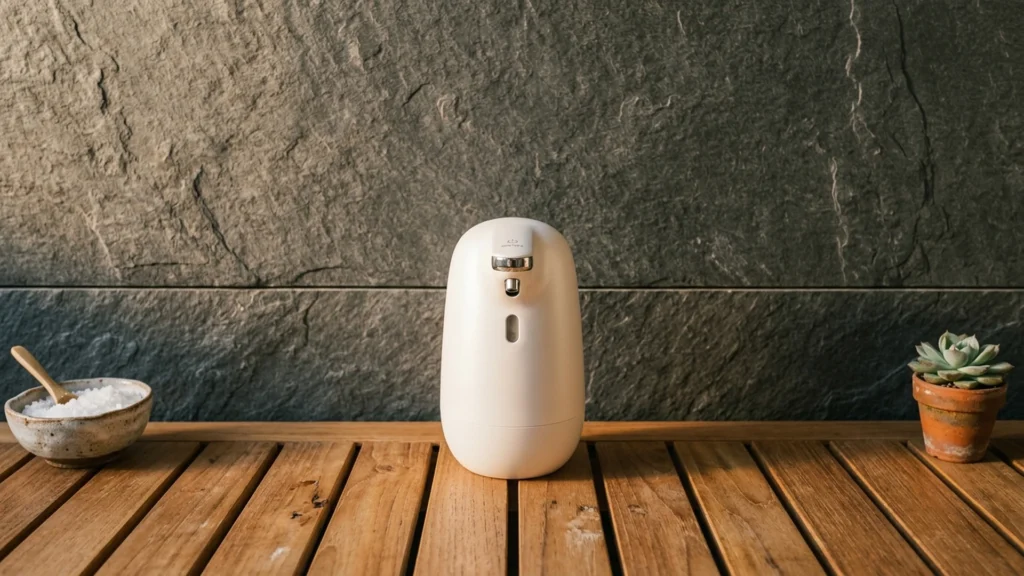
Battery-Operated Soap Dispensers are the touchless units that run on batteries and release soap when a sensor detects your hand. For buyers, the core need is simple: soap should come out every time, without drips, slow response, or missed triggers.
The hard part is the trade-off between sensor behavior and day-to-day upkeep. Better sensors can cost more. Larger tanks can save refills, but they also mean heavier refilling and a bigger footprint. Battery choices matter too. Some units handle frequent use better than others, and weak pumps show up as sputtering or clogging over time.
Looking for all types? See our Best Soap Dispensers.
Quick Overview
Our Top Picks
#1. Aunmaon Touchless Soap Dispenser

Specifications
| Brand | Aunmaon |
|---|---|
| Mounting Type | Wall Mount |
| Soap Compatibility | Liquid Soap |
| Operation Type | Touchless Sensor |
| Power Source | Battery |
| Capacity | 12.5 oz |
| Dimensions | 7.3 x 4 x 2.8 in |
Pros
- Hands-free operation
- Easy setup, simple controls
- Reliable performance, fair cost
Cons
- Requires frequent battery changes
- Thin plastic shows wear
- Limited compatibility
This wall-mount, battery-operated touchless dispenser stands out for how easy it is to use day to day. The sensor gives hands-free soap flow on approach, which helps keep sinks cleaner during busy mornings or when multiple people share the bathroom. Setup is straightforward, and the controls are simple enough to understand without reading a manual.
The main trade-off is power management. Expect to change batteries more often than you would with hardwired models, and the outer plastic can show wear over time. It is best for households or small offices that want touchless hygiene and can handle regular battery swaps, and it works specifically with liquid soap.
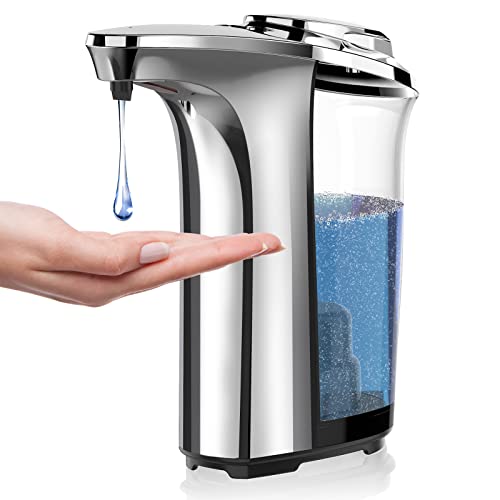
#2. PZOTRUF 17oz Touchless Soap Dispenser
Specifications
| Brand | PZOTRUF |
|---|---|
| Soap Compatibility | Dish Soap |
| Operation Type | Touchless Sensor |
| Power Source | Battery |
| Capacity | 17 oz |
| Material | Aluminum |
| Dimensions | 7.4 x 6.4 x 3.3 in |
Pros
- Reliable performance, fair cost
- Hands-free operation
Cons
- Requires frequent battery changes
- Limited compatibility
This touchless, battery powered dispenser stands out for its simple hands free use. The 17 oz aluminum body looks clean on a counter, while the sensor helps deliver soap with less mess during busy moments. In a typical home or small office routine, you can rinse hands and do not have to press a pump. That means fewer smears on the front and less contact when multiple people use the same sink.
The main trade off is power. It runs on batteries, so you will need to swap them out at some point, which is less convenient than refillable models that do not rely on batteries. Also, the compatibility note is a bit narrow, since it is meant for dish soap, so it may not match every hand soap you already use. This is best for households or workplaces that want touchless dispensing and are fine doing periodic battery changes.
#3. Secura 17oz Touchless Soap Dispenser
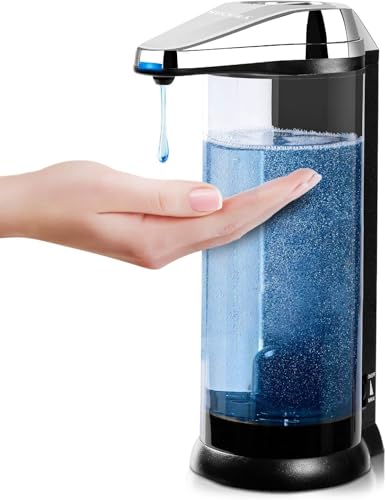
Specifications
| Brand | Secura |
|---|---|
| Mounting Type | Wall Mount, Countertop |
| Soap Compatibility | Liquid Soap |
| Operation Type | Touchless Sensor |
| Power Source | Battery |
| Capacity | 17 oz |
| Dimensions | 8.7 x 6 x 3.3 in |
Pros
- Reliable performance, fair cost
- Hands-free operation
- Less countertop clutter
Cons
- Requires frequent battery changes
- Thin plastic shows wear
- Limited compatibility
For battery-operated touchless soap dispensers, the Secura 17oz stands out for simple, hands-free use with quick sensor response. It fits both wall mount and countertop setups, so you can place it near sinks without relying on a permanent outlet. The 17 oz tank also helps reduce how often you refill, which matters in busy bathrooms and shared kitchens.
The main trade-off is power. Like most battery units, you will plan for regular battery swaps to keep the sensor consistent. It also uses thin plastic, so it may show wear over time, especially in high-traffic spaces. Best for households or small offices that want touchless operation and an easy setup, not for people looking for the most heavy-duty housing or the widest soap range.
What to Look For
Sensor response and consistency: In a battery-powered touchless unit, the sensor controls everything. Look for fast activation, consistent soap portions, and no false triggers when hands hover or when the air shifts.
Drip control and clog resistance: Check whether the pump stops cleanly. Good dispensers avoid lingering drips after each use and reduce clog risk from soap residue, thicker gels, or foam formulas.
Battery type, life, and refill cadence: Batteries drive the whole experience. Prefer models that are easy to open for battery changes and that maintain steady output across many activations, especially in high-traffic bathrooms.
Refill access and chamber design: Choose a unit with a practical refill opening and simple access to the chamber. Wider openings make it less messy to top up, and single-chamber designs are often easier to clean than multi-part layouts.
Build quality for wet environments: Soap dispensers live in moisture and soap spray. Aim for sturdy housings and seals that resist warping, cracking, or leaking after repeated refills and daily wiping.
How We Picked
Products were identified through broad research across review sites and buyer forums, then filtered to only those that qualify as Battery-Operated Soap Dispensers.
Scoring used the same objective pillar framework as the main Soap Dispensers post, allowing direct comparison of products within this sub-category.
Frequently Asked Questions
What batteries do battery operated soap dispensers use, and how long do they last?
Most models use standard AA batteries. Battery life depends on how often people trigger the sensor. Heavy daily use can drain batteries faster than light home use.
Do battery operated soap dispensers work with both liquid and foaming soap?
Many battery operated models work best with liquid soap. Foam soap can sometimes cause clogging if the pump is not built for it. Check the label for Liquid Soap, Foam Soap, or Sanitizer compatibility before you fill.
How do I prevent clogs and drips in a battery powered touchless dispenser?
Use soap that matches the dispenser type and keep the nozzle clean. Wipe any soap residue around the outlet to stop buildup. If it starts dripping, remove and rinse the pump parts if the model allows it.
How should I set up and mount a battery operated soap dispenser?
Most units are either Countertop or Wall Mount, depending on the base and bracket. Place it where the sensor can reach hands without shadows. Allow space for refilling and battery access.
When should I choose a non battery soap dispenser instead?
Choose a non battery option if you want fewer parts to replace. Manual pumps can also work during power outages or in very low use areas. If you hate battery upkeep, a manual or AC powered model may fit better.
How do battery operated soap dispensers compare to AC powered dispensers?
Battery units are easier to place anywhere without outlets. AC powered models can dispense more consistently during high traffic use. However, AC models require outlet access and careful placement near a plug.